seamus dubhghaill

Promoting Irish Culture and History from Little Rock, Arkansas, USA


Leave a comment

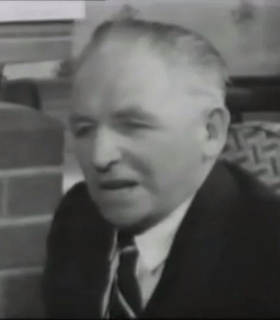
Birth of Sportswriter Con Houlihan

Con Houlihan, Irish sportswriter, is born on December 6, 1925, in CastleislandCounty Kerry. Despite only progressing to national journalism at the age of 46, he becomes “the greatest and the best-loved Irish sports journalist of all.”

Over a lengthy career, Houlihan covers many Irish and international sporting events, from Gaelic football and hurling finals, to soccer and rugby World Cups, the Olympic Games and numberless race meetings inside and outside Ireland.

Houlihan is a journalist with the Irish Press group writing for The Irish PressEvening Press and sometimes The Sunday Press, until the group’s demise in 1995. He writes the “Tributaries” column and Evening Press back sports page “Con Houlihan” column.

Houlihan dies on the morning of August 4, 2012, in St. James’s Hospital in Dublin. Often considered one of Ireland’s finest writers, he leaves behind a legacy of immense sports journalism that spans over 60 years. A minute’s silence is observed in his memory ahead of Kerry GAA‘s All-Ireland Senior Football Championship quarter-final defeat to Donegal GAA at Croke Park the following day. His last column, in which he wishes Irish Olympic boxer Katie Taylor well, is published the day after his death. His funeral takes place on August 8, 2012.

Ireland’s presidentMichael D. Higgins, leads the tributes to Houlihan, describing him as a “most original writer, with a unique style based on his extensive knowledge of literature, politics, life and sport.” He adds, “He had that special quality and ability to identify with the passion, pain and celebration of Irish community life.”

A bronze bust of Houlihan is unveiled in his hometown of Castleisland in 2004. In 2011, another sculpture is erected outside The Palace bar in Dublin.


Leave a comment

Death of John Joe Sheehy, Republican Activist & Sportsperson

John Joseph Sheehy, Irish political/military activist and sportsperson, dies on January 12, 1980. He participates in the Irish War of Independence (1919-21) and Irish Civil War (1922-23) in the Irish Republican Army (IRA), where he is a senior figure in County Kerry. He also gains fame as a successful Gaelic footballer representing the Kerry county football team.

Sheehy is born in Tralee, County Kerry, on October 16, 1897. In 1914 he joins Fianna Éireann, the republican boy scouts, and later the Irish Volunteers. He commands the Boherbue company of the IRA, and later the Tralee company. His brother Jimmy is killed in the British Army in the Battle of the Somme in 1916.

Sheehy sides against the Anglo-Irish Treaty in 1922, like most of the IRA in Kerry. In the Irish Civil War, when Free State troops land in Kerry as part of a seaborne offensive, he is in command of the Anti-Treaty garrison in Tralee. After the Army takes the town, he retreats, burning the barracks there. As the conflict becomes a guerrilla affair, he finds himself in charge of three flying columns, or around 75 men in total, in the Ballymacthomas area. He and Tom McEllistrim are in charge of an attack on Castlemaine in January 1923. 

Just after the Irish Civil War, when Sheehy is still on the run, he manages to play football for Kerry. Kerry captain Con Brosnan, though a member of the Free State army, guarantees his safe passage. He pays into Munster and All-Ireland finals, slips off his street clothes, plays, and then at the final whistle, disappears back into the crowd. In 1936 he is in New York and is able to smuggle a large number of Thompson submachine guns back to Ireland.

In February 1941 Sheehy is arrested and interned in the Curragh Camp for two years. He is arrested again and charged with making “seditious speeches” on May 11, 1946, the day that IRA hunger striker Seán McCaughey dies. He is found guilty and sentenced to four months imprisonment.

Sheehy plays Gaelic football with his local club, John Mitchels, and is a member of the senior Kerry county football team from 1919 until 1930. He also plays hurling with Tralee Parnells. He captains Kerry to the All-Ireland title in 1930. He plays in the Railway Cup hurling final in 1927 and is captain of the football team the same year and wins other medals in 1931. Three of his sons – Seán Óg, Niall and Paudie – all win All-Ireland titles with Kerry in the 1960s.

Sheehy remains a staunch supporter of Sinn Féin and is critical of the moves to end abstention by the party in the late 1960s. He sides with the Provisionals in the split at the 1970 Ardfheis and remains active in Provisional Sinn Féin until his death, supporting the IRA’s guerrilla campaign. He dies in Tralee on January 12, 1980, and is given a republican funeral at his own request. His funeral oration is given by Dáithí Ó Conaill, vice-president of Sinn Féin.


Leave a comment

Birth of Austin Stack, Irish Republican & Politician

Augustine Mary Moore Stack, Irish republican and politician who serves as Minister for Home Affairs from 1921 to 1922, is born on December 7, 1879, in Ballymullen, Tralee, County Kerry. He is a Teachta Dála (TD) from 1918 to 1927.

Stack is born to William Stack, an attorney’s clerk, and Nanette O’Neill. He is educated at the Christian Brothers School in Tralee. At the age of fourteen, he leaves school and becomes a clerk in a solicitor‘s office. A gifted Gaelic footballer, he captains the Kerry team to All-Ireland victory in 1904. He also serves as President of the Kerry Gaelic Athletic Association County Board.

Stack becomes politically active in 1908 when he joins the Irish Republican Brotherhood (IRB). In 1916, as commandant of the Kerry Brigade of the Irish Volunteers, he makes preparations for the landing of arms by Roger Casement. He is made aware that Casement was arrested on Easter Saturday and was being held in Tralee. He makes no attempt to rescue him from Ballymullen Barracks.

Stack is arrested and sentenced to death for his involvement in the Easter Rising, however, this is later commuted to penal servitude for life. He is released under general amnesty in June 1917 and is elected as an abstentionist Sinn Féin MP for West Kerry at the 1918 Irish general election, becoming a member of the First Dáil. He is elected unopposed as an abstentionist member of the House of Commons of Southern Ireland and a member of the Second Dáil as a Sinn Féin TD for Kerry–Limerick West at the 1921 Irish elections.

Stack, as part of his role as Minister for Home Affairs, is widely credited with the creation and administration of the Dáil Courts. These are courts run by the Irish Republican Army (IRA) in parallel and opposition to the judicial system being run by the British government. The IRA and Sinn Féin are highly successful in both getting the civilian population of Ireland to use the courts and accept their rulings. The success of this initiative gives Sinn Féin a large boost in legitimacy and supports their goals in creating a “counter-state” within Ireland as part of their overarching goals in the Irish War of Independence.

Stack opposes the Anglo-Irish Treaty of 1921 and takes part in the subsequent Irish Civil War. He is captured in 1923 and goes on hunger strike for forty-one days before being released in July 1924.

Stack is elected to the Third Dáil at the 1922 Irish general election and subsequent elections as an Anti-Treaty Sinn Féin TD for the Kerry constituency. When Éamon de Valera founds Fianna Fáil in 1926, Stack remains with Sinn Féin, being re-elected to the Dáil at the June 1927 Irish general election. He does not contest the September 1927 Irish general election.

In 1925, Stack marries Winifred (Una) Gordon, (née Cassidy), the widow of a Royal Irish Constabulary (RIC) district inspector, Patrick Gordon.

Stack’s health never recovers following his hunger strike and he dies at the age of 49 in a Dublin hospital on April 27, 1929.

Austin Stack Park in his hometown of Tralee, one of the Gaelic Athletic Association’s stadiums, is named in his honour, as is the Austin Stacks GAA hurling and Gaelic football club.


Leave a comment

Birth of Mick Galwey, Gaelic Football & Rugby Union Player

Michael Joseph Galwey, Gaelic football and rugby union player, is born on October 8, 1966, in Currow, County Kerry. As a 19-year-old he wins an All-Ireland Senior Football Championship with the Kerry Gaelic football team in 1986, before turning to rugby union. He is thus the only winner of an “All-Ireland” in both rugby union and Gaelic football. He also holds County Championship medals in Senior, Junior and Minor grades. His nickname ‘Gaillimh’ comes from the name of the Irish town Galway, in the Irish language.

Before becoming a rugby player Galwey plays Gaelic football with Kerry. His first success at intercounty level comes in 1986 when he is part of the Kerry team that wins that year’s All-Ireland. He plays in the semi-final win over Meath. The following year he wins a Munster Under 21 Championship medal and later plays in the All-Ireland final but his side loses out to Donegal. In 1989 he plays his second and last championship game with Kerry in the Munster Championship first round win over Limerick, a game that he also captains the side in.

At club level Galwey plays with his local Currow club. The club produces three other senior Irish Rugby Internationals – Moss Keane, Mick Doyle and Tommy Doyle, an All-Ireland Minor winner in 1962, along with an U-20 Irish Rugby International, JJ Hanrahan. He plays a key part in helping Currow win their first Kerry Junior Football Championship in 1988 when they beat Rathmore in the final.

Galwey also plays with the St. Kieran’s divisional team. In 1988 he helps them win their first and to date only Kerry Senior Football Championship title.

After making the switch to rugby union, Galwey is a key figure in Shannon RFC‘s side during their four in a row winning streak of All-Ireland League titles in the late 1990s. Throughout his career he proves to be a leader who can inspire and motivate players around him to punch above their collective weights. He instills a “don’t panic” and professional attitude in his Shannon team which later becomes the hallmarks of Munster Rugby during his tenancy as captain. He is seen as a legend of the sport in his native Munster, particularly in Limerick.

Galwey’s involvement in the Irish national squad is more of a mixed bag. Making his debut in 1991 against France, his 11-year international career is rarely without controversy. Owing to the selection decisions of various national coaches and selectors, he becomes the most dropped player in international history. He fights his way back onto the Irish squad, becoming the team’s captain ten years after he made his debut. In the 1993 Five Nations Championship match against England, he rounds off a fine display in the 17–3 defeat by scoring the only try of the game. His efforts are rewarded later that year when he is selected for the Lions tour to New Zealand.

Galwey plays for the Ireland national rugby sevens team at the inaugural 1993 Rugby World Cup Sevens.

Galwey’s rugby record includes 41 caps for Ireland, four times as captain and scorer of three tries; 1993 Lions tour to New Zealand; 130 caps for Munster, 85 as captain, 1 Celtic League; 10 Munster senior cups and 6 All-Ireland Leagues with Shannon R.F.C.; 113 games for Shannon in the All-Ireland League, scoring 28 tries.

Galwey has coached Shannon to two All-Ireland League victories and two Munster Senior Cups.


Leave a comment

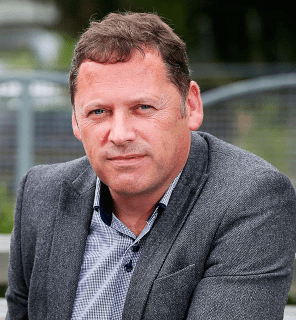
Birth of Barry Cowen, Fianna Fáil Politician

Barry Cowen, Fianna Fáil politician who has been a Teachta Dála (TD) for the Laois–Offaly constituency since the 2020 Irish general election, is born in Clara, County Offaly, on August 28, 1967. Previously from 2011 to 2016 and from 2016 to 2020 he serves as TD for the Offaly constituency. He also serves as Minister for Agriculture, Food and the Marine from June 2020 to July 2020.

Cowen is married with four children and is a full-time politician. His father, Bernard Cowen, was also a TD, Senator and Minister of State. His grandfather, Christy Cowen, was an Offaly County Councillor and a member of the Fianna Fáil National Executive. Another relation, Ernest Cowen, was also a member of the Fianna Fáil National Executive having been elected to its Committee of 15.

Before his election to Dáil Éireann, Cowen serves as a member of Offaly County Council for the Tullamore local electoral area since the 1991 Irish local elections.

Cowen has served in various Fianna Fáil Front Bench roles such as Minister for Social Protection from 2011 to 2012, Spokesperson for Housing, Planning and Local Government from 2012 to 2018 and Spokesperson for Public Expenditure and Reform from 2018 to 2020. He represents Fianna Fáil in talks on government formation in 2016 and 2020.

In July 2020, it emerges that Cowen has a conviction for drunk driving. He is fined €200 and is disqualified from driving for three months. The incident occurs in September 2016, after an All-Ireland football final between Dublin and Mayo. He apologises for his “serious lapse of judgement.” The Garda Síochána Ombudsman Commission (GSOC) is asked by Garda Síochána to investigate the alleged leaking of information concerning Cowen’s drunk driving arrest. He accuses Gardaí of criminality for leaking allegations that he attempted to evade a garda checkpoint before he was caught drunk driving. He admits receiving a ban for drunk drinking but denies attempting to evade Gardaí. He issues a statement that the Garda record was “incorrect” and suggests he will take legal action against The Sunday Times, which first reported the story. He says that the leaks were a flagrant breach of criminal law and “my rights under data protection law” and that they were an “attempt to cause me the maximum personal and political harm.” Fianna Fáil TD Thomas Byrne denies that it was he who leaked news of Cowen’s ban to the press. Eamon Dooley, the longest serving Fianna Fáil member of Offaly County Council, claims that a party member with a “grudge” leaked it to the media.

On July 14, 2020, after he refuses to resign the role of Minister for Agriculture, Cowen is sacked by Taoiseach Micheál Martin due to the controversy surrounding his conviction for drunk driving. In November 2020, it is reported that a barrister is to be questioned by GSOC in relation to the leak. In 2021, GSOC searches a Garda station in Munster in relation to the leak.

In July 2021, Cowen calls on Fianna Fáil to form a new “modern centre-left” alliance with the Labour Party for the next election.


Leave a comment

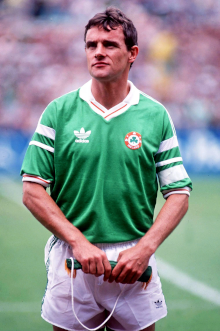
Birth of Kevin Moran, Gaelic & Association Footballer

Kevin Bernard Moran, Irish footballer who excels at the top levels of Gaelic and association football, is born in Dublin on April 29, 1956. In Gaelic football, he is known for his time at senior level with the Dublin county football team, winning two All-Ireland Senior Football Championships with them, and in association football for his career with Manchester United F.C. and the Republic of Ireland national football team. In 1985 he becomes the first man to be sent off in an FA Cup Final.

Moran grows up in Rialto, Dublin until his early teens, before he moves to the Long Mile Road in Walkinstown. While there, he attends James’s Street CBS and Drimnagh Castle Secondary School where Gaelic football is the dominant sport although association football proves to be the sport he plays on the streets while growing up. During the period in which he plays Gaelic football for Good Counsel GAA and association football for Rangers A.F.C., Bohemian F.C. and Pegasus A.F.C., he has divided loyalties between the two sports, as both sports are then played on Saturday.

In his native Ireland, Moran plays at senior level for the Dublin county football team. A former Dublin under-21 player, he is called up to the senior panel for the first time in 1976. He wins two All-Ireland Championship medals with Dublin in 1976 and 1977. In the 1976 final, he helps Dublin to defeat (by 3–8 to 0–10) Kerry, the winner over Dublin in the 1975 final, and again in the 1977 semi-final, aided by new tactics which manager Kevin Heffernan introduces, and which hinders Kerry’s tactic of pulling defenders forward and taking full advantage of the space behind the half-back line. The 1977 final results in a 5–12 to 3–6 victory over Armagh at Croke Park. He is awarded a GAA GPA All-Stars Award for his performance in the 1976 championship.

Moran is also part of the 1976–77 side that wins the National Football League for Dublin with a win over Derry in the final. He plays his club football for Dublin-based GAA club Good Counsel.

With Bohemian F.C. winning everything bar the FAI Cup in the 1974-75 League of Ireland season, 18-year-old Moran does not have an opportunity for much game time and only makes one League of Ireland appearance in the last game of the season on April 17, 1975. After Bohs he moves to University College Dublin A.F.C. where in December 1975 he wins the Collingwood Cup. In February 1976 he wins the Universities Championship when he scores the winner for the Irish Universities against their Scottish counterparts. He plays for Pegasus A.F.C. from 1976-78.

Moran is spotted by Billy Behan, a Manchester United F.C. scout, who reports to United manager Dave Sexton, and Moran signs for Manchester United in February 1978. He makes his senior debut on April 20, 1979, against Southampton F.C., and is a regular player in the first team by the time Ron Atkinson succeeds Sexton as manager in June 1981. Despite not being the tallest of defenders, he is known for his strong aerial ability and is a threat in the box from corners and set pieces. Playing as a centre-back, he wins FA Cup medals with the club in 1983 and 1985.

Moran is notable for being sent off in the 1985 FA Cup Final against Everton F.C., the first player ever to be sent off in an FA Cup final. TV cameras reveal that he had gone for the ball, and not for Peter Reid in the offending tackle. He is later presented with the winner’s medal that had at first been withheld.

After 10 years with United, Moran leaves Old Trafford as a 32-year-old in the summer of 1988, having played his final 18 months at the club under the management of Alex Ferguson. His first team opportunities are limited since the arrival of Steve Bruce in December 1987.

Moran transfers to Sporting Gijón, where he remains for two seasons, making 33 appearances without scoring. During his time at Sporting Gijón, he rooms with promising youngster and future Real Madrid CF and FC Barcelona star Luis Enrique.

In 1990, Moran returns to England to join Second Division Blackburn Rovers F.C. He is an automatic choice in the first team but endures a disappointing first season at Ewood Park as Rovers finishes 19th in the Second Division. The following season is a huge success, however, as playoff victory ends the club’s 26-year exile from the top division and secures their place in the new Premier League. He continues in his role as club captain as Rovers finishes fourth in 1992–93 and runners-up in 1993–94. He retires at the end of the 1993–94 season, one year before Rovers wins their first league title in 81 years. In both seasons preceding his retirement, Rovers are beaten to the title by his old club, Manchester United.

Moran makes his debut for the Republic of Ireland against Switzerland in 1980 and plays a key role in Ireland’s unsuccessful attempt to qualify for the 1982 FIFA World Cup finals in Spain. He plays 71 times for Ireland between 1980 and 1994, including UEFA Euro 1988 in Germany and the 1990 FIFA World Cup in Italy, and scores 6 goals. He is also a member of the Irish squad at the 1994 FIFA World Cup in the United States, despite being 38 years old and about to retire from playing completely but does not play due to an injury he picks up before the tournament starts.

After retiring from football, Moran makes a career in business. In 1994, he forms a football agency, Proactive Sports Management, with Paul Stretford and Jesper Olsen. His own clients include John O’Shea and Steve Finnan. He also works as a pundit on Irish television channel TV3.

Moran’s brother Ray is a knee specialist known as “Dr. Cruciate” and as a “surgeon to the stars,” with clients including rock star Jon Bon Jovi and numerous athletes (such as Bernard Brogan, Colm Cooper, Brendan Maher, Alan Quinlan and Josh van der Flier). Moran sits on the board of his brother’s Sports Surgery Clinic (SSC) in Santry, Dublin, which opens in 2007.


Leave a comment

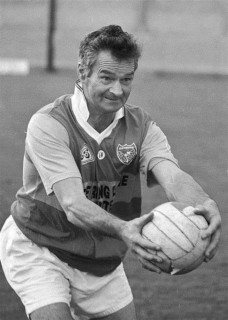
Birth of John O’Keeffe, Gaelic Footballer

John O’Keeffe, former Gaelic footballer, is born on April 15, 1951 in Tralee, County Kerry. He plays with the local Austin Stacks GAA sports club and is a member of the Kerry GAA senior inter-county team from 1969 until 1984. He is a highly talented midfielder, and one of the most stylish and accomplished full-backs in Gaelic football history. He later becomes the Ireland international rules football team manager.

O’Keeffe’s father, Frank (1923-2014), is also a Gaelic footballer who plays as a left corner-forward for the Kerry senior team.

O’Keeffe wins seven All-Ireland Senior Football Championship medals and twelve Munster Senior Club Football Championship medals. Other honours won include seven National Football League medals and eight GAA Interprovincial Championship (Railway Cup) medals between Munster GAA and Combined Universities GAA. He also wins a Munster Junior Championship medal in 1969.

O’Keeffe is among the leading recipients of GAA GPA All Stars Awards, with five awards from 1973, 1975, 1976, 1978, and 1979. He is also named the Texaco Footballer of the Year in 1975.

O’Keeffe retires reluctantly on medical advice after the 1984 Munster Final with a serious hip complaint, having played relatively few games in the previous eighteen months. He has hip replacement surgery some twenty years later. His last game for Kerry is in the full back position against Tipperary in the 1984 Munster Senior Club Football Championship semi-final. He always maintains that his most dangerous opponent is likely Dublin‘s Jimmy Keaveney, with whom he enjoys several battles. His performance against Offaly‘s Matt Connor in the 1982 All-Ireland final is all the more remarkable considering he has little or no training preparation owing to injury. He is consistently named as full back in various GAA players/managers best ever team selections, particularly in the years leading up to the GAA’s Centenary and beyond.

O’Keeffe is captain of the Austin Stacks team that wins the 1976 County Senior Football Championship. He also wins medals in 1973, 1974, 1979 and 1986 (following a brief comeback), as well as a Munster Club Championship in 1976 and an All-Ireland in 1977. He also wins a County Minor Hurling Championship with the club in 1967. He also captains the St. Brendan’s College, Killarney side to the school’s first Hogan Cup title in 1969.

With the University College Dublin GAA team, O’Keeffe wins a Dublin County Championship in 1974, and the Leinster Club Championships and All-Ireland Club Championships in 1973-74 and 1974-75. He also wins Sigerson Cup medals in 1973, 1974, and 1975.

O’Keeffe teaches history, Social, Personal and Health Education (SPHE), and Physical Education at Tralee Christian Brothers School before retiring after forty years in 2011.

In May 2020, the Irish Independent places O’Keeffe at number ten in its “Top 20 footballers in Ireland over the past 50 years.”


Leave a comment

Birth of Gaelic Footballer Mick O’Connell

Michael “Mick” O’Connell, retired Gaelic footballer, is born on Valentia Island, County Kerry, on January 4, 1937. His league and championship career with the Kerry senior team spans nineteen seasons from 1956 to 1974. He is widely regarded as one of the greatest players in the history of the game.

O’Connell is raised in a family that has no real link to Gaelic football. His father is a fisherman who also works on the family’s small farm on the island. From an early age O’Connell shows his footballing talent and “inimitable signs of excellence.” He excels at the game in his youth and also at Cahersiveen CBS.

O’Connell begins his club football career with neighbouring Waterville. When a football club, Valentia Young Islanders, is founded on Valentia Island, as per GAA rules he switches allegiance to his local parish team. He wins three Kerry Senior Football Championship medals with the South Kerry divisional side.

O’Connell’s career with Kerry begins in 1955 when he lines out in the Munster Minor Championship. Kerry loses the replayed Munster final to Tipperary.

O’Connell quickly joins the Kerry senior football team, making his debut in 1956 against Tipperary in the Munster Championship. He later lines out in the Munster final against Cork, but loses out in a replay. In 1958 he wins the first of eight consecutive Munster Senior Football Championship titles, however, Kerry suffers a shocking defeat by Derry in the All-Ireland semi-final. In 1959 he is captain when Kerry wins the National Football League. He later guides his native-county to another Munster title, however, he has to retire due to injury in Kerry’s All-Ireland victory over Galway.

Following a second National League victory in 1961, O’Connell captures his second All-Ireland medal in 1962 when Kerry defeats Roscommon in the final. A third National League victory quickly follows at the start of 1963. After two All-Ireland defeats by Galway in 1964 and 1965 Kerry surrenders their provincial crown to Cork in 1966 and 1967. He wins a ninth Munster title in 1968, however, Kerry loses out to Down in the All-Ireland final. This defeat is followed by a great year of success in 1969 as he adds a fourth National League medal to his collection before winning a tenth Munster title. He later wins a third All-Ireland medal following a victory over Offaly.

In 1970 O’Connell enters the third decade of his inter-county football career, winning an eleventh Munster title in the process. A fourth All-Ireland medal quickly follows after a victory over Meath in the first 80-minute All-Ireland final. He claims two more National league medals in 1971 and 1972, before winning his twelfth and final provincial medal in 1972. That year Offaly later defeats Kerry in O’Connell’s last All-Ireland final appearance. In spite of this loss he is still presented with an GAA GPA All Star award. He retires from inter-county football in 1973.

In 1972 O’Connell marries his wife Rosaleen. They have three children, Máire, Mícheál and Diarmuid. Mícheál marries Emma, daughter of then President of Ireland Mary McAleese in December 2009.

In retirement from playing O’Connell publishes his autobiography, A Kerry Footballer, in 1974. Ten years later in 1984, the GAA’s centenary year, his reputation as one of the all-time greats is recognised when he is named in the midfield position on the GAA Football Team of the Century. In 2000 he is also named on the associations Football Team of the Millennium.


Leave a comment

Birth of Colm O’Rourke, Footballer & Broadcaster

colm-orourke

Colm O’Rourke, sports broadcaster, columnist and former Gaelic footballer, is born on August 31, 1957. His league and championship career with the Meath GAA senior team spans twenty years from 1975 to 1995.

O’Rourke is born in Aughavas, County Leitrim, but is raised in Skryne, County Meath after his family moves there in his youth. He plays competitive Gaelic football during his schooling at St. Patrick’s Classical School in Navan. He first appears for the Skryne GFC at underage levels, before winning two county senior championship medals in 1992 and 1993. While studying at University College Dublin he wins a Sigerson Cup medal in 1979.

O’Rourke makes his debut on the inter-county scene when he is picked for the Meath minor team. He later joins the under-21 side but enjoys little success in these grades. He makes his senior debut during the 1975-1976 league. Over the course of the next twenty years he is a regular member of the starting fifteen and wins back-to-back All-Ireland medals in 1987 and 1988. He also wins five Leinster Senior Football Championship medals, three National Football League titles and is named Texaco Footballer of the Year in 1991. He plays his last game for Meath in July 1995.

In retirement from playing O’Rourke combines his teaching career with a new position as a sports broadcaster. His media career begins with RTÉ where he has worked as a studio analyst with the flagship programme The Sunday Game for over twenty-five years. He also writes a weekly column for the Sunday Independent.


Leave a comment

Birth of Gaelic Footballer Mikey Sheehy

mikey-sheehyMichael “Mikey” Sheehy, Gaelic football selector and former player, is born in Tralee, County Kerry on July 28, 1954. His league and championship career with the Kerry senior team spans fifteen seasons from 1973 to 1988. He is widely regarded as one of the greatest players in the history of the game.

Sheehy is born into a strong Gaelic football family. His father, Jim Sheehy, had played with the Laune Rangers club in his youth. Sheehy first plays competitive Gaelic football during his schooling at Tralee CBS. He first appears for the Austin Stacks club at underage levels, before winning an All-Ireland Senior Club Football Championship medal with the senior team in 1977. He also wins one Munster Senior Club Football Championship medal and five Kerry Senior Football Championship medals.

Sheehy makes his debut on the inter-county scene at the age of sixteen when he is picked on the Kerry minor team. He enjoys two championship seasons with the minors, however, he is a Munster Minor Football Championship runner-up on both occasions. He subsequently joins the Kerry under-21 team, winning two GAA Football Under-20 All-Ireland Championship medals in 1973 and 1975. By this stage he has also joined the Kerry senior team, making his debut during the 1973-1974 league. Over the course of the next fifteen seasons, he wins eight All-Ireland medals, beginning with a lone triumph in 1975, a record-equalling four championships in-a-row from 1978 to 1981 and three championships in-a-row from 1984 to 1986. He also wins eleven Munster medals, three National Football League medals and is named Texaco Footballer of the Year in 1979. He plays his last game for Kerry in July 1987.

After being chosen on the Munster inter-provincial team for the first time in 1976, Sheehy is an automatic choice on the starting fifteen for the following seven years. During that time he wins five Railway Cup medals.

In retirement from playing Sheehy becomes involved in team management and coaching. In 2012 he is appointed as a selector with the Kerry senior team. Since then he has helped steer the team to one All-Ireland title and four successive Munster titles.

Even during his playing days Sheehy comes to be recognised as one of the greatest players of all time. He is named in the right corner-forward position on the Football Team of the Century in 1984. He is one of only two players from the modern era to be named on that team. He switches to the left-corner forward position when he is named on the Football Team of the Millennium in 1999. He also wins seven All-Stars, while his tally of eight All-Ireland medals, albeit one as a non-playing substitute, is also a record which he shares with fellow Kerry players Páidí Ó Sé, Pat Spillane and Denis “Ógie” Moran. His scoring tally of 29-205 is a record which stands for 25 years.