seamus dubhghaill

Promoting Irish Culture and History from Little Rock, Arkansas, USA


Leave a comment

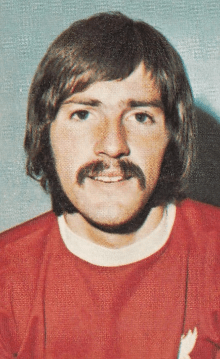
Birth of Steve Heighway, Irish Footballer

Stephen Derek Heighway, former Irish footballer who plays as a winger, is born in Dublin on November 25, 1947. He is part of the successful Liverpool F.C. team of the 1970s. Following his eleven-years with the club, he is ranked 23rd in the 100 Players Who Shook the Kop poll.

Heighway’s early education takes place in Sheffield, South Yorkshire, where he attends Ecclesall Junior School until 1959, followed by High Storrs School and latterly Moseley Hall Grammar School for Boys in Cheadle, near Stockport.

Heighway’s early promise as a winger is not spotted by professionals. Instead, he concentrates on his studies in economics and politics at the University of Warwick in Coventry achieving a 2:1.

In 1970, Heighway is studying for his final exams and playing for Skelmersdale United F.C. when he is spotted by Liverpool’s scouting system. With manager Bill Shankly keen to rebuild his ageing, underachieving team of the 1960s, Heighway is signed up swiftly in May of that year. It is due to his academic achievements that he gets his nickname “Big Bamber,” while teammate and fellow university graduate Brian Hall is dubbed “Little Bamber” – both after the television programme University Challenge host Bamber Gascoigne.

A strong and fast left winger with two good feet, Heighway settles into topflight football after making his debut on September 22, 1970, in a League Cup 2nd round replay at Anfield against Mansfield Town F.C. (3-2). He opens his goalscoring account in the 51st minute of a 2–0 home league win over Burnley F.C. on October 1, 1970.

A month later, Heighway scores against Merseyside rivals Everton F.C. in a hard-fought 3–2 win, after his team had found themselves down 2–0 early in the second half. He stays in the side for the rest of the season as Liverpool’s new charges finish the league campaign strongly and also defeat Everton in the semi-finals of the FA Cup to reach the final at Wembley Stadium.

Their opponents are Arsenal F.C., who are after a coveted “double” having won the Football League First Division championship. Heighway plays confidently in a match that is goalless after 90 minutes and therefore needs a period of extra-time. Just two minutes into the added half-hour, he receives the ball wide on his left flank from substitute Peter Thompson and starts a run toward the Arsenal penalty area, with Gunners full back Pat Rice tracking his run but unwilling to put in a tackle. With a swift turn outside, he gains a yard on Rice and hits a low drive into the net past Arsenal goalkeeper Bob Wilson, who had committed the cardinal goalkeeping sin of coming out too far from his near post to anticipate a cross, thereby leaving a gap that Heighway exploits. Sadly, for Heighway and Liverpool, their opponents scored two goals in response.

Heighway settles into the Liverpool team for the next decade, winning the first of four League titles in 1973, along with the UEFA Cup. He returns to Wembley for another FA Cup final a year later as Liverpool faces Newcastle United F.C. He scores again with 16 minutes remaining in the match to make the score 2–0, latching on to a flick from John Toshack after a long clearance from goalkeeper Ray Clemence to slot a right-footed shot into the far corner. The game ends 3–0.

By now, Heighway is a regular for the Republic of Ireland national football team, making his debut on September 23, 1970, against the Poland national football team. He remains so for the whole of the 1970s, winning a total of 34 caps but never managing to score. He does have a goal disallowed in a qualifier for the 1978 FIFA World Cup against the Bulgaria national football team in Sofia. On the domestic front, he attains another League and UEFA Cup double with Liverpool in 1976 and then forms part of the side which comes so close to the “treble” of League, FA Cup and European Cup.

Liverpool wins the League by a single point and again defeats rivals Everton in the semi-final to reach the FA Cup final, this time to face bitter rival Manchester United F.C. at Wembley. Liverpool loses 2–1 and the “treble” dream is dead.

Heighway scores his first goal of the 1977 European Cup in a 5–0 first round second leg win over Crusaders F.C. He then scores in a 3–0 second round win against Trabzonspor and in the 3–1 semi-final first leg win over FC Zürich. Liverpool beats Borussia Mönchengladbach 3–1 to win their first European Cup, with Heighway setting up both outfield goals for Terry McDermott, a defence-splitting pass, and Tommy Smith, a corner.

In 1978, Heighway is on the bench as Liverpool retains the European Cup with a 1–0 victory over Club Brugge KV at Wembley, coming on as a substitute for Jimmy Case. The following year he is again in the side frequently as Liverpool wins another League title, but from 1980 onward his opportunities in the side diminish.

Heighway stays for two more seasons, appearing only occasionally in the team and missing out on two more League title medals, another European Cup triumph and a first EFL Cup medal, which is successfully defended a year later. He leaves Anfield in 1982 after 444 matches and 76 goals.

Heighway then prolongs his career with a move to the United States, joining the Minnesota Kicks for the 1981 season. He plays 26 games, scoring four goals. He then joins the coaching staff of Umbro, which leads to a position with the Clearwater Chargers where he pioneers the role of director of coaching in the United States. In 1989 he is asked to rejoin Liverpool to run their youth academy, bringing promising youngsters up through the system until they were ready for the professional game. Among his successes are Steve McManaman, Robbie Fowler, Steven Gerrard, Jamie Carragher, Dominic Matteo, David Thompson and Michael Owen.

On September 4, 2006, a poll on Liverpool’s official web site names Heighway 23rd out of 100 Players Who Shook the Kop.

Heighway announces his retirement from Liverpool on April 26, 2007, immediately after the side he manages won the FA Youth Cup for the second year running. He comments, “I don’t know what the future holds just yet, we’ll have to wait and see.”

Heighway returns to working at Liverpool’s Academy part-time in 2015, at the request of Academy Director Alex Inglethorpe, before taking up a full-time consultancy role later that year. After seven years in this position, he retires for a second time in December 2022.

Heighway also features in the popular Liverpool chant, The Fields of Anfield Road, which is frequently sung by Liverpool fans during matches.

Leave a comment

Birth of Pete St. John, Irish Folk Singer-Songwriter

Peter Mooney, Irish folk singer-songwriter known professionally as Pete St. John, is born in Inchicore, Dublin on January 31, 1932. He is best known for composing “The Fields of Athenry.”

St. John is the eldest of six children born to Tommy and Lottie Mooney. He is educated at Scoil Muire Gan Smál and Synge Street CBS. He emigrates to Ontario, Canada in 1958 where he takes what labouring jobs he can find. Within six months he meets a woman named Gert Gorman who has an electrical contracting company in the United States. She and her husband sponsor him to move to Washington, D.C., where he is able to work as an electrician. He marries his sweetheart, Susie Bourke, who is from a well-known Dublin theatrical family with links to both the Gaiety and the Olympia theatres. They have two sons, Kieron and Brian. He travels widely and becomes involved in the peace movement and the civil rights movement. He remains in the United States until 1970, returning to settle in Collins Avenue in north Dublin.

The Dublin city that St. John returns to is a changed place from the one he had grown up in and proves to be the spur that inspires his songwriting. He chooses “St. John” as his nom de plume, inspired by a middle name he had been given while at school when all the boys in his class were assigned saints’ names. In 1975, he is running a theatre in Petticoat Lane on Marlborough Street, and while fixing an alarm outside a window on the first floor, the ledge on which he is leaning gives way, resulting in a bad fall. He breaks his elbow and hip and spends six months in the hospital recuperating. It is during this time that he takes to songwriting in earnest.

St. John is an extrovert who loves people. He is a voracious reader with a particular interest in Irish history. His son Kieron recalls his father writing “The Rare Aul Times” during this recovery period and singing it to his family. The Dublin City Ramblers is the first band to cover the song, but it is Danny Doyle’s version that achieves a real breakthrough, spending eleven weeks in the Irish Singles Chart, reaching No. 1 in 1978.

In 1978, St. John writes “The Fields of Athenry,” a tale of a man exiled to Botany Bay for stealing food to feed his family during the Famine. It has been recorded by several artists, charting in the Irish Singles Chart on a number of occasions. A recording by Paddy Reilly, which is released in 1982, remains in the Irish charts for 72 weeks.

St. John pays close attention to the melding of lyric and melody and has particular form in writing memorable melodies that sound timeless, resonating deeply with listeners across all walks of life. His songs sometime express regret for the loss of old certainties, for example, the loss of Nelson’s Pillar and the Metropole Ballroom, two symbols of old Dublin, as progress makes a “city of my town.”

St. John describes his chosen craft with affection. “Songs are magic carpets. They can tell a story over and over again without boring the pants off the listener and maybe take us out of ourselves for a few moments of peaceful escapism. With easy to remember melody lines, the words can tell of times and events in our daily lives that are worth noting or remembering.”

St. John’s songbook consists of hundreds of compositions, including “The Ferryman,” “Waltzing on Borrowed Time” and “The Furey Man” and are recorded by over 2,500 artists. He is a founding member of the Irish Music Rights Organisation (IMRO) and is always generous and supportive of younger writers, some of whom he continues to mentor well into his 80s.

St. John is surprised and delighted at the affiliation that emerges between “The Fields of Athenry” and rugby and football sporting events. He is present in Croke Park in 2007 when Ireland beats England in the Six Nations, and where the song is sung three times over. It is a song often heard in Anfield in Liverpool, and at Glasgow Celtic games, and reverberates around the stadium at Chicago’s Soldier Field when Ireland beats the All Blacks on November 5, 2016.

St. John wins several awards, including the Irish Music Rights Organisation “Irish Songwriter of the Year.”

St. John lives life to the fullest, and while he suffers ill health in his later years with both diabetes and Parkinson’s disease, he never loses his zest for life. His son Kieron describes his father with affection as a man who had nine lives and lived them all to the fullest. He lives independently at home until his admission to Beaumont Hospital in Dublin. He dies peacefully there at the age of 90 on March 12, 2022. After his funeral, Paddy Reilly and Glen Hansard perform “The Fields of Athenry” at Beaumont House in Dublin as a tribute.


Leave a comment

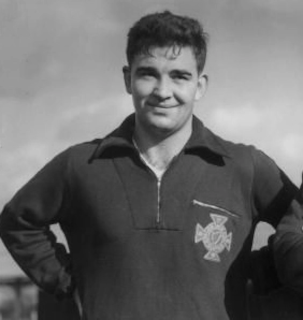
Birth of Jackie Blanchflower, Northern Irish Footballer

John “Jackie” Blanchflower, Northern Irish footballer, is born on March 7, 1933, in Belfast, Northern Ireland. He graduates from Manchester United‘s youth system and plays for the club on 117 occasions, winning two league titles, before his career is cut short due to injuries sustained in the Munich air disaster. He is also capped 12 times at senior level by Northern Ireland.

Blanchflower is the younger brother of Danny Blanchflower, the captain of the Tottenham Hotspur side that dominates English football in the early 1960s.

Blanchflower’s first appearance in a professional game is for Manchester United on November 24, 1951, against Liverpool, away at Anfield. He becomes a regular first team player in the 1953–54 season, when he plays in 27 out of 42 league games and scores 13 goals as an inside-forward.

Blanchflower helps the club win the league title in 1956 and again in 1957. Nicknamed “Twiggy” by his teammates, he is renowned for his versatility. He begins his career as a left-half before the emergence of Duncan Edwards in this position, at which time he switches to the forward positions. The Manchester United manager, Matt Busby, recognises his intelligent positioning sense and aerial power and chooses to play him at centre-half by the 1955–56 season, with John Doherty and Billy Whelan now competing for his former position. He faces fierce competition for the solitary centre-half place due to the presence of Mark Jones. He covers in goal in the 1957 FA Cup Final while Ray Wood receives treatment for an injury suffered in a collision with Peter McParland, who scores both of Aston Villa‘s goals as United loses 2–1. Blanchflower also plays in some of United’s first European Cup fixtures.

Blanchflower scores 27 goals during his time with Manchester United, most of them during his time as a forward.

On February 6, 1958, the Manchester United team that had travelled to Belgrade for the second leg of a European cup tie have their chartered plane stop in Munich to refuel. Weather conditions cause the plane to crash when the pilot attempts to take-off from Munich airport and 23 of the 44 people on board are killed. Blanchflower is severely injured, suffering from a fractured pelvis and arms and legs, and crushed kidneys, and his right arm is nearly severed. He is in hospital for two months and, although not a Catholic, is read the last rites but survives.

Blanchflower tries to return to football, but never makes a full recovery. Doctors advise him not to return to football because of fears he would damage his kidney and, a year later, he retires from football. The Munich air disaster means that he had played his last game of football when still only 24 years old, having earned 12 caps for Northern Ireland, played well over 100 times for Manchester United and won two league championship medals.

Blanchflower marries his wife Jean in 1956 and eventually pursues studies in finance and begins a career as an accountant. He later becomes an after-dinner speaker and is a regular on the after-dinner circuits until his death from cancer on September 2, 1998. He is 65 years old, and just two weeks prior to his death he attended the Munich air disaster testimonial match at Old Trafford.

He is survived by his three children; Krista, Senior (born 1958), Laurie (born 1961) and Andrew (born 1963), as well as his wife, Jean, who dies in 2002 following a long illness.