King’s support of the Glorious Revolution in 1688 serves to advance his position. He becomes Bishop of Derry in 1691. His years as a bishop are marked by reform and the building of churches and glebe houses, and by the dispensing of charity. His political influence is considerable. He is always consulted on judicial appointments and at times seems to have an effective veto over candidates he considers unsuitable.
He is advanced to the position of Archbishop of Dublin in 1703, a post he holds until his death. He gives £1,000 for the founding of “Archbishop King’s Professorship of Divinity” at Trinity College in 1718. His influence declines after the appointment of Hugh Boulter as Archbishop of Armagh in 1724.
William King dies in May 1729. Much of his correspondence survives and provides a historic resource for the study of the Ireland of his time.
O’Hanlon spends several years in exile as an officer with the French army and is awarded the title of Count of the French Empire. He returns to Ireland around 1660, after the Restoration of King Charles II of England. After realizing there will be no restitution of his family’s lands, he takes to the hills around Slieve Gullion and becomes a notorious highwayman.
Although O’Hanlon is often compared to a real-life Robin Hood, the truth is more complex. Protestant landlords, militia officers, and even Anglican and Catholic priests work as informal members of the O’Hanlon gang, giving him information and scouting sites for him to rob. He also forces the landlords and merchants of northern Ireland to pay protection money. It is stated that the criminal activities of O’Hanlon are bringing in more money than the King’s revenue collectors.
In 1674 the colonial authorities in Dublin put a price on O’Hanlon’s head with posters advertising for his capture, dead or alive. The Anglo-Irish landowner Henry St. John, who had been granted the traditional lands of the O’Hanlon clan, receives O’Hanlon’s undying hatred when he begins evicting his clansmen in large numbers. St. John responds by waging a private war against the O’Hanlon Gang. The loss of his 19-year-old son while pursuing O’Hanlon only makes Henry St. John increasingly brutal toward anyone suspected of aiding Redmond O’Hanlon. On September 9, 1679, St. John is riding on his estate with a manservant and the Reverend Lawrence Power, the Church of Ireland Rector of Tandragee. A party of O’Hanlon’s associates ride into view and seize him, warning that he would be killed if a rescue is attempted. Then, a group of the family’s retainers ride into view and open fire on the kidnappers. As a result, Henry St. John receives two pistol balls in the forehead.
At the landlord’s funeral, an outraged Reverend Power denounces the outlaws and the landowners who do business with them. Outraged, James Butler, 1st Duke of Ormond, the Lord Deputy of Ireland, orders the assassination of O’Hanlon.
Count Redmond O’Hanlon is murdered in his sleep by his foster brother and close associate Art MacCall O’Hanlon at Eight Mile Bridge near Hilltown, County Down, on April 25, 1681. Art receives a full pardon and two hundred pounds from the Duke of Ormond for murdering his leader. William Lucas, the militia officer who had recruited Art and arranges the killing, receives a Lieutenant’s commission in the British Army.
As is the custom of the day, there are gruesome displays of his body parts including his head which is placed on a spike over Downpatrick jail. His remains are eventually removed to lie in a family plot in Conwal Parish Church cemetery in Letterkenny, County Donegal, where his parents had fled from Henry St. John. His bones, however, are not left to rest in peace there and his grave is constantly desecrated by the duke’s supporters. His remains are finally removed by his family and interred in his final secret resting place, somewhere within Lurgan Parish.
In 1824 the four eldest Brontë daughters are enrolled as pupils at the Clergy Daughters’ School at Cowan Bridge. The following year Maria and Elizabeth, the two eldest daughters, become ill, leave the school and ultimately die. Charlotte and sister Emily, understandably, are brought home. Charlotte ultimately uses the school as the basis for Lowood School in Jane Eyre.
In 1826 Patrick Brontë brings home a box of wooden soldiers for son Branwell. Charlotte, Emily, Branwell, and Ann, playing with the soldiers, conceive of and begin to write in great detail about an imaginary world which they call Angria.
In 1831 Charlotte becomes a pupil at the school at Roe Head in Mirfield, but she leaves school the following year to teach her sisters at home. She returns to Roe Head School in 1835 as a governess, leaving in 1838. The following year she accepts a position as governess in the Sidgewick family, but leaves after three months and returns to Haworth. In 1841 she becomes governess in the White family, but leaves, once again, after nine months.
Upon her return to Haworth the three sisters, led by Charlotte, decide to open their own school after the necessary preparations have been completed. In 1842 Charlotte and Emily go to Brussels to complete their studies. After a trip home to Haworth, Charlotte returns alone to Brussels, where she remains until 1844.
Upon her return home the sisters embark upon their project for founding a school, which proves to be an abject failure. Their advertisements do not elicit a single response from the public. The following year Charlotte discovers Emily’s poems and decides to publish a selection of the poems of all three sisters. The poems, written under the pseudonyms of Currer, Ellis and Acton Bell, are published in 1846. She also completes The Professor, which is rejected for publication. The following year, however, Charlotte’s Jane Eyre, Emily’s Wuthering Heights, and Ann’s Agnes Grey are all published, still under the Bell pseudonyms.
In 1848 Charlotte and Ann visit their publishers in London, and reveal the true identities of the “Bells.” In the same year Branwell Brontë, by now an alcoholic and a drug addict, dies, and Emily dies shortly thereafter. Ann dies the following year.
In 1849 Charlotte, visiting London, begins to move in literary circles, making the acquaintance, for example, of William Makepeace Thackeray. In 1850 she edits her sister’s various works, and meets Elizabeth Gaskell. In 1851 she visits The Great Exhibition in London, and attends a series of lectures given by Thackeray.
The Rev. Arthur Bell Nicholls, curate of Haworth since 1845, proposes marriage to Charlotte in 1852. Her father objects violently, and Charlotte, who, though she may have pitied him, is not in love with him and refuses the proposal. Nicholls leaves Haworth in the following year, the same in which Charlotte’s Villette is published. By 1854, however, her father’s opposition to the proposed marriage has weakened, and Charlotte and Nicholls become engaged. Nicholls returns as curate at Haworth and they are married, though it seems clear that Charlotte, though she admires him, still does not love him.
Charlotte becomes pregnant soon after her wedding, but her health declines rapidly. She dies at the age of 38, with her unborn child, on March 31, 1855, three weeks before her 39th birthday, at Haworth, West Yorkshire, England. Her death certificate gives the cause of death as tuberculosis, but biographers including Claire Harman suggest that she died from dehydration and malnourishment due to vomiting caused by severe morning sickness.
The Professor is published postumously in 1857, having been written in 1845-1846. In that same year, Elizabeth Gaskell’s Life of Charlotte Brontë is published.
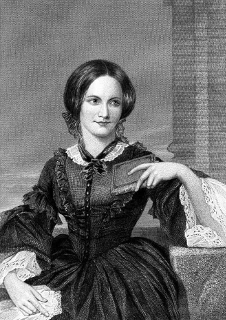
(Pictured: An idealised posthumous portrait by Duyckinick, 1873, based on a drawing by George Richmond)
Atherton is born in 1598 in Somerset, England. He studies at Oxford University and joins the ranks of the Anglican clergy. In 1634 he becomes Bishop of Waterford and Lismore in the Church of Ireland. In 1640 he is accused of buggery with a man, John Childe, his steward and titheproctor. They are tried under a law that Atherton himself had helped to institute. They are both condemned to death, and Atherton is executed in St. Stephen’s Green, Dublin. Reportedly, he confesses to the crime immediately before his execution, although he had proclaimed his innocence before that.
More recently, some historical evidence has been developed that shows Atherton might have been a victim of a conspiracy to discredit him and his patrons. This is attributable to Atherton’s status as an astute lawyer, who seeks to recover lost land for the relatively weak Protestant Church of Ireland during the 1630s. Unfortunately for Atherton, this alienates him from large landowners, who then allegedly use his sexuality to discredit him.
English Puritan, Congregationalist and Independent activists, as well as English and Scottish Presbyterian activists, contemporaneously campaign to abolish Episcopacy (bishops) within the embattled Church of England, Church of Scotland and Church of Ireland, notionally expediting the political interest in Atherton’s downfall.
Posthumous accusations of sexual wrongdoing also include allegations of “incest” with his sister-in-law, and infanticide of the resultant child, as well as zoophilia with cattle. However, these allegations begin to be circulated several months after his death in an anonymous pamphlet, and may have been intended to further discredit the bishop’s campaign to restore the finances of the Church of Ireland.
(Pictured: Anonymous pamphlet of the hangings of John Atherton and John Childe, 1641)
Lewis is born in Belfast on November 29, 1898. When he is seven, his family moves into “Little Lea,” the family home of his childhood, in the Strandtown area of East Belfast. He was schooled by private tutors until age 9, when his mother dies from cancer. His father then sends him to live and study at Wynyard School in Watford, Hertfordshire. The school closes soon afterwards due to a lack of pupils. He then attends Campbell College in the east of Belfast about a mile from his home, but leaves after a few months due to respiratory problems. He is then sent to the health-resort town of Malvern, Worcestershire, where he attends the preparatory school Cherbourg House. It is during this time that Lewis abandons his childhood Christian faith and becomes an atheist. In September 1913, he enrolls at Malvern College, where he remains until the following June. After leaving Malvern, he studies privately with William T. Kirkpatrick, his father’s old tutor and former headmaster of Lurgan College.
Lewis and fellow novelist J.R.R. Tolkien are close friends. They both serve on the English faculty at Oxford University, and are active in the informal Oxford literary group known as the Inklings. According to Lewis’s memoir Surprised by Joy, he is baptised in the Church of Ireland, but fell away from his faith during adolescence. He returns to Anglicanism at the age of 32, owing to the influence of Tolkien and other friends, and he becomes an “ordinary layman of the Church of England.” His faith profoundly affects his work, and his wartime radio broadcasts on the subject of Christianity bring him wide acclaim.
Lewis writes more than 30 books, which have been translated into more than 30 languages and have sold millions of copies. The books that make up The Chronicles of Narnia have sold the most and have been popularised on stage, TV, radio, and cinema. His philosophical writings are widely cited by Christian apologetics from many denominations.
In early June 1961, Lewis begins suffering from nephritis, which results in blood poisoning. His illness causes him to miss the autumn term at Cambridge, though his health gradually begins improving in 1962 and he returns that April. His health continues to improve and he is fully himself by early 1963. On July 15 of that year he falls ill and is admitted to hospital. At 5:00 PM the following day he suffers a heart attack and lapses into a coma, unexpectedly awaking the following afternoon. After he is discharged from the hospital he is too ill to return to work. As a result, he resigns from his post at Cambridge in August. His condition continues to decline, and in mid-November he is diagnosed with end-stage renal failure. On November 22, exactly one week before his 65th birthday, he collapses in his bedroom at 5:30 PM and dies a few minutes later. He is buried in the churchyard of Holy Trinity Church, Headington, Oxford.
Media coverage of Lewis’s death is almost completely overshadowed by news of the assassination of U.S. President John F. Kennedy, which occurs on the same day approximately 55 minutes following Lewis’s collapse, as does the death of English writer Aldous Huxley, author of Brave New World.
In 2013, on the 50th anniversary of his death, Lewis is honoured with a memorial in Poets’ Corner in Westminster Abbey. His works enter the public domain in 2014 in countries where copyright expires 50 years after the death of the creator, such as Canada.




 seamus dubhghaill