
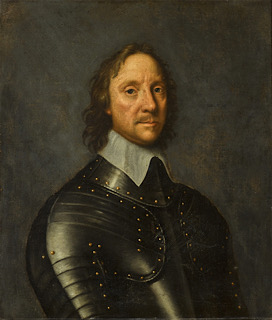
Oliver Cromwell, English statesman, farmer and soldier, sets sail from Milford Haven, Pembrokeshire, Wales, on August 13, 1649, with a fleet of about 35 ships, accompanied by a second and third flotilla that arrives days later. The invasion marks the beginning of the Cromwellian conquest of Ireland, a brutal four-year campaign (1649–1653) that reshapes the island’s political and demographic landscape.
By 1649, England is in the midst of the English Civil War. The execution of King Charles I in January leaves the Commonwealth of England under Cromwell’s leadership. Ireland, already embroiled in the Irish Confederate Wars, has become a battleground between Irish Catholic Confederates allied with the exiled Charles II, Royalist forces under James Butler, Earl of Ormonde, and Parliamentarian forces led by Cromwell and his son-in-law Henry Ireton.
Cromwell’s landing at Dublin is swift but not without hardship—seasickness plagues him during the voyage. He lands with around 9,000–20,000 troops, stores, and £20,000 in cash. His early actions include the Siege of Drogheda (September 10, 1649) where, following a prolonged cannonade, his forces breach the town’s defenses. On September 11, the entire garrison—about 8,000 men, including English troops, Irish soldiers, and civilians—is massacred, including commander Sir Arthur Aston. Early actions also include the Sack of Wexford (October 1649). Despite Cromwell’s public justification for the slaughter, Wexford’s garrison and civilians are killed in a similar manner.
Over the next four years, Cromwell’s forces defeat the Irish Confederacy by late 1650, engage in widespread plunder, executions, and displacement of Catholic populations, confiscate large tracts of Catholic land for Protestant settlers under the Cromwellian Plantation, and introduce the Act for the Settlement of Ireland 1652, barring Catholics from most public offices and redistributing land.
Modern estimates suggest 15–40% of Ireland’s pre-1641 population perishes due to warfare, famine, and disease. The campaign entrenches Protestant dominance in Ireland and leaves deep scars in Irish memory.
Cromwell’s invasion is remembered in Ireland as a symbol of English conquest and sectarian violence. While some historians argue his actions are within contemporary military norms, many see them as part of a broader pattern of colonial subjugation. The detailed land surveys he orders—mapping every parish and barony—become a tool for land redistribution, shaping Ireland’s political and economic structure for centuries.
In short, August 13, 1649, is the start of a campaign that not only ends Irish Catholic political power but also alters the island’s demographic and cultural fabric for generations.

