seamus dubhghaill

Promoting Irish Culture and History from Little Rock, Arkansas, USA


Leave a comment

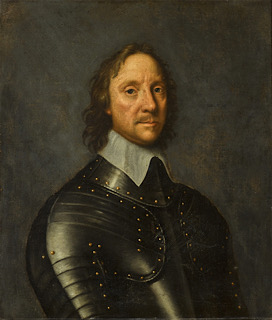
Oliver Cromwell Sets Sail for Ireland

Oliver Cromwell, English statesman, farmer and soldier, sets sail from Milford Haven, Pembrokeshire, Wales, on August 13, 1649, with a fleet of about 35 ships, accompanied by a second and third flotilla that arrives days later. The invasion marks the beginning of the Cromwellian conquest of Ireland, a brutal four-year campaign (1649–1653) that reshapes the island’s political and demographic landscape.

By 1649, England is in the midst of the English Civil War. The execution of King Charles I in January leaves the Commonwealth of England under Cromwell’s leadership. Ireland, already embroiled in the Irish Confederate Wars, has become a battleground between Irish Catholic Confederates allied with the exiled Charles II, Royalist forces under James Butler, Earl of Ormonde, and  Parliamentarian forces led by Cromwell and his son-in-law Henry Ireton.

Cromwell’s landing at Dublin is swift but not without hardship—seasickness plagues him during the voyage. He lands with around 9,000–20,000 troops, stores, and £20,000 in cash. His early actions include the Siege of Drogheda (September 10, 1649) where, following a prolonged cannonade, his forces breach the town’s defenses. On September 11, the entire garrison—about 8,000 men, including English troops, Irish soldiers, and civilians—is massacred, including commander Sir Arthur Aston. Early actions also include the Sack of Wexford (October 1649). Despite Cromwell’s public justification for the slaughter, Wexford’s garrison and civilians are killed in a similar manner.

Over the next four years, Cromwell’s forces defeat the Irish Confederacy by late 1650, engage in widespread plunder, executions, and displacement of Catholic populations, confiscate large tracts of Catholic land for Protestant settlers under the Cromwellian Plantation, and introduce the Act for the Settlement of Ireland 1652, barring Catholics from most public offices and redistributing land.

Modern estimates suggest 15–40% of Ireland’s pre-1641 population perishes due to warfare, famine, and disease. The campaign entrenches Protestant dominance in Ireland and leaves deep scars in Irish memory.

Cromwell’s invasion is remembered in Ireland as a symbol of English conquest and sectarian violence. While some historians argue his actions are within contemporary military norms, many see them as part of a broader pattern of colonial subjugation. The detailed land surveys he orders—mapping every parish and barony—become a tool for land redistribution, shaping Ireland’s political and economic structure for centuries.

In short, August 13, 1649, is the start of a campaign that not only ends Irish Catholic political power but also alters the island’s demographic and cultural fabric for generations.

Leave a comment

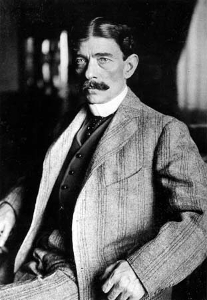
Birth of Frank Harris, Journalist & Novelist

frank-harris

Frank Harris, Irish American editor, novelist, short story writer, journalist and publisher, is born James Thomas Harris to Welsh parents in Galway, County Galway on February 14, 1855. He is friendly with many well-known figures of his day.

Harris’s father, Thomas Vernon Harris, is a naval officer from Fishguard, Pembrokeshire, Wales. While living with his older brother he is, for a year or more, a pupil at The Royal School, Armagh. At the age of twelve he is sent to Wales to continue his education as a boarder at the Ruabon Grammar School in Denbighshire, a time he is to remember later in My Life and Loves. He is unhappy at the school and runs away within a year.

Harris runs away to the United States in late 1869, arriving in New York City virtually penniless. The 13-year-old takes a series of odd jobs to support himself, working first as a shoeshiner, a porter, a general laborer, and a construction worker on the erection of the Brooklyn Bridge. He later turns these early occupational experiences into art, incorporating tales from them into his book The Bomb (1908).

From New York Harris moves to Chicago, where he takes a job as a hotel clerk and eventually a manager. Owing to Chicago’s central place in the meat packing industry, he makes the acquaintance of various cattlemen, who inspire him to leave the big city to take up work as a cowboy. He eventually grows tired of life in the cattle industry and enrolls at the University of Kansas, where he studies law and earns a degree, gaining admission to the Kansas Bar Association.

Harris is not cut out to be a lawyer and soon decides to turn his attention to literature. He returns to England in 1882, later traveling to various cities in Germany, Austria, France, and Greece on his literary quest. He works briefly as an American newspaper correspondent before settling down in England to seriously pursue the vocation of journalism.

Harris first comes to general notice as the editor of a series of London papers including The Evening News, The Fortnightly Review and the Saturday Review, the latter being the high point of his journalistic career, with H. G. Wells and George Bernard Shaw as regular contributors.

From 1908 to 1914 Harris concentrates on working as a novelist, authoring a series of popular books such as The Bomb, The Man Shakespeare, and The Yellow Ticket and Other Stories. With the advent of World War I in the summer of 1914, he decides to return to the United States.

From 1916 to 1922 Harris edits the U.S. edition of Pearson’s Magazine, a popular monthly which combines short story fiction with socialist-tinted features on contemporary news topics. One issue of the publication is banned from the mails by United States Postmaster General Albert S. Burleson during the period of American participation in World War I. Despite this Harris manages to navigate the delicate situation which faces the left-wing press and keeps Pearson’s Magazine functioning and solvent during the war years.

Harris becomes an American citizen in April 1921. In 1922 he travels to Berlin to publish his best-known work, his four-volume autobiography My Life and Loves (1922–1927). It is notorious for its graphic descriptions of his purported sexual encounters and for its exaggeration of the scope of his adventures and his role in history. A fifth volume, supposedly taken from his notes but of doubtful provenance, is published in 1954, long after his death.

Harris also writes short stories and novels, two books on William Shakespeare, a series of biographical sketches in five volumes under the title Contemporary Portraits and biographies of his friends Oscar Wilde and George Bernard Shaw. His attempts as a playwright are less successful. Only Mr. and Mrs. Daventry (1900), which is based on an idea by Oscar Wilde, is produced on the stage.

Married three times, Harris dies of a heart attack in Nice, France on August 26, 1931. He is buried at Cimetière Sainte-Marguerite, adjacent to the Cimetière Caucade, in Nice. Just after his death a biography written by Hugh Kingsmill (pseudonym of Hugh Kingsmill Lunn) is published.


Leave a comment

John de Wogan Ceases to be Justiciar of Ireland

picton-castle

Sir John de Wogan, Cambro-Norman judge styled lord of Picton, ceases to be Justiciar of Ireland on August 6, 1312 although remaining nominally justiciar until April 1313. He serves as Justiciar of Ireland from 1295 to 1313.

There are several dubious theories about Wogan’s ancestry, and uncertainty exists about his wives, sons, and other relations. He comes from Picton Castle in Pembrokeshire and is a vassal of William de Valence, 1st Earl of Pembroke. He comes to have lands in Pembrokeshire, Somerset, Dorset, Devon, Wiltshire, and Oxfordshire. He represents de Valence at an Irish court case in 1275, and in 1280 he is steward of Wexford, Valence’s Irish liberty. He is an eyre in England from 1281 to 1284, and returns to Ireland in 1285. In 1290 he is a referee with Hugh de Cressingham in a dispute between Queen Eleanor and de Valence and his wife.

In December 1295 Wogan takes office as justiciar and organises a two-year truce between the feuding Burkes and Geraldines. In 1296 he organises a force with Richard Óg de Burgh, 2nd Earl of Ulster, Theobald Butler, and John FitzGerald, 1st Earl of Kildare, to assist Edward I in the First War of Scottish Independence. The king entertains them at Roxburgh Castle in May. After his return to Ireland, Wogan “kept everything so quiet that we hear of no trouble in a great while.” The Parliament of Ireland he summons in 1297 is for long compared to the English “Model Parliament” of 1295, though historical opinion now places less importance on it.

In February 1308, under orders from the new king Edward II, Wogan suppresses the Knights Templar in Ireland. In June 1308 his forces are defeated by the O’Tooles and O’Byrnes, who are harrying The Pale from the Wicklow Mountains. From September 1308 to May 1309 Piers Gaveston, 1st Earl of Cornwall is in Ireland as “king’s lieutenant,” a new position outranking the justiciar, and he has more success against the Gaels. Wogan leaves Ireland in August 1312 although remaining nominally justiciar until April 1313.

Either the same John Wogan or his son of the same name returns to Ireland in 1316 as advisor to Roger Mortimer, 1st Earl of March, who counters Edward Bruce‘s invasion of Ireland.

John de Wogan dies in 1321 and is buried in St. David’s Cathedral, initially in a chapel he had endowed, later in Edward Vaughan‘s chapel.