seamus dubhghaill

Promoting Irish Culture and History from Little Rock, Arkansas, USA


Leave a comment

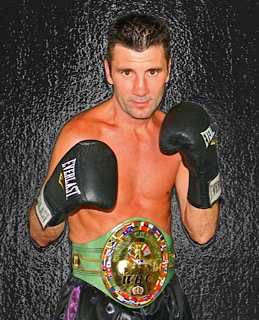
Birth of Wayne McCullough, Northern Irish Professional Boxer

Wayne William McCullough, former professional boxer, is born on July 7, 1970, in Belfast, Northern Ireland.

McCullough grows up in the Shankill Road area of Belfast, a community impacted by the Troubles. He begins boxing as a teenager and quickly achieves prominence in the amateur circuit. He carries the Irish flag at the 1988 Summer Olympics in Seoul, South Korea, at the age of 18 and earns a silver medal at the 1992 Summer Olympics in Barcelona, Spain, in the bantamweight division. Representing Northern Ireland, he also wins a gold medal at the 1990 Commonwealth Games in Auckland, New Zealand, and a bronze at the 1990 World Cup in Mumbai, India. Throughout his amateur career, he achieves 319 wins with 11 losses, with over 100 knockouts.

McCullough turns professional in 1993, moving to Las Vegas, Nevada, to train under legendary coach Eddie Futch. Less than 2½ years after his debut, he captures the WBC bantamweight title on July 30, 1995, by defeating Yasuei Yakushiji in Japan, becoming the first Irish or UK boxer to win a world title there. He successfully defends the WBC belt twice before moving up in weight. He challenges for championships in super bantamweight and featherweight, including notable bouts against Daniel Zaragoza, Naseem Hamed, Erik Morales, and Oscar Larios. He is renowned for his relentless attacking style and exceptional durability, never being knocked down in his professional career.

McCullough’s career record consists of 34 professional bouts with 27 wins (18 by knockout) and 7 losses. He retires after a bout against Juan Ruiz in June 2008 due to injury, ending a career spanning 15 years.

McCullough marries Cheryl Rennie in 1993, and they have a daughter, Wynona, pursuing a career in entertainment. During his career, he faces mental health challenges, including depression and suicidal thoughts, which he overcomes with the support of his family and faith. He becomes a United States citizen in 2005.

After retiring, McCullough becomes a trainer for amateur and professional fighters and works to promote goodwill in sports as WBC World Ambassador for Peace. He is also involved in mixed martial arts public relations and founds his charity initiative, IHOW. He publishes his autobiography, Pocket Rocket: Don’t Quit, in 2005. In 2019, he is inducted into the Nevada Boxing Hall of Fame for his contributions to the sport.

McCullough’s courage, low knockdown susceptibility, and international successes have cemented him as a revered figure in boxing, both in Ireland and globally. His story is one of triumph, resilience, and overcoming personal and professional adversity.

Leave a comment

Irish Government Announces New Zealand Embassy

The Irish Government confirms on October 24, 2017, that it plans to open an embassy in New Zealand. The announcement comes as President Michael D. Higgins meets Governor-General Patsy Reddy on the first day of his State visit to New Zealand.

The new Embassy in New Zealand brings to six the number of new Embassies or Consulates announced by the Government in the recent weeks. The new Missions announced on Budget Day are an Embassy in Santiago, Chile; an Embassy in Bogotá, Colombia; an Embassy in Amman, Jordan; a Consulate General in Vancouver, Canada; and a Consulate General in Mumbai, India.

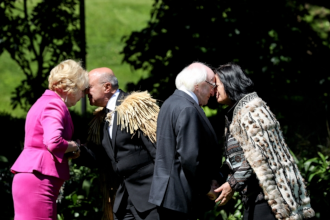
The President along with his wife Sabina Higgins meet with Governor-General Reddy and Sir David Gascoigne on the first day of their State visit to New Zealand.

According to a statement released by the President’s office, “the decision to establish an embassy reflects an exceptionally close partnership between Ireland and New Zealand in international affairs, including at the United Nations.” New Zealand also announces plans to open an embassy in Ireland.

Diplomatic relations between Ireland and New Zealand are established in 1965. Ireland’s Ambassador to Australia is also accredited to New Zealand. Niamh McMahon serves as Ireland’s Honorary Consul in Auckland, New Zealand.

The President visits Wellington, Christchurch, Auckland and Waitangi while in New Zealand, a country in which there are almost 14,000 Irish born people and one in six people claim Irish heritage.

President Higgins also meets with the prime minister-elect of New Zealand, Jacinda Ardern, who becomes the third woman to lead a government in her country.

(Pictured: President Michael D. Higgins and Sabina Higgins receive a traditional Maori welcome from Governor-General of New Zealand Dame Patsy Reddy and Sir David Gascoigne, Government House, Wellington)


Leave a comment

Birth of William Massey, New Zealand Prime Minister

william-ferguson-massey

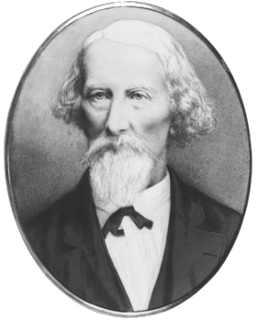
William Ferguson Massey, New Zealand statesman, Prime Minister from 1912 to 1925, and founder of the Reform Party, is born in Limavady, County Derry in what is now Northern Ireland on March 26, 1856. He is a lifelong spokesman for agrarian interests and opponent of left-wing movements. His Reform Party ministries include leadership of the country during World War I.

The Massey family arrives in New Zealand on October 21, 1862, on board the Indian Empire as Nonconformist settlers, although William remains in Ireland for an additional eight years to complete his education. After arriving on December 10, 1870, on the City of Auckland, he works as a farmhand for some years before acquiring his own farm in Mangere, south Auckland, in 1876.

While managing his own farm, Massey assumes leadership in farmers’ organizations. He enters Parliament in 1894 as a conservative and from 1894 to 1912 is a leader of the conservative opposition to the Liberal ministries. He becomes prime minister in 1912 and promptly signs legislation enabling freeholders to buy their land at its original value. The first years of his ministry see labour strikes by miners in Waihi in 1912 and wharf workers in Wellington in 1913. His harsh repression of them give impetus to the formation of the Labour Party in 1916. He also improves federal administration by putting civil service positions under a nonpolitical commission.

A coalition with the Liberal Party led by Sir Joseph Ward enables Massey to continue his ministry in 1915. He participates in the Imperial War Cabinet (1917–18) and signs the Treaty of Versailles at the Paris Peace Conference of 1919, making New Zealand a founding member of the League of Nations. He opposes separate sovereign status for dominions within the British Commonwealth.

Following the war, farmers are troubled by depressed prices resulting from the sharply reduced British demand for their products, and they also face inflation in land prices, aggravated by increased demand for land by returning servicemen. Massey responds to these problems by establishing the Meat Control Board (1922) and the Dairy Export Control Board (1923), but rural and urban unrest resulting from rising prices continue to mount in the final years of his ministry.

In 1924 cancer forced Massey to relinquish many of his official duties, and he dies on May 10, 1925, at Wellington, New Zealand. The Massey Memorial is erected as his mausoleum in Wellington, paid for mostly by public subscription. Massey University is named after him, the name chosen because the university had a focus on agricultural science, matching Massey’s own farming background.


Leave a comment

Birth of New Zealand Settler Frederick Edward Maning

frederick-edward-maning

Frederick Edward Maning, a notable early settler in New Zealand and writer and judge of the Native Land Court, is born in Johnville, County Dublin on July 5, 1812.

Maning is the eldest son of moderately wealthy, Protestant Anglo-Irish parents. His father, Frederick Maning, emigrates to Van Diemen’s Land in 1824 with his wife and three sons to take up farming. Young Maning becomes a skilled outdoorsman and builds up the physical strength to match his six-foot, three-inch stature. In 1829, his father becomes a customs officer in Hobart and moves there with his family. By 1832, Frederick leaves home to manage a remote outpost in the north of Tasmania. Soon after, he decides to pursue his fortune in New Zealand.

Maning arrives in the Hokianga area on June 30, 1833, and lives among the Ngāpuhi Māori people. With his physical skills and great stature, as well as his considerable good humor, he quickly gains favour with the tribe. He becomes known as a Pākehā Māori (a European turned native) and his arrival in New Zealand is the subject of the first chapters of his book Old New Zealand.

In 1837, he sells his property and returns to Hobart. He returns to Hokianga in March 1839 and in September purchases 200 acres for a farm at Onoke. He builds a house there that is standing until destroyed by fire in 2004. He takes a Māori wife, Moengoroa, and they have four children.

In 1840, Maning acts as a translator at meetings about the Treaty of Waitangi, and he advises the local Māori to not sign. His vocal opposition to the Treaty is primarily because he has settled with the Māori precisely to escape from the restrictions of European civilisation. He fears that the introduction of European style law will put a damper on his lifestyle and on his entrepreneurial trading activities. He warns the Māori that European colonisation will degrade them. Governor William Hobson counters by telling the Māori that without British Law, lawless self-interested Europeans without any regard for Māori rights will soon take all their land. Maning’s book Old New Zealand is, in part, a lament for the lost freedom enjoyed before European rule.

In 1845–1846, during the Māori Wars, Maning sometimes uses his influence with the Māori to intercede on behalf of settlers. He also organises supplies to the government’s Māori supporters. However, he writes his second book, History of the War in the North of New Zealand against the Chief Heke, from the perspective of an imaginary supporter of Hōne Heke, who is one of the principal antagonists opposing the government.

Through the 1850s, Maning primarily occupies himself with timber and gum trade. In the early 1860s, he retires from business activities. In 1865, he enters the public service as a judge of the Native Land Court, where his unequalled knowledge of the Māori language, customs, traditions and prejudices are of solid value.

Maning retires in 1876 although he helps conduct a major land court hearing at Taupo in 1881. He becomes estranged from his children in his later years. In November 1882, he goes to London for an operation, however, he dies there on July 25, 1883, of cancer. At his wish, his body is taken back to New Zealand and buried in December 1883, in the Symonds Street Cemetery in Auckland.

Maning is chiefly remembered as the author of two short books, Old New Zealand and History of the War in the North of New Zealand against the Chief Heke. Both books have been reprinted many times and have become classics of New Zealand literature.