Burgh is the son of Ignatius Hussey of Donore House, near Naas, and his wife Elizabeth Burgh. Elizabeth is the daughter of the leading statesman and architect Colonel Thomas de Burgh, who designs some of the most notable Irish buildings of his era, including Trinity College Library. Walter adopts the surname Burgh as a condition for inheriting the Burgh estate at Drumkeen, County Limerick, from his uncle Richard Burgh.
Burgh is educated at Mr. Young’s school at Abbey Street in Dublin, and then at the University of Dublin, where he graduates Bachelor of Arts in 1762. He is an accomplished classical scholar and has some reputation a poet. After studying at the Temple, he is called to the Bar in 1769 and within a few years becomes one of its leaders. He enters the Irish House of Commons in the same year, sitting first for Athy, later for the University of Dublin.
In Parliament he is a close associate of Henry Grattan and a supporter of his “free trade” programme. He becomes legendary for his oratory in support of the Irish Patriot Party. At the same time he prides himself on his independence of mind, preferring not to pledge support for any particular policy until he has examined its merits. He acquires as his patron Philip Tisdall, the immensely influential Attorney-General for Ireland, who calls him “the most promising of the rising young men.” At Tisdall’s request Burgh is appointed Prime Serjeant in 1776. He resigns the office in 1779, in protest at the continuing restrictions on free trade, after making the celebrated “England has sown her laws as dragon’s teeth” speech. After the removal of the restrictions, he agrees to accept office again and is re-appointed Prime Serjeant in 1782. A month later he is appointed Chief Baron of the Irish Exchequer, but he dies the following year at the assizes in Armagh, reportedly from gaol fever.
Daniel O’Connell, Irish political leader often referred to as The Liberator or The Emancipator, is born on August 6, 1775, at Carhan near Cahersiveen, County Kerry, to the O’Connells of Derrynane, a once-wealthy Roman Catholic family, that has been dispossessed of its lands.
Raised by his uncle, Daniel learns the Irish language and Irish lore in Kerry. O’Connell does part of his schooling in France during the revolution. On May 19, 1798, O’Connell is called to the Irish Bar and becomes a barrister. Four days later, the United Irishmen stage their rebellion which is put down by the British with great bloodshed. O’Connell does not support the rebellion. He believes that the Irish need to assert themselves politically rather than by force. The violent excesses he witnesses in France, the slaughter of the 1798 Rising, and finally his own killing of a man in a duel in 1815 leads him to renounce violence forever.
Moving into politics, O’Connell founds the Catholic Association in 1823, creating one of the first massive political movements in Europe or the Americas. The Catholic Association embraces other aims to better Irish Catholics, such as electoral reform, reform of the Church of Ireland, tenants’ rights, and economic development.
When he is elected to Parliament in 1828, he is unable to take his seat as members of parliament have to take the Oath of Supremacy, which is incompatible with Catholicism. Fear of the reaction of his millions of followers leads to the passage of the Roman Catholic Relief Act 1829. O’Connell works for Home Rule for Ireland for the rest of his days but never achieves it. The British ban his mass Repeal of the Union rallies in 1843 and jail him for a time. The movement loses momentum at that point and the long years of hard work wear “The Liberator” down.
O’Connell dies at the age of 71 of cerebral softening on May15, 1847, in Genoa, Italy, while on a pilgrimage to Rome. His time in prison seriously weakens him and the appallingly cold weather he has to endure on his journey is likely the final blow. According to his dying wish, his heart is buried in Rome at Sant’Agata dei Goti, then the chapel of the Irish College, and the remainder of his body in Glasnevin Cemetery in Dublin, beneath a round tower.
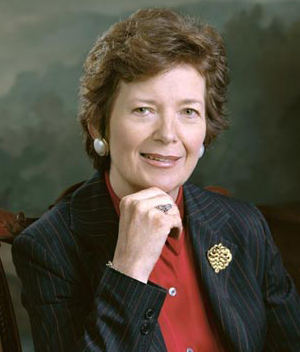
Robinson first rises to prominence as an academic, barrister, campaigner, and member of the Irish Senate (1969–1989). Running as an Independent candidate nominated by the Labour Party, the Workers’ Party, and independent senators, Robinson defeats Fianna Fáil‘s Brian Lenihan and Fine Gael‘s Austin Currie in the 1990 presidential election becoming the first elected president in the office’s history not to have had the support of Fianna Fáil.
Robinson is widely regarded as a transformative figure for Ireland, and for the Irish presidency, revitalising and liberalising a previously conservative, low-profile political office. She resigns the presidency two months before the end of her term in office in order to take up her post in the United Nations. During her UN tenure, she visits Tibet in 1998, the first High Commissioner to do so. She criticises Ireland’s immigrant policy and criticises the use of capital punishment in the United States. She extends her intended single four-year term by a year to preside over the World Conference against Racism 2001 in Durban, South Africa. The conference proves controversial, and under continuing pressure from the United States, Robinson resigns her post in September 2002.
After leaving the UN in 2002, Robinson forms Realizing Rights: The Ethical Globalization Initiative, which comes to a planned end at the end of 2010. Its core activities are fostering equitable trade and decent work, promoting the right to health and more humane migration policies, and working to strengthen women’s leadership and encourage corporate social responsibility. The organisation also supports capacity building and good governance in developing countries. Robinson returns to live in Ireland at the end of 2010, and sets up The Mary Robinson Foundation – Climate Justice, which aims to be “a centre for thought leadership, education, and advocacy on the struggle to secure global justice for those many victims of climate change who are usually forgotten – the poor, the disempowered, and the marginalised across the world.”
In July 2009, Robinson is awarded the Presidential Medal of Freedom, the highest civilian honour awarded by the United States. In presenting the award to Robinson, U.S. President Barack Obama says, “Mary Robinson learned early on what it takes to make sure all voices are heard. As a crusader for women and those without a voice in Ireland, Mary Robinson was the first woman elected President of Ireland, before being appointed U.N. High Commissioner for Human Rights. When she traveled abroad as President, she would place a light in her window that would draw people of Irish descent to pass by below. Today, as an advocate for the hungry and the hunted, the forgotten and the ignored, Mary Robinson has not only shone a light on human suffering but illuminated a better future for our world.”
Redmond is born at Ballytrent House, his grandfather’s old family mansion, in Kilrane, County Wexford. As a student at Clongowes Wood College, he exhibits the seriousness that many soon come to associate with him. After finishing at Clongowes, Redmond attends Trinity College, Dublin to study law, but his father’s ill health leads him to abandon his studies before taking a degree and, in 1876, goes to live with him in London. As a clerk in the House of Commons he increasingly identifies himself with the fortunes of Charles Stewart Parnell, one of the founders of the Irish Land League.
Redmond first attends political meetings with Parnell in 1879. Upon the death of his father, a Member of Parliament for Wexford, in 1880, Redmond writes to Parnell asking for adoption as the Nationalist Party, which becomes the Irish Parliamentary Party in 1882, candidate in the by-election to fill the open seat, but is disappointed to learn that Parnell has already promised the next vacancy to his secretary Timothy Healy. When a vacancy arises in New Ross, he wins election unopposed as the Parnellite candidate for the seat. He served as MP for New Ross from 1881 to 1885, for North Wexford from 1885 to 1891 and finally for Waterford City from 1891 until his death in 1918.
In 1890, the Irish Parliamentary Party splits over Parnell’s leadership when his long-standing adultery with Katharine O’Shea is revealed in a spectacular divorce case. Redmond stands by Parnell and works to keep the minority faction active. When Parnell dies in 1891, Redmond takes over leadership of the Parnellite faction of the split party, called the Irish National League (INL). The larger anti-Parnellite group forms the Irish National Federation (INF) under John Dillon.
Through the initiative of William O’Brien and his United Irish League (UIL), the INL and the INF re-unite on February 6, 1900, within the Irish Parliamentary Party. Redmond is elected its chairman, a position he holds until his death in 1918, a longer period than any other nationalist leader with the exceptions of Éamon de Valera and Daniel O’Connell.
The achievement of Home Rule is his life’s goal, having strongly supported William Gladstone’s Home Rule bills of 1886 and 1893. His best opportunity arises when the Irish Parliamentary Party holds the balance of power under H. H. Asquith in the period from 1910 onwards. Opposition by the Ulster Unionists frustrates his plans, his main worry being that Home Rule will result in the permanent exclusion of at least some of the Ulster counties. He also fears that the activities of the Irish Volunteers might hinder the enactment of Home Rule. To guard against this eventuality, he secures the control of the organisation in June 1914. He welcomes the Government of Ireland Act, 1914 as the only measure of Home Rule then possible. Its suspension for the duration of the war postpones addressing the issue of partition.
To ensure the success of the war effort and the speedier implementation of Home Rule, Redmond offers the services of the Irish Volunteers for the defence of the country, an offer rejected by the government. By encouraging the Volunteers to join the British army, he splits the organisation. The vast majority, totaling 170,000 and thereafter known as the National Volunteers, follow Redmond, many of them enlisting in the British army. Those who aspire to an Irish republic or who have lost faith in Home Rule remain as the Irish Volunteers, their numbers now reduced to about 10,000.
Consequently, the 1916 Easter Rising takes him completely by surprise. Committed to keeping Ireland within the Union, he regards the Rising as treason and a “German intrigue.” He has no sympathy with the leaders or their objective of a republic. Nevertheless, he pleads for leniency in the House of Commons.
An operation in March 1918 to remove an intestinal obstruction appears to progress well at first, but then he suffers heart failure. He dies a few hours later at a London nursing home on March 6, 1918. One of the last things he says to the Jesuit Father who is with him to the end is, “Father, I am a broken-hearted man.”



 seamus dubhghaill