seamus dubhghaill

Promoting Irish Culture and History from Little Rock, Arkansas, USA


Leave a comment

British Double Agent John Henry Gooding Offers to Betray His Superior to the IRA

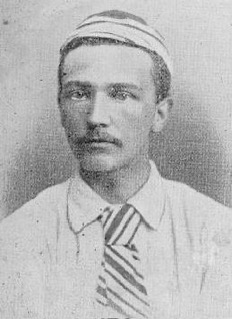
On September 16, 1920, the British double agent John Henry Gooding, operating under the alias F. Digby Hardy, makes a dramatic overture to the Irish Republican Army (IRA). Hardy, a habitual criminal with a long record of forgery, fraud, and petty crime, has been recruited by British intelligence to infiltrate the IRA’s intelligence network and capture Michael Collins.

Born in 1868 in Devonport, Plymouth, England, Hardy has a troubled life marked by multiple imprisonments, bigamy, and a career in petty crime. After deserting the Royal Navy in 1888, he adopts the alias “Frank Hall” and lives in Surrey before moving to London. By 1920, he is a known criminal with a five-year fraud sentence in 1918, partially served until his release in 1919.

Hardy approaches IRA intelligence, offering to betray his British superior, Basil Thomson, to the IRA. The plan is for him to infiltrate the IRA’s network and hand over information on Collins. However, the operation is foiled when Arthur Griffith, a leading Irish republican, intercepts Hardy’s mission.

Griffith arranges a staged meeting in Dublin attended by international journalists. Hardy is confronted and, upon presentation of evidence, confesses his mission and criminal background. The exposure embarrasses British intelligence and draws international attention.

Rather than being executed, Hardy is given until the next morning to leave Ireland. He flees, resuming petty crimes until his death in 1930. The September 16, 1920 incident becomes a notable example of how British intelligence’s reliance on unreliable agents could backfire during the Irish War of Independence.

In summary, on September 16, 1920, F. Digby Hardy (John Henry Gooding) attempts to betray his British handler to the IRA, but is exposed and forced to flee Dublin after being misled by Arthur Griffith into revealing his mission to reporters.


Leave a comment

The “German Plot”

On Friday, May 17, 1918, the British government orders the arrest and imprisonment of all leading members of Sinn Féin, claiming they were involved in a plan to import arms from Germany. The British cover for these arrests is a bogus “German Plot,” which has since been thoroughly discredited.

The “German Plot” is a spurious conspiracy that the Dublin Castle administration in Ireland claims to exist between the Sinn Féin movement and the German Empire in May 1918. Allegedly, the two factions conspire to start an armed insurrection in Ireland during World War I, which would divert the British war effort. The administration uses these claims to justify the internment of Sinn Féin leaders, who are actively opposing attempts to introduce conscription in Ireland and more Irishmen being used as cannon fodder in service to their oppressors.

The “plot” originates on April 12 when the British arrest Joseph Dowling after he is put ashore in County Clare by a German U-boat. Dowling is a member of the Irish Brigade, one of several schemes by Roger Casement to get German assistance for the 1916 Easter Rising. Dowling now claims that the Germans are planning a military expedition to Ireland. William Reginald Hall and Basil Thomson believe him and convince the authorities to intern all Sinn Féin leaders. One hundred fifty are arrested on the night of May 17–18 and taken to prisons in England, including Éamon de Valera, Arthur Griffith, Constance Markievicz and W. T. Cosgrave. The introduction of internment and conscription reflects a decision of the British cabinet to take a harder line on the Irish Question following the failure of the Irish Convention.

Historian Paul McMahon characterises the “Plot” as “a striking illustration of the apparent manipulation of intelligence in order to prod the Irish authorities into more forceful action.” Republicans are tipped off about the impending arrests, allowing some to escape capture while others choose to be taken in order to secure a propaganda victory. The internment is counterproductive for the British, imprisoning the more accommodating Sinn Féin leadership while failing to capture members of the Irish Republican Brotherhood who are more committed to physical force republicanism.

The British live to regret one man who slips through their fingers that spring. Michael Collins uses the months he might have spent in an English prison assembling and consolidating his control of an intelligence organisation and putting it on a more focused military footing that soon makes the Empire squeal.

Even at the time, the proposition that the Sinn Féin leadership are directly planning with the German authorities to open another military front in Ireland is largely seen as spurious. Irish nationalists generally view the “German Plot” not as an intelligence failure but as a black propaganda project to discredit the Sinn Féin movement, particularly to an uninformed public in the United States. McMahon comments that this belief is mistaken, and that the authorities acted honestly but on the basis of faulty intelligence. It is still a matter of study and conjecture what impact it had on U.S. foreign policy regarding the 1919 bid for international recognition of the Irish Republic.

(Pictured: Dublin Castle, Dame Street, Dublin)