seamus dubhghaill

Promoting Irish Culture and History from Little Rock, Arkansas, USA


Leave a comment

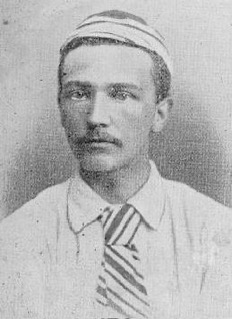
British Double Agent John Henry Gooding Offers to Betray His Superior to the IRA

On September 16, 1920, the British double agent John Henry Gooding, operating under the alias F. Digby Hardy, makes a dramatic overture to the Irish Republican Army (IRA). Hardy, a habitual criminal with a long record of forgery, fraud, and petty crime, has been recruited by British intelligence to infiltrate the IRA’s intelligence network and capture Michael Collins.

Born in 1868 in Devonport, Plymouth, England, Hardy has a troubled life marked by multiple imprisonments, bigamy, and a career in petty crime. After deserting the Royal Navy in 1888, he adopts the alias “Frank Hall” and lives in Surrey before moving to London. By 1920, he is a known criminal with a five-year fraud sentence in 1918, partially served until his release in 1919.

Hardy approaches IRA intelligence, offering to betray his British superior, Basil Thomson, to the IRA. The plan is for him to infiltrate the IRA’s network and hand over information on Collins. However, the operation is foiled when Arthur Griffith, a leading Irish republican, intercepts Hardy’s mission.

Griffith arranges a staged meeting in Dublin attended by international journalists. Hardy is confronted and, upon presentation of evidence, confesses his mission and criminal background. The exposure embarrasses British intelligence and draws international attention.

Rather than being executed, Hardy is given until the next morning to leave Ireland. He flees, resuming petty crimes until his death in 1930. The September 16, 1920 incident becomes a notable example of how British intelligence’s reliance on unreliable agents could backfire during the Irish War of Independence.

In summary, on September 16, 1920, F. Digby Hardy (John Henry Gooding) attempts to betray his British handler to the IRA, but is exposed and forced to flee Dublin after being misled by Arthur Griffith into revealing his mission to reporters.

Leave a comment

Birth of Stage Actress George Anne Bellamy

george-anne-bellamy

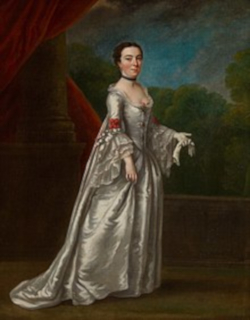
George Anne Bellamy, English actress whose stage career and personal life are, in their irregularity, not entirely atypical of her era, is born in County Fingal on April 23, 1727. Her best performances are in such tragic roles as Desdemona in Othello and Juliet in Romeo and Juliet.

Bellamy is the illegitimate daughter of a Quaker lady who elopes from boarding school with the diplomat James O’Hara, 2nd Baron Tyrawley. She is named George Anne through a mishearing of the name Georgiana at her christening. Though her mother marries a Captain Bellamy in Lisbon, Bellamy is acknowledged by Tyrawley as his daughter and he provides for her needs, including her education at a convent in Boulogne-sur-Mer. While living with her mother in London, she meets the theatrical manager John Rich and other leading stars of the stage, and she soon determines to pursue an acting career.

Bellamy’s early roles at Covent Garden, beginning about 1744, are as Miss Prue in Love for Love and with James Quin in The Orphan. Her reputation as an actress rests largely on her good looks and her “soft” feminine manner. Her career reaches its pinnacle when, in 1750, her performance of Juliet to David Garrick’s Romeo at Theatre Royal, Drury Lane is said to surpass the work of the revered Susannah Cibber in a rival production of the play at Covent Garden.

Riotous living, including a legal and a bigamous marriage, takes its toll on Bellamy’s beauty and her appeal to managers. Her later life is marred by ill health and credit troubles. Her last appearance is at Drury Lane on May 24, 1785, at her own benefit concert. She is unable to act but speaks briefly to the audience.

In the same year Bellamy publishes “An Apology for the Life of George Anne Bellamy” in six volumes. The salacious work is said to be ghost written by Alexander Bicknell.

George Anne Bellamy dies in poverty on February 16, 1788, in London.

(Pictured: George Anne Bellamy by F Lindo exhibited in 1833 now owned by Garrick Club)