seamus dubhghaill

Promoting Irish Culture and History from Little Rock, Arkansas, USA


Leave a comment

The Battle of Naas

The Battle of Naas is fought on May 24, 1798. It is a significant engagement during the Irish Rebellion of 1798, where a force of over 1,000 rebels attack the Crown garrison in Naas, County Kildare.

The Battle of Naas is one of the early confrontations in the 1798 Irish Rebellion, which aims to end British rule in Ireland. On the night of May 23, 1798, a large group of rebels, primarily composed of United Irishmen, mobilize in County Kildare, preparing to attack the garrison in Naas, which is considered one of the strongest military positions in the area.

At approximately 2:30 a.m. on May 24, the rebels, led by Michael Reynolds, launches their assault from multiple directions. They initially achieved some success, pushing the garrison back to a barricade near the jail. However, the defenders, numbering around 250 men and equipped with artillery, manage to regroup and repel the attack. 

The battle lasts about an hour, during which the rebels face heavy resistance. Ultimately, they are forced to retreat, suffering significant casualties—around 135 rebels are killed, while government forces lose about 25 men. The aftermath sees many rebels arrested, and the military pursues the fleeing insurgents, leading to further casualties among the retreating forces. 

In a contemporary development, skeletal remains believed to be linked to the 1798 Rebellion are discovered in Naas in late September 2025. This site, known as Gallows Glen, is associated with executions during the rebellion, and the discovery sparks interest in the historical significance of the battle and its aftermath. 

The Battle of Naas is a pivotal moment in the 1798 Rebellion, illustrating the fierce resistance of the rebels against British rule. The recent archaeological findings further highlight the ongoing historical interest in this event and its impact on Irish history. The battle remains a significant part of the narrative surrounding the struggle for Irish independence.

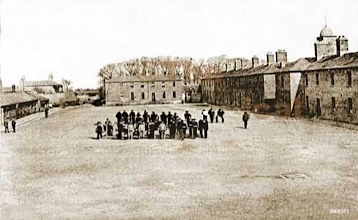
(Pictured: Military Barracks, Naas)

Leave a comment

The Battle of Ballymore-Eustace

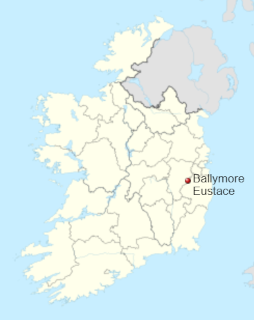
The Battle of Ballymore-Eustace is one of the events in the United Irish rebellion of 1798. It takes place on May 24, 1798, after the stationing of the 9th Dragoons, and members of the Tyrone, Antrim and Armagh Militias at Ballymore-Eustace in County Kildare near the border with County Wicklow on May 10. The town has been recently garrisoned by almost 200 soldiers and militia who have been sent to repress sedition in the area. The troops have been dispersed in billets among the populace as per counter-insurgency practice of “free-quarters” where responsibility for the provisioning and sheltering of militia is foisted onto the populace. During this time a quantity of arms are surrendered and letters of protection issued.

On May 23, one hundred twenty soldiers are recalled, leaving a garrison of around 80 men. At around 1:00 a.m. on May 24, the rebel force of approximately 200 attack the town. As in the attacks on Naas and Prosperous, the rebels seek to surprise and overwhelm the garrison by coordinated attacks before it can react and rally against them. The houses containing troops of the 9th Dragoons and the Tyrone Militia are to be attacked simultaneously.

However, the attack on garrison headquarters is miscarried due to lack of coordination and numbers so that the building becomes a rallying point for the Government troops. Captain Beevor is attacked in his own bedchamber by two rebels. Lieutenant Parkinson and some dragoons come to his aid and both rebels are slain. Other isolated billets are attacked but some units manage to cut themselves free and fight their way through the streets to the headquarters. A number of properties, including the Protestant church, are set on fire.

For two hours, the rebels attack the strongpoint but, without artillery, are unable to take the building and lose many men in the process. The momentum has by now slipped away from the rebels and they draw off their attack leaving behind around 50 dead but at a cost to the garrison of at least 12 dead and 5 wounded.

The battle leads directly to the Dunlavin Green executions, in which fears of a possible rebel attack on the garrison at nearby Dunlavin lead to the summary execution of rebel prisoners.


Leave a comment

The Carnew Executions

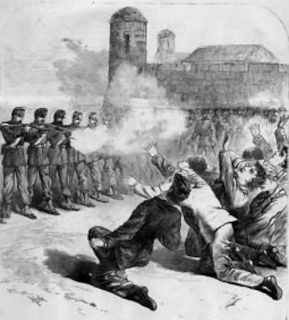
The Carnew executions, the summary execution of 28 prisoners being held as suspected United Irishmen by the local garrison in the British army barracks base of Carnew Castle, Carnew, County Wicklow, takes place on May 25, 1798.

The Society of United Irishmen having failed to advance its aims of Catholic emancipation and parliamentary reform by political means, instigate a rebellion against British rule. The rebellion begins on the morning of May 24, 1798, but the only significant uprisings outside of the province of Ulster occur in counties Wicklow and Wexford, both south of County Dublin. The rebels are met with a swift response from British forces and the bulk of the rebellion is suppressed within a year.

By the morning of the May 25, news of the long-expected outbreak of the 1798 rebellion in neighbouring County Kildare and of military losses in the battles of Ballymore-Eustace, Naas, and Prosperous have reached the garrison in Carnew, who decide to take preventative measures by assembling the rebel suspects in detention. The suspects are marched from Carnew Castle to the local Gaelic handball alley and executed by firing squad as a warning to the local populace.

A similar mass execution of 36 nationalist prisoners occurs on the following day at Dunlavin Green.

News of the summary executions, together with news of the similar massacre at Dunlavin, spread throughout County Wicklow and across the border into County Wexford, giving substance to the rumours of widespread killing already prevalent. On June 7, the town is burned and sacked in a revenge raid by Wexford rebels, led by Anthony Perry.