seamus dubhghaill

Promoting Irish Culture and History from Little Rock, Arkansas, USA


Leave a comment

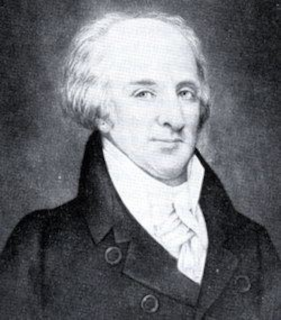
John Armstrong, Sr. Appointed Brigadier General in the Continental Army

John Armstrong, Sr., an Irish American civil engineer and soldier, is appointed a brigadier general in the Continental Army on March 1, 1776. He also serves as a major general in the Pennsylvania Militia during the American Revolutionary War.

Armstrong is born on October 13, 1717, in Brookeborough, County Fermanagh, parents not determined, who married in 1704. He is one of approximately fifteen children born to his parents that included: Margaret Armstrong (1737–1817), who marries Rev. George Duffield (1732–90), and Rebecca Armstrong (1738–1828), who marries James Turner (1737–1803).

Armstrong is educated in Ireland and becomes a civil engineer before emigrating to Pennsylvania, with his brother-in-law, John Lyon, around 1740. He comes to Pennsylvania as a surveyor for the Penn family, the proprietary owners of the colony. In 1750, he lays out the first plat or plan for the town of Carlisle, Pennsylvania, and is one of its first settlers. He is later appointed surveyor for the newly established Cumberland County.

In 1756, during the Seven Years’ War, Armstrong leads the Kittanning Expedition. In 1758, he leads 2,700 Pennsylvania provincial troops on the Forbes Expedition, the approach of which compels the French to vacate and blow-up Fort Duquesne. He becomes a good friend to the other militia commander in this expedition, Colonel George Washington.

James Smith writes that in the fall of 1763, “I went on the Susquehannah campaign, against the Indians, under the command of General Armstrong. In this route we burnt the Delaware and Monsey towns, on the West Branch of the Susquehannah, and destroyed all their corn.”

In the early stages of the American Revolutionary War (1775-83), Armstrong is a brigadier general in the Pennsylvania militia. On March 1, 1776, the Continental Congress appoints him to that same rank in the Continental Army. He is sent south to begin preparations for the defense of Charleston, South Carolina. He contributes his engineering talents to the construction of defenses that enable them to withstand the Battle of Sullivan’s Island later that year. When General Charles Lee arrives to take command, Armstrong returns to his duties with the main army and with the Pennsylvania militia. Pennsylvania names him major general in charge of the state militia. This ends his service in the Continental Army, but not the war or his cooperation with General George Washington.

At the Battle of Brandywine on September 11, 1777, Armstrong’s militia holds the far left of the American line. They also guard the army’s supplies. After a hard day’s fighting, the Americans are forced to withdraw, or face being surrounded. He brings the supplies and his militia out from Pyle’s Ford after dark.

In the Battle of Germantown on October 4, Armstrong leads the American right. His mission is to skirt the British left flank and attack there and in their rear. Despite delays and the troubles some units have in moving, the overall attack is going well, until the center is held up at the Benjamin Chew House. The attack then collapses after a friendly fire incident in the fog in which General Adam Stephen‘s men fire on Anthony Wayne‘s troops causing their withdrawal. Armstrong, whose men have advanced nearly to the center of Germantown but are not greatly involved in the fight later complains that it was “…. a glorious victory fought for, and eight tenths won, …. mysteriously lost, for to this moment no one man can …. give any good reason for the flight.”

After Germantown, Armstrong is granted permission to give up active command. At aged sixty, his health is declining, and old wounds are troubling him. He serves until April 4, 1778.

After his service in the War ends, Armstrong returns home to Carlisle, where he is elected to the Continental Congress by the Pennsylvania Assembly. As a delegate from 1779 to 1780, he is a strong supporter of Washington and the army. He is firm in his support for a new United States Constitution and is returned to the Congress of the Confederation during its final days in 1787 and 1788.

Throughout his life Armstrong serves in a number of local or civic offices. One of these, the Carlisle school board, leads him to originally oppose Dr. Benjamin Rush‘s proposal to start a college in the town. He later relents and becomes a member of the first Board of Trustees for Dickinson College from 1783 to 1794.

In 1747, Armstrong marries Rebecca Lyon Armstrong (1719–97), daughter of Archibald Lyon and Ann Lyon. Together, they are the parents of:

Armstrong dies at his home in Carlisle, Pennsylvania, on March 9, 1795, and is buried in the Old Carlisle Cemetery. In 1800, when Pennsylvania creates a new county with its seat at Kittanning, it is named Armstrong County in his honor.

Leave a comment

Birth of Mathew Carey, Irish American Publisher & Economist

Mathew Carey, Irish-born American publisher and economist who lives and works in Philadelphia, Pennsylvania, is born into a middle-class Catholic family in Dublin on January 28, 1760. He is the father of economist Henry Charles Carey.

Carey enters the bookselling and printing business in 1775 and, at the age of seventeen, publishes a pamphlet criticizing dueling. He follows this with a work criticizing the severity of the Irish penal code, and another criticizing Parliament. As a result, the British House of Commons threatens him with prosecution. In 1781 he flees to Paris as a political refugee. There he meets Benjamin Franklin, the ambassador representing the American Revolutionary forces, which achieves independence that year. Franklin takes Carey to work in his printing office.

Carey works for Franklin for a year before returning to Ireland, where he edits two Irish nationalist newspapers, the Freeman’s Journal and The Volunteer’s Journal. He gains passage on a ship to emigrate to the newly independent United States in September 1784.

Upon Carey’s arrival in Philadelphia, he finds that Franklin has recommended him to Gilbert du Motier, Marquis de Lafayette, who gives him a $400 check to establish himself. He uses this money to set up a new publishing business and a book shop. He founds The Pennsylvania Herald (1785), Columbian Magazine (1786), and The American Museum (1787). None of these ventures proves very profitable. The American Museum is the first American periodical to treat American culture as rich and original, instead of a poor imitation of Great Britain’s. He prints the first American version of the Douay–Rheims Bible in 48 weekly installments, this Roman Catholic edition popularly known as the Carey Bible. It is the first Roman Catholic version of the Bible printed in the United States. He also prints numerous editions of the King James Version, fundamental to English-speaking peoples.

In 1794–96, Carey publishes America’s first atlases. His 1802 map of Washington, D.C. is the first to name the stretch of land west of the United States Capitol as the “Mall.”

Carey frequently writes articles on various social topics, including events during the 1793 Philadelphia Yellow Fever Epidemic, which proves a crisis for the city. He reports on debates in the state legislature as well as providing political commentary in his essays. He is a Catholic and a founding member of the American Sunday-School Society, along with Quaker merchant Thomas P. Cope, Dr. Benjamin Rush and Episcopal bishop William White.

In 1822 Carey publishes Essays on Political Economy; or, The Most Certain Means of Promoting the Wealth, Power, Resources, and Happiness of Nations, Applied Particularly to the United States. This is one of the first treatises favoring Alexander Hamilton‘s protectionist economic policy.

During Carey’s lifetime, the publishing firm evolves to M. Carey & Son (1817–21), M. Carey & Sons (1821–24), and then to Carey & Lea (1824). He retires in 1825, leaving the publishing business to his son, Henry Charles Carey and son-in-law Isaac Lea. Lea and Henry Carey make the business economically successful and, for a time, it is one of the most prominent publishers in the country.

In 1821, Carey is elected as a member to the American Philosophical Society (APS) in Philadelphia.

Upon arriving in America, Carey quickly develops political connections in the developing country. One of his most important supporters is John Adams, still a leading figure of the Federalist Party at the time. His passionate support for the establishment of an American Navy contributes significantly to his alliance with the Federalists.

Throughout his political career in America, Carey supports the development and maintenance of American naval strength, even after joining Thomas Jefferson’s Democratic-Republicans in 1796. His political realignment occurs shortly before the American ratification of the Jay Treaty, primarily intended to ensure peace with Britain, while distancing America from France. His publishing in America channels his energy toward productive political objectives. His published works are credited with swaying public opinion toward the establishment of a powerful American navy.

Carey’s book Naval History of the United States, is meant to influence the public. Its conspicuous omission of naval activity during the American Quasi-War with France shows his political intentions. It helps direct political energy against the British, with which the U.S. is at war at the time of the book’s publication on May 6, 1813.

Focus on the British, known around the world for their naval power, makes an influential case for extending the reach of the American navy. Along with his publication of Naval History, Carey writes Olive Branch, published in 1814. He tries to eliminate competition between the two American political parties to create unity during the War of 1812. To many people, these efforts, and his early relationship with Franklin, make him the logical choice as Franklin’s political successor. Scholars believe that he contributed significantly by his books and publications to the establishment of the United States Whig Party.

Carey is elected a member of the American Antiquarian Society (AAS) in 1815. A significant portion of his business papers, as well as a very large number of original copies of works printed and/or published by him reside in the collections of the AAS.

Carey dies on September 16, 1839, and is buried in St. Mary’s Catholic Churchyard in Philadelphia.

In 1943, Publishers Weekly creates the Carey-Thomas Award for creative publishing, naming it in honor of Mathew Carey and Isaiah Thomas.

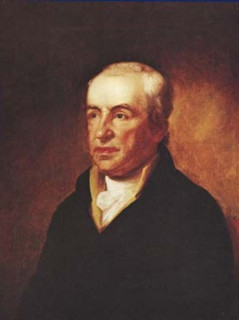
(Pictured: Portrait of Mathew Carey by John Neagle, 1825, The Library Company of Philadelphia)


Leave a comment

Death of John Dunlap, Printer of the Declaration of Independence

John Dunlap, Irish printer who printed the first copies of the United States Declaration of Independence and one of the most successful Irish American printers of his era, dies in Philadelphia, Pennsylvania on November 27, 1812.

Dunlap is born in 1747 in Strabane, County Tyrone, in what is now Northern Ireland. When he is ten years old, he goes to work as an apprentice to his uncle, William Dunlap, a printer and bookseller in Philadelphia. In 1766, William Dunlap leaves the business in the care of his nephew, who eventually purchases the business. Initially he makes a living by printing sermons, broadsides and handbills. In November 1771, he begins the publication of the Pennsylvania Packet, or General Advertiser, a weekly newspaper. In 1773 he marries Elizabeth Hayes Ellison.

During the American Revolutionary War, Dunlap becomes an officer in the First Troop Philadelphia City Cavalry and sees action with George Washington at the battles of Trenton and Princeton. He continues in the First City Troop after the war, rising to the rank of major, and leading Pennsylvania’s cavalry militia to help suppress the Whiskey Rebellion in 1794.

In 1776, Dunlap secures a lucrative printing contract for the Continental Congress. In July 1776, fighting between the American colonists and the British forces had been going on for over a year. On July 2, the Second Continental Congress votes on the Lee Resolution to secede. Two days later, they approve the final wording of a public declaration regarding their decision, which ultimately comes to be known as the Declaration of Independence. President of Congress John Hancock signs the fair copy with Secretary of Congress Charles Thomson attesting it. That evening Hancock orders Dunlap to print broadside copies of the declaration. He prints perhaps 200 broadsides, since known as the Dunlap broadsides, which are the first published versions of the Declaration.

Dunlap also prints items for Pennsylvania’s revolutionary government. In 1777 he takes over the printing of the Journals of the Continental Congress from Robert Aitken, but loses the contract in 1779 after printing in his newspaper a letter from Thomas Paine that leaks news of the secret French aid to the Americans.

In 1784, Dunlap’s paper becomes a daily with a new title: the North American and United States Gazette. It is not the first daily in the United States as the Pennsylvania Evening Post is the first in 1783, but it becomes the first successful daily.

Continuing to serve the changing needs of the government, Dunlap and his partner David Claypoole print the Constitution of the United States on September 19, 1787 for use by the Constitutional Convention, and later publish it for the first time in the Pennsylvania Packet.

Dunlap’s major financial success comes from real estate speculation. During the American Revolutionary War, he purchases property confiscated from Loyalists who refuse to take Pennsylvania’s new loyalty oath. After the war, he purchases land in Kentucky. By 1795, when he is forty-eight, he is able to retire with a sizable estate. Retirement does not agree with him, however. According to his friend, Dr. Benjamin Rush, he becomes a drunkard in his final years. He dies in Philadelphia on November 27, 1812.