The son of a local school teacher, Noonan is raised in Loughill, County Limerick. He is educated at the local National School and St. Patrick’s Secondary School in Glin, before studying to be a primary school teacher at St. Patrick’s College, Drumcondra, Dublin. He subsequently completes a BA and H.Dip. in English and Economics at University College Dublin (UCD). He begins to work as a secondary school teacher in Dublin. He develops an interest in politics from his mother, whose family had been heavily involved in Fine Gael at the local level in Limerick, and joins the Dublin branch of the party after graduating from university.
Having been involved in the local Fine Gael organisation in Limerick since the late 1960s, Noonan first holds political office in 1974, when he is elected as a member of Limerick County Council. Having built up a local profile he contests the 1981 Irish general election for the party and secures a seat in Limerick East. Upon taking his Dáil seat, he becomes a full-time politician, giving up his teaching post and resigning his seat on Limerick County Council. Though Fine Gael forms a coalition government with the Labour Party, as a first time Teachta Dála (TD), he remains on the backbenches. He serves as a TD from 1981 to 2020.
Noonan marries Florence Knightley, a native of Castlemaine, County Kerry and a primary school teacher, in 1969. They have three sons (Tim, John and Michael) and two daughters (Orla and Deirdre). In May 2010, Noonan appears on RTÉ‘s The Frontline to talk about his wife’s battle with Alzheimer’s disease. Florence Noonan dies on February 23, 2012 of pneumonia.
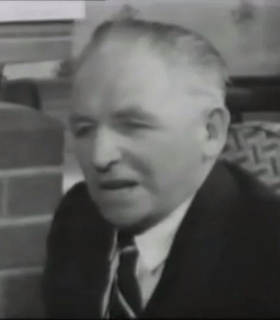
Sheehy is born in Tralee, County Kerry, on October 16, 1897. In 1914 he joins Fianna Éireann, the republican boy scouts, and later the Irish Volunteers. He commands the Boherbue company of the IRA, and later the Tralee company. His brother Jimmy is killed in the British Army in the Battle of the Somme in 1916.
Sheehy sides against the Anglo-Irish Treaty in 1922, like most of the IRA in Kerry. In the Irish Civil War, when Free State troops land in Kerry as part of a seaborne offensive, he is in command of the Anti-Treaty garrison in Tralee. After the Army takes the town, he retreats, burning the barracks there. As the conflict becomes a guerrilla affair, he finds himself in charge of three flying columns, or around 75 men in total, in the Ballymacthomas area. He and Tom McEllistrim are in charge of an attack on Castlemaine in January 1923.
Just after the Irish Civil War, when Sheehy is still on the run, he manages to play football for Kerry. Kerry captain Con Brosnan, though a member of the Free State army, guarantees his safe passage. He pays into Munster and All-Ireland finals, slips off his street clothes, plays, and then at the final whistle, disappears back into the crowd. In 1936 he is in New York and is able to smuggle a large number of Thompson submachine guns back to Ireland.
In February 1941 Sheehy is arrested and interned in the Curragh Camp for two years. He is arrested again and charged with making “seditious speeches” on May 11, 1946, the day that IRA hunger striker Seán McCaughey dies. He is found guilty and sentenced to four months imprisonment.
Sheehy plays Gaelic football with his local club, John Mitchels, and is a member of the senior Kerry county football team from 1919 until 1930. He also plays hurling with Tralee Parnells. He captains Kerry to the All-Ireland title in 1930. He plays in the Railway Cup hurling final in 1927 and is captain of the football team the same year and wins other medals in 1931. Three of his sons – Seán Óg, Niall and Paudie – all win All-Ireland titles with Kerry in the 1960s.
Sheehy remains a staunch supporter of Sinn Féin and is critical of the moves to end abstention by the party in the late 1960s. He sides with the Provisionals in the split at the 1970 Ardfheis and remains active in Provisional Sinn Féin until his death, supporting the IRA’s guerrilla campaign. He dies in Tralee on January 12, 1980, and is given a republican funeral at his own request. His funeral oration is given by Dáithí Ó Conaill, vice-president of Sinn Féin.
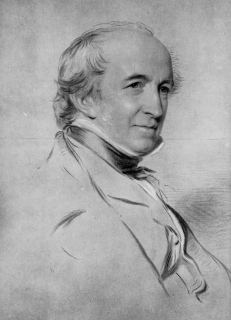
Spring Rice is educated at Trinity College, Cambridge, and later studies law at Lincoln’s Inn, but is not called to the Bar. His family is politically well-connected, both in Ireland and Great Britain, and he is encouraged to stand for Parliament by his father-in-law, Lord Limerick.
Spring Rice first stands for election in Limerick City in 1818 but is defeated by the Tory incumbent, John Vereker, by 300 votes. He wins the seat in 1820 and enters the House of Commons. He positions himself as a moderate unionist reformer who opposes the radical nationalist politics of Daniel O’Connell and becomes known for his expertise on Irish and economic affairs. In 1824 he leads the committee which establishes the Ordnance Survey in Ireland.
Spring Rice’s fluent debating style in the Commons brings him to the attention of leading Whigs and he comes under the patronage of the Marquess of Lansdowne. As a result, he is made Under-Secretary of State for the Home Department under George Canning and Lord Goderich in 1827, with responsibility for Irish affairs. This requires him to accept deferral of Catholic emancipation, a policy which he strongly supports. He then serves as joint Secretary to the Treasury from 1830 to 1834 under Lord Grey. Following the Reform Act 1832, he is elected to represent Cambridge from 1832 to 1839. In June 1834, Grey appoints him Secretary of State for War and the Colonies, with a seat in the cabinet, a post he retains when Lord Melbourne becomes Prime Minister in July. A strong and vocal unionist throughout his life, he leads the Parliamentary opposition to Daniel O’Connell’s 1834 attempt to repeal the Acts of Union 1800. In a six-hour speech in the House of Commons on April 23, 1834, he suggests that Ireland should be renamed “West Britain.” In the Commons, he also champions causes such as the worldwide abolition of slavery and the introduction of state-supported education.
The Whig government falls in November 1834, after which Spring Rice attempts to be elected Speaker of the House of Commons in early 1835. When the Whigs return to power under Melbourne in April 1835, he is made Chancellor of the Exchequer. As Chancellor, he has to deal with crop failures, a depression and rebellion in North America, all of which create large deficits and put considerable strain on the government. His Church Rate Bill of 1837 is quickly abandoned and his attempt to revise the charter of the Bank of Ireland ends in humiliation. Unhappy as Chancellor, he again tries to be elected as Speaker but fails. He is a dogmatic figure, described by Lord Melbourne as “too much given to details and possessed of no broad views.” Upon his departure from office in 1839, he has become a scapegoat for the government’s many problems. That same year he is raised to the peerage as Baron Monteagle of Brandon, in the County of Kerry, a title intended earlier for his ancestor Sir Stephen Rice. He is also Comptroller General of the Exchequer from 1835 to 1865, despite Lord Howick‘s initial opposition to the maintenance of the office. He differs from the government regarding the exchequer control over the treasury, and the abolition of the old exchequer is already determined upon when he dies.
From 1839 Spring Rice largely retires from public life, although he occasionally speaks in the House of Lords on matters generally relating to government finance and Ireland. He vehemently opposes John Russell, 1st Earl Russell‘s policy regarding the Irish famine, giving a speech in the Lords in which he says the government had “degraded our people, and you, English, now shrink from your responsibilities.”
Spring Rice is well regarded in Limerick, where he is seen as a compassionate landlord and a good politician. An advocate of traditional Whiggism, he strongly believes in ensuring society is protected from conflict between the upper and lower classes. Although a pious Anglican, his support for Catholic emancipation wins him the favour of many Irishmen, most of whom are Roman Catholic. He leads the campaign for better county government in Ireland at a time when many Irish nationalists are indifferent to the cause. During the Great Famine of the 1840s, he responds to the plight of his tenants with benevolence. The ameliorative measures he implements on his estates almost bankrupts the family and only the dowry from his second marriage saves his financial situation. A monument in honour of him still stands in the People’s Park in Limerick.
Even so, Spring Rice’s reputation in Ireland is not entirely favourable. In a book regarding assisted emigration from Ireland, a process in which a landlord pays for their tenants’ passage to the United States or Australia, Moran suggests that Spring Rice was engaged in the practice. In 1838, he is recorded as having “helped” a boat load of his tenants depart for North America, thereby allowing himself the use of their land. However, he is also recorded as being in support of state-assisted emigration across the British Isles, suggesting that his motivation is not necessarily selfish.
After the Desmond defeat at Battle of Affane in 1565, the 14th Earl and his brother, John of Desmond, are detained in England. During their absence, FitzMaurice becomes captain general of County Desmond with the warrant of the Earl. This means he has authority over the soldiers retained in the service of the Desmond Fitzgeralds. In July 1568, he enters Clanmaurice, the territory of the lord of Lixnaw, to distrain for rent and assert the Desmond authority. Having seized 200 head of cattle and wasted the country, he is confronted by Lixnaw on the way home and utterly defeated.
At the end of 1568, the absent Earl of Desmond grants Sir Warham St. Leger a lease of the barony of Kerricurrihy, which cast FitzMaurice’s inheritance into confusion. In 1569 the Lord Deputy of Ireland, Sir Henry Sidney, is informed by FitzMaurice that he has assembled the people of Desmond to tell them that the Lord Deputy was unable to procure the release of the captive earl, who would be executed or perpetually imprisoned, and that the people should proclaim a new earl or captain. With one voice, the people cry out for FitzMaurice to be captain. The earl’s wife, Eleanor Butler, writes to her husband in November that FitzMaurice is seeking to bring the earl into further disrepute and to usurp his inheritance, “by the example of his father.”
To reassert Geraldine authority, FitzMaurice then launches what becomes known as the first of the Desmond Rebellions. The southern part of Ireland erupts into a general rebellion, owing in part to attempts at establishing plantations. In June 1569, FitzMaurice and the Earl of Clancarty (MacCarthy Mor) invade Kerrycurrihy, spoil the inhabitants, take the castle-abbey of Tracton, hang the garrison, and refuse to depart without the surrender to them of the custody of Lady St. Leger and Lady Grenville, the wives of the principal English colonists. FitzMaurice then joins in league with the turbulent brothers of the Earl of Ormond and enters a bond with the Earl of Thomond and John Burke, son of the Earl of Clanricard. He writes to the mayor and corporation of Cork in July ordering the abolition of the new heresy of Protestantism, at a time when he appears to have been taking instruction from Irish Jesuits.
By September 1569, Sidney has broken the back of the rebellion and leaves Sir Humphrey Gilbert behind to suppress FitzMaurice, who seeks refuge in the woods of Aherlow, and after Gilbert’s departure FitzMaurice raises a new force in February 1570 and by a surprise night attack, takes Kilmallock and after hanging the chief townsmen at the market cross, plunders its wealth and burns the town. In February 1571, Sir John Perrot lands at Waterford as Lord President of Munster and challenges FitzMaurice to a duel, which FitzMaurice declines with the remark, “For if I should kill Sir John Perrot the Queen of England can send another president into this province; but if he do kill me there is none other to succeed me or to command as I do.”
FitzMaurice attacks Perrot but retires on mistaking a small cavalry company for the advance party of a larger force. After a second and successful siege by Perrot of the Geraldine stronghold of Castlemaine, FitzMaurice sues for pardon, which is granted in February 1573, after he prostrates himself in Kilmallock church with the president’s sword point next to his heart. He swears fealty to the crown and gives up his son as hostage.
On the return to Ireland of the Earl of Desmond in 1573, FitzMaurice leaves for the continent, offering his reasons variously as a desire to gain pardon from the Queen through the French court, and the unkindness of the earl. In March 1575 he and his family, along with the Geraldine Seneschal of Imokilly, James Fitzedmund Fitzgerald, and the White Knight, Edmund FitzGibbon, sail on the La Arganys for Saint-Malo, Brittany where they are received by the governor. He has several interviews with Catherine de’ Medici in Paris, offering to help make Henry III of France king of Ireland, and is granted a pension of 5,000 crowns in 1576.
Early in the following year FitzMaurice leaves for the Spanish court, where he offers the crown to the brother of King Philip II, Don John. The king is cautious, however. FitzMaurice leaves his sons Maurice and Gerald with Cardinal Antoine Perrenot de Granvelle, and travels to Italy to meet Pope Gregory XIII.
At the papal court FitzMaurice meets adventurer Captain Thomas Stukley, and together they persuade the pope to underwrite the cost of 1,000 troops to invade Ireland, most of whom, according to Philip O’Sullivan Beare, are desperadoes the pope wishes to get out of Italy. Fitzmaurice and Stukley are to rendezvous in Lisbon and proceed to Ireland, however, Stukley decides to throw his troops and support to King Sebastian‘s expedition to Morocco, where he dies.
Following the diversion of Stukley to Morocco, FitzMaurice sets out with the nuncioNicholas Sanders, and Matthew de Oviedo from Ferrol in Galicia, Spain on June 17, 1579, with a few troops on his vessel and three Spanish shallops. They capture two English vessels in the channel and arrive at Dingle on July 16, 1579, launching the Second Desmond Rebellion.
On July 18 they cast anchor in Ard na Caithne, where they garrison at Dún an Óir (Fort of Gold), and are joined on July 25 by two galleys with 100 troops. Four days later their ships are captured by the English fleet under the command of Sir William Wynter. Having exhorted the Earl of Desmond and the Earl of Kildare, as Geraldine leaders, to fight the heretics, FitzMaurice leaves the fort to await the arrival of Stukley who, unknown to him, had been killed at the Battle of Alcácer Quibir in the previous year, during a campaign by King Sebastian of Portugal.
FitzMaurice goes to make a vow at the monastery of the Holy Cross in County Tipperary but becomes caught in a skirmish with the forces of his cousin, Theobald Burke, during which he is shot with a ball in the hollow of the chest, but cuts his way through to Burke and his brother William, both of whom he kills with single strokes of his sword.
The battle is won, but close to the scene his injuries overcome him. He makes his will and orders his friends to cut off his head after death in order that his enemies might not mutilate his body. He begs his attendants to attest that he had not turned tail on the enemy. They assure him and wish him to be quiet because hostile soldiers are closing in, but he insists, “My wounds are clear, my wounds are clear.” Upon his death, a kinsman orders the decapitation and then wraps the head in cloth. An attempt is made to conceal his trunk under a tree, but it is discovered by a hunter and brought to the town of Kilmallock. For weeks, the trunk is nailed to the gallows, until it is shattered by musket fire and collapses.
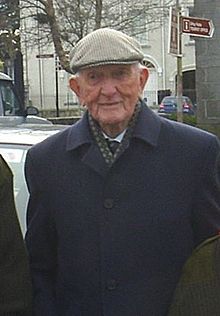
Keating is born on January 2, 1902, in Castlemaine, County Kerry. He receives his education in local schools, including the Christian Brothers’ School in Tralee. Tralee is also the place where Keating does his apprenticeship. During this time, he becomes a skillful Gaelic football player in his native Kerry.
Keating joins Fianna Éireann in 1918. In 1920, during the Irish War of Independence, he joins the Boherbee B Company, 3rd Battalion, 1st Kerry Brigade, Irish Republican Army (IRA). He first brings a firearm of a Liverpool Irish soldier of the British Army into a public house in which he works. On April 21, 1921, Royal Irish Constabulary (RIC) Constable Denis O’Loughlin is shot dead in Knightly’s public house in Tralee. Keating, Jimmy O’Connor and Percy Hanafin are suspected of the killing and are forced to go on the run. On June 1, Keating is involved in an ambush between Castlemaine and Milltown which claims the lives of five RIC men. On July 10, a day before the truce between the IRA and British forces, his unit is involved in a gun battle with the British Army near Castleisland. This confrontation results in the deaths of four British soldiers and five IRA volunteers.
Keating remains an IRA member for a long time after the Civil War. He is arrested several times during the 1930s on various charges. He is active in London during the 1939/1940 IRA bombing campaign.
In 1933, Keating is involved in an attempt to assassinate the leader of the Irish Blueshirts, Eoin O’Duffy, during a visit to County Kerry. The attack is to happen at Ballyseedy, where Free State forces had carried out the Ballyseedy Massacre during the Irish Civil War. However, the plot fails when the person travelling with O’Duffy refuses to divulge in which car O’Duffy would be riding.
Keating subsequently returns to Dublin and works as a barman in several public houses. He retires and returns to his native Kerry in 1978, living out the rest of his life with relatives in Knockbrack. Until his death he refuses to accept a state pension because he considers the 26-county Republic of Ireland an illegitimate state which usurps the 1916 Irish Republic.
“All the talk you hear these days is of peace. But there will never be peace until the people of the 32 counties elect one parliament without British interference.”
In 2002, Keating refuses the state’s standard €2,500 award to centenarians from PresidentMary McAleese. After former IRA volunteer George Harrison dies in November 2004, Keating becomes patron of Republican Sinn Féin until his own death. At the time of his death at the age of 105 on October 2, 2007, he is the oldest man in Ireland. He is buried in Kiltallagh Cemetery, Castlemaine.