seamus dubhghaill

Promoting Irish Culture and History from Little Rock, Arkansas, USA


Leave a comment

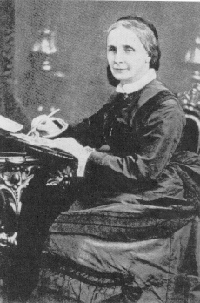
Birth of Brian Coffey, Poet & Publisher

Brian Coffey, Irish poet and publisher, is born in Dún LaoghaireCounty Dublin on June 8, 1905. His work is informed by his Catholicism and by his background in science and philosophy, and his connection to surrealism. For these reasons, he is seen as being closer to an intellectual European Catholic tradition than to mainstream Irish Catholic culture.

Coffey attends the Mount St. Benedict boarding school in GoreyCounty Wexford from 1917 to 1919 and then Clongowes Wood College, in ClaneCounty Kildare from 1919 until 1922. In 1923, he goes to France to study for the Bachelor’s degree in Classical Studies at the Institution St. Vincent, SenlisOise. While still at college, Coffey begins writing poetry. He publishes his first poems in University College Dublin‘s The National Student under the pseudonym Coeuvre.

In the early 1930s, Coffey moves to Paris where he studies Physical Chemistry under Jean Baptiste Perrin, who won the Nobel Prize for Physics in 1926. He completes these studies in 1933, and his Three Poems is printed in Paris by Jeanette Monnier that same year. In 1934 he enters the Institut Catholique de Paris to work with the noted French philosopher Jacques Maritain, taking his licentiate examination in 1936. He then moves to London for a time and contributes reviews and a poem to T.S. Eliot‘s The Criterion magazine. He returns to Paris in 1937 as an exchange student to work on his doctoral thesis on the idea of order in the work of Thomas Aquinas. In 1938, Coffey’s second volume of poetry, Third Person, is published by George Reavey‘s Europa Press.

During the war, Coffey teaches in schools in London and Yorkshire, leaving his young family in Dublin. After the war, he returns to Paris and completes his doctoral thesis. The family then moves so that Coffey can take up a teaching post at the Jesuit Saint Louis University.

By the early 1950s, Coffey becomes uncomfortable for a number of reasons, including the nature of his work, his distance from Ireland and the pressures that inevitably come to bear on an academic who has previously associated with well-known left-wing writers in Paris. For these reasons, he resigns in 1952.

In 1952, Coffey returns to live in London and, from 1973, Southampton. He begins again to publish his poetry and translations, mainly of French poetry. The first work in English to appear after this period of silence is Missouri Sequence, apparently begun in St. Louis but first appearing in the University Review, later known as the Irish University Review, in 1962.

Over the next decade or so, he publishes regularly in the University Review. He also sets up his own publishing enterprise, Advent Press, which publishes work by himself and by younger writers he wants to support.

Brian Coffey dies at the age of 89 on April 14, 1995, and is buried in Southampton, England.

Leave a comment

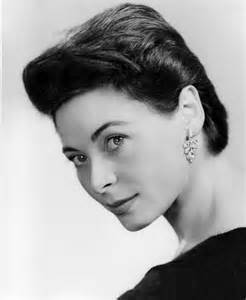
Birth of Stage & Screen Actress Siobhán McKenna

Siobhán McKenna, Irish stage and screen actress, is born Siobhán Giollamhuire Nic Cionnaith into a Catholic and nationalist family in Belfast on May 24, 1923.

McKenna grows up in Galway, where her father is Professor of Mathematics at University College Galway, and in County Monaghan, speaking fluent Irish. She is still in her teens when she becomes a member of an amateur Gaelic theatre group and makes her stage debut at Galway’s Gaelic theatre, the Taibhdhearc na Gaillimhe, in 1940.

McKenna is remembered for her English language performances at the Abbey Theatre in Dublin where she eventually stars in what many consider her finest role in the George Bernard Shaw play, Saint Joan.

While performing at the Abbey Theatre in the 1940s, she meets actor Denis O’Dea, whom she marries in 1946. Until 1970 they live in Richmond Street South, Dublin. They have one child, a son Donnacha O’Dea, who swims for Ireland at the 1968 Summer Olympics and later wins a World Series of Poker bracelet in 1998.

In 1947, McKenna makes her debut on the London stage in The Chalk Garden. She reprises the role on Broadway in 1955, for which she receives a Tony Award nomination for “Best Actress in a Leading Role, Drama.” In 1956, she appears in the Cambridge Drama Festival production of Saint Joan at the Off-Broadway Phoenix Theatre. Theatre critic Elliot Norton calls her performance the finest portrayal of Joan of Arc in memory. Siobhán McKenna’s popularity earns her the cover of Life magazine. She receives a second Tony Best Actress nomination for her role in the 1958 play, The Rope Dancers, in which she stars with Art Carney and Joan Blondell.

Although primarily a stage actress, McKenna appears in a number of made-for-television films and dramas. She also appears in several motion pictures such as King of Kings in 1961, as the Virgin Mary. In 1964, she performs in Of Human Bondage and the following year in Doctor Zhivago. She also appears in the miniseries The Last Days of Pompeii as Fortunata, wife of Gaius, played by Laurence Olivier. She stars in the title role of the Tales of the Unexpected episode “The Landlady.”

McKenna is awarded the Gold Medal of the Éire Society of Boston, for having “significantly fulfilled the ideals of the Éire Society, in particular, spreading awareness of the cultural achievements of the Irish people.”

McKenna’s final stage appearance comes in the 1985 play Bailegangaire for the Druid Theatre Company. Despite surgery, she dies of lung cancer on November 16, 1986, in Dublin, at 63 years of age. She is buried at Rahoon Cemetery in County Galway.

In 1988, two years after her death, McKenna is inducted into the American Theater Hall of Fame. The Siobhán McKenna Theatre in Cultúrlann McAdam Ó Fiaich, in her native Belfast is named in her honour.


Leave a comment

Birth of Irish Author Mary Anne Sadlier

mary-anne-sadlier

Mary Anne Sadlier, Irish author, is born Mary Anne Madden in Cootehill, County Cavan, on December 30, 1820.

Sadlier publishes roughly sixty novels and numerous stories in her lifetime. She writes for Irish immigrants in both the United States and Canada, encouraging them to attend mass and retain the Catholic faith. In so doing, Sadlier also addresses the related themes of anti-Catholicism, the Great Famine, emigration, and domestic work. Her writings are often found under the name Mrs. J. Sadlier.

Upon the death of her father, Francis, a merchant, Mary Madden emigrates to Sainte-Marthe, Quebec in 1844, where she marries publisher James Sadlier, also from Ireland, on November 24, 1846. Sadlier publishes much of her work in the family’s Catholic magazine, The Tablet. Sadlier experiences her most productive literary period after her marriage and is most creative after the time all of her children are born. While living in Canada, Sadlier publishes eighteen books — five novels, one collection of short stories, a religious catechism, and nine translations from the French — in addition to assorted magazine articles she contributes to the Pilot and American Celt free of charge. In New Lights (1853), Sadlier deals with the Great Famine for the first time. The book proves one of her most popular, going through at least eight editions in fifty years. In this novel, Sadlier focuses a polemical attack on the Protestant practice of converting Irish peasants by promising them soup but condemns peasant retaliation and violence.

In the early 1860s, the couple moves to New York City. The Sadlier’s New York home becomes the hub of literary activity in the Catholic community, and Sadlier also enjoys the company of the brightest Irish writers in the United States and Canada, including New York Archbishop John Hughes, editor Orestes Brownson, and Thomas D’Arcy McGee. She holds weekly salons in her Manhattan home, as well as her summer home on Far Rockaway on Long Island. Her closest friend is D’Arcy McGee, a poet, Irish nationalist exile and Canadian statesman known as one of the founding “Fathers of Confederation” who helps bring about Canada’s independence. McGee and Sadlier share an interest in a “national poetry” that does not only capture the spirit of a people but inspires them to political and national independence. While McGee, as a man, can take part in political rallies and organize Irish American support for Home Rule, Sadlier, as a woman, directs her support for Irish independence into literature. McGee’s biographer notes that Sadlier’s success inspires him to write emigrant novels and is planning a novel on this subject at the time of his assassination by an Irish American radical in 1868. His death is a crushing blow to Sadlier and her husband. Sadlier edits a collection of McGee’s poetry in 1869 in tribute to his memory.

Sadlier remains in New York for nine years before returning to Canada, where she dies in Montreal on April 5, 1903. In later years she loses the copyright to all her earlier works, many of which remain in print. One of Mary Anne’s daughters, Anna Theresa Sadlier, also becomes a writer.


Leave a comment

Birth in Belfast of Ian Paisley

ian-paisley

Ian Richard Kyle Paisley, loyalist politician and Protestant religious leader from Northern Ireland is born on April 6, 1926, in Armagh, County Armagh.

Paisley becomes a Protestant evangelical minister in 1946 and remains one for the rest of his life. In 1951, he co-founds the fundamentalist Free Presbyterian Church of Ulster and is its leader until 2008. Paisley becomes known for his fiery speeches and regularly preaches and protests against Catholicism, ecumenism and homosexuality. He gains a large group of followers who are referred to as “Paisleyites.”

Paisley becomes involved in Ulster unionist/loyalist politics in the late 1950s. In the mid-late 1960s he leads and instigates loyalist opposition to the Catholic civil rights movement in Northern Ireland. This leads to the outbreak of The Troubles in the late 1960s, a conflict that engulfs Northern Ireland for the next thirty years. In 1970, he becomes Member of Parliament for North Antrim and the following year he founds the Democratic Unionist Party (DUP), which he leads for almost forty years. In 1979, he becomes a Member of the European Parliament.

Throughout the Troubles, Paisley is seen as a firebrand and the face of hard-line unionism. He opposes all attempts to resolve the conflict through power-sharing between unionists and Irish nationalists/republicans, and all attempts to involve the Republic of Ireland in Northern affairs. His efforts help bring down the Sunningdale Agreement of 1974. He also opposes the Anglo-Irish Agreement of 1985, with less success. His attempts to create a paramilitary movement culminate in Ulster Resistance. Paisley and his party also oppose the Northern Ireland peace process and Good Friday Agreement of 1998.

In 2005, Paisley’s DUP becomes the largest unionist party in Northern Ireland, displacing the Ulster Unionist Party (UUP), which has dominated unionist politics since 1905. In 2007, following the St. Andrews Agreement, the DUP finally agrees to share power with republican party Sinn Féin and consent to all-Ireland governance in certain matters. Paisley and Sinn Féin’s Martin McGuinness become First Minister and deputy First Minister respectively in May 2007. Paisley steps down as First Minister and DUP leader in May 2008 and leaves politics in 2011. Paisley is made a life peer in 2010 as Baron Bannside.

In November 2011, Paisley announces to his congregation that he is retiring as a minister. He delivers his final sermon to a packed attendance at the Martyrs’ Memorial Hall on December 18, 2011, and finally retires from his religious ministry on January 27, 2012.

Paisley dies in Belfast on September 12, 2014. He is buried in Ballygowan, County Down on September 15 following a private funeral and a public memorial for 800 invited guests is held in the Ulster Hall on October 19. An obituary in The New York Times reports that late in life Paisley had moderated and softened his stances against Roman Catholics but that “the legacies of fighting and religious hatreds remained.”