seamus dubhghaill

Promoting Irish Culture and History from Little Rock, Arkansas, USA


Leave a comment

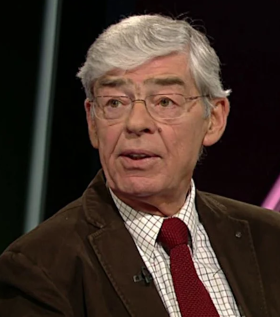
Birth of Alan Dukes, Former Fine Gael Politician

Alan Martin Dukes, former Fine Gael politician, is born in Drimnagh, Dublin, on April 20, 1945. He holds several senior government positions and serves as a Teachta Dála (TD) from 1981 to 2002. He is one of the few TDs to be appointed a minister on their first day in the Dáil.

His father, James F. Dukes, is originally from Tralee, County Kerry, and is a senior civil servant and the founding chairman and chief executive of the Higher Education Authority (HEA), while his mother is from near Ballina, County Mayo.

The Dukes family originally comes from the north of England. His grandfather serves with the Royal Engineers in World War I and settles in County Cork and then County Kerry afterward where he works with the Post Office creating Ireland’s telephone network.

Dukes is educated by the Christian Brothers at Coláiste Mhuire, Dublin, and is offered several scholarships for third level on graduation, including one for the Irish language. His interest in the Irish language continues to this day, and he regularly appears on Irish-language television programmes.

On leaving school he attends University College Dublin (UCD), where he captains the fencing team to its first-ever Intervarsity title.

Dukes becomes an economist with the Irish Farmers’ Association (IFA) in Dublin in 1969. After Ireland joins the European Economic Community (EEC) in 1973, he moves to Brussels where he is part of the IFA delegation. In this role, he is influential in framing Ireland’s contribution to the Common Agricultural Policy (CAP). He is appointed as chief of staff to Ireland’s EEC commissioner Richard Burke, a former Fine Gael politician.

In the 1979 European Parliament election, Dukes stands as a Fine Gael candidate in the Munster constituency. He has strong support among the farming community, but the entry of T. J. Maher, a former president of the IFA, as an independent candidate hurts his chances of election. Maher tops the poll.

He stands again for Fine Gael at the 1981 Irish general election in the expanded Kildare constituency, where he wins a seat in the 22nd Dáil. On his first day in the Dáil, he is appointed Minister for Agriculture by the Taoiseach, Garret FitzGerald, becoming one of only eight TDs so appointed. He represents Kildare for 21 years.

This minority Fine Gael–Labour Party coalition government collapses in February 1982 on the budget but returns to power with a working majority in December 1982. Dukes is again appointed to cabinet, becoming Minister for Finance less than two years into his Dáil career.

He faces a difficult task as finance minister. Ireland is heavily in debt while unemployment and emigration are high. Many of Fine Gael’s plans are deferred while the Fine Gael–Labour Party coalition disagrees on how to solve the economic crisis. The challenge of addressing the national finances is made difficult by electoral arithmetic and a lack of support from the opposition Fianna Fáil party led by Charles Haughey. He remains in the Department of Finance until a reshuffle in February 1986 when he is appointed Minister for Justice.

Fine Gael fails to be returned to government at the 1987 Irish general election and loses 19 of its 70 seats, mostly to the new Progressive Democrats. Outgoing Taoiseach and leader Garret FitzGerald steps down and Dukes is elected leader of Fine Gael, becoming Leader of the Opposition.

This is a difficult time for the country. Haughey’s Fianna Fáil runs on promises to increase spending and government services, and attacking the cutbacks favoured by Fine Gael. However, on taking office, the new Taoiseach and his finance minister Ray MacSharry immediately draw up a set of cutbacks including a spate of ward and hospital closures. This presents a political opportunity for the opposition to attack the government.

However, while addressing a meeting of the Tallaght Chamber of Commerce, Dukes announces, in what becomes known as the Tallaght Strategy that: “When the government is moving in the right direction, I will not oppose the central thrust of its policy. If it is going in the right direction, I do not believe that it should be deviated from its course, or tripped up on macro-economic issues.”

This represents a major departure in Irish politics whereby Fine Gael will vote with the minority Fianna Fáil Government if it adopts Fine Gael’s economic policies for revitalising the economy. The consequences of this statement are huge. The Haughey government is able to take severe corrective steps to restructure the economy and lay the foundations for the economic boom of the nineties. However, at a snap election in 1989, Dukes does not receive electoral credit for this approach, and the party only makes minor gains, gaining four seats. The outcome is the first-ever coalition government for Fianna Fáil, whose junior partner is the Progressive Democrats led by former Fianna Fáil TD Desmond O’Malley.

The party’s failure to make significant gains in 1989 leaves some Fine Gael TDs with a desire for a change at the top of the party. Their opportunity comes in the wake of the historic 1990 Irish presidential election. Fine Gael chooses Austin Currie TD as their candidate. He had been a leading member of the Northern Ireland Civil Rights Association (NICRA) movement in the 1960s and had been a member of the Social Democratic and Labour Party (SDLP) before moving south.

Initially, Fianna Fáil’s Brian Lenihan Snr is the favourite to win. However, after several controversies arise, relating to the brief Fianna Fáil administration of 1982, and Lenihan’s dismissal as Minister for Defence midway through the campaign, the Labour Party’s Mary Robinson emerges victorious. To many in Fine Gael, the humiliation of finishing third is too much to bear and a campaign is launched against Dukes’ leadership. He is subsequently replaced as party leader by John Bruton.

Bruton brings Dukes back to the front bench in September 1992, shortly before the November 1992 Irish general election. In February 1994, Dukes becomes involved in a failed attempt to oust Bruton as leader and subsequently resigns from the front bench. Bruton becomes Taoiseach in December 1994 and Dukes is not appointed to cabinet at the formation of the government.

In December 1996, Dukes returns as Minister for Transport, Energy and Communications following the resignation of Michael Lowry. At the 1997 Irish general election, he tops the poll in the new Kildare South constituency, but Fine Gael loses office. He becomes Chairman of the Irish Council of the European Movement. In this position, he is very involved in advising many of the Eastern European countries who are then applying to join the European Union.

In 2001, Dukes backs Michael Noonan in his successful bid to become leader of Fine Gael.

After 21 years, Dukes loses his Dáil seat at the 2002 Irish general election. This contest sees many high-profile casualties for Fine Gael, including Deputy Leader Jim Mitchell, former deputy leader Nora Owen and others. Many local commentators feel that Dukes’ loss is due to a lack of attention to local issues, as he is highly involved in European projects and has always enjoyed a national profile.

He retires from frontline politics in 2002 and is subsequently appointed Director General of the Institute of International and European Affairs. He remains active within Fine Gael and serves several terms as the party’s vice-president. From 2001 to 2011, he is President of the Alliance française in Dublin, and in June 2004, the French Government appoints him an Officer of the Legion of Honour. In April 2004, he is awarded the Commander’s Cross of the Order of Merit of the Republic of Poland.

In December 2008, Dukes is appointed by Finance Minister Brian Lenihan Jnr as a public interest director on the board of Anglo Irish Bank. The bank is subsequently nationalised, and he serves on the board until the Irish Bank Resolution Corporation (IBRC) is liquidated in 2013.

From 2011 to 2013, Dukes serves as chairman of the Board of Irish Guide Dogs for the Blind. In 2011, he founds the think tank Asia Matters, which inks an agreement with the Chinese People’s Association for Friendship with Foreign Countries in May 2019.

Dukes has lived in Kildare since first being elected to represent the Kildare constituency in 1981. His wife Fionnuala (née Corcoran) is a former local politician and serves as a member of Kildare County Council from 1999 until her retirement in 2009. She serves as Cathaoirleach of the council from 2006 to 2007, becoming only the second woman to hold the position in the body’s one-hundred-year history. They have two daughters.

Leave a comment

Birth of Thomas Pringle, Irish Independent Politician

Thomas Pringle, an Irish independent politician who has been a Teachta Dála (TD) for the Donegal constituency since the 2016 Irish general election, is born into an Irish Republican family in Dublin on August 30, 1967. From 2011 to 2016 he is the TD for the Donegal South-West constituency.

Pringle’s father, Peter, is a supporter of the Irish Republican Socialist Party (IRSP) and is convicted of the killing of two members of the Gardaí in 1980, a conviction that is subsequently declared as unsafe, although it has not been certified as a miscarriage of justice. Pringle is a patron of the People’s Movement, which campaigns against the Treaty of Lisbon. He is previously a member of Donegal County Council, where he manages a water treatment plant and is a shop steward, having been elected as an independent member in the 1999 Irish local elections, and then as a Sinn Féin candidate in the 2004 Irish local elections. He leaves Sinn Féin in 2007 and retains his seat as an independent in the 2009 Irish local elections.

Pringle is elected as a TD for the Donegal South-West constituency at the 2011 Irish general election, unseating the incumbent Tánaiste Mary Coughlan. He quickly becomes an ally of Luke ‘Ming’ Flanagan, elected as an independent TD at the same time as Pringle, but for the Roscommon–South Leitrim constituency. Flanagan and Pringle go on to support each other on many issues, including reform of the Common Agricultural Policy (CAP) and opposition to the Mercosur deal. Even when Flanagan is elected as a Member of the European Parliament (MEP) for the Midlands–North-West constituency after spending three years in the Dáil, he and Pringle continue to work together, and Flanagan visits Donegal to canvass for Pringle ahead of the 2020 Irish general election.

On December 5, 2011, Pringle delivers a televised address to the nation, representing the technical group of TDs in Dáil Éireann. He does so in response to Taoiseach Enda Kenny‘s address to the nation of the previous evening. Later that month, he calls on people for support in a campaign not to pay a new household charge brought in as part of the latest austerity budget and announces that he will not register for the tax or pay it.

In February 2012, Pringle publishes his expenses online. He is elected leader of the technical group in Dáil Éireann in March 2012.

In May 2012, Pringle brings an unsuccessful High Court challenge over the 2012 European Fiscal Compact referendum and the European Stability Mechanism (ESM) Treaty which is appealed to the Supreme Court in July 2012. In July 2012, the Irish Supreme Court decides to refer three questions to the Court of Justice of the European Union (CJEU) arising out of his challenge of the European Stability Mechanism Treaty and doubts about the ESM’s legality under the Treaties of the European Union. The CJEU holds an oral hearing on the referral on October 23, 2012. It is the first time that the full court sits to hear a reference from a member state of the Union. The 27 judges hear oral arguments from the counsel for Pringle, Ireland, nine other member states, the Commission, the Council, and the European Parliament. On November 27, 2012, the EU Court of Justice dismisses Pringle’s arguments and rules that the ESM is in accordance with the Treaties.

In the 2016 Irish general election, after a re-drawing of constituency boundaries, Pringle campaigns in the new five-seater Donegal constituency. He is re-elected to the final seat by a margin of just 184 votes over Sinn Féin’s Pádraig Mac Lochlainn. During negotiations to form a government, Pringle says he is glad not to have signed up to the Independent Alliance, after that group enters talks with Taoiseach Enda Kenny. He says that unless Kenny or Fianna Fáil leader Micheál Martin sign up to Right2Change, he will not support either as Taoiseach.

As of April 2016, Pringle had become a member of the Independents 4 Change technical group in the Dáil.

In May 2016, Pringle introduces legislation designed to retain water in public ownership and avoid further privatisation.

Pringle puts forward a bill calling on the government to end public spending from fossil fuels, which passes, making Ireland the first country to fully divest public money from fossil fuels. In June 2022, he puts forward a bill proposing a referendum on lowering the voting age to sixteen.

Pringle is married and has three children.


Leave a comment

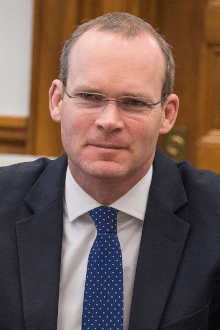
Birth of Simon Coveney, Minister of Foreign Affairs & Deputy Leader of Fine Gael

Simon Coveney, Fine Gael politician who has served as Minister for Foreign Affairs and Deputy Leader of Fine Gael since 2017 and Minister for Defence since 2020, is born in Cork, County Cork, on June 16, 1972.

Coveney is born to Hugh Coveney, a chartered quantity surveyor and later a TD, and Pauline Coveney. His uncle is Archbishop Patrick Coveney. His brother, Patrick, is chief executive of the food corporation Greencore. He is educated locally in Cork, before later attending Clongowes Wood College, County Kildare. He is expelled from the college in Transition Year but ultimately is invited back to complete his full six years there. He repeats his Leaving Certificate in Bruce College in Cork. He subsequently attends University College Cork and Gurteen College, County Tipperary, before completing a BSc in Agriculture and Land Management from Royal Agricultural College, Gloucestershire.

A keen fan of all competitive sport, Coveney plays rugby for Garryowen, Cork Constitution and Crosshaven Rugby Club. In 1997-98, he leads the “Sail Chernobyl Project” which involves sailing a boat 30,000 miles around the world and raising €650,000 for charity. He is a qualified sailing instructor and lifeguard. He spends several years working as an agriculture adviser and farm manager.

Coveney is first elected to Dáil Éireann in a 1998 by-election as a Fine Gael candidate for Cork South-Central. He holds Shadow Ministries in the areas of Drugs and Youth Affairs, Communications, Marine and Natural Resources, and Transport. He chairs the Fine Gael Policy Development Committee prior to the 2011 Irish general election.

Coveney is a member of Cork County Council and the Southern Health Board from 1999 to 2003.

Coveney is elected to the European Parliament in 2004 and is a member of the EPP-ED group. He is a member of the Committee on Foreign Affairs and the Internal Market and Consumer Protection Committee. He is the author of the European Parliament’s Annual Report on Human Rights in the World for the year 2004 and again for 2006.

Coveney is named Tánaiste by Leo Varadkar, replacing Frances Fitzgerald, on November 30, 2017, a position he holds until June 27, 2020. He also serves as Minister for Housing, Planning and Local Government as well as Minister for Agriculture, Food and the Marine. For the six-month period ending June 2013, he chairs the EU Council of Agriculture & Fisheries Ministers where he is at the forefront regarding EU efforts in respect of Common Agricultural (CAP) as well as Common Fisheries (CFP) Policy reforms. Under his chairmanship both dossiers are progressed significantly, with a reform package for CFP agreed in May 2013 and a reform package for CAP agreed at the end of the Irish Presidency in July. The Defence portfolio is added to his brief on July 11, 2014.

In July 2008, Simon marries his long-time girlfriend Ruth Furney, an IDA Ireland employee. They have three daughters and currently live in Carrigaline, County Cork.


Leave a comment

Birth of Raymond Crotty, Economist, Writer, Academic & Farmer

Raymond Dominick Crotty, economist, writer, academic and farmer who is known for his opposition to Ireland’s membership of the European Union, is born in Kilkenny, County Kilkenny on January 22, 1925.

Crotty grows up in Kilkenny and, while a student at St. Kieran’s College, Kilkenny, he begins breeding pigs in his spare time. Rather than move on to university, he pursues his interest in agriculture by going to work for a farmer relative in 1942. A year later he undertakes a 12-month course at the Albert Agricultural College in Glasnevin, Dublin. In 1945, he purchases a 204-acre farm in Dunbell, not far from Kilkenny, and spends the next two decades putting into practice his developing knowledge of agricultural production.

In 1956, while still a farmer, Crotty enrolls as a distance-learning student at the University of London, obtaining a BSc (Econ.) degree in 1959. He spends two further years studying for a MSc (Econ.) degree at the London School of Economics. In 1961, he obtains a post as lecturer in Agricultural Economics at University of Wales, Aberystwyth. During the 1960s, he sells his farm and becomes an economic adviser to various development agencies, including the World Bank. His work brings him to various parts of the developing world, including Latin America, India, and Africa. In 1976, he receives a fellowship at the University of Sussex. In 1982, he becomes a lecturer in statistics at Trinity College, Dublin.

Crotty’s knowledge and experience of agricultural economics shapes his attitude to Ireland’s participation in the European Economic Community. His years as a farmer teaches him that Irish agriculture is structured so as to discourage efficient use of the land.

Crotty grows to believe that agricultural efficiency can best be achieved by the imposition of an annual land tax. This would allow taxes on inputs and outputs to be removed or reduced and would encourage only those prepared to maximise the potential of their land to remain in farming. In putting forward this proposal, he is reflecting the influence of American economist Henry George, who held that land owned by private individuals should be subject to a tax on the land because of the advantage bestowed on the owner. He believes that Irish agriculture would be damaged if Ireland joined the European Economic Community (EEC) as, instead of becoming more efficient, farmers would grow to depend on external subsidies under the Common Agricultural Policy (CAP).

Furthermore, Crotty maintains that Ireland’s status as an ex-colony makes it unsuited for membership of a bloc of nations that include former colonial powers. In 1962, in the early stages of the public debate on whether Ireland should join the EEC, he expresses his concerns about the possible loss of Ireland’s national identity within what he termed a “European super state.”

In 1972, Crotty joins Trinity College academic Anthony Coughlan in opposing Ireland’s accession to the EEC. Over the next twenty years he campaigns against further integration of Ireland into the EEC, most notably during the attempts to ratify the Single European Act in the mid-1980s. He stands for election in the 1989 European Parliament election as a candidate in the Dublin constituency. He receives 25,525 votes (5.69% of the valid votes cast), not enough to elect him. In 1992, he once again allies himself with Coughlan in urging Irish voters to reject the Maastricht Treaty in the referendum held on June 18.

Despite failing to win majority support for his views in elections and referendums, Crotty continues until the end of his life his campaign against Ireland’s membership of the European Union.

Crotty is a prolific writer, producing books, pamphlets, articles, and letters on subjects such as economics, history, and Ireland’s involvement with Europe. His final work, When Histories Collide: The Development and Impact of Individualistic Capitalism, is edited by his son Raymond and published posthumously in 2001. It is an economic history of mankind from the earliest stages of human development to the present day. Reviewing it on behalf of the American Sociological Association, Professor Michael Mann of University of California, Los Angeles (UCLA) describes it as “an extraordinary book by an extraordinary man” and “a must-read.”

Raymond Crotty dies at St. Vincent’s Hospital, Dublin, at the age of 68, on January 1, 1994, and is buried in Tulla Cemetery outside Kilkenny.