Bushe is born at Kilmurry House, near Thomastown, County Kilkenny, the only son of the Reverend Thomas Bushe, rector of Mitchelstown, and his wife Katherine Doyle, daughter of Charles Doyle of Bramblestown, near Gowran. Kilmurry House had been built by the Bushe family in the 1690s. His father is forced to sell it to pay his debts, but he is able to repurchase it in 1814. He goes to the celebrated Quaker academy, Shackleton’s School in Ballitore, County Kildare, then graduates from Trinity College Dublin (TCD), where his eloquence makes him a star of the College Historical Society. He is called to the Bar in 1790.
Bushe is a member of the Irish Parliament for Callan from 1796 to 1799, and for Donegal Borough from 1799 to 1800. He is Escheator of Leinster in 1799. By this time the office is a sinecure. He is vehemently opposed to the Acts of Union 1800, referring emotionally to Britain’s subjection of Ireland as “six hundred years of uniform oppression and injustice,” a phrase which quickly became a proverb. Although he refuses an offer of a place on the Bench as a bribe for supporting the Union, cynics note that his staunch opposition to the Union does not prevent him accepting high office under the British Crown afterwards. He is appointed Solicitor-General for Ireland in 1805 and holds the office for 17 years until in 1822 he is appointed Lord Chief Justice of the King’s Bench for Ireland, although only after William Saurin, the equally long-serving Attorney-General, refuses the position. He retire in 1841.
As an advocate “silver-tongued Bushe” is legendary for his eloquence, and as a politician, he is admired by his English contemporaries like Sir Robert Peel and Lord Brougham. As a judge, according to F. Elrington Ball, he does not live up to expectations, although, if not an outstanding judge, he is an impressive and dignified one. As a statesman he is often accused of double-dealing: having opposed the Acts of Union, he has few scruples about accepting office under the new regime; and while himself supporting Catholic Emancipation, he prosecutes members of the Catholic Association for sedition, merely for advocating the same cause.
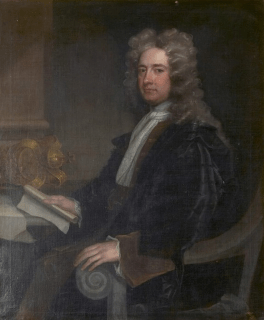
William Conolly, Irish politician, Commissioner of Revenue, lawyer and landowner also known as Speaker Conolly, resigns as Speaker of the Irish House of Commons on October 13, 1729, on grounds of ill health. Sir Ralph Gore is elected unanimously in his place. His name is spelled Conolly rather than the more familiar Connolly, derived ultimately from the Gaelic surname “Ó Conghalaigh.”
Conolly is born on April 9, 1662, in Ballyshannon, County Donegal, the son of an innkeeper, Patrick Conolly. His father is a native of County Monaghan, and a descendant of the Ó Conghalaigh clan of Airgíalla, who settles in County Donegal, embraces the Anglican Church, and has children William, Patrick, Hugh, Phelim and Thady. His father sets aside enough money that he is able to send Conolly to Dublin to study law. He qualifies as an attorney in 1685, aged twenty-three.
Conolly practises as a lawyer in Dublin and in 1694 he marries Katherine Conyngham, daughter of General Sir Albert Conyngham. The Conynghams are an Ulster Scots family who are originally from Mountcharles in County Donegal. The family later settles at Slane Castle in County Meath in the 1780s, where the Conynghams still reside. They have no children, and on Katherine’s death in 1752 the estates are inherited by William James Conolly, his nephew by his brother Patrick.
Conolly makes his fortune from land transfers, following the confiscations by the Crown of lands belonging to supporters of King James II, in the wake of the Glorious Revolution and the accession of William III and Mary II in 1688–91, known as the “Williamite War in Ireland.” About 600,000 Irish acres are confiscated to be sold to pay for the costs of the war, nearly 5% of the land area of Ireland. Conolly is the largest individual buyer, in particular buying 3,300 acres in County Meath that had been assigned to the Earl of Albemarle.
Conolly builds the first winged Palladian house in Ireland, Castletown House in Celbridge, County Kildare, starting in 1722, and specifies that every part of it has to be made from Irish materials. His Dublin townhouse is on Capel Street, then the most fashionable part of the city. He also commissions the former Customs House (now the site of the Clarence Hotel) and the Irish Houses of Parliament, the world’s first building specifically designed as a bicameral parliament.
Conolly is the most important of the “Undertakers,” the managers of Government business in the Irish House of Commons, in the early 18th century. He is associated with the moderate faction of Whigs and is opposed by the Brodrick faction from Cork. He is a Member of Parliament for Donegal Borough from 1692 to 1703 and subsequently for Londonderry County until his death in 1729. In 1703 and 1713, he is also elected for Newtown Limavady and in 1727 for Ballyshannon but chooses each time not to sit.
Conolly is Speaker of the Irish House of Commons and a Commissioner of the Revenue from 1715 to his death in 1729. He is re-elected as Speaker of the House of Commons in the first session of George II‘s parliament and continues to serve until he collapses in the Commons on September 26, 1729. He is eventually persuaded to resign the Speaker’s chair on October 13, and he dies at his house in Capel Street, Dublin, on October 30. He is buried in Celbridge following a spectacular public funeral, which sees the beginnings of the custom of mourners wearing linen scarves to promote the Irish linen industry.
On his death, the Archbishop of Armagh, Hugh Boulter, estimates Conolly’s income in 1729 at £17,000 p.a. His widow Katherine continues to live in style at Castletown until her death in 1752. She builds the Wonderful Barn and the Conolly Folly in the 1740s. Then their estates pass briefly to William’s nephew William junior, and then on to his great-nephew Thomas Conolly M.P., known as “Squire Tom,” who is married to Lady Louisa Conolly.
A pub in Celbridge, The Speaker’s Bar, is named in his memory. There is also a pub in Firhouse, Dublin, called The Speaker Conolly named after him.


 seamus dubhghaill