seamus dubhghaill

Promoting Irish Culture and History from Little Rock, Arkansas, USA


Leave a comment

Death of Irish Dramatist George Farquhar

George Farquhar, Irish dramatist, dies in London on April 29, 1707. He is noted for his contributions to late Restoration comedy, particularly for his plays The Constant Couple (1699), The Recruiting Officer (1706) and The Beaux’ Stratagem (1707).

Born in Derry in 1677, Farquhar is one of seven children born to William Farquhar, a clergyman of modest means. The author of “Memoirs of Mr. George Farquhar,” a biographical sketch prefixed to certain 18th-century editions of his works, claims that he “discovered a Genius early devoted to the Muses. When he was very young, he gave Specimens of his Poetry; and discovered a Force of Thinking, and Turn of Expression, much beyond his years.”

Farquhar is educated at Foyle College and later enters Trinity College Dublin at age seventeen as a sizar under the patronage of the Bishop of Dromore, who may have been related to Farquhar’s mother. He may have initially intended to follow his father’s profession and become a clergyman but is “unhappy and rebellious as a student” and leaves college after two years to become an actor. His 18th-century biographer claims that the departure is because “his gay and volatile Disposition could not long relish the Gravity and Retirement of a College-life,” but another story of uncertain veracity has him being expelled from Trinity College due to a “profane jest.” The two accounts are not necessarily mutually exclusive.

Farquhar joins a company performing on the Dublin stage, probably through his acquaintance with the well-known actor Robert Wilks. However, he is reportedly not that impressive as an actor. It is said that “his voice was somewhat weak” and that “his movements [were] stiff and ungraceful.” But he is well received by audiences and thought to continue in this career “till something better should offer.” Some of the roles reportedly played by Farquhar are Lennox in William Shakespeare‘s Macbeth, Young Bellair in The Man of Mode by George Etherege, Lord Dion in Philaster by Francis Beaumont and John Fletcher, and Guyomar in The Indian Emperour by John Dryden.

During one of the performances in the Dryden play, an accident on stage puts an end to Farquhar’s acting career. As Guyomar, he is supposed to “kill” Vasquez, one of the Spanish generals in the drama. Forgetting to exchange his sword for a foil before enacting this scene, he severely wounds Price, the actor playing Vasquez. Although Price recovers, Farquhar resolves after this mishap to give up acting for good.

Farquhar then leaves for London, “possibly with a draft of his first play in his portmanteau.” Some writers tie his move to that of his friend Wilks, who had received an offer from the manager of Drury Lane to come to London and join that theatre. Wilks is also credited with encouraging Farquhar’s efforts at writing plays.

Farquhar’s first comedy, Love and a Bottle, premieres in 1698 and is well received by the audience. Called a “licentious piece” by one scholar and cited as proof that Farquhar had “absorbed the stock topics, character-types, and situations of Restoration comedy” by another, the play deals with Roebuck, “An Irish Gentleman of a wild roving Temper” who is “newly come to London.” The general character of the play can be evaluated by considering that in the opening scene, Roebuck tells his friend Lovewell that he has left Ireland due to getting a woman pregnant with twins and to Roebuck’s father trying to force Roebuck to marry the woman; however, Roebuck remarks, “Heav’n was pleas’d to lessen my Affliction, by taking away the She-brat.”

After the favourable reception of Love and a Bottle, Farquhar decides to devote himself to playwriting. He also at this point receives a commission in the regiment of the Earl of Orrery, so his time for the next few years is divided between the vocations of soldier and dramatist. It is also at about this time that he discovers Anne Oldfield, who is reading aloud a scene from The Scornful Lady at her aunt’s tavern. Impressed, he brings her to the notice of Sir John Vanbrugh, and this leads to her theatrical career, during which she is the first performer of major female roles in Farquhar’s last comedies.

In 1700, Farquhar’s The Constant Couple is acted at Drury Lane and proves a great success, helped considerably by his friend Wilks’ portrayal of the character of Sir Henry Wildair. The playwright follows up with a sequel, Sir Harry Wildair, the following year, and in 1702 writes the comedies The Inconstant and The Twin Rivals. Also in 1702, he publishes Love and Business, a collection that includes letters, verse, and A Discourse Upon Comedy.

The next year, Farquhar marries Margaret Pemell, “a widow with three children, ten years his senior,” who reportedly tricks him into the marriage by pretending to have a great fortune. His 18th century biographer records that “though he found himself deceived, his Circumstances embarrassed, and his Family increasing, he never upbraided her for the Cheat but behaved to her with all the Delicacy and Tenderness of an indulgent Husband.” He is engaged in recruiting for the army, due to the War of the Spanish Succession, for the next three years, writing little except The Stage Coach in collaboration with Peter Motteux, an adaptation of a French play. He draws on his recruiting experience for his next comedy, The Recruiting Officer (1706). However, he has to sell his army commission to pay debts, reportedly after the Duke of Ormonde advises him to do so, promising him another but failing to keep his promise.

Early in 1707, Farquhar’s friend Wilks visits him. Farquhar is ill and in distress, and Wilks is said to have “cheered him with a substantial present and urged him to write another comedy.” This comedy, The Beaux’ Stratagem, is given its première on March 8, 1707. It is known from Farquhar’s own statement prefacing the published version of the play that he wrote it during his sickness:

“The reader may find some faults in this play, which my illness prevented the amending of; but there is great amends made in the representation, which cannot be match’d, no more than the friendly and indefatigable care of Mr. Wilks, to whom I chiefly owe the success of the play.”

Farquhar dies in London on April 29, 1707, not quite two months after the opening of this last play. He is buried on May 3 in St. Martin-in-the-Fields, a Church of England parish church in the City of Westminster, London.


Leave a comment

Birth of Playwright Thomas Cornelius Murray

thomas-cornelius-murray

Thomas Cornelius Murray, Irish dramatist who is closely associated with the Abbey Theatre, is born in Macroom, County Cork on January 17, 1873.

Murray is educated at St. Patrick’s Teacher Training College in Drumcondra, Dublin. He works as a schoolteacher and in 1900 is appointed headmaster of the national school in Rathduff, County Cork. His first play, The Wheel of Fortune, is produced in 1909 by the Little Theatre in Cork, a theatre he had co-founded with Daniel Corkery, Con O’Leary and Terence MacSwiney. The play is revised and renamed Sovereign Love in 1913. In 1915, he moves to Dublin as headmaster of the Model Schools at Inchicore, where he remains until his retirement from teaching in 1932.

Murray’s play Birthright is performed in the Abbey Theatre in 1910 and establishes him as a writer of force. In all, he writes fifteen plays, all of which are produced by the Abbey. His two most highly regarded works are Maurice Harte (1912) and Autumn Fire (1924). Both of these and Birthright are performed in New York City on Broadway, with Autumn Fire having a run of 71 performances. He also writes an autobiographical novel Spring Horizon (1937).

It has been stated both by A. DeGiacomo and by R. Allen Cave that, in the Art competitions at the 1924 Summer Olympics in Paris, France, Murray is awarded a bronze medal for his play Birthright. However, according to the official record for the games, although Murray is a participant in the literature category with this play and also with Maurice Harte, he does not win a medal.

T. C. Murray dies in Dublin on March 7, 1959.


Leave a comment

Birth of Hugh Leonard, Dramatist, Writer & Essayist

hugh-leonard

Hugh Leonard, Irish dramatist, television writer and essayist, is born in Dublin on November 9, 1926. In a career that spans 50 years, he writes nearly 30 full-length plays, 10 one-act plays, three volumes of essays, two autobiographies, three novels and numerous screenplays and teleplays, as well as writing a regular newspaper column.

After birth, Leonard is put up for adoption. Raised in Dalkey, a suburb of Dublin, by Nicholas and Margaret Keyes, he changes his name to John Keyes Byrne. For the rest of his life, despite the pen name of “Hugh Leonard” which he later adopts and becomes well known by, he invites close friends to call him “Jack.”

Leonard is educated at the Harold Boys’ National School, Dalkey, and Presentation College, Glasthule, winning a scholarship to the latter. He works as a civil servant for fourteen years. During that time, he both acts in and writes plays for community theatre groups. His first play to be professionally produced is The Big Birthday, which is mounted by the Abbey Theatre in Dublin in 1956. His career with the Abbey Theatre continues until 1994. After that his plays are produced regularly by Dublin’s theatres.

Leonard moves to Manchester for a while, working for Granada Television before returning to Ireland in 1970. There he settles in Dalkey.

During the 1960s and 1970s, Leonard is the first major Irish writer to establish a reputation in television, writing extensively for television including original plays, comedies, thrillers and adaptations of classic novels for British television. He is commissioned by RTÉ to write Insurrection, a 50th anniversary dramatic reconstruction of the Easter Rising of 1916. His Silent Song, adapted for the BBC from a short story by Frank O’Connor, wins the Prix Italia in 1967. He writes the script for the RTÉ adaptation of Strumpet City by James Plunkett.

Three of Leonard’s plays have been presented on Broadway: The Au Pair Man (1973), which stars Charles Durning and Julie Harris, Da (1978) and A Life (1980). Of these, Da, which originates off-off-Broadway at the Hudson Guild theatre before transferring to the Morosco Theatre, is the most successful, running for 20 months and 697 performances, then touring the United States for ten months. It earns Leonard both a Tony Award and a Drama Desk Award for Best Play. It is made into a film in 1988, starring Martin Sheen and Barnard Hughes, who reprises his Tony Award-winning Broadway performance.

Leonard writes two volumes of autobiography, Home Before Night (1979) and Out After Dark (1989). Some of his essays and journalism are collected in Leonard’s Last Book (1978) and A Peculiar People and Other Foibles (1979). In 1992 the Selected Plays of Hugh Leonard is published. Until 2006 he writes a humorous weekly column, “The Curmudgeon,” for the Irish Sunday Independent newspaper. He has a passion for cats and restaurants, and an abhorrence of broadcaster Gay Byrne.

Even after retiring as a Sunday Independent columnist, Leonard displays an acerbic humour. In an interview with Brendan O’Connor, he is asked if it galls him that Gay Byrne is now writing his old column. His reply is, “It would gall me more if he was any good at it.” He is a patron of the Dublin Theatre Festival.

In 1994, Leonard appears in a televised interview with Gerry Adams, president of Sinn Féin, an Irish political party associated with the Provisional Irish Republican Army. He has long been an opponent of political violence and a critic of the IRA. However, on the show and afterwards he is criticised for being “sanctimonious and theatrical” towards Adams. At one point he refers to Sinn Féin as “dogs.”

Hugh Leonard – Odd Man In, a film on his life and work is shown on RTÉ in March 2009. Leonard’s final play, Magicality, is not performed during his lifetime. A rehearsed reading of the second act is staged at the Dalkey Castle and Heritage Centre in June 2012.

Hugh Leonard dies after a long illness on February 12, 2009, in his hometown of Dalkey at the age of 82, leaving €1.5 million in his will.


Leave a comment

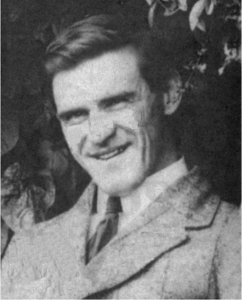
Birth of Dramatist George Shiels

George Shiels, Irish dramatist whose plays are a success both in his native Ulster and at the Abbey Theatre in Dublin, is born in Ballymoney, County Antrim on June 24, 1881. His most famous plays are The Rugged Path, The Passing Day, and The New Gossoon.

Shiels is born to Robert Shiels and Eileen (née MacSweeney). He emigrates to Canada as a young man. While working on the building of the Canadian Pacific Railway in 1913, he is involved in a serious accident that leaves him in a wheelchair for the rest of his life. He returns to Ballymoney and starts a shipping company with his brother and also begins writing. Starting with poems and short stories, he soon progresses to plays, which he provides to the Ulster Literary Theatre under the pen name of George S. Morsheils.

Starting with Bedmates (1921), his plays begin to be regularly accepted by the Abbey Theatre for production. His 1930 work The New Gossoon is so well-received that the Abbey’s touring company, The Abbey Theatre Irish Players, bring the play to Broadway for limited runs three times, in 1932, 1934, and 1937. In 1940, a production of Shiels’ The Rugged Path sets an Abbey record by attracting a total audience of 25,000 people over eight weeks.

When his success as a playwright allows him, he leaves the shipping business and moves to Carnlough on the coast of County Antrim, where he lives from 1932 until his death on September 19, 1949.