seamus dubhghaill

Promoting Irish Culture and History from Little Rock, Arkansas, USA


Leave a comment

Death of David Neligan, Intelligence Agent & Police Detective

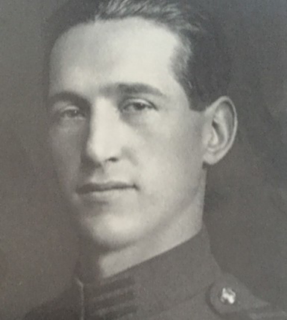
David Neligan, intelligence agent, police detective and superintendent known by his sobriquet “The Spy in the Castle,” dies on October 6, 1983, at St. Vincent’s Hospital in Dublin. He is a figure involved in the Irish War of Independence (1919–21) and subsequently becomes Director of Military Intelligence for the Irish Army after the Irish Civil War (1922–23).

Neligan is born on October 14, 1899, at TempleglantineCounty Limerick, where his parents, David and Elizabeth Neligan (née Mullan), are primary school teachers. He is an accomplished hurler with his local Templeglantine GAA club. In 1917, he joins the Irish Volunteers, the military organisation established in 1913 by Irish nationalists.

Against his father’s wishes, Neligan joins the Dublin Metropolitan Police (DMP) – also in 1917. Picking up travel documentation from the local Royal Irish Constabulary barracks, he declines a suggestion that he enlist in this armed rural force. After service as a uniformed constable with the DMP, he is promoted to Detective and transferred into the Department’s widely hated counterintelligence and anti-political-subversion unit, the G Division, in 1919. In May 1920, his elder brother Maurice (1895–1920), an Irish Republican Army (IRA) member and friend of Michael Collins, persuades him to resign from the DMP.

After his resignation, Neligan returns to his native County Limerick with the intention of joining the Limerick IRA. Shortly afterward, Maurice is killed in a motorcycle accident, near their home in Templeglantine. In the meantime, Neligan also receives word from a family friend that Michael Collins wishes to meet with him in Dublin. Collins is outraged that Neligan has been allowed to resign and persuades him to rejoin the DMP as a mole for the intelligence wing of the IRA. Along with Detectives Eamon Broy and James McNamara, Neligan acts as a highly valuable agent for Collins and passes on reams of vital information. He leaks documents about the relative importance of police and military personnel and also warns insurgents of upcoming raids and ambushes. There are unconfirmed rumors that Neligan might be a double agent working for British interests.

In 1921, Collins orders Neligan to let himself be recruited into MI5 and he uses the opportunity to memorise their passwords and the identities of their agents. All of this is passed on to Collins. After Broy and McNamara are dismissed in 1921, Neligan becomes Collins’ most important mole inside Dublin Castle.

On the outbreak of the Irish Civil War in June 1922, Neligan joins the Irish Army in Islandbridge Barracks with the rank of Commandant, and is attached to the Dublin Guard. He is involved in the seaborne assault on Fenit, County Kerry, and spends the remainder of the war serving as a military intelligence officer operating between Ballymullen BarracksTralee and Killarney. He is involved in atrocities alongside Paddy Daly including the Ballyseedy massacre, mock executions and the torture of prisoners using crowbars and is sometimes referred to as the “Butcher of Kerry.” In 1923, he is posted to Dublin, where he is promoted to Colonel and succeeds Diarmuid O’Hegarty as the Irish Army’s Director of Military Intelligence.

In 1924, Neligan hands over his post to the youthful Colonel Michael Joe Costello and takes command of the DMP, which still continues as a force separate from the newly established Garda Síochána, with the rank of Chief Superintendent. The next year he transfers to the Garda when the two police forces are amalgamated, and is instrumental in the foundation of the Garda Special Branch. When Éamon de Valera becomes head of government in 1932, his republican followers demand Neligan’s dismissal. Instead, Neligan is transferred to an equivalent post in the Irish Civil Service. In June 1935, he is married to fellow civil servant Sheila Maeve Rogan. They have one son and three daughters, and reside at 15 St. Helen’s Road, Booterstown, Dublin.

Neligan draws pensions from the DMP, the British MI5, the Garda Síochána and the Irish Civil Service. He also receives an “Old IRA” pension through the Department of Defence.


Leave a comment

Death of Paddy Daly, IRA Volunteer & National Army Officer

Paddy Daly, sometimes referred to as Paddy O’Daly, dies at his home in County Dublin on January 16, 1957. He serves in the Irish Republican Army (IRA) during the Irish War of Independence (1919–1921) and subsequently holds the rank of major general in the Irish National Army from 1922 to 1924.

Daly is born in Dublin in 1888. He fights in the 1916 Easter Rising under the command of his namesake Edward Daly, leading the unsuccessful attempt to destroy the Magazine Fort in the Phoenix Park. He is later wounded in the particularly vicious fighting near the Linenhall. He is subsequently interned in Frongoch internment camp for his part in the rebellion until 1918, when he is released as part of a general amnesty for Irish prisoners.

During the Irish War of Independence, Daly serves as leader of the “Squad,” Michael Collins‘ assassination unit.

On December 19, 1919, Daly along with Dan Breen lead an abortive ambush, at Ashtown railway station near the Phoenix Park, on the British Viceroy, Lord Lieutenant of Ireland and Supreme Commander of the British Army in Ireland, Lord French, as he returns from a private party which he had hosted the previous evening at his country residence in Frenchpark, County Roscommon. Lord French escapes the ambush, but Martin Savage is shot dead.

Daly and the men under his command are responsible for the killing of many British intelligence officers, in particular District Inspector Redmond, who had been putting increasing pressure on the Squad. Daly himself personally kills several people, including Frank Brooke, director of Great Southern and Eastern Railway, who serves on an advisory council to the British military, in June 1920. He does not directly lead any of the attacks on Bloody Sunday but is on standby in one of the Squad’s safe houses. In the aftermath, November 23, 1920, he is arrested and interned in Abercorn Barracks in Ballykinler, County Down.

Daly is released on parole from Ballykinler in March 1921, the British apparently being unaware of his senior position within the Dublin Brigade of the IRA. After his release, he, along with Emmet Dalton, is also involved in the attempt to free Seán Mac Eoin from Mountjoy Prison on May 14, 1921. He and his men hijack a British Army Peerless armoured car in Clontarf at the corporation abattoir, while it is escorting a consignment of meat to a barracks and shoot dead two soldiers in the process. The plan involves Dalton and Joe Leonard impersonating two British army officers and using forged documents to “transfer” MacEoin to Dublin Castle. They gain entry to Mountjoy but are discovered before they can free MacEoin and have to shoot their way out. They later abandon the armoured car after removing the Hotchkiss machine guns and setting fire to what they can. Toward the end of the war, in May 1921, the two principal fighting units of the IRA’s Dublin Brigade, the “Squad” and the “Active Service Unit” are amalgamated after losses suffered in the burning of the Custom House. Daly is named Officer Commanding (OC) of this new unit, which is named the Dublin Guard.

Daly’s own account of his activities during the Irish War of Independence is held at the Bureau of Military History in Cathal Brugha Barracks.

After the Anglo-Irish Treaty splits the IRA, Daly and most of his men side with the pro-treaty party, who go on to found the Irish Free State. He is appointed to the rank of brigadier in the newly created Irish National Army, which is inaugurated in January 1922. When the Irish Civil War breaks out in June 1922, he commands the Free State’s troops who secure Dublin, after a week of fighting.

In August 1922, during the Irish Free State offensive that re-takes most of the major towns in Ireland, Daly commands a landing of 450 troops of the Dublin Guard at Fenit, County Kerry, which goes on to capture Tralee from the anti-treaty forces. Acting with severe brutality in Kerry, he comments that, “nobody had asked me to take kid-gloves to Kerry, so I didn’t.” As the Civil War develops into a vicious guerrilla conflict, he and his men are implicated in a series of atrocities against anti-treaty prisoners, culminating in a series of killings with land mines in March 1923. Daly, and others under his command, claim that those killed were accidentally blown up by their own mines. Statements by the Garda Síochána, two Free State lieutenants on duty, W. McCarthy and Niall Harrington, and one survivor, Stephen Fuller, maintain the claims are fabricated.

Daly resigns from the Free State army in 1924 after an incident in Kenmare, County Kerry, concerning the daughters of a doctor. A court martial is held but collapses as no one is prepared to give evidence. He volunteers his services for the Irish Army again in 1940 and is appointed as a Captain to the non-combatant Construction Corps.

Daly is a carpenter by trade. He marries Daisy Gillies in 1910. His brother James (Seamus) marries Daisy’s sister Nora, a Cumann na mBan activist, in a joint wedding ceremony. After Daisy’s death in 1919, Daly marries Bridget Murtagh, also a Cumann na mBan activist, in 1921. Murtagh and Nora O’Daly carry out intelligence gathering for the planned attack on the Magazine Fort in 1916. She is a sister of Elizabeth Murtagh, the first wife of Commandant Michael Love who serves with Daly in the Collins Squad of the IRA, in the Irish Free State Army of the 1920s and during the Emergency period. Murtagh dies in childbirth in 1930. Daly subsequently marries Norah Gillies, his first wife’s niece.

On his death on January 16, 1957, Daly is buried with full military honours in Mount Jerome Cemetery. He is survived by his brothers, Comdt Seamus O’Daly and Capt Frank O’Daly, his sons Patrick and Colbert, and his daughters Brede and Philomena.


Leave a comment

The Jeanie Johnston Begins 4-Month Voyage Around Ireland

jeanie-johnston

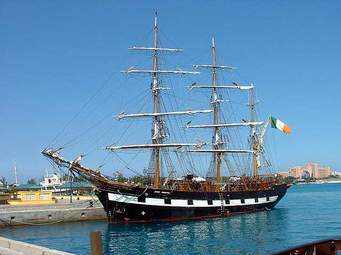
The Jeanie Johnston, a replica of a three-masted barque that was originally built in 1847 in Quebec, Canada, by the Scottish-born shipbuilder John Munn, begins a four-month voyage around Ireland on June 9, 2004.

The original Jeanie Johnston makes her maiden emigrant voyage on April 24, 1848, from Blennerville, County Kerry to Quebec with 193 emigrants on board who are fleeing the effects of the Great Famine that is ravaging Ireland. Between 1848 and 1855, the Jeanie Johnston makes sixteen voyages to North America, sailing to Quebec, Baltimore, and New York. Ships that transport emigrants out of Ireland during this period become known as “famine ships” or “coffin ships.”

The project to build a replica is conceived in the late 1980s, but does not become a reality until November 1993 when a feasibility study is completed. In May 1995, The Jeanie Johnston (Ireland) Company Ltd. is incorporated. The ship is designed by Fred Walker, former Chief Naval Architect with the National Maritime Museum in Greenwich, England.

The original plans are to launch the ship from her shipyard in Blennerville, but a 19th-century shipwreck is discovered by marine archaeologists while a channel is being dredged. To preserve the find, on April 19, 2000 the hull of the Jeanie Johnston is hauled to the shore and loaded onto a shallow-draft barge. There she is fitted with masts and sails, and on May 4 is transported to Fenit, a short distance away. On May 6 the barge is submerged and the Jeanie Johnston takes to the water for the first time. The next day she is officially christened by President Mary McAleese.

In 2003, the replica Jeanie Johnston sails from Tralee to Canada and the United States visiting 32 U.S. and Canadian cities and attracting over 100,000 visitors.

The replica is currently owned by the Dublin Docklands Development Authority who bought it in 2005 for a reported 2.7 million Euro, which were used to clear outstanding loans on the vessel guaranteed by Tralee Town Council and Kerry County Council. It is docked at Custom House Quay in the centre of Dublin.


Leave a comment

The SS Aud Begins Gun-Running Voyage to Ireland

the-ss-aud

The German merchant steam ship SS Libau, also known as SS Castro and masquerading under the cover name of SS Aud, sets sail from the Baltic port of Lübeck on April 9, 1916, loaded with guns and ammunition for the Irish Republican Brotherhood (IRB) as part of the preparation for the Easter Rising.

Masquerading as SS Aud, an existing Norwegian vessel of similar appearance, SS Libau sets sail from the port of Lübeck, under the command of Karl Spindler, bound for the southwest coast of Ireland. Under Spindler is a crew of 22 men, all of whom are volunteers. SS Libau, laden with an estimated twenty thousand rifles, one million rounds of ammunition, ten machine guns, and explosives under a camouflage of a timber cargo, evade patrols of both the British 10th Cruiser Squadron and local Auxiliary patrols.

After surviving violent storms off Rockall, SS Libau arrives in Tralee Bay on April 20. There they are due to meet Roger Casement and others, with Casement having been landed nearby by the German submarine U-19. The SS Libau has no communications equipment aboard, giving them no means of contacting the Irish while en route. As a result, they are unaware that the date for its arrival off Fenit has been altered from Thursday, April 20 to Sunday, April 23.

One of the two cars carrying Volunteers who are supposed to meet SS Libau crash into the River Laune, many miles away, at Ballykissane pier, Killorglin, resulting in the death of three of the four occupants of the car. This leads to no hope of an organised transfer of arms and the gun-running plan nears an end.

SS Libau, attempting to escape the area, is trapped by a blockade of British ships. Captain Spindler allows himself to be escorted towards Cork Harbour, in the company of the Acacia-class sloop HMS Bluebell. The German crew then scuttles the ship. Spindler and his crew are interned for the duration of the war. Roger Casement and his companions are captured in an old ringfort or rath between Ardfert and Tralee.

A number of rifles are recovered from SS Libau before the vessel is scuttled. Several examples exist in various museums in Britain and Ireland. Among these are the Cork Public Museum in Fitzgerald’s Park in Cork, a museum in Lurgan County Armagh, the National Museum of Ireland in Dublin, and the Imperial War Museum in London.