O’Connor’s father, Andrew O’Connor (1846–1924), of Lanarkshire, Scotland, is a stonecutter who becones a professional sculptor. As a teenager, he apprentices to his father, helping him to design monuments for cemeteries.
O’Connor is involved in a minor controversy in 1909 when he is commissioned to design a statue for Commodore John Barry, of the American Revolutionary-era navy. His first design is heatedly attacked by Irish American groups. He submits a second version, but it too is ultimately rejected, and the sculptor John J. Boyle received the commission.
Cronin is the only son among three children of Con Cronin, a member of the Irish Republican Army (IRA), and his wife Kate. After his father’s death, his mother works as a cook in a boarding school while the children are brought up by relatives in Ballinskelligs in the County KerryGaeltacht. Educated locally, he is deeply influenced by his Gaeltacht childhood; his later writings often refer to the hypocrisy of a state that romanticises the Gaeltacht while neglecting its social problems.
During World War II, Cronin’s sisters emigrate to England to train as nurses while he works as a labourer for Kerry County Council. In December 1941, he joins the Irish Army and is selected in 1943 for an officers’ training course, on which he forms a lifelong friendship with the future theatre directorAlan Simpson. He is commissioned and remains in the army until 1948.
Shortly thereafter Cronin emigrates to New York City, where he finds work as a journalist writing for The Advocate, an Irish American newspaper. He is strongly influenced by interviewing 1916 veterans for The Advocate and by contact with left-wing Irish American associates of Michael Quill, who played leading roles in the foundation of the Transport Workers Union of America. He becomes active in the semi-secret separatist organisation Clan na Gael, and in autumn 1955 returns to Ireland with the aim of helping the IRA to prepare for another military campaign.
Cronin begins work as a sub-editor with the Evening Press and also contributes summaries of world affairs to The Irish Times.
Cronin establishes contact with the IRA, and his military experience leads to his rapid assignment to GHQ staff. He is initially placed in charge of training and instruction, composing a manual on guerrilla warfare and twelve lectures on battlefield training. He teaches new military techniques and new recruits, such as the future IRA Chief of Staff Ruairí Ó Brádaigh, find him deeply impressive.
Cronin becomes a leading advocate of an early IRA campaign against Northern Ireland and becomes the chief strategist for Operation Harvest, a campaign which sees the carrying out of a range of military operations from direct attacks on security installations to disruptive actions against infrastructure. He is arrested on January 8, 1957, near the border in County Cavan. He is imprisoned several times over the course of the campaign (1956–1962).
Most of the IRA and Sinn Féin leadership are interned by the Dublin government on July 6, 1957. Cronin, one of the few to escape, becomes IRA Chief of Staff. He also acts for a time as editor of the movement’s newspaper, United Irishman. He tries to secure weapons from various sources, leading an unsuccessful raid on a British Army base at Blandford Camp in Dorset on February 16, 1958, and through contacts with Spanish republican exiles in Paris. The Irish American community remains the IRA’s main source of external support.
Cronin is arrested on September 30, 1958, and interned, causing considerable disarray, as he had been running much of the campaign single-handed. When the internees are released in March 1959, he resumes his position as Chief of Staff after a factional dispute causes the resignations of Tomás Óg Mac Curtain and the former Chief of Staff Tony Magan. He continues to argue that a sustained guerrilla campaign might yet succeed, but in June 1960 is again arrested and imprisoned for six months.
In November 1960, the Irish Freedom Committee (IFC), a Clan na Gael splinter group, accuses Cronin of being a communist and a “Free State agent,” supposedly implicated in the 1944 execution of Charlie Kerins. The IRA supports Cronin, but he nevertheless decides to resign successively as Chief of Staff, as a member of the Army Council, and as an IRA volunteer, on the grounds that his presence endangers the American support necessary for the continuance of the campaign. He then secures a job as a journalist on the Irish Independent. He withdraws his resignation in November 1961 after the Irish government reinstates military tribunals to try suspected IRA men. He is subsequently sentenced to six months’ imprisonment by a military tribunal and is in prison when the border campaign ends on February 26, 1962. Released on amnesty on April 19, 1962, he finally resigns from the IRA the next day.
By February 1966, Cronin has returned to the United States, where he resides for the remainder of his life, with regular visits to Ireland. He works as a journalist on the Newark Evening News and the Dow Jones News Service and is the U.S. correspondent of The Irish Times from 1967 to 1991, becoming that paper’s first Washington, D.C. correspondent.
In the 1970s Cronin takes a degree at New York University, then teaches and studies for a doctorate at The New School for Social Research in New York under Hans Morgenthau. His dissertation forms the basis for his magnum opus, Irish nationalism: its roots and ideology (1980). Although limited by its colonial model and socialist-republican intellectual framework, this historically oriented account draws on his extensive research and personal contacts to some effect.
Cronin is the author of a dozen books and pamphlets, including a biography of republican Frank Ryan, Washington’s Irish Policy 1916-1986: independence, partition, neutrality (1987), an authoritative account of Irish-US relations, Our Own Red Blood: The Story of the 1916 Rising (1966), and a number of works on guerrilla strategy, including an early Sinn Féin pamphlet Resistance under the pseudonym of J. McGarrity.
After the death of his first wife in 1974, Cronin marries Reva Rubinstein, a toxicologist. In 1980 they move to Washington, D.C. He has no children by either marriage, though his second wife brings him a stepson. After several years of illness, he dies in Baltimore, Maryland, on March 9, 2011. He is survived by his second wife, Reva Rubenstein Cronin.
Comparatively little is known of his early life, and it has been suggested that he was illegitimate and took his mother’s surname and that his father’s surname was actually Gannon. He emigrates with his father to Baltimore, Maryland, in 1793, eventually settling in Philadelphia, Pennsylvania. A short time after their arrival, the friend who had invited them and offered them food and hospitality dies of yellow fever. Several days later, his father also succumbs to the same disease.
One morning, while Brown is wandering along the banks of the Delaware River, he meets the captain of a ship then moored in port. The captain inquires if he wants employment and Brown agrees. The captain engages him as a cabin boy, thereby setting him on the naval promotion ladder, where he works his way to the captaincy of a merchant ship. After ten years at sea, where he develops his skills as a sailor and reaches the rank of captain, Brown is press-ganged into a Royal Navy warship. British impressment of American sailors is one of the primary issues leading to the War of 1812.
During the Napoleonic Wars, Brown escapes the ship he is serving on, a galley, and scuttles the vessel. However, the French do not believe he had assisted them and imprison him in Lorient. On being transferred to Metz, he escapes, disguised in a French officer’s uniform. However, he is recaptured and is imprisoned in the fortress of Verdun. In 1809, he escapes from there in the company of a British Army officer named Clutchwell, and eventually reaches German territory.
Returning to England, Brown renounces his maritime career and on July 29, 1809, he marries Elizabeth Chitty, daughter of an English shipping magnate, in Kent. As he is a Catholic and she a Protestant, they agree to raise their sons as Catholics and their daughters as Protestants. Despite lengthy periods of enforced separation, they have nine children. He leaves the same year for the Río de la Plata on board Belmond and sets himself up as a merchant in Montevideo, Uruguay.
Late in 1811 Brown settles in Buenos Aires just as a criollo rebellion against Spanish colonial rule in Argentina is gaining strength. By April 1812, he is developing a coastal shipping business in fruit and hides. As the Spanish naval blockade of 1812–14 begins to choke trade, he is first commissioned by the patriot government as a privateer licensed to raid Spanish merchantmen, and then, on March 1, 1814, invited to take charge of a small rebel naval squadron to contest Spanish control of the Río de la Plata estuary. Leading a fleet of nineteen ships, he fixes with great speed on a set of wartime naval routines and signaling methods, and organises a system of discipline, founding the navy on principles that pay exceptional attention to the welfare of ordinary seamen.
In early March 1814, Brown shows personal courage and incisive skill in outwitting and defeating a more powerful Spanish force near Martín García Island, thereby dividing the Spanish blockade. A Spanish attempt in May 1814 to break his blockade of Montevideo is decisively crushed by him and his makeshift navy, and the Spanish strongholds on the Atlantic coast collapse, ending open war. In 1815 and 1816, however, he carries out skirmishing raids on military and commercial targets belonging to Spanish South American possessions, until detained by a British colonial governor in Barbados in July 1816 for alleged infringements of international rules of trade.
Illness, and a tortuous but ultimately successful appeal process, take up most of 1817–18, but when Brown returns to Argentina in October 1818, political enemies set in motion a prosecution for alleged disobedience of orders. Cashiered in August 1819, then restored in rank but forced to retire, he attempts suicide the following month. Convalescence and resumption of his trading concern occupies him for several years.
A repentant government renews Brown’s command of the navy in December 1825, when war breaks out with Brazil. Though vastly outnumbered by the Brazilian fleet, he shows audacity and great finesse in a number of successful engagements in the Plate estuary in 1826, roving up the Brazilian coast on occasion to create great confusion. In February 1827, he triumphs in a series of actions known as the Battle of Juncal. After another year of commercial privateering against the Brazilian merchant fleet, he is one of two delegates selected to sign peace terms with Brazil in October 1828.
Retiring from active service that month, Brown tries to remain neutral as civil war erupts in Argentina, but reluctantly accepts the post of governor of Buenos Aires under General Juan Lavalle from December 1828 to May 1829, when he resigns in disgust at government excesses. During 1829–37 he holds aloof from the despotic government of Juan Manuel de Rosas. After French and British encroachments on the region in the later 1830s, he offers to take charge of the navy again to protect national independence and is available to defend Argentine interests when war breaks out with a French-backed Uruguay in early 1841. Though exasperated by a long and “stupid war,” he blockades the Uruguayan navy effectively until French and British fleets intervene in July 1845 with overwhelming force to capture his squadron and bring the war to an end.
Idolised by the Argentinian population for his high-principled and humane advocacy of independent democracy, Brown passes his last years trading and farming a country estate. In late 1847, he journeys to Ireland, hoping to find relations in Mayo, and is shocked by the hunger and destitution of the Great Famine.
Brown dies on March 3, 1857, at his home in Buenos Aires and is buried with full military honours. The Argentine government issues a comuniqué: “With a life of permanent service to the national wars that our homeland has fought since its independence, William Brown symbolized the naval glory of the Argentine Republic.” During his burial, General Bartolomé Mitre famously says: “Brown in his lifetime, standing on the quarterdeck of his ship, was worth a fleet to us.” His grave is currently located in the La Recoleta Cemetery in Buenos Aires.
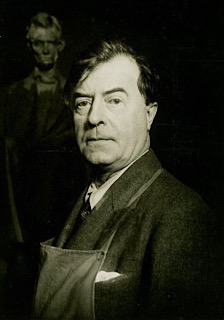
O’Connor is born on June 7, 1874, at Worcester, Massachusetts, the eldest of three sons and two daughters of Andrew O’Connor, a stonecutter from Lanarkshire, Scotland, who becomes a professional sculptor, and Marie Anne O’Connor (née McFadden), of County Antrim. Educated in Worcester public schools, at the age of 14 he becomes apprenticed to his father, helping him to design monuments for cemeteries. He is employed in the early 1890s on sculptural work for the World’s Columbian Exposition (Chicago World’s Fair), being active in the studio of William Ordway Partridge, and assisting Daniel Chester French on his colossal Statue of the Republic, a landmark of the 1893 Columbian exposition.
Moving to London (1894–98), O’Connor works on bas-reliefs in the studio of the painter John Singer Sargent, who uses him as a model for his mural Frieze of Prophets for the Boston Public Library. His first independent work, Sea Dreams, a relief of a head, is exhibited at the Royal Academy of Arts in 1896. Returning to the United States (1898–1903), he becomes a studio assistant of French, through whom he receives his first public commission, for the Vanderbilt Memorial Doors for St. Bartholomew’s Episcopal Church, Manhattan, New York, a project completed in 1902 to wide critical acclaim. He also executes the tympanum and lateral friezes.
Around 1900, O’Connor marries an artist’s model named Nora, by whom he has a daughter. In 1902, he hires as studio model Jessie Phoebe Brown from New Jersey and of County Down parentage. The following year he elopes with her to Paris, where they marry and have four sons, the youngest of whom, Patrick O’Connor, becomes an artist and gallery curator. Jessie continues for many years as his primary model, sitting for the heads of both female and male figures, O’Connor coarsening the features for the latter.
During his years in Paris (1903–14), O’Connor is influenced by the work of Auguste Rodin, whom he befriends. Among his pupils in Paris is the American sculptor and heiress Gloria Vanderbilt Whitney. He continues to fulfil numerous commissions for funerary and public monuments in the United States, an example of the former being the Recuillement in Sleepy Hollow Cemetery, near Tarrytown, New York. From 1906 he exhibits annually at the Salon in Paris, where he is the first foreigner to win a second-class medal, for his bronze statue of Gen. Henry Lawton. Included in his only exhibition at the Royal Hibernian Academy (1907) is a bronze relief of the prophet Nehemiah adapted from a panel of the Vanderbilt doors. The relief is subsequently included in his one-man show at the Galerie Hébrard, Paris in 1909.
In 1909, O’Connor wins a competition open to sculptors of Irish descent to execute a monument to Commodore John Barry, the County Wexford-born “father of the American navy,” for Washington, D.C. His design includes a frieze depicting events in Irish history, flanked by a group of three nude Irish emigrants entitled Exile from Ireland, and another group representing the Genius of Ireland, which includes a female figure of the “Motherland.” Probably owing to opposition from the Barry family to the depiction of their ancestor as a rough-and-ready sailor, the commission is not completed. His marble statue of Gen. Lew Wallace (author of Ben-Hur: A Tale of the Christ), a plaster of which is exhibited at the Salon in Paris in 1909, is placed by the state of Indiana in the National Statuary Hall in the United States Capitol, Washington, D.C. Another marble, Peace by Justice, is commissioned as a gift from the United States to the Peace Palace in The Hague in 1913.
Returning to Paris in the mid-1920s, O’Connor becomes the first foreigner to win a gold medal at the Salon des Artistes in 1928, for the marble sculpture Tristan and Iseult, now held in the Brooklyn Museum, New York. The French government makes him a Chevalier of the National Order of the Legion of Honour in 1929. In 1926 he had exhibited a plaster group, Monument aux morts de la Grande Guerre, at the Salon in Paris. The sculpture is requested in 1932 by the people of Dún Laoghaire, County Dublin, as a memorial to Christ the King, O’Connor obligingly altering the interpretation of his iconography. Imposed on a “Tree of life” are three figures of Christ, representing in turn “Desolation,” “Consolation” and “Triumph.” Cast in bronze, throughout World War II the statue remains hidden in Paris to avoid its being melted down for the valuable metal. Transported to Dún Laoghaire in 1949, due to clerical opposition to its unconventional iconography, it is not at first erected, but for years lay on its side in a garden in Rochestown Avenue until its eventual unveiling in 1978 as Triple Cross in Haigh Terrace, where it stands in Moran Park. His other chief work in Ireland is a bronze statue of Daniel O’Connell in the Bank of Ireland, College Green, Dublin. Inspired by Rodin’s famous Monument to Balzac, the work is executed at his studio in a converted stable at Leixlip Castle, County Kildare in 1931–32.
During the 1930s, O’Connor lives and works in London and Ireland, where he has residences at Glencullen House, County Wicklow, and 77 Merrion Square, Dublin. He dies at the latter address on June 9, 1941, and is buried in Glasnevin Cemetery. His own bronze relief, Le feu sacré, marks the grave. A portrait painting, executed by his son Patrick in 1940, is in Dublin City Gallery The Hugh Lane, which also holds twenty-six sculptures presented by O’Connor late in his life, and posthumously by his family. The collection includes a marble self-portrait bust of 1940, a bronze of the Lafayette cast by the gallery in 1984 from a reduced plaster model presented by the artist, and a bronze group entitled The Victim, on view in Merrion Square Park, from an uncommissioned and uncompleted war memorial conceived by O’Connor under the general title Le Débarquement. The National Gallery of Ireland has the Desolation maquette for the Triple Cross. A centenary exhibition of his work is held at Trinity College Dublin in 1974. His widow dies in Dublin in 1974.
(From: “O’Connor, Andrew” by Lawrence William White and Carmel Doyle, Dictionary of Irish Biography, http://www.dib.ie, October 2009)
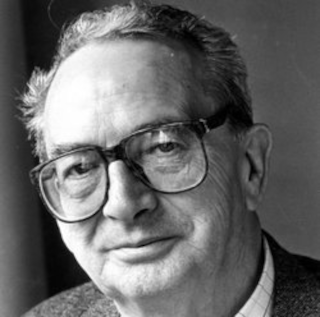
Cronin is born on August 29, 1922, in Dublin, the only son among three children of Con Cronin, a member of the IRA, and his wife Kate. After his father’s death, his mother works as a cook in a boarding school while the children are brought up by relatives in Ballinskelligs in the County KerryGaeltacht. Educated locally, he is deeply influenced by his Gaeltacht childhood; his later writings often refer to the hypocrisy of a state that romanticises the Gaeltacht while neglecting its social problems.
During World War II, Cronin’s sisters emigrate to England to train as nurses while he works as a labourer for Kerry County Council. In December 1941, he joins the Irish Army and is selected in 1943 for an officers’ training course, on which he forms a lifelong friendship with the future theatre directorAlan Simpson. He is commissioned and remains in the army until 1948.
Shortly thereafter Cronin emigrates to New York City, where he finds work as a journalist writing for The Advocate, an Irish American newspaper. He is strongly influenced by interviewing 1916 veterans for The Advocate and by contact with left-wing Irish American associates of Michael Quill, who played leading roles in the foundation of the Transport Workers Union of America. He becomes active in the semi-secret separatist organisation Clan na Gael, and in autumn 1955 returns to Ireland with the aim of helping the IRA to prepare for another military campaign.
Cronin begins work as a sub-editor with the Evening Press and also contributes summaries of world affairs to The Irish Times.
Cronin establishes contact with the IRA, and his military experience leads to his rapid assignment to GHQ staff. He is initially placed in charge of training and instruction, composing a manual on guerrilla warfare and twelve lectures on battlefield training. He teaches new military techniques and new recruits, such as the future IRA Chief of Staff Ruairí Ó Brádaigh, find him deeply impressive.
Cronin becomes a leading advocate of an early IRA campaign against Northern Ireland and becomes the chief strategist for Operation Harvest, a campaign which sees the carrying out of a range of military operations from direct attacks on security installations to disruptive actions against infrastructure. He is arrested on January 8, 1957, near the border in County Cavan. He is imprisoned several times over the course of the campaign (1956–1962).
Most of the IRA and Sinn Féin leadership are interned by the Dublin government on July 6, 1957. Cronin, one of the few to escape, becomes IRA Chief of Staff. He also acts for a time as editor of the movement’s newspaper, United Irishman. He tries to secure weapons from various sources, leading an unsuccessful raid on a British Army base at Blandford Camp in Dorset on February 16, 1958, and through contacts with Spanish republican exiles in Paris. The Irish American community remains the IRA’s main source of external support.
Cronin is arrested on September 30, 1958, and interned, causing considerable disarray, as he had been running much of the campaign single-handed. When the internees are released in March 1959, he resumes his position as Chief of Staff after a factional dispute causes the resignations of Tomás Óg Mac Curtain and the former Chief of Staff Tony Magan. He continues to argue that a sustained guerrilla campaign might yet succeed, but in June 1960 is again arrested and imprisoned for six months.
In November 1960, the Irish Freedom Committee (IFC), a Clan na Gael splinter group, accuses Cronin of being a communist and a “Free State agent,” supposedly implicated in the 1944 execution of Charlie Kerins. The IRA supports Cronin, but he nevertheless decides to resign successively as Chief of Staff, as a member of the Army Council, and as an IRA volunteer, on the grounds that his presence endangers the American support necessary for the continuance of the campaign. He then secures a job as a journalist on the Irish Independent. He withdraws his resignation in November 1961 after the Irish government reinstates military tribunals to try suspected IRA men. He is subsequently sentenced to six months’ imprisonment by a military tribunal and is in prison when the border campaign ends on February 26, 1962. Released on amnesty on April 19, 1962, he finally resigns from the IRA the next day.
By February 1966, Cronin has returned to the United States, where he resides for the remainder of his life, with regular visits to Ireland. He works as a journalist on the Newark Evening News and the Dow Jones News Service and is the U.S. correspondent of The Irish Times from 1967 to 1991, becoming that paper’s first Washington, D.C. correspondent.
In the 1970s Cronin takes a degree at New York University, then teaches and studies for a doctorate at The New School for Social Research in New York under Hans Morgenthau. His dissertation forms the basis for his magnum opus, Irish nationalism: its roots and ideology (1980). Although limited by its colonial model and socialist-republican intellectual framework, this historically oriented account draws on his extensive research and personal contacts to some effect.
Cronin is the author of a dozen books and pamphlets, including a biography of republican Frank Ryan, Washington’s Irish Policy 1916-1986: independence, partition, neutrality (1987), an authoritative account of Irish-US relations, Our Own Red Blood: The Story of the 1916 Rising (1966), and a number of works on guerrilla strategy, including an early Sinn Féin pamphlet Resistance under the pseudonym of J. McGarrity.
After the death of his first wife in 1974, Cronin marries Reva Rubinstein, a toxicologist. In 1980 they move to Washington, D.C. He has no children by either marriage, though his second wife brings him a stepson. After several years of illness, he dies in Baltimore, Maryland, on March 9, 2011. He is survived by his second wife, Reva Rubenstein Cronin.
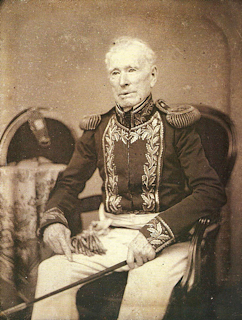
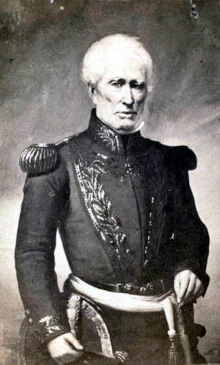
Brown is born on June 22, 1777, in Foxford, County Mayo. Comparatively little is known of his early life, and it has been suggested that he was illegitimate and took his mother’s surname and that his father’s surname was actually Gannon. He emigrates with his father to Baltimore, Maryland, in 1793, eventually settling in Philadelphia, Pennsylvania. A short time after their arrival, the friend who had invited them and offered them food and hospitality dies of yellow fever. Several days later, his father also succumbs to the same disease.
One morning, while Brown is wandering along the banks of the Delaware River, he meets the captain of a ship then moored in port. The captain inquires if he wants employment and Brown agrees. The captain engages him as a cabin boy, thereby setting him on the naval promotion ladder, where he works his way to the captaincy of a merchant ship. After ten years at sea, where he develops his skills as a sailor and reaches the rank of captain, Brown is press-ganged into a Royal Navy warship. British impressment of American sailors is one of the primary issues leading to the War of 1812.
During the Napoleonic Wars, Brown escapes the ship he is serving on, a galley, and scuttles the vessel. However, the French do not believe he had assisted them and imprison him in Lorient. On being transferred to Metz, he escapes, disguised in a French officer’s uniform. However, he is recaptured and is imprisoned in the fortress of Verdun. In 1809, he escapes from there in the company of a British Army officer named Clutchwell, and eventually reaches German territory.
Returning to England, Brown renounces his maritime career and on July 29, 1809, he marries Elizabeth Chitty, daughter of an English shipping magnate, in Kent. As he is a Catholic and she a Protestant, they agree to raise their sons as Catholics and their daughters as Protestants. Despite lengthy periods of enforced separation, they have nine children. He leaves the same year for the Río de la Plata on board Belmond and sets himself up as a merchant in Montevideo, Uruguay.
Late in 1811 Brown settles in Buenos Aires just as a criollo rebellion against Spanish colonial rule in Argentina is gaining strength. By April 1812, he is developing a coastal shipping business in fruit and hides. As the Spanish naval blockade of 1812–14 begins to choke trade, he is first commissioned by the patriot government as a privateer licensed to raid Spanish merchantmen, and then, on March 1, 1814, invited to take charge of a small rebel naval squadron to contest Spanish control of the Río de la Plata estuary. Leading a fleet of nineteen ships, he fixes with great speed on a set of wartime naval routines and signaling methods, and organises a system of discipline, founding the navy on principles that pay exceptional attention to the welfare of ordinary seamen.
In early March 1814, Brown shows personal courage and incisive skill in outwitting and defeating a more powerful Spanish force near Martín García Island, thereby dividing the Spanish blockade. A Spanish attempt in May 1814 to break his blockade of Montevideo is decisively crushed by him and his makeshift navy, and the Spanish strongholds on the Atlantic coast collapse, ending open war. In 1815 and 1816, however, he carries out skirmishing raids on military and commercial targets belonging to Spanish South American possessions, until detained by a British colonial governor in Barbados in July 1816 for alleged infringements of international rules of trade.
Illness, and a tortuous but ultimately successful appeal process, take up most of 1817–18, but when Brown returns to Argentina in October 1818, political enemies set in motion a prosecution for alleged disobedience of orders. Cashiered in August 1819, then restored in rank but forced to retire, he attempts suicide the following month. Convalescence and resumption of his trading concern occupies him for several years.
A repentant government renews Brown’s command of the navy in December 1825, when war breaks out with Brazil. Though vastly outnumbered by the Brazilian fleet, he shows audacity and great finesse in a number of successful engagements in the Plate estuary in 1826, roving up the Brazilian coast on occasion to create great confusion. In February 1827, he triumphs in a series of actions known as the Battle of Juncal. After another year of commercial privateering against the Brazilian merchant fleet, he is one of two delegates selected to sign peace terms with Brazil in October 1828.
Retiring from active service that month, Brown tries to remain neutral as civil war erupts in Argentina, but reluctantly accepts the post of governor of Buenos Aires under General Juan Lavalle from December 1828 to May 1829, when he resigns in disgust at government excesses. During 1829–37 he holds aloof from the despotic government of Juan Manuel de Rosas. After French and British encroachments on the region in the later 1830s, he offers to take charge of the navy again to protect national independence and is available to defend Argentine interests when war breaks out with a French-backed Uruguay in early 1841. Though exasperated by a long and “stupid war,” he blockades the Uruguayan navy effectively until French and British fleets intervene in July 1845 with overwhelming force to capture his squadron and bring the war to an end.
Idolised by the Argentinian population for his high-principled and humane advocacy of independent democracy, Brown passes his last years trading and farming a country estate. In late 1847, he journeys to Ireland, hoping to find relations in Mayo, and is shocked by the hunger and destitution of the Great Famine.
Brown dies on March 3, 1857, at his home in Buenos Aires and is buried with full military honours. The Argentine government issues a comuniqué: “With a life of permanent service to the national wars that our homeland has fought since its independence, William Brown symbolized the naval glory of the Argentine Republic.” During his burial, General Bartolomé Mitre famously says: “Brown in his lifetime, standing on the quarterdeck of his ship, was worth a fleet to us.” His grave is currently located in the La Recoleta Cemetery in Buenos Aires.
Born in St. Johnston, County Donegal around 1760, Bond is the son of a dissenting minister and is connected with several respectable families. In his early years, he works as an apprentice haberdasher in Derry before relocating to Dublin.
In the capital, Bond is in business as a merchant in the woollen trade, and becomes wealthy. Initially, he is based in Pill Lane (now Chancery Street), before moving to 9 Lower Bridge Street in 1786. In 1791, he marries Eleanor ‘Lucy’ Jackson, daughter of the iron founder Henry Jackson, who like Bond is to become a leading United Irishman.
Bond is an early member in the movement planning for a union in Ireland across religious lines to press for reform of the Parliament of Ireland and for an accountable government independent of the Privy Council of the United Kingdom and cabinet. When, following the Belfast example, the Society of United Irishmen forms in Dublin in November 1791, Bond becomes a member.
Bond is secretary of the meeting, with the barrister Simon Butler presiding, when in February 1793 the society passes resolutions which, in addition to the call for Catholic emancipation and parliamentary reform, condemn as unconstitutional the repressive measures of the government, and deplore war against the new French Republic. A result is a summons to appear before the bar of the Irish House of Lords in Dublin where, in consequence of the their defiant performance, Bond and Butler are charged and convicted of libel, fined and confined for six months in Newgate Prison.
Despairing of their efforts to secure full emancipation and advance parliamentary reform, and in anticipation of French assistance, the United Irishmen resolve on an insurrection to depose the Crown‘s Dublin Castle executive and the Protestant AscendancyLords and Commons, and to establish Ireland as an independent republic. Bond becomes a member of the United Irishmen’s northern executive committee and of the Leinster directorate, the meetings of which are generally held at his house on Lower Bridge Street.
There, on February 19, 1798, the famous resolution is passed: “We will pay no attention to any measure which the Parliament of this kingdom may adopt, to divert the public mind from the grand object we have in view; as nothing short of the entire and complete regeneration of our country can satisfy us.”
Through the treachery of Thomas Reynolds, Bond’s house is surrounded by military on the morning of March 12, 1798, and fourteen members of the Leinster Directory are seized. The insurrection goes forward in their absence to defeat in the early summer. Following suppression of the rebellion, Bond goes to trial. The efforts of his defence counsel, John Philpot Curran, to discredit Reynold’s testimony are unavailing. On July 27, 1798, Bond is convicted of treason and sentenced to hang.
It is mainly to prevent Bond’s execution that Thomas Addis Emmet and other state prisoners enter a compact with government whereby (without incriminating further individuals) they agree to testify on the activities of Union Irishmen before a parliamentary committee, and to accept permanent exile. With the endorsement of Charles Cornwallis, 1st Marquess Cornwallis, the Commander-in-Chief, Ireland, Bond’s sentence is commuted. He survives, however, but five weeks, dying in prison of apoplexy at the age of 36 on September 6, 1798.
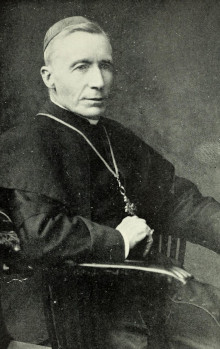
Gibbons is taken by his parents from Baltimore to Ireland in 1837. Following his father’s death in 1847, at the height of The Great Hunger, his mother moves the family back to the United States. He spends the next eight years as a grocer in New Orleans. In 1855 he enters a seminary in Baltimore, becoming a priest in 1861. He rises through the ranks of the Roman Catholic Church quickly, and by 1868 he is the youngest bishop in the United States. During a short stay in North Carolina, he writes The Faith of Our Fathers (1876), a defense of Catholicism that proves exceptionally popular, selling more than two million copies. He is elevated to Archbishop of Baltimore in 1877. He assumes a leadership role as the presiding prelate at the Third Plenary Council of Baltimore in 1884, and in 1886 he is made a cardinal by Pope Leo XIII.
As a leader of the Catholic Church hierarchy in the United States, Gibbons is outspoken in his praise for American democratic institutions and he advocates Americanization — the rapid assimilation of Catholic immigrants into American culture and institutions — both as a means to counter Protestant Americans’ suspicions toward Catholics and to avoid the fragmentation of the Catholic Church in the United States along ethnic lines. He is also sympathetic to the cause of organized labour and works to overcome suspicions within the Catholic Church toward the Knights of Labor, which has been considered a secret society by many clergymen.
On education, as on other social issues, Gibbons seeks ways of harmonizing the tenets of the Catholic faith with the principles of American democracy. He enters the controversy over control of parochial and public schools in 1891 when he defends Archbishop John Ireland’s experimental plan for cooperation between Catholic and public schools in the Minnesota towns of Faribault and Stillwater. To the dismay of conservative bishops, he refuses to condemn public education and encourages efforts to find common ground between the two systems. The Faribault-Stillwater plan remains controversial despite Gibbons’s support, and acrimony between the plan’s supporters and conservative opponents lingers until 1893.
James Cardinal Gibbons dies at the age of 86 in Baltimore on March 24, 1921. Throughout his career he is a respected and influential public figure. Although nonpartisan, he takes positions on a variety of foreign and domestic policy issues and is personally acquainted with every U.S. president from Andrew Johnson to Woodrow Wilson.
Raised in Dublin, Devlin first develops his badminton skills in the family garden during his childhood with his friend Gordon “Curly” Mack. The two childhood friends graduate from the garden to win an impressive six titles together in men’s doubles at the All England Open Badminton Championships.
Devlin is the second most successful player ever in the All England Open Badminton Championships with 18 titles between 1925 and 1931, including three triple championships in 1926, 1927 and 1929. He dominates the 1920s with six titles at the Irish Open and two titles at the Scottish Open.
Despite being Irish Devlin is part of the English team that tours Canada in 1925 to promote the sport on behalf of the Canadian Badminton Association which had recently been formed in 1921. He is also part of a second English touring team that visits Canada during 1930. A match is held at the Granite Club in Toronto which England wins 7-2.
When his playing career comes to an end in 1931, Devlin moves to North America to become the first known full-time badminton coach. He first sets foot in Winnipeg and then in Baltimore. After spending time coaching in North America, he returns to Ireland and teaches his skills to the next generations until he is well into his eighties.
Adding to his success with the racket, Devlin earns a solid reputation as a writer. Over four decades, he authors many books on the technical and tactical aspects of badminton. He is a strong believer in sound technique and becomes the first known player to use the overhead backhand clear.
Frank Devlin dies on October 27, 1988, at 88 years of age.
Two of Devlin’s daughters, Judy and Susan, become badminton legends in their own right, and win six All England women’s doubles titles together as partners. Judy, who also wins ten All England titles in women’s singles, is inducted with her late father into the Badminton Hall of Fame in 1997.
(Pictured (L to R): Sir George Thomas of England and Frank Devlin of Ireland)
Michael Joseph McGivney, American Catholic priest, is born to Irish immigrants Patrick and Mary (Lynch) McGivney on August 12, 1852, in Waterbury, Connecticut. He founds the Knights of Columbus at a local parish to serve as a mutual aid and fraternal insurance organization, particularly for immigrants and their families. It develops through the 20th century as the world’s largest Catholic fraternal organization.
From his own experience, McGivney recognizes the devastating effect on immigrant families of the untimely death of the father and wage earner. Many Catholics are still struggling to assimilate into the American economy. On March 29, 1882, while an assistant pastor at Saint Mary’s Church in New Haven, Connecticut, he founds the Knights of Columbus, with a small group of parishioners, as a mutual aid society to provide financial assistance in the event of the men’s death to their widows and orphans. The organization develops as a fraternal society. He is also known for his tireless work among his parishioners.
The Knights of Columbus is among the first groups to recruit blood donors, with formal efforts dating to 1937 during the Great Depression. As of 2013, the order has more than 1.8-million-member families and 15,000 councils. During the 2012 fraternal year, $167 million and 70 million man-hours are donated to charity by the order.
In 1996, the Roman Catholic Archdiocese of Hartford opens the cause for canonization, an investigation into McGivney’s life with a view towards formal recognition by the Church of his sainthood. Father Gabriel O’Donnell, OP, is the postulator of McGivney’s cause. He is also the director of the Fr. McGivney Guild, which now has 150,000 members supporting his cause.
The diocesan investigation is closed in 2000, and the case is passed to the Congregation for the Causes of Saints in Vatican City. On March 15, 2008, Pope Benedict XVI approves a decree recognizing McGivney’s heroic virtue, thus declaring him “Venerable.” As of August 6, 2013, a miracle attributed to McGivney’s intercession is under investigation at the Vatican.