seamus dubhghaill

Promoting Irish Culture and History from Little Rock, Arkansas, USA


Leave a comment

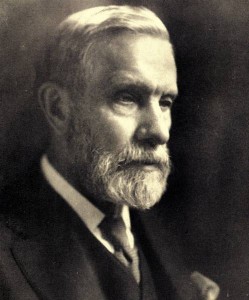
Death of Irish American Painter William Harnett

william-harnett

William Michael Harnett, Irish American painter known for his trompe-l’œil still lifes of ordinary objects, dies at New York Hospital on October 29, 1892.

Harnett is born in Clonakilty, County Cork, on August 10, 1848, during the time of the Great Famine. Shortly after his birth his family emigrates to America, settling in Philadelphia. Becoming a United States citizen in 1868, he makes a living as a young man by engraving designs on table silver, while also taking night classes at the Pennsylvania Academy of the Fine Arts and later, in New York City, at Cooper Union and at the National Academy of Design. His first known oil painting, a still life, dates from 1874.

The style of trompe-l’œil painting that Harnett develops is distinctive and inspired many imitators, but it is not without precedent. A number of 17th century Dutch painters, Pieter Claesz for instance, specialize in tabletop still life of astonishing verisimilitude. Raphaelle Peale, working in Philadelphia in the early 19th century, pioneers the form in America. What sets Harnett’s work apart, besides his enormous skill, is his interest in depicting objects not usually made the subject of a painting.

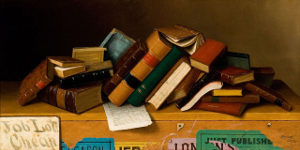
Harnett paints musical instruments, hanging game, and tankards, but also painted the unconventional Golden Horseshoe (1886), a single rusted horseshoe shown nailed to a board. He paints a casual jumble of second-hand books set on top of a crate, Job Lot, Cheap (1878), as well as firearms and even paper currency. His works sell well, but they are more likely to be found hanging in a tavern or a business office than in a museum, as they did not conform to contemporary notions of high art.

Harnett spent the years 1880–1886 in Europe, staying in Munich from 1881 until early 1885. Harnett’s best-known paintings, the four versions of After the Hunt, are painted between 1883 and 1885. Each is an imposing composition of hunting equipment and dead game, hanging on a door with ornate hinges at the right and keyhole plate at the left. These paintings, like the horseshoe or currency depictions mentioned earlier, are especially effective as trompe-l’œil because the objects occupy a shallow space, meaning that the illusion is not spoiled by parallax shift if the viewer moves.
job-lot-cheap

Overall, Harnett’s work is most comparable to that of the slightly younger John F. Peto. The two artists know each other, and a comparison can be made between two paintings featuring violins. Harnett’s Music and Good Luck from 1888 shows the violin hanging upright on a door with ornate hinges and with a slightly torn piece of sheet music behind it. The elements are arranged in a stable, deliberate manner. Peto’s 1890 painting shows the violin hanging askew, as well as chipped and worn, with one string broken. The sheet music is dog-eared and torn around the edges and placed haphazardly behind the instrument. The hinges are less ornate, and one is broken. Harnett’s objects show signs of use but are well preserved, while Peto’s more humble objects are nearly used up.

Crippling rheumatism plagues Harnett in his last years, reducing the number but not the quality of his paintings. He seeks relief in the waters at Karlsbad and Wiesbaden, Germany and later at Hot Springs, Arkansas. But he continues to worsen and is hospitalized several times. He dies in New York City in 1892.


Leave a comment

Canonisation of Sir Oliver Plunkett

oliver-plunkett

Sir Oliver Plunkett is canonised in Rome by Pope Paul VI on October 12, 1975, the first new Irish saint in almost seven hundred years, and the first of the Irish martyrs to be beatified. For the canonisation, the customary second miracle is waived.

Plunkett is born on November 1, 1625, in Loughcrew, County Meath, to parents with Hiberno-Norman ancestors. Until his sixteenth year, his education is entrusted to his cousin Patrick Plunkett, Abbot of St. Mary’s, Dublin, and brother of Luke Plunkett, the first Earl of Fingall, who later becomes successively Bishop of Ardagh and of Meath. As an aspirant to the priesthood, Plunkett sets out for Rome in 1647.

Plunkett is admitted to the Pontifical Irish College in Rome and proves to be an able pupil. He is ordained a priest in 1654 and deputed by the Irish bishops to act as their representative in Rome. Meanwhile, the Cromwellian conquest of Ireland (1649–1653) has defeated the Roman Catholic cause in Ireland. As a result, it is impossible for Plunkett to return to Ireland for many years, so he petitions to remain in Rome. At the Congregation of Propaganda Fide on July 9, 1669, he is appointed Archbishop of Armagh and is consecrated on November 30 at Ghent. He returns to Ireland on March 7, 1670, as the English Restoration of 1660 has begun on a basis of toleration.

Plunkett sets about reorganising the ravaged Roman Church and builds schools both for the young and for clergy. The Penal Laws have been relaxed in line with the Declaration of Breda in 1660 and he is able to establish a Jesuit College in Drogheda in 1670, which becomes the first Catholic-Protestant integrated school in Ireland.

On the enactment of the Test Act in 1673, to which Plunkett does not agree for doctrinal reasons, the college is closed and demolished. Plunkett goes into hiding, travelling only in disguise, and refuses a government edict to register at a seaport to await passage into exile.

In 1678 the so-called Popish Plot, concocted in England by clergyman Titus Oates, leads to further anti-Roman Catholic action. Archbishop Peter Talbot of Dublin is arrested, and Plunkett again goes into hiding. Despite being on the run and with a price on his head, Plunkett refuses to leave his flock.

Plunkett is arrested in Dublin in December 1679 and imprisoned in Dublin Castle. He is tried at Dundalk for conspiring against the state by allegedly plotting to bring 20,000 French soldiers into the country, and for levying a tax on his clergy to support 70,000 men for rebellion. The trial soon collapses as the prosecution witnesses are themselves wanted men and afraid to appear in court. Plunkett is moved to Newgate Prison in London in order to face trial at Westminster Hall. The first grand jury finds no true bill, but he is not released. The second trial is generally regarded as a serious miscarriage of justice as Plunkett is denied defending counsel.

Archbishop Plunkett is found guilty of high treason in June 1681 “for promoting the Roman faith,” and is condemned to death. Plunkett is hanged, drawn, and quartered at Tyburn on July 1, 1681, the last Roman Catholic martyr to die in England. His body is initially buried in two tin boxes in the courtyard of St. Giles in the Fields church. The remains are exhumed in 1683 and moved to the Benedictine monastery at Lamspringe, near Hildesheim in Germany. His head is brought to Rome, and from there to Armagh, and eventually to Drogheda where it has rested in St. Peter’s Church since June 29, 1921. Most of the body is brought to Downside Abbey, England, where the major part is located today, with some parts remaining at Lamspringe.


Leave a comment

Birth of Patrick d’Arcy, Scientist & Soldier

patrick-darcy

Patrick d’Arcy, scientist and soldier in the Irish Brigade of France, is born in Kitulla, County Galway, on September 27, 1725.

The d’Arcy family, who are Catholics, suffer under the Penal Laws. In 1739 d’Arcy is sent to Paris for his education. He is tutored in mathematics by Jean-Baptiste Clairaut, and becomes a friend of Jean-Baptiste’s son, Alexis-Claude Clairaut, who is a brilliant young mathematician. d’Arcy makes original contributions to dynamics. He is best known for his part in the discovery of the principle of angular momentum, in a form which is known as “the principle of areas,” which he announces in 1746.

Perhaps seeking more adventure than an academic life can provide, d’Arcy enlists in the French army. He fights in Germany in the regiment of Condé and serves as an aide-de-camp to Marshal Saxe at the Battle of Fontenoy. He obtains the title of “Count” in the French nobility and is a generous patron of Irish refugees in France. He sails for Scotland in 1745, attempting to fight in “Bonnie” Prince Charlie‘s rising, but his ship is captured, and he is taken prisoner.

After his release, d’Arcy returns to France where he continues both his scientific and military careers. In addition to his contributions to dynamics, he performs research on artillery and electricity. One of his experiments on visual perception, reported in 1765, is often referenced. It involves a rotating disk on which a burning coal ember is placed. When the disk is spun at an angular velocity exceeding seven revolutions per second, a full circle of light is perceived. This and other experiments make d’Arcy the first person to demonstrate the illusion of a moving image, although Joseph Plateau greatly elaborates on this initial finding.

Patrick d’Arcy is elected to the Academie Royale des Sciences in 1749. He died from cholera in Paris on October 18, 1779.


Leave a comment

Birth of Chaim Herzog, Sixth President of Israel

chaim-herzog

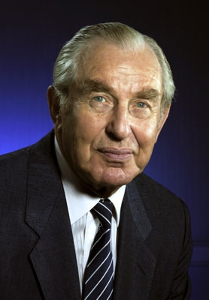
Chaim Herzog, Israeli politician, general, lawyer, and author who serves as the sixth President of Israel between 1983 and 1993, is born in Cliftonpark Avenue in Belfast on September 17, 1918.

Herzog is raised predominantly in Dublin, the son of Ireland’s Chief Rabbi Yitzhak HaLevi Herzog and his wife Sara. Herzog’s father, a fluent speaker of the Irish language, is known as “the Sinn Féin Rabbi” for his support of the First Dáil and the Irish Republican cause during the Irish War of Independence. Herzog studies at Wesley College, Dublin, and is involved with the Federation of Zionist Youth and Habonim Dror, the Labour-Zionist movement, during his teenage years.

The family emigrates to Mandatory Palestine in 1935 and Herzog serves in the Jewish paramilitary group Haganah during the 1936–1939 Arab revolt. He goes on to earn a degree in law at University College London, and then qualifies as a barrister at Lincoln’s Inn.

Herzog joins the British Army during World War II, operating primarily in Germany as a tank commander in the Armoured Corps. There, he is given his lifelong nickname of “Vivian” because the British could not pronounce the name, “Chaim.” A Jewish soldier had volunteered that “Vivian” is the English equivalent of “Chaim.”

Herzog returns to Palestine after the war and, following the end of the British Mandate and Israel’s Declaration of Independence in 1948, operates in the Battles of Latrun during the 1948 Arab–Israeli War. He retires from the Israel Defence Forces in 1962 with the rank of Major-General.

After leaving the army, Herzog opens a private law practice. He returns to public life when the Six-Day War breaks out in 1967, serving as a military commentator for Kol Israel radio news. Following the capture of the West Bank, he is appointed Military Governor of East Jerusalem, and Judea and Samaria.

In 1972 Herzog is a co-founder of Herzog, Fox & Ne’eman, which becomes one of Israel’s largest law firms. Between 1975 and 1978 he serves as Israel’s Permanent Representative to the United Nations, in which capacity he repudiates UN General Assembly Resolution 3379, the “Zionism is Racism” resolution, and symbolically tears it up before the assembly.

Herzog enters politics in the 1981 elections, winning a Knesset seat as a member of the Alignment. Two years later, in March 1983, he is elected to the largely ceremonial role of President. He serves two five-year terms before retiring in 1993. He dies on April 17, 1997, and is buried on Mount Herzl, Jerusalem. His son, Isaac Herzog, has led the Israeli Labour Party and the parliamentary Opposition in the Knesset since 2013.


Leave a comment

Final Concert by Phil Lynott & Thin Lizzy

thin-lizzy-1983

Although a version of the band still tours today, the definitive Thin Lizzy lineup, according to the official Thin Lizzy website, plays its last concert at the Monsters Of Rock festival in Nuremburg, Germany, on September 4, 1983. Afterwards the band members go their separate ways.

Formed in 1969 featuring bass guitarist and lead vocalist Phil Lynott and drummer Brian Downey, the band goes through various members including Gary Moore before Scott Gorham and Brian Robertson join the band in the mid-1970s. Thin Lizzy’s big breakthrough comes with the Jailbreak album in 1976 featuring the hit single The Boys Are Back In Town.

After the success of the Jailbreak album, Thin Lizzy’s popularity begins to subside in the United States, with each successive album finding less success. They manage, however, to maintain a presence in the United Kingdom. Another problem contributing to the band’s demise is Lynott’s drug use, which begins to escalate around this time and eventually ruins his marriage.

Two more Thin Lizzy albums, Renegade and Thunder and Lightning, follow over the next two and half years, as does a second solo offering by Lynott, The Phillip Lynott Album. Despite this, things continue to unravel for Lynott and company.

They plan a farewell tour to coincide with the March 1983 release of Thunder and Lightning, which features a heavier approach and proves to be their most popular album in some time. This ends up being a year-long adventure whose high point is a special performance at the legendary Hammersmith Odeon. For the show, Lynott brings in former band members Brian Robertson, Eric Bell, and Gary Moore as special guests.

The final concert in the United Kingdom takes place on August 28, 1983, at the Reading Festival, while their final concert with Lynott in the lineup finds them in Nuremberg on a bill that includes Whitesnake, Ozzy Osbourne, Blue Öyster Cult, Motörhead, and others. Lizzy’s set features old favorites along with a few new songs.

Lynott dies on January 4, 1986, of heart failure and pneumonia. Although the band eventually regroups with various ex-members trying to sail the ship, it never rekindles its past success without their leader.


Leave a comment

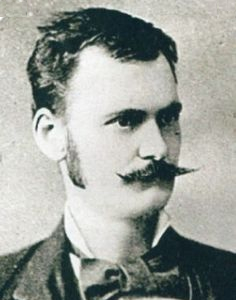
Birth of Irish Rebel Leader John Devoy

john-devoy

John Devoy, one of the most devoted revolutionaries the world has ever seen, is born in Kill, County Kildare, on September 3, 1842. Dedicating over 60 years of his life to the cause of Irish freedom, he is one of the few people to have played a leading role in the Fenian Rising of 1867, the 1916 Easter Rising, and the Irish War of Independence (1919 – 1921).

After the Great Famine, the family moves to Dublin where Devoy’s father obtains at job at Watkins’ brewery. Devoy attends night school at the Catholic University before joining the Fenians. In 1861 he travels to France with an introduction from Timothy Daniel Sullivan to John Mitchel. Devoy joins the French Foreign Legion and serves in Algeria for a year before returning to Ireland to become a Fenian organiser in Naas, County Kildare.

In 1865, when many Fenians are arrested, James Stephens, founder of the Irish Republican Brotherhood (IRB), appoints Devoy Chief Organiser of Fenians in the British Army in Ireland. His duty is to enlist Irish soldiers in the British Army into the IRB. In November 1865 Devoy orchestrates Stephens’ escape from Richmond Prison in Dublin.

In February 1866 an IRB Council of War calls for an immediate uprising but Stephens refuses, much to Devoy’s annoyance, as he calculated the Fenian force in the British Army to number 80,000. The British get wind of the plan through informers and move the regiments abroad, replacing them with regiments from Britain. Devoy is arrested in February 1866 and interned in Mountjoy Gaol, then tried for treason and sentenced to fifteen years penal servitude. In Portland Prison Devoy organises prison strikes and, as a result, is moved to Millbank Prison in Pimlico, London.

In January 1871, he is released and exiled to the United States as one of the “Cuba Five.” He receives an address of welcome from the House of Representatives. Devoy becomes a journalist for the New York Herald and is active in Clan na Gael. Under Devoy’s leadership, Clan na Gael becomes the central Irish republican organisation in the United States. In 1877 he aligns the organisation with the Irish Republican Brotherhood in Ireland.

In 1875, Devoy and John Boyle O’Reilly organise the escape of six Fenians from Fremantle Prison in Western Australia aboard the ship Catalpa. Devoy returns to Ireland in 1879 to inspect Fenian centres and meets Charles Kickham, John O’Leary, and Michael Davitt en route in Paris. He convinces Davitt and Charles Stewart Parnell to co-operate in the “New Departure” during the growing Land War.

Devoy’s fundraising efforts and work to sway Irish Americans to physical force nationalism makes possible the Easter Rising in 1916. In 1914, Patrick Pearse visits the elderly Devoy in America, and later the same year Roger Casement works with Devoy in raising money for guns to arm the Irish Volunteers. Though he is skeptical of the endeavor, he finances and supports Casement’s expedition to Germany to enlist German aid in the struggle to free Ireland from English rule. Also, before and during World War I, Devoy is also identified closely with the Ghadar Party, and is accepted to have played a major role in supporting Indian Nationalists, as well as playing a key role in the Hindu-German Conspiracy which leads to the trial that is the longest and most expensive trial in the United States at the time.

In 1916 Devoy plays an important role in the formation of the Clan-dominated Friends of Irish Freedom, a propaganda organization whose membership totals 275,000 at one point. The Friends fail in their efforts to defeat Woodrow Wilson for the presidency in 1916. Fearful of accusations of disloyalty for their cooperation with Germans and opposition to the United States’ entering the war on the side of Great Britain, the Friends significantly lower their profile after April 1917. Sinn Féin‘s election victories and the British government’s intentions to conscript in Ireland in April 1917 help to revitalize the Friends.

With the end of the war, Devoy plays a key role in the Friends’ advocacy for not the United States’ recognition of the Irish Republic but, in keeping with President Wilson’s war aims, self-determination for Ireland. The latter does not guarantee recognition of the Republic as declared in 1916 and reaffirmed in popular election in 1918. American Irish republicans challenge the Friends’ refusal to campaign for American recognition of the Irish Republic. Not surprisingly, Devoy and the Friends’ Daniel F. Cohalan become the key players in a trans-Atlantic dispute with de facto Irish president Éamon de Valera, touring the United States in 1919 and 1920 in hopes of gaining U.S. recognition of the Republic and American funds. Believing that the Americans should follow Irish policy, de Valera forms the American Association for the Recognition of the Irish Republic in 1920 with help from the Philadelphia Clan na Gael.

Devoy returns to Ireland and in 1919 addresses Dáil Éireann. He later supports the Anglo-Irish Treaty of 1921. Devoy is editor of The Gaelic American from 1903 until his death in Atlantic City on September 29, 1928. His body is returned to Ireland and buried in Glasnevin Cemetery. A large memorial to him stands on the road between his native Kill and Johnstown.


Leave a comment

Pope Gregory XIII Commissions the Gregorian Calendar

pope-gregory-xiii

Pope Gregory XIII commissions the new Gregorian calendar on February 24, 1582, replacing the Julian calendar introduced by Julius Caesar in 45BCE.

The reason for the reform is that the average length of the year in the Julian calendar is too long. It treats each year as 365 days, 6 hours in length, whereas calculations show that the actual mean length of a year is 365 days, 5 hours, and 49 minutes. As a result, the date of the actual vernal equinox, over the course of 13 centuries, has slowly slipped to March 10, while the calculation of the date of Easter still follows the traditional date of March 21.

These calculations are verified by the observations of mathematician and astronomer Christopher Clavius, and the new calendar is instituted when Gregory decrees on February 24, 1582, that the day after Thursday, October 4, 1582 will not be Friday, October 5, but rather Friday, October 15, 1582. The new calendar duly replaces the Julian calendar and has since come into universal use. Because of Gregory’s involvement, the reformed Julian calendar comes to be known as the Gregorian calendar.

The switchover is bitterly opposed by much of the populace, who fear it is an attempt by landlords to cheat them out of a week and a half of rent. However, the Catholic countries of Spain, Portugal, Poland, and Italy comply almost immediately. France, some states of the Dutch Republic, and various Catholic states in Germany and Switzerland follow suit within a year or two, and Hungary follows in 1587.

More than a century passes before Protestant Europe accepts the new calendar. Denmark, the remaining states of the Dutch Republic, and the Protestant states of the Holy Roman Empire and Switzerland adopt the Gregorian calendar in 1700–1701. Ireland and Great Britain, along with its American colonies, reform in 1752, where Wednesday, September 2, 1752 is immediately followed by Thursday, September 14, 1752. They are joined by the last Protestant holdout, Sweden, on March 1, 1753.

The Gregorian calendar is not accepted in eastern Christendom for several hundred years, and then only as the civil calendar. The Gregorian Calendar is instituted in Russia by the Bolsheviks in 1917. Romania accepts it in 1919 and is followed by Turkey in 1923. The last Orthodox country to accept the calendar is Greece, also in 1923.