seamus dubhghaill

Promoting Irish Culture and History from Little Rock, Arkansas, USA


Leave a comment

The 1991 Cappagh Killings

The 1991 Cappagh killings, a gun attack by the loyalist Ulster Volunteer Force (UVF) in the village of Cappagh, County Tyrone, Northern Ireland, takes place on March 3, 1991. A unit of the UVF’s Mid-Ulster Brigade drive to the staunchly republican village and shoot dead three Provisional Irish Republican Army (IRA) members and a Catholic civilian at Boyle’s Bar. There are allegations of collusion between the UVF and the Ulster Defence Regiment (UDR) in the shootings.

Although nobody is ever charged in connection with the killings, it is widely believed by nationalists and much of the press that the attack had been planned and led by Billy Wright, the leader of the Mid-Ulster Brigade’s Portadown unit. Wright himself takes credit for this and boasts to The Guardian newspaper, “I would look back and say Cappagh was probably our best,” though some sources are sceptical about his claim.

On the evening of Sunday, March 3, 1991, a unit of the UVF’s Mid-Ulster Brigade drive into the heartland of the East Tyrone IRA, intent on wiping out an entire IRA unit that is based in the County Tyrone village of Cappagh. One team of the UVF men wait outside Boyle’s Bar, while a second team waits on the outskirts of the town. At 10:30 p.m. a car pulls into the car park outside the bar and the UVF gunmen open fire with vz. 58 assault rifles, killing Provisional IRA volunteers John Quinn (23), Dwayne O’Donnell (17) and Malcolm Nugent (20). The victims and car are riddled with bullets. According to author Thomas G. Mitchell, Quinn, O’Donnell and Nugent are part of an IRA active service unit (ASU). The gunmen then attempt to enter the pub but are unable to after the civilians inside realise what is happening and barricade the door. Unable to get into the bar, a UVF gunman shoots through a high open toilet window killing local civilian, Thomas Armstrong (50) and badly wounding a 21-year-old man. Their intended target, IRA commander Brian Arthurs, escapes with his life by crouching behind the bar during the shooting. According to the Conflict Archive on the Internet (CAIN), the three IRA volunteers chose to go to the pub “on the spur of the moment,” thus are unlikely to be the UVF’s original target.

After the attack, the UVF issues a statement: “This was not a sectarian attack on the Catholic community, but was an operation directed at the very roots of the Provisional IRA command structure in the Armagh–Tyrone area.” The statement concludes with the promise that “if the Provisional IRA were to cease its campaign of terror, the Ulster Volunteer Force would no longer deem it necessary to continue with their military operations.” Privately the UVF are hugely pleased with the attack in a republican heartland and Billy Wright, leader of the Portadown unit of the UVF’s Mid-Ulster Brigade, who is alleged to be centrally involved, tells Jim Cusack and Henry McDonald the killings were “one of things we did militarily in thirty years. We proved we could take the war to the Provos in one of their strongest areas.” Cusack and McDonald assert that a wealthy UVF supporter with a business in South Belfast helped the UVF purchase the cars used in the attack at auctions in the city.

The Provisional IRA initially does not acknowledge that three of the victims are within its ranks, apparently with the aim of garnering sympathy from the wider world, particularly in the Republic of Ireland, toward nationalists in Northern Ireland.

The first reprisal takes place on April 9, 1991, when alleged UVF member Derek Ferguson, a cousin of local MP Reverend William McCrea, is shot and killed in Coagh by members of the East Tyrone Brigade. His family denies any paramilitary links. In the months following the 1991 shootings, two former UDR soldiers are killed by the IRA near Cappagh. One of them is shot dead while driving along Altmore Road on August 5, 1991. The other former soldier is blown up by an IRA bomb planted inside his car at Kildress on April 25, 1993. It is claimed that he has loyalist paramilitary connections. The 1993 bombing leads to allegations that the IRA is killing Protestant landowners in Tyrone and Fermanagh in an orchestrated campaign to drive Protestants out of the region. There are at least five botched IRA attempts against the life of Billy Wright before the Irish National Liberation Army (INLA) succeeds in killing him in 1997 inside the Maze Prison.

This is not the first time the UVF carries out an attack on Boyle’s Bar in Cappagh. On January 17, 1974, at around 7:40 p.m. two masked UVF gunmen enter the pub and open fire indiscriminately on the customers with a Sterling submachine gun and a Smith & Wesson revolver, firing at least 35 shots. A Catholic civilian and retired farmer Daniel Hughes (73) is shot eleven times and killed in the attack and three other people are injured. A group calling itself the “Donaghmore-Pomeroy Battalion of the UVF” claim responsibility for the shooting. The attack is linked to the notorious Glenanne gang.

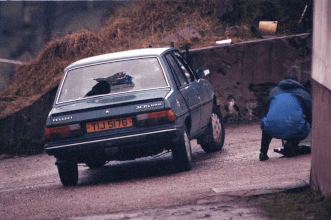
(Pictured: The scene of the UVF attack outside Boyle’s Bar in Cappagh in March 1991. Photo: Pacemaker Archive Belfast 153-91-BW)


Leave a comment

The Reavey and O’Dowd Killings

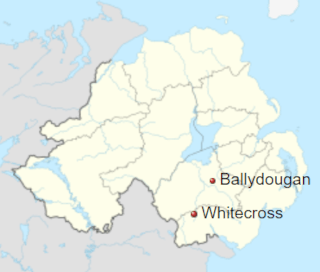
The Reavey and O’Dowd killings are two coordinated gun attacks on January 4, 1976, in County Armagh, Northern Ireland. Six Catholic civilians die after members of the Ulster Volunteer Force (UVF), an Ulster loyalist paramilitary group, break into their homes and shoot them. Three members of the Reavey family are shot at their home in Whitecross and four members of the O’Dowd family are shot at their home in Ballydougan. Two of the Reaveys and three of the O’Dowds are killed outright, with the third Reavey victim dying of brain hemorrhage almost a month later.

In February 1975, the Provisional Irish Republican Army and the British Government enter into a truce and restart negotiations. For the duration of the truce, the IRA agrees to halt its attacks on the British security forces, and the security forces mostly end their raids and searches. However, there are dissenters on both sides. There is a rise in sectarian killings during the truce, which “officially” lasts until February 1976.

The shootings are part of a string of attacks on Catholics and Irish nationalists by the “Glenanne gang,” an alliance of loyalist militants, rogue British soldiers and Royal Ulster Constabulary (RUC) police officers. Billy McCaughey, an officer from the Special Patrol Group (SPG), admits taking part and accuses another officer of involvement. His colleague John Weir says those involved include a British soldier, two police officers and an alleged police agent, Robin “the Jackal” Jackson.

At about 6:10 p.m., at least three masked men enter the home of the Reaveys, a Catholic family, in Whitecross, through a door that had been left unlocked. Brothers John (24), Brian (22) and Anthony Reavey (17) are alone in the house and are watching television in the sitting room. The gunmen open fire on them with two 9mm Sterling submachine guns, a 9mm Luger pistol and a .455 Webley revolver. John and Brian are killed outright. Anthony manages to run to the bedroom and take cover under a bed. He is shot several times and is left for dead. After searching the house and finding no one else, the gunmen leave. Badly wounded, Anthony crawls about 200 yards to a neighbour’s house to seek help. He dies of a brain haemorrhage on January 30. Although the pathologist says the shooting played no part in his death, Anthony is listed officially as a victim of the Troubles. A brother, Eugene Reavey, says “Our entire family could have been wiped out. Normally on a Sunday, the twelve of us would have been home, but that night my mother took everybody [else] out to visit my aunt.” Neighbours claim there had been two Royal Ulster Constabulary (RUC) checkpoints set up — one at either end of the road — around the time of the attack. These checkpoints are to stop passers-by from seeing what is happening. The RUC denies having patrols in the area at the time but says there could have been checkpoints manned by the British Army‘s Ulster Defence Regiment (UDR).

At about 6:20 p.m., three masked men burst into the home of the O’Dowds, another Catholic family, in Ballydougan, about fifteen miles away. Sixteen people are in the house for a family reunion. The male family members are in the sitting room with some of the children, playing the piano. The gunmen spray the room with bullets, killing Joseph O’Dowd (61) and his nephews Barry (24) and Declan O’Dowd (19). All three are members of the Social Democratic and Labour Party (SDLP) and the family believes this is the reason they are targeted. Barney O’Dowd, Barry and Declan’s father, is also wounded by gunfire. The RUC concludes that the weapon used is a 9mm Sterling submachine gun, although Barney believes a Luger pistol with a suppressor was also used. The gunmen had crossed a field to get to the house, and there is evidence that UDR soldiers had been in the field the day before.

The following day, gunmen stop a minibus carrying ten Protestant workmen near Whitecross and shoot them dead by the roadside. This becomes known as the Kingsmill massacre. The South Armagh Republican Action Force (SARAF) claims responsibility, saying it is retaliation for the Reavey and O’Dowd killings. Following the massacre, the British Government declares County Armagh to be a “Special Emergency Area” and announces that the Special Air Service (SAS) is being sent into South Armagh.

Some of the Reavey family come upon the scene of the Kingsmill massacre while driving to the hospital to collect the bodies of John and Brian. Some members of the security forces immediately begin a campaign of harassment against the Reavey family and accuse Eugene Reavey of orchestrating the Kingsmill massacre. On their way home from the morgue, the Reavey family are stopped at a checkpoint. Eugene claims the soldiers assaulted and humiliated his mother, put a gun to his back, and danced on his dead brothers’ clothes. The harassment would later involve the 3rd Battalion, Parachute Regiment. In 2007, the Police Service of Northern Ireland (PSNI) apologises for the “appalling harassment suffered by the family in the aftermath at the hands of the security forces.”

After the killings of the Reavey brothers, their father makes his five surviving sons swear not to retaliate or to join any republican paramilitary group.

In 1999, Democratic Unionist Party (DUP) leader Ian Paisley states in the House of Commons that Eugene Reavey “set up the Kingsmill massacre.” In 2010, a report by the police Historical Enquiries Team clears Eugene of any involvement. The Reavey family seeks an apology, but Paisley refuses to retract the allegation and dies in 2014.


Leave a comment

The Tullyvallen Massacre

tullyvallen-orange-hall

The Tullyvallen massacre takes place on September 1, 1975, when Irish republican gunmen attack an Orange Order meeting hall at Tullyvallen, near Newtownhamilton in County Armagh, Northern Ireland. The Orange Order is an Ulster Protestant and unionist brotherhood. Five Orangemen are killed and seven wounded in the shooting. The “South Armagh Republican Action Force” claims responsibility, saying it is retaliation for a string of attacks on Catholic civilians by Loyalists. It is believed members of the Provisional Irish Republican Army (IRA) carried out the attack, despite the organisation being on ceasefire.

On February 10, 1975, the Provisional IRA and British government enter into a truce and restart negotiations. The IRA agrees to halt attacks on the British security forces, and the security forces mostly end their raids and searches. There is a rise in sectarian killings during the truce. Loyalists, fearing they are about to be forsaken by the British government and forced into a united Ireland, increase their attacks on Irish Catholics/nationalists. They hope to force the IRA to retaliate and thus end the truce. Some IRA units concentrate on tackling the loyalists. The fall-off of regular operations causes unruliness within the IRA and some members, with or without permission from higher up, engage in tit-for-tat killings.

On August 22, loyalists kill three Catholic civilians in a gun and bomb attack on a pub in Armagh. Two days later, loyalists shoot dead two Catholic civilians after stopping their car at a fake British Army checkpoint in the Tullyvallen area. Both of these attacks are linked to the Glenanne gang. On August 30, loyalists kill two more Catholic civilians in a gun and bomb attack on a pub in Belfast.

On the night of September 1, a group of Orangemen are holding a meeting in their isolated Orange hall in the rural area of Tullyvallen. At about 10:00 PM, two masked gunmen burst into the hall armed with assault rifles and spray it with bullets while others stand outside and fire through the windows. The Orangemen scramble for cover. One of them is an off-duty Royal Ulster Constabulary (RUC) officer. He returns fire with a pistol and believes he hit one of the attackers. Five of the Orangemen, all Protestant civilians, are killed while seven others are wounded. Before leaving, the attackers also plant a two-pound bomb outside the hall, but it fails to detonate.

The victims are John Johnston (80), James McKee (73) and his son William McKee (40), Nevin McConnell (48), and William Herron (68) who dies two days later. They all belong to Tullyvallen Guiding Star Temperance Orange Lodge. Three of the dead are former members of the Ulster Special Constabulary.

A caller to the BBC claims responsibility for the attack on behalf of the “South Armagh Republican Action Force” or “South Armagh Reaction Force,” saying it is retaliation for “the assassinations of fellow Catholics.” The Irish Times reports on September 10: “The Provisional IRA has told the British government that dissident members of its organisation were responsible” and “stressed that the shooting did not have the consent of the organisation’s leadership.”

In response to the attack, the Orange Order calls for the creation of a legal militia, or “Home Guard,” to deal with republican paramilitaries.

Some of the rifles used in the attack are later used in the Kingsmill massacre in January 1976, when ten Protestant workmen are killed. Like the Tullyvallen massacre, it is claimed by the “South Armagh Reaction Force” as retaliation for the killing of Catholics elsewhere.

In November 1977, 22-year-old Cullyhanna man John Anthony McCooey is convicted of driving the gunmen to and from the scene and of IRA membership. He is also convicted of involvement in the killings of Ulster Defence Regiment (UDR) soldier Joseph McCullough, chaplain of Tullyvallen Orange lodge, in February 1976, and UDR soldier Robert McConnell in April 1976.


Leave a comment

The Dublin and Monaghan Bombings

dublin-and-monaghan-bombings

The Dublin and Monaghan bombings of May 17, 1974 are a series of co-ordinated bombings in Dublin and Monaghan, Ireland. Three car bombs explode in Dublin at Parnell Street, Talbot Street and South Leinster Street during the evening rush hour and a fourth car bomb explodes in Monaghan, just south of the border with Northern Ireland, almost ninety minutes later. The bombs kill 33 civilians and a full-term unborn child, and injure almost 300. The bombings are the deadliest attack of the conflict known as the Troubles, and the deadliest attack in the Republic of Ireland‘s history. Most of the victims are young women, although the ages of the dead range from pre-born up to 80 years.

The Ulster Volunteer Force (UVF), an Ulster loyalist paramilitary group from Northern Ireland, claims responsibility for the bombings in 1993. It has launched a number of attacks in the Republic since 1969. There are allegations taken seriously by inquiries that elements of the British state security forces help the UVF carry out the bombings, including members of the Glenanne gang. Some of these allegations have come from former members of the security forces. The Irish parliament‘s Joint Committee on Justices calls the attacks an act of international terrorism involving British state forces. The month before the bombings, the British government lifts the UVF’s status as a proscribed organisation.

The bombings happen during the Ulster Workers’ Council strike. This is a general strike called by hardline loyalists and unionists in Northern Ireland who oppose the Sunningdale Agreement. Specifically, they oppose the sharing of political power with Irish nationalists and the proposed role for the Republic in the governance of Northern Ireland. The Republic’s government had helped bring about the Agreement. The strike brings down the Agreement and the Northern Ireland Assembly on May 28.

No one has ever been charged with the bombings. A campaign by the victims’ families leads to an Irish government inquiry under Justice Henry Barron. His 2003 report criticises the Garda Síochána‘s investigation and says the investigators stopped their work prematurely. It also criticises the Fine Gael/Labour Party government of the time for its inaction and lack of interest in the bombings. The report says it is likely that British security force personnel or MI5 intelligence is involved but has insufficient evidence of higher-level involvement. However, the inquiry is hindered by the British government’s refusal to release key documents. The victims’ families and others are continuing to campaign to this day for the British government to release these documents.

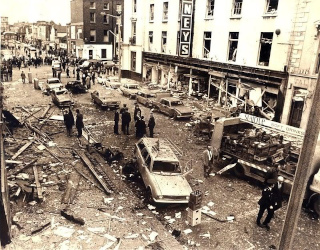
(Pictured: Some of the damage caused by the second car bomb on Talbot Street, Dublin)