seamus dubhghaill

Promoting Irish Culture and History from Little Rock, Arkansas, USA


Leave a comment

The Chlorane Bar Attack

The Chlorane Bar attack is a mass shooting at a city centre pub on June 5, 1976, in BelfastNorthern Ireland. It is carried out by the Ulster Volunteer Force (UVF), an Ulster loyalist paramilitary organisation, apparently in retaliation for the Provisional Irish Republican Army bombing attack on the Times Bar on York Road, in which two Protestant civilians were killed. In the Chlorane attack, five civilian men are killed, three Catholics and two Protestants. The gunmen are militants from the UVF Belfast Brigade’s Shankill Road battalion. The assault is a joint operation by the platoons based at the Brown Bear and the Windsor Bar, drinking haunts in the Shankill Road district frequented by UVF members.

On June 5, 1976, a bomb explodes at the door of the Times Bar on York Road, killing two Protestants. The pub is frequented by members of the Ulster Defence Association (UDA), a legal loyalist paramilitary group. Irish republicans are blamed for the bombing. Shortly after, the UVF Brigade Staff (its Shankill Road-based leadership) decide to hit back by attacking the Chlorane Bar. It is a hastily arranged operation devised by its military commander “Bunter,” whom investigative journalist Martin Dillon refers to as “Mr. F.” The Chlorane Bar is located at 23 Gresham Street in Belfast’s city centre, near Smithfield Market. Its clientele is mixed (Protestant and Catholic), which is unusual during The Troubles. On August 17, 1973, the Chlorane Bar had been firebombed, however, no one was injured as the pub was closed at the time of the attack. Later that same month, the Ulster Freedom Fighters (UFF), a cover name sometime used by the UDA, claim responsibility for a car bomb which exploded in Gresham Street. Although there were no human casualties, a pet shop located near the bomb’s epicentre was damaged in the blast and a number of animals inside the building were either killed or injured.

The attack is planned and executed by the UVF platoons based at the Brown Bear and the Windsor Bar respectively. These are two pubs located on the Shankill Road and regularly frequented by UVF members. Dillon sometimes refers to the former platoon as the “Brown Bear Team” because the members generally meet at that particular pub, which faces Shankill Library on the corner of Mountjoy Street. To carry out the attack, along with the procuring of weapons and masks, a black taxi is hijacked by two young men outside the Long Bar on the Shankill Road to transport the gunmen to the Chlorane Bar. Taxi driver Mark Hagan and a passenger are held hostage at the Windsor Bar.

The Chlorane Bar is likely chosen for its nearness to the Shankill Road, affording the attackers a speedy getaway. There is not much of a security presence that evening in the area. The driver of the taxi, with four specifically chosen armed men seated in the rear of the vehicle in the manner of genuine passengers, makes his way from the Shankill Road to North Street and turns south into Gresham Street. Upon arrival outside the Chlorane Bar, the four gunmen don their masks, devised from yellow money bags, and exit the taxi.

At 10:00 p.m., the four masked gunmen storm through Chlorane Bar’s front door leading to the public bar. There are about sixteen customers inside the pub at the time. One of the four gunmen is Robert “Basher” Bates, a member of the violent Shankill Butchers gang led by Lenny Murphy, who is in police custody at the time the attack against the Chlorane takes place. Bates is the only one of the four to have been from the “Brown Bear Team.” The hit squad is commanded by a “Mr. G,” leader of the Windsor Bar UVF platoon, with “Mr. D” as his second-in-command and “Mr. C” completing the team. Entering the bar in single file, “Mr. G” orders everybody to stand up, and then asks the startled customers whether there are any “Prods” (Protestants) among them. William Greer, a Protestant, thinking the gunmen are from the Irish Republican Army, quickly flees to the men’s toilet where he places his feet up against the door. Customer Frederick Graham and his girlfriend, Pat Mahood, assume the same thing. “Mr. G” tells the customers to separate into two groups, with the Protestants standing at the bottom end of the bar, and the Catholics at the top.

When one man, Edward Farrell, admits to being a Catholic, the UVF men open fire. Farrell tries to run toward the toilet but is shot dead. The Catholic owner of the Chlorane, 64-year-old James Coyle, is standing behind the bar when he is hit at close-range. The bullet enters his heart and he dies instantly. The gunmen continue firing and two Protestant men, Daniel McNeil and Samuel Corr, are also struck by the hail of bullets. McNeil is killed on the spot and Corr is fatally wounded. Another Catholic man, John Martin, is shot and dies of his injuries on June 23. Several other customers are hit as gunfire is sprayed around the bar. One customer pretends to be dead, however, a gunman walks over to where he lay and deliberately fires three shots into his thigh, knee, and below the ankle. The man later recounts that he had then looked up to see “men lying shot all over the place.” William Greer, hiding in the toilet, is shot when one of the gunmen fire through the door. He survives despite being hit in the leg and neck. There are more customers upstairs in the lounge area, but although they hear the gunshots, the gunmen never go near them. Dillon maintains that it had not been the UVF unit’s intention to kill any Protestants.

“Mr. G” calls a halt to the shooting, saying “that’s it,” and the four-man UVF team nonchalantly walks out of the pub and re-enters the hijacked black taxi, which is parked so the driver has easy access to North Street. This route offers a quick return to the Shankill. After the four men get into the back seat, the driver (“Mr. H”) drives off. As the taxi passes by the Catholic Unity Flats area, three shots are fired from the vehicle. Two young men walking nearby get a look at the driver. He is described as being around 38 to 40 years old and having shoulder-length, black curly hair. Upon the taxi’s return to the Shankill, Mark Hagan and the passenger are released. They immediately go to the Tennent Street Royal Ulster Constabulary (RUC) Station off the Shankill where they report the taxi’s hijacking. The shooting team proceeds to the Long Bar pub where “Mr. I” (commander of UVF 1st Battalion) procures a forty-ounce bottle of vodka for “Mr. G” and “Mr. D” – their payment for leading the operation.

Having heard the gunshots, a barmaid serving in the upstairs lounge goes downstairs to investigate and discovers the body of her employer, James Coyle, lying on the floor behind the bar and those of the other dead and wounded. The first policeman on the scene is Constable George McElnea, from the RUC Special Patrol Group in Tennent Street. He quickly notices the pile of bodies near the men’s toilet as Samuel Corr stumbles toward him, gravely injured. McElnea places Corr on a bench and offers what assistance he can but to no avail. Corr dies of his gunshot wounds before the ambulance arrives. Alan McCrum, a Scenes of Crime officer, appears at the Chlorane fifteen minutes after the shootings. He retrieves 24 spent bullet casings from the floor and determines that most of the shots had been fired at the rear of the pub. Later ballistic testing establishes that the weapons used in the attack were a .22 caliber pistol, a 9 mm pistol, and two .45 snub-nosed revolvers. Police believe one of the victims, Daniel McNeil, had tenuous UVF connections, although he is not an active member.

The hijacked black taxi is found by police the following morning in a cul-de-sac in Beresford Street, off the Shankill Road. A cyclist, who had witnessed the masked gunmen entering the Chlorane Bar, describes the four men as having been in the 20 to 30 age group, all about 5’10 in height and well-built. The last gunman to enter had shoulder-length brown hair. The witness had gone to a nearby British Army post where he told soldiers what he had seen.

Ten days after the gun attack, the Chlorane Bar is blown up by a bomb. Three weeks after the attack the Provisional IRA, using their sometime cover-name of the “Republican Action Force“, enter Walker’s Bar in Templepatrick and kill three Protestant civilians in retaliation for the Chlorane attack. As part of this series of deadly tit for tat attacks on pubs, the UVF responds by killing six customers at the Catholic-owned Ramble Inn outside Antrim.

No one is ever charged with the shootings. In February 1979, Bates is convicted of the murders he had committed as part of the Shankill Butchers, and given ten life sentences. In his statement to the police following his arrest in 1977, he recounts his role in the Chlorane Bar attack. He alleges while working as a barman in the Long Bar on the evening of June 5, 1976, he is approached by the UVF military commander, “Mr. F”, who informs him of a job in which he is to take part that same evening. It is decided to attack the city centre pub in retaliation for the IRA’s earlier bombing of The Times pub. Bates goes on to say that “Mr. I” provides the weapons which are used in the shooting and “Mr. J” (UVF Provost Marshal) procures the masks. Bates claims that his revolver malfunctions and therefore he never fires his gun during the attack. However, forensic evidence proves that two .45 revolvers had been fired inside the Chlorane. Upon his release from the HM Prison Maze, Bates is gunned-down in June 1997 by the son of James Curtis Moorhead, a UDA man he had killed in 1977.
Leave a comment

Donnelly’s Bar and Kay’s Tavern Attacks

During the evening of December 19, 1975, two coordinated attacks are carried out by the Ulster Volunteer Force (UVF) in pubs on either side of the Irish border. The first attack, a car bombing, takes place outside Kay’s Tavern, a pub along Crowe Street in DundalkCounty LouthRepublic of Ireland – close to the border. The second, a gun and bomb attack, takes place at Donnelly’s Bar & Filling Station in Silverbridge, County Armagh, just across the border inside Northern Ireland.

The attacks are linked to the Glenanne gang, a group of loyalist militants who are either members of the UVF, the Ulster Defence Regiment (UDR), the Royal Ulster Constabulary (RUC) and the closely linked UVF paramilitary the Red Hand Commando (RHC). Some of the Glenanne gang are members of two of these organisations at the same time, such as gang leaders Billy Hanna, who is in both the UVF and the UDR and who fights for the British Army during the Korean War, and John Weir from County Monaghan, who is in the UVF and is a sergeant in the RUC. At least 25 UDR men and police officers are named as members of the gang. The Red Hand Commando claim to have carried out both attacks.

According to journalist Joe Tiernan, the attacks are planned and led by Robert McConnell and Robin “The Jackal” Jackson who are both alleged to have carried out dozens of sectarian murders during The Troubles, mainly from 1974 to 1977, mostly in south County Armagh – which in 1975 is virtually lawless. Loyalist paramilitaries and the Provisional Irish Republican Army roam the streets and countryside and can set up bogus military checkpoints freely.

The attacks are planned at the Glenanne farm of RUC reserve officer James Mitchell which is where most terrorist acts are planned by the gang and the farm also acts as a UVF arms dump and bomb-making site. After the attacks are finished everyone involved in both attacks is to meet at Mitchell’s farm. Then if there is any heat, Mitchell can claim the bombers and shooters were with him when the attacks happened.

The first phase of the plan starts at around 6:15 p.m. along Crowe Street in Dundalk when a 100-pound no-warning bomb explodes in a Ford sports car just outside Kay’s Tavern. The blast kills Hugh Watters, who is a tailor and has just dropped into the pub to deliver some clothes he has altered for the pub’s owner, almost instantly. Jack Rooney, who is walking past the town hall on the opposite side of the street, is struck in the head by flying shrapnel and dies three days later. A further 20 people are injured in the explosion, several of them very seriously. The car bomb is fitted with fake southern registration plates and placed in one of the busiest streets in Dundalk in the hope of causing maximum death and injury. According to Joe Tiernan, UVF commander Robin Jackson plants the bomb and along with other members of his unit escapes across the border in a blue Hillman Hunter around the time the bomb goes off.

At around 9:00 p.m., about three hours after the Dundalk bombing, the second phase of the coordinated plan begins. It is led by McConnell and takes place at Donnelly’s Bar & Filling Station in the small Armagh village Silverbridge, close to Crossmaglen.

The unit arrives in two cars and come unusually fast toward the pub. The publican’s son, Michael Donnelly (14), is serving petrol to a customer. He notices the strange speed of the cars. He tries to run toward the pub, but McConnell jumps out of one of the cars and shoots the teenage boy dead with a Sten gun. McConnell then shoots the man Michael Donnelly had been serving petrol to in the head. Although the man survives the shooting, he is maimed for life.

Then a second gunman, believed to be Billy McCaughey, a UVF volunteer and member of the RUC Special Patrol Group, shoots dead a second person, local man Patrick Donnelly (no relation to the pub owner’s family) who has been waiting for petrol. McConnell then goes inside the pub and sprays the bar with his Sten SMG, killing a third man, Trevor Bracknell, and seriously injuring three more people.

As McConnell withdraws to his car, two other members of the unit carry a 25-pound cylinder bomb inside the pub. As McConnell’s unit flees back to Mitchell’s farm, the bomb detonates inside the pub. However, by this time most of the people have already fled.

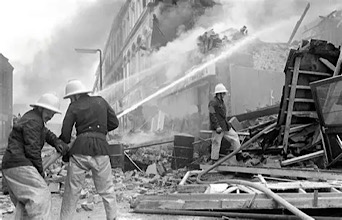
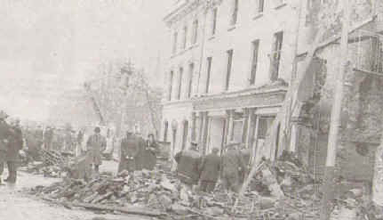
(Pictured: Photograph of the destruction at Kay’s Tavern after the loyalist car bomb explosion on December 19, 1975. Members of the Garda and Dundalk fire service are seen in the foreground. Also present are a number of visiting government ministers from Dublin.)


Leave a comment

The Reavey and O’Dowd Killings

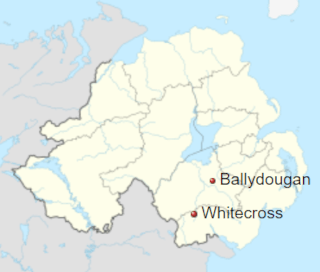
The Reavey and O’Dowd killings are two coordinated gun attacks on January 4, 1976, in County Armagh, Northern Ireland. Six Catholic civilians die after members of the Ulster Volunteer Force (UVF), an Ulster loyalist paramilitary group, break into their homes and shoot them. Three members of the Reavey family are shot at their home in Whitecross and four members of the O’Dowd family are shot at their home in Ballydougan. Two of the Reaveys and three of the O’Dowds are killed outright, with the third Reavey victim dying of brain hemorrhage almost a month later.

In February 1975, the Provisional Irish Republican Army and the British Government enter into a truce and restart negotiations. For the duration of the truce, the IRA agrees to halt its attacks on the British security forces, and the security forces mostly end their raids and searches. However, there are dissenters on both sides. There is a rise in sectarian killings during the truce, which “officially” lasts until February 1976.

The shootings are part of a string of attacks on Catholics and Irish nationalists by the “Glenanne gang,” an alliance of loyalist militants, rogue British soldiers and Royal Ulster Constabulary (RUC) police officers. Billy McCaughey, an officer from the Special Patrol Group (SPG), admits taking part and accuses another officer of involvement. His colleague John Weir says those involved include a British soldier, two police officers and an alleged police agent, Robin “the Jackal” Jackson.

At about 6:10 p.m., at least three masked men enter the home of the Reaveys, a Catholic family, in Whitecross, through a door that had been left unlocked. Brothers John (24), Brian (22) and Anthony Reavey (17) are alone in the house and are watching television in the sitting room. The gunmen open fire on them with two 9mm Sterling submachine guns, a 9mm Luger pistol and a .455 Webley revolver. John and Brian are killed outright. Anthony manages to run to the bedroom and take cover under a bed. He is shot several times and is left for dead. After searching the house and finding no one else, the gunmen leave. Badly wounded, Anthony crawls about 200 yards to a neighbour’s house to seek help. He dies of a brain haemorrhage on January 30. Although the pathologist says the shooting played no part in his death, Anthony is listed officially as a victim of the Troubles. A brother, Eugene Reavey, says “Our entire family could have been wiped out. Normally on a Sunday, the twelve of us would have been home, but that night my mother took everybody [else] out to visit my aunt.” Neighbours claim there had been two Royal Ulster Constabulary (RUC) checkpoints set up — one at either end of the road — around the time of the attack. These checkpoints are to stop passers-by from seeing what is happening. The RUC denies having patrols in the area at the time but says there could have been checkpoints manned by the British Army‘s Ulster Defence Regiment (UDR).

At about 6:20 p.m., three masked men burst into the home of the O’Dowds, another Catholic family, in Ballydougan, about fifteen miles away. Sixteen people are in the house for a family reunion. The male family members are in the sitting room with some of the children, playing the piano. The gunmen spray the room with bullets, killing Joseph O’Dowd (61) and his nephews Barry (24) and Declan O’Dowd (19). All three are members of the Social Democratic and Labour Party (SDLP) and the family believes this is the reason they are targeted. Barney O’Dowd, Barry and Declan’s father, is also wounded by gunfire. The RUC concludes that the weapon used is a 9mm Sterling submachine gun, although Barney believes a Luger pistol with a suppressor was also used. The gunmen had crossed a field to get to the house, and there is evidence that UDR soldiers had been in the field the day before.

The following day, gunmen stop a minibus carrying ten Protestant workmen near Whitecross and shoot them dead by the roadside. This becomes known as the Kingsmill massacre. The South Armagh Republican Action Force (SARAF) claims responsibility, saying it is retaliation for the Reavey and O’Dowd killings. Following the massacre, the British Government declares County Armagh to be a “Special Emergency Area” and announces that the Special Air Service (SAS) is being sent into South Armagh.

Some of the Reavey family come upon the scene of the Kingsmill massacre while driving to the hospital to collect the bodies of John and Brian. Some members of the security forces immediately begin a campaign of harassment against the Reavey family and accuse Eugene Reavey of orchestrating the Kingsmill massacre. On their way home from the morgue, the Reavey family are stopped at a checkpoint. Eugene claims the soldiers assaulted and humiliated his mother, put a gun to his back, and danced on his dead brothers’ clothes. The harassment would later involve the 3rd Battalion, Parachute Regiment. In 2007, the Police Service of Northern Ireland (PSNI) apologises for the “appalling harassment suffered by the family in the aftermath at the hands of the security forces.”

After the killings of the Reavey brothers, their father makes his five surviving sons swear not to retaliate or to join any republican paramilitary group.

In 1999, Democratic Unionist Party (DUP) leader Ian Paisley states in the House of Commons that Eugene Reavey “set up the Kingsmill massacre.” In 2010, a report by the police Historical Enquiries Team clears Eugene of any involvement. The Reavey family seeks an apology, but Paisley refuses to retract the allegation and dies in 2014.