seamus dubhghaill

Promoting Irish Culture and History from Little Rock, Arkansas, USA


Leave a comment

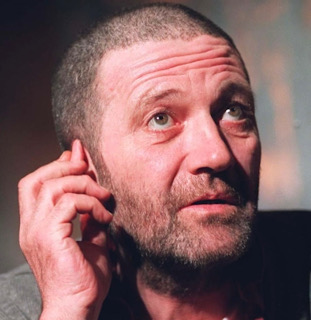
Death of Donal McCann, Stage, Film & Television Actor

Donal McCann, Irish stage, film, and television actor, dies from pancreatic cancer in Dublin on July 17, 1999. He is best known for his roles in the works of Brian Friel and for his lead role in John Huston‘s last film, The Dead (1987). In 2020, he is listed as number 45 on The Irish Times list of Ireland’s greatest film actors.

McCann is born on May 7, 1943, in Terenure, Dublin. His father is John J. McCann, a playwright and politician who serves twice as Lord Mayor of Dublin. Although he acts in a production of his father’s Give Me a Bed of Roses at Terenure College in 1962, he briefly studies architecture before taking a job as a trainee sub-editor at the Evening Press which allows him to pursue part-time acting classes at the Abbey School of Acting at the same time. He joins the Abbey Players in the late 1960s.

Among his most important early roles are Cú Chulainn in W. B. Yeats‘s On Baile Strand (1966), and as Estragon in a seminal production of Samuel Beckett‘s Waiting for Godot, partnering with Peter O’Toole as Vladimir (1969).

McCann’s career includes parts in many plays from the Irish literary canon, including Tarry FlynnThe Shaughran, and the Gate Theatre‘s highly acclaimed production of Seán O’Casey‘s classic Juno and the Paycock in the 1980s (McCann plays the “Paycock” (Captain Boyle) opposite Geraldine Plunkett as Juno and John Kavanagh as Joxer Daly) as well as a subsequent production of O’Casey’s The Plough and the Stars.

McCann develops a particularly fruitful relationship with the playwright Brian Friel. He plays the role of Gar O’Donnell, the public figure, in a film adaptation of Philadelphia, Here I Come! in 1970 and, despite popular belief, he never plays either public or private Gar on stage. He gives a landmark performance as Frank Hardy, the title character, in Faith Healer in 1980 (a role he reprised in 1994), continuing his relationship with Friel through productions of Translations (1988) and Wonderful Tennessee (1993).

Friel says that McCann’s work “contains extraordinary characteristics that go beyond acting … it is deeply spiritual.” Perhaps McCann’s most renowned role is as Thomas Dunne in Sebastian Barry‘s The Steward of Christendom. He wins the London Critics’ Circle Theatre Award (Drama Theatre) as best actor for this role in 1995. He reprises this role in a 1996 production at the Gate Theatre, Dublin and, following a twelve-week run at the Brooklyn Academy of Music in 1997, his “performance of unarguable greatness” (The New York Observer) had Newsweek hailing him as “a world-class star,” and The New York Times referring to this “astonishing Irish actor…widely regarded as the finest of them all.”

On the London stage, McCann plays in Prayer for My Daughter opposite Antony Sher (1978), and is Jean to Dame Helen Mirren‘s Julie in Miss Julie (1971). This is filmed for the BBC, and he much later plays Judge Brack with Fiona Shaw in the title role of Henrik Ibsen‘s Hedda Gabler, a production filmed for the BBC in 1993.

McCann begins his film career early, in 1966, in Walt Disney Pictures’s The Fighting Prince of Donegal (this later becomes a TV series). More significant roles include the title character’s father Shamie in Cal and one of the feuding brothers in Thaddeus O’Sullivan‘s December Bride (1990). He works a number of times with Neil Jordan (in AngelThe Miracle and High Spirits).

His best-known film role is as Gabriel Conroy in The Dead (1987), starring opposite Anjelica Huston and directed by her father, John Huston. Significant late roles include Bernardo Bertolucci‘s Stealing Beauty (1996) and in John Turturro‘s Illuminata (released in 1999, after McCann’s death).

McCann’s television work includes the featured role of Phineas Finn in the BBC’s serialised adaptation of Anthony Trollope‘s The Pallisers, Willie Burke in RTÉ‘s Prix Italia drama entry The Burke Enigma (1979) and Barney Mulhall in RTÉ’s Strumpet City (1980), as well as many one-off parts.

McCann plays in Bob Quinn‘s Irish language film Poitín (1979) and in Quinn’s somewhat experimental The Bishop’s Story (1995). After hearing that McCann is ill, Tom Collins asks Quinn to make a TV documentary about McCann for RTÉ called It Must Be Done Right (1999), after a remark by McCann on his craft. The film airs on RTÉ a week before McCann’s death.

In his private life, McCann is a quiet and unassuming man, but he battles both depression and alcoholism all his life. He has many friends in Irish theatre and artistic circles but also across all strata of life. His hobbies include sketching and he is passionate about horse racing.

Remembering McCann on the 25th anniversary of his death, Gerald Smyth writes, “In the melancholy of that life-worn voice could be heard the cadences of a lyric heart.”

Leave a comment

Birth of Actress Jennifer Gibney

Jennifer Ann O’Carroll (née Gibney), Irish actress, is born on July 7, 1964, in Dublin. She is best known for playing Cathy Brown in the BBC television sitcom, Mrs. Brown’s Boys and its adaptions. She also appears as contestant on the twelfth series of Strictly Come Dancing in 2014.

Gibney works as a civil servant in the Irish tax office for seven years and then joins the Bank of Ireland. She studies for a drama degree while at the bank and joins the company’s amateur dramatics group. She trains to be an actress at Dublin Oscar Theatre School.

Gibney’s first professional acting role comes in 1996, with a minor part in Some Mother’s Son, a film starring Helen Mirren. In 1999, she appears in the film Agnes Browne as Winnie the Mackerel. In 2007, she appears in Prosperity as Linda.

Gibney’s most prominent role is her portrayal of Cathy Brown, the daughter of Agnes Brown, played by her real-life husband, Brendan O’Carroll, a part she begins playing in the 1990’s in the original Mrs. Browne, and subsequently the BBC sitcom Mrs. Brown’s Boys since 2011. She also appears as Cathy in the film adaption Mrs. Brown’s Boys D’Movie and the talk show All Round to Mrs. Brown’s between 2017 and 2020. She and O’Carroll reprise their roles as the characters in the Netflix film A Madea Homecoming (2022).

In 2014, Gibney takes part in the twelfth series of Strictly Come Dancing. She is partnered with Irish professional Tristan MacManus. She and MacManus are the second couple to be eliminated in week three of the competition after dancing to ABBA‘s “Mamma Mia” on Movie Week. She competes in the bottom two against Blue star Simon Webbe and his partner Kristina Rihanoff.

Gibney has been married to Brendan O’Carroll since 2005 and has three stepchildren, Fiona and Danny, who also appear in Mrs. Brown’s Boys, and Eric.


Leave a comment

Birth of John Lynch, Actor & Novelist

john-lynch

John Lynch, actor and novelist, is born in Corrinshego, County Armagh, Northern Ireland on December 26, 1961. He wins the AFI (AACTA) Award for Best Actor in a Leading Role for the 1995 film Angel Baby. His other film appearances include Cal (1984), The Secret Garden (1993), In the Name of the Father (1993) and Sliding Doors (1998).

Lynch is the eldest of five children of an Irish father and an Italian mother from Trivento in the Province of Campobasso. His younger sister Susan and his nephew Thomas Finnegan are also actors. He attends St. Colman’s College, Newry and begins acting in Irish language-medium plays at school during the early years of the conflict in Northern Ireland.

Lynch has appeared in numerous films related to Northern Ireland’s problems such as Cal (1984) with Helen Mirren, In the Name of the Father (1993) with Daniel Day-Lewis, The Railway Station Man (1992) with Julie Christie and Donald Sutherland, Nothing Personal (1995) and Some Mother’s Son (1996), also with Mirren, as well as the Irish-themed film Evelyn (2002).

Lynch stars as a supporting actor in Derek Jarman‘s Edward II (1991), as Lord Craven in Agnieska Holland‘s film of The Secret Garden (1993), as Tadhg in The Secret of Roan Inish (1994), and as Gerry in Sliding Doors (1998).

Lynch plays the part of football legend George Best in the 2000 film Best. He plays the lead in the Australian feature Angel Baby, winning the Australian Film Institute award for best leading actor and the Australian Film Critics Association award for best actor of 1995. He is nominated for a Satellite Film Award for the film Moll Flanders in 1996. He works with acclaimed Belgian director Marion Hänsel on her adaptation of Booker-nominated author Damon Galgut‘s novel, The Quarry (1998), which wins Best Film at the Montreal World Film Festival. He wins Best Actor for the lead role in Best at the Fort Lauderdale Film Festival in 2000.

Lynch is nominated for a British Academy of Film and Television Arts (BAFTA) for Cal, as well as for an Irish Film and Television Award for his role in The Baby War. He stars in Five Day Shelter as Stephen, which wins a European Film Award and is in competition at the Rome Film Festival. He plays the lead in Craig Vivieros’ first feature film, the prison drama Ghosted. He plays the role of Wollfstan in Black Death and appears in the 2012 film version of Michael Morpurgo‘s novel, Private Peaceful.

Lynch is also a novelist. His first novel, Torn Water, is published in November 2005 by the 4th Estate, a literary imprint of HarperCollins Publishers LLC, and his second, Falling Out of Heaven, is published on May 13, 2010, by the same publisher.


Leave a comment

Birth of Actor Liam Neeson

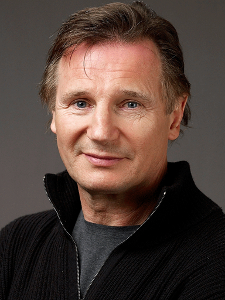
Actor Liam John Neeson is born on June 7, 1952, in BallymenaCounty Antrim. Raised as a Roman Catholic, Neeson is named Liam after the local priest. He says growing up as a Catholic in a predominately Protestant town made him cautious. At age nine, he begins boxing lessons at the All-Saints Youth Club and later becomes Ulster’s amateur senior boxing champion.

Neeson first steps on stage at age eleven after his English teacher offers him the lead role in a school play, which he accepts because the girl he is attracted to is starring in it. He continues to act in school productions over the following years.

Neeson’s interest in acting and decision to become an actor is also influenced by minister Ian Paisley, into whose Free Presbyterian church Neeson would sneak. Neeson says of Paisley, “He had a magnificent presence, and it was incredible to watch him just Bible-thumping away… it was acting, but it was also great acting and stirring too.”

In 1971, Neeson is enrolled as a physics and computer science student at Queen’s University BelfastNorthern Ireland, before leaving to work for the Guinness Brewery. At Queen’s, he discovers a talent for football and is spotted by Seán Thomas at Bohemian F.C. There is a club trial in Dublin and Neeson plays one game as a substitute against Shamrock Rovers F.C. but is not offered a contract.

In 1976, Neeson joins the Lyric Players’ Theatre in Belfast for two years. He then acts in the Arthurian film, Excalibur (1981), alongside Helen Mirren. Between 1982 and 1987, he stars in five films, most notably alongside Mel Gibson and Anthony Hopkins in The Bounty (1984) and Robert De Niro and Jeremy Irons in The Mission (1986). He lands a leading role alongside Patrick Swayze in Next of Kin (1989).

Neeson rises to prominence when he stars in the title role in Steven Spielberg‘s 1993 Oscar winner Schindler’s List. He has since starred in other successful films, including the title role in the historical biopic Michael Collins (1996), the film adaptation of Victor Hugo‘s 1862 novel Les Misérables (1998), Star Wars: Episode I – The Phantom Menace as Qui-Gon Jinn (1999), the biographical drama Kinsey (2004), the superhero film Batman Begins as Ra’s al Ghul (2005), the action thriller series Taken (2008–2014), the fantasy adventure film Clash of the Titans (2010) as Zeus, the fantasy films in The Chronicles of Narnia series (2005–2010) as Aslan, and the thriller-survival film The Grey (2011). In 2016 he narrates the RTÉ One three-part documentary on the Easter Rising1916.

Neeson has been nominated for a number of awards, including an Academy Award for Best Actor, a BAFTA Award for Best Actor in a Leading Role and three Golden Globe Awards for Best Actor in a Motion Picture DramaEmpire magazine ranks Neeson among both the “100 Sexiest Stars in Film History” and “The Top 100 Movie Stars of All Time.”


Leave a comment

Birth of Academy Award Winning Actor Daniel Day-Lewis

Sir Daniel Michael Blake Day-Lewis, English actor who holds both British and Irish citizenship, is born in KensingtonLondonEngland, on April 29, 1957.

Day-Lewis is the son of poet Cecil Day-Lewis and English actress Jill Balcon. His father, who was born in Ballintubbert, County Laois, was of Protestant Anglo-Irish and English background, lived in England from the age of two, and later became the Poet Laureate of the United Kingdom. Day-Lewis’s mother was Jewish, and his maternal great-grandparents’ Jewish families emigrated to England from Latvia and Poland. His maternal grandfather, Sir Michael Balcon, was the head of Ealing Studios.

Growing up in London, he excels on stage at the National Youth Theatre, before being accepted at the Bristol Old Vic Theatre School, which he attends for three years. Despite his traditional actor training at the Bristol Old Vic, he is considered to be a method actor, known for his constant devotion to and research of his roles. He often remains completely in character for the duration of the shooting schedules of his films, even to the point of adversely affecting his health. He is one of the most selective actors in the film industry, having starred in only five films since 1998, with as many as five years between roles. Protective of his private life, he rarely gives interviews and makes very few public appearances.

Day-Lewis shifts between theatre and film for most of the early 1980s, joining the Royal Shakespeare Company and playing Romeo in Romeo and Juliet and Flute in A Midsummer Night’s Dream, before appearing in the 1984 film The Bounty. He stars in My Beautiful Laundrette (1985), his first critically acclaimed role, and gains further public notice with A Room with a View (1985). He then assumes leading man status with The Unbearable Lightness of Being (1988).

One of the most acclaimed actors of his generation, Day-Lewis has earned numerous awards, including three Academy Awards for Best Actor for his performances in My Left Foot (1989), There Will Be Blood (2007), and Lincoln (2012), making him the only male actor in history to have three wins in the lead actor category and one of only three male actors to win three Oscars. He is also nominated in this category for In the Name of the Father (1993) and Gangs of New York (2002). He has also won four BAFTA Awards for Best Actor in a Leading Role, three Screen Actors Guild Awards, and two Golden Globe Awards. In November 2012, Time names Day-Lewis the “World’s Greatest Actor.”

In 2008, while receiving the Academy Award for Best Actor for There Will Be Blood from Helen Mirren, who presented the award, Day-Lewis kneels before her and she taps him on each shoulder with the Oscar statuette, to which he quips, “That’s the closest I’ll come to ever getting a knighthood.” In November 2014, Day-Lewis is formally knighted by Prince William, Duke of Cambridge at Buckingham Palace for services to drama.

Day-Lewis and his wife, Rebecca Miller, have lived in Annamoe, County Wicklow since 1997.