seamus dubhghaill

Promoting Irish Culture and History from Little Rock, Arkansas, USA


Leave a comment

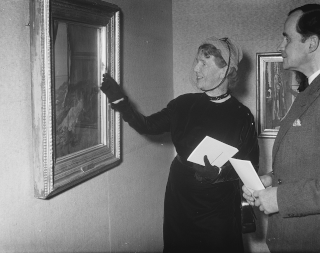
Death of Josephine McNeill, First Irish Female Diplomat

Josephine McNeill, Irish diplomat, dies in Dublin on November 19, 1969. She is the first Irish female diplomat appointed to represent Ireland abroad in a ministerial capacity.

McNeill is born Josephine Ahearne on March 31, 1895, in FermoyCounty Cork, the daughter of shopkeeper and hotelier, James Ahearne, and his wife Ellen Ahearne (née O’Brien). She attends the Loretto Convent, Fermoy, and goes on to graduate from University College Dublin (UCD) with a BA,  H.Dip.Ed. in French and German. With this she begins a teaching career, at St. Louis’ Convent, Kiltimagh, at the Ursuline Convent, Thurles, and at Scoil Íde. Scoil Íde, the female counterpart to St. Enda’s School, had been established by her friend, Louise Gavan Duffy. She is fluent in the Irish language and takes an active part in the cultural elements of the Irish independence movement, such as literature and music. She is a member of Cumann na mBan, serving as a member of the executive committee in 1921.

McNeill becomes engaged to Pierce McCan, but he dies of influenza in Gloucester Gaol in March 1919. She marries James McNeill in 1923, while he is serving as Irish High Commissioner in London. Despite her reservations, she becomes a noted hostess, both in London and later in Dublin when her husband becomes the Governor-General of the Irish Free State from 1928 to 1932.

After the death of her husband in 1938, McNeill becomes the honorary secretary of the council of the Friends of the National Collections, as well as serving as chair of the executive committee of the Irish Countrywomen’s Association until 1950. As a member of the Department of External Affairs advisory committee on cultural relations, she writes on economic, social and cultural issues. She represents Ireland at the UNESCO general assembly in Paris in 1949.

McNeill is an active member of Clann na Poblachta from its foundation in 1946. She is appointed the minister to the Netherlands in 1950 by Seán MacBride, making her the first Irish female diplomat to represent the Republic of Ireland abroad in a ministerial capacity. This appointment is not well received by diplomats in the Department of External Affairs. Her reports from The Hague focus on the issues the Netherlands faces with decolonisation. In 1955, she becomes the minister to Sweden, going on to hold the joint appointment to Austria and Switzerland from 1956 to 1960, after which she retires. While serving in Switzerland she puts aside the resentment she feels towards Éamon de Valera based on how he had treated her husband, to sit with him during a convalescence while de Valera recovers from an eye operation.

McNeill is an amateur pianist and collects paintings and porcelains. In 1933, she publishes the Irish language book, Finnsgéalta ó India.

McNeill dies in St. Vincent’s Hospital, Dublin, on November 19, 1969. She is buried in Kilbarrack Cemetery. Her papers are held in the UCD Archives.


Leave a comment

Birth of Josephine McNeill, First Irish Female Diplomat

Josephine McNeill, Irish diplomat, is born on March 31, 1895, in Fermoy, County Cork. She is the first Irish female diplomat appointed to represent Ireland abroad in a ministerial capacity.

McNeill is born Josephine Ahearne, the daughter of shopkeeper and hotelier, James Ahearne, and his wife Ellen Ahearne (née O’Brien). She attends the Loretto Convent, Fermoy, and goes on to graduate from University College Dublin (UCD) with a BA, H.Dip.Ed. in French and German. With this she begins a teaching career, at St. Louis’ Convent, Kiltimagh, at the Ursuline Convent, Thurles, and at Scoil Íde. Scoil Íde, the female counterpart to St. Enda’s School, had been established by her friend, Louise Gavan Duffy. She is fluent in the Irish language and takes an active part in the cultural elements of the Irish independence movement, such as literature and music. She is a member of Cumann na mBan, serving as a member of the executive committee in 1921.

McNeill becomes engaged to Pierce McCan, but he dies of influenza in Gloucester Gaol in March 1919. She marries James McNeill in 1923, while he is serving as Irish High Commissioner in London. Despite her reservations, she becomes a noted hostess, both in London and later in Dublin when her husband becomes the Governor-General of the Irish Free State from 1928 to 1932.

After the death of her husband in 1938, McNeill becomes the honorary secretary of the council of the Friends of the National Collections, as well as serving as chair of the executive committee of the Irish Countrywomen’s Association until 1950. As a member of the Department of External Affairs advisory committee on cultural relations, she writes on economic, social and cultural issues. She represents Ireland at the UNESCO general assembly in Paris in 1949.

McNeill is an active member of Clann na Poblachta from its foundation in 1946. She is appointed the minister to the Netherlands in 1950 by Seán MacBride, making her the first Irish female diplomat to represent the Republic of Ireland abroad in a ministerial capacity. This appointment is not well received by diplomats in the Department of External Affairs. Her reports from The Hague focus on the issues the Netherlands faces with decolonisation. In 1955, she becomes the minister to Sweden, going on to hold the joint appointment to Austria and Switzerland from 1956 to 1960, after which she retires. While serving in Switzerland she puts aside the resentment she feels towards Éamon de Valera based on how he had treated her husband, to sit with him during a convalescence while de Valera recovers from an eye operation.

McNeill is an amateur pianist and collects paintings and porcelains. In 1933, she publishes the Irish language book, Finnsgéalta ó India.

McNeill dies in St. Vincent’s Hospital, Dublin, on November 19, 1969. She is buried in Kilbarrack Cemetery. Her papers are held in the UCD Archives.


Leave a comment

Death of Elizabeth Burke-Plunkett, Countess of Fingall

The Rt. Hon. Elizabeth Mary Margaret Burke-Plunkett, Countess of Fingall, dies in Dublin on October 28, 1944.

Burke is born in Moycullen, County Galway, a daughter of George Edmond Burke of Danesfield and his wife Theresa Quin. She becomes an activist in Irish industrial, charitable and cultural groups, serving as second president of the Camogie Association and first president of the Irish Countrywomen’s Association. She is also a noted literary hostess, whose salon at Earlsfort House is a centre of Dublin intellectual life for many years.

In 1883, Burke marries Arthur James Francis Plunkett, 11th Earl of Fingall, 4th Baron Fingall (1859–1929), state steward to the administration in Dublin Castle and one of the few Catholics to hold an Irish peerage, thus becoming Countess of Fingall.

Burke-Plunkett befriends unionists such as Field Marshal Douglas Haig, 1st Earl Haig, and Chief Secretary for Ireland George Wyndham and also nationalist leaders such as Charles Stewart Parnell, Michael Collins and Éamon de Valera, as well as activists like the cooperative pioneer Sir Horace Plunkett. Her colourful memoir of those circles is published in 1937. She establishes a famous literary salon and for many years she is “at home” every Thursday at Earlsfort House to the leading figures in Dublin intellectual circles. Her main rival as a literary hostess is the artist Sarah Purser, who is “at home” every Tuesday.

A friendship with Máire Ní Chinnéide, forged through theatrical circles, leads to Burke-Plunkett accepting the patronage of Camogie Association of Ireland from 1910 to 1923. She also presents a cup and medals for the winners of the Dublin League. She serves largely in an honorary role, attending a few meetings of what is then known as Cualacht Luithchleas na mBan Gaedheal.

A liberal unionist, Burke-Plunkett becomes active in the promotion of Irish agriculture, industry and culture. She is a founder member of Horace Plunkett’s Irish co-operative movement, is the first president of the Society of United Irishwomen from 1912 to 1921, and of its successor, the Irish Countrywomen’s Association until 1942. She presides at suffragette meetings in Dublin, is a founder of the Irish Distressed Ladies Committee, and serves on the board of the Irish Industries Association. She is also the chairperson of the Irish Central Committee for the Employment of Women.

Burke-Plunkett dies on October 28, 1944, at Earlsfort House, her Dublin home, where she had held her famous Thursdays “at home” for many years. She is buried on the grounds of Killeen Castle, County Meath, following a Requiem Mass at University Church in Dublin.