seamus dubhghaill

Promoting Irish Culture and History from Little Rock, Arkansas, USA


Leave a comment

Sinn Féin Splits in 1970

sinn-fein

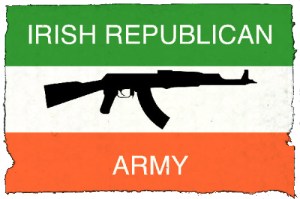
On January 11, 1970, at Sinn Féin‘s Ard Fheis at the Intercontinental Hotel in Ballsbridge, Dublin, the proposal to end abstentionism and take seats, if elected, in the Dáil, the Northern Ireland Parliament, and the Parliament of the United Kingdom is put before the members. A similar motion had been adopted at an Irish Republican Army (IRA) convention the previous month, leading to the formation of a Provisional Army Council by Seán Mac Stíofáin and other members opposed to the leadership.

There are allegations of malpractice and that some supporters cast votes to which they are not entitled. In addition, the leadership has also refused voting rights to a number of Sinn Féin cumainn (branches) known to be in opposition, particularly in the north and in County Kerry. The motion is debated all of the second day, and when it was put to a vote at 5:30 PM the result is 153:104 in favour of the motion, failing to achieve the necessary two-thirds majority.

The Executive attempts to circumvent this by introducing a motion in support of the IRA Army Council, led by Tomás Mac Giolla, which only requires a simple majority. In protest of the motion, Ruairí Ó Brádaigh and his minority group walks out of the meeting. These members reconvene at a hall in 44 Parnell Square, which they had already booked in anticipation of the move by the leadership. They appoint a Caretaker Executive, and pledged allegiance to the Provisional Army Council.
irish-republican-army

The Caretaker Executive declares itself in opposition to the ending of abstentionism, the drift towards Marxism, the failure of the leadership to defend the nationalist people of Belfast during the 1969 Northern Ireland riots, and the expulsion of traditional republicans by the leadership during the 1960s. At the October 1970 Ard Fheis, it is announced that an IRA convention has been held and has regularised its structure, bringing the “provisional” period to an end.

At the end of 1970 the terms “Official IRA” and “Regular IRA” are introduced by the press to differentiate the two factions. During 1971, the rival factions play out their conflict in the press with the Officials referring to their rivals as the Provisional Alliance, while the Provisionals refer to the Officials (IRA and Sinn Féin) as the National Liberation Front (NLF).

The Falls Road Curfew, coupled with internment in August 1971, and Bloody Sunday in Derry in January 1972, boosts the Provisionals in Belfast. These events produce an influx into the Provisionals on the military side, making them the dominant force and finally eclipsing the Officials everywhere. Despite becoming the dominant group and the dropping of the word “provisional” at the convention of the IRA Army Council in September 1970, they are still known to the mild irritation of senior members as Provisionals, Provos, or Provies.

Leave a comment

Death of Shipbuilding Mogul John Roach

john-roach

John Roach, an American industrialist who rises from humble origins as an Irish immigrant laborer to found the largest and most productive shipbuilding empire in the postbellum United States, John Roach & Sons, dies in New York City on January 10, 1887.

Roach is born on December 25, 1815, at Mitchelstown, County Cork, Ireland, the first of seven children to Patrick Roche, a retail salesman, and his wife Abigail Meany. In 1832, at the age of sixteen, he emigrates together with his cousin to the United States. Arriving in New York City, he is at first unable to find regular work, but eventually gains secure employment at the Howell Works of James P. Allaire on the recommendation of a former employee of his father.

In 1852, after 20 years in the employment of Allaire, Roach and three partners purchase the Etna Iron Works, a small New York City ironworks which has fallen into receivership. Roach soon becomes sole proprietor, and during the American Civil War transforms the Etna Iron Works into a major manufacturer of marine engines. He continues to prosper after the war and in 1867 he purchases the Morgan Iron Works on New York’s East River and relocates his business there.

In 1871, Roach purchases the Reaney, Son & Archbold shipyard in Chester, Pennsylvania, which has fallen into receivership and renames it the Delaware River Iron Ship Building and Engine Works. This becomes his main facility. Over the next few years, he founds a network of new companies in Chester to support the shipyard’s operations. To give his sons a stake in the business, Roach founds the firm of John Roach & Sons, which becomes the overall parent and marketing company. He also attempts to create his own shipping line with the establishment of the United States and Brazil Mail Steamship Company, but this venture is a costly failure.

From 1871 until 1885, John Roach & Sons is easily the largest and most productive shipbuilding firm in the United States, building more tonnage of ships than its next two chief competitors combined. In the mid-1880s the firm runs into trouble when a series of U.S. Navy contracts become the subject of political controversy. Roach signed the contracts under a Republican administration, but when the Democratic administration of Grover Cleveland comes to power, it voids one of the contracts. Doubts over the validity of the remaining three contracts make it impossible for John Roach & Sons to obtain loans and, in 1885, the Roach shipbuilding empire is forced into receivership.

During the contract disputes, Roach falls ill with a chronic mouth infection which is diagnosed as cancer in 1886. Roach undergoes surgery in the spring of 1886, but it provides only temporary relief. He dies at the age of 71 on January 10, 1887, while his business is still in the hands of receivers. Roach’s eldest son, John Baker Roach, assumes control of the business which continues for another 20 years, although it never regains the pre-eminent position in American shipbuilding that it had enjoyed under Roach Sr.

During its existence between 1871 and 1907, the shipyard established by Roach builds 179 iron ships, 98 under Roach’s own management and an additional 81 under that of John Baker Roach.


Leave a comment

Éamon de Valera Resigns as President of the Republic

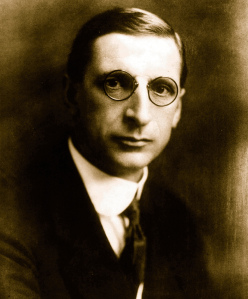
eamon-de-valeraThe Anglo-Irish Treaty is introduced to replace the Republic with a dominion of the British Commonwealth with the King represented by a Governor-General of the Irish Free State. The Treaty is finally signed on December 6, 1921.
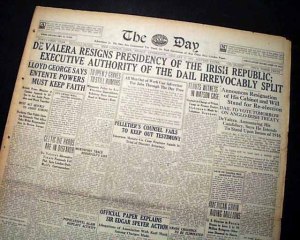
Éamon de Valera does not join in on the negotiations. His opponents say that he does so because he knows that the British will only allow an Irish dominion, not a republic, and does not want to be blamed for giving up the idea of a republic. De Valera says he is angry because the delegates working out the treaty had not asked him before signing the treaty. But at a secret session of the Dáil during the Treaty debates and publicised in January 1922, de Valera’s ideas for a treaty include dominion status, the “Treaty Ports,” a veto by the parliament in Belfast, and the king as head of the Commonwealth. Ireland would pay a share of the imperial debt.

On January 9, 1922, when the Treaty is accepted by a vote of 64 to 57, de Valera resigns as President of the Republic and a large minority of Sinn Féin Teachta Dálas (TDs) leave Dáil Éireann. De Valera  states, “In view of the vote that was taken here on Saturday and which I had definitely to oppose as one that was tending to subvert the Republic which I was elected to my present position to defend and maintain; and as it appeared to me also to be a vote which would tend to subvert the independence of the country, I could no longer continue— as I was beaten in that — I could no longer continue in my present office feeling I did not have the confidence of the House. I therefore wish to place my resignation in the hands of the Assembly.”the-day-01-09-1922

A motion to re-elect De Valera as President is defeated along pro and anti-treaty lines by 60 votes to 58. Arthur Griffith, de Valera opponent and former colleague, is elected President of Dáil Éireann in his place.

Following the vote, Griffith says, “Before another word is spoken I want to say: I want the Deputies here to know, and all Ireland to know, that this vote is not to be taken as against President de Valera. It is a vote to help the Treaty, and I want to say now that there is scarcely a man I have ever met in my life that I have more love and respect for than President de Valera. I am thoroughly sorry to see him placed in such a position. We want him with us.”


Leave a comment

Major Thomas Buchanan McGuire, Jr.

Major Thomas Buchanan McGuire, Jr., the second highest scoring United States ace of World War II and winner of the Medal of Honor, is shot down and killed over the Pacific on January 7, 1945.

Cadet Thomas B. McGuire Jr.

McGuire is an Irish American born in Ridgewood, New Jersey on August 1, 1920. He spends most of his childhood in Sebring, Florida, where he and his mother move after his parents are divorced.

McGuire enlists in the army as a aviation cadet in July 1941 and earns his pilot’s wings in February 1942. Sent to Alaska, McGuire bristles at the lack of combat and requests a transfer to a combat squadron. In December he is sent to California to learn to fly the twin-engine P-38 Lightning in which he earns his fame. In March 1943 he ships out to the Pacific, joining the 49th Fighter Group. One of the veteran combat pilots in the 49th is Richard Bong, who becomes the highest scoring ace of World War II.

In just his second mission, on August 18, McGuire is credited with shooting down three Japanese planes. On his next mission, on the 21st, he shoots down two more, making him an ace after just three missions. In October he is shot down but manages to bail out over the ocean and is rescued by a PT boat. When he takes off from his base in the Philippines on Christmas day 1944, he has thirty-one kills. In the next two days he shoots down seven enemy planes to bring his total to thirty-eight, putting him only two behind Bong, who has been sent home for a fund-raising tour. McGuire is anxious to pass him.

thomas-mcguire-memorial

Early on the morning of January 7, McGuire leads a flight of four P-38s over Japanese airbases on Negros Island. The group is confronted by a lone Ki-43 “Oscar.” As the Japanese fighter approaches from behind, McGuire makes an extremely sharp turn to the left. This extremely dangerous maneuver, performed at an altitude of only 300 feet, causes McGuire’s P-38 to stall. It snap rolls inverted and noses down into the ground. Despite the low altitude, McGuire nearly pulls out successfully. Had he jettisoned his drop tanks at the start of the dogfight, he might have managed it, however McGuire is killed on impact.

A memorial, placed by aviation archaeologist and former fighter pilot David Mason in 2007, stands at McGuire’s fatal crash site on Negros Island as a tribute. McGuire is posthumously awarded the Medal of Honor for his seven kills in two days in December. He is memorialized by the renaming of Fort Dix Army Air Force Base in Burlington County, New Jersey, to McGuire Air Force Base in 1948.


Leave a comment

Hugh O’Brien – First Irish Mayor of Boston

hugh-obrien

Hugh O’Brien is sworn in as Boston’s 31st mayor and first Irish mayor on January 5, 1885, marking the beginning of a new era in Boston politics.

Born in Ireland on July 13, 1827, O’Brien moves with his family to Boston when he is five years old, well before the potato famine sends waves of impoverished Irish men and women to Boston. He spends seven years in the Boston public schools and is apprenticed to a printer at the age of 12.

Working first for the newspaper Boston Courier and then for a Boston printer, O’Brien excels at the printing business, making foreman when he is only fifteen. He starts his own publication, Shipping and Commercial List, and is soon successful enough to become a respected member of the Boston business elite.

O’Brien’s business success draws the attention of Patrick Maguire, publisher of The Republic newspaper and the unofficial head of Irish politics in Boston. He orchestrates O’Brien’s election to the city’s Board of Aldermen.

Boston has long been controlled by native-born Protestants, generally called “Yankees,” most of whom have a stereotypical view of Irish immigrants as poor, ignorant, undisciplined, and under the thumb of the Catholic Church. But the Irish-born population of Boston is exploding, making up over 40% of the city’s population by 1885.

By 1883, Maguire decides that the time has come for Boston to elect an Irish-born mayor. He devises a two-part strategy. O’Brien will be the public face of the campaign, an able public official who criticizes the previous administration for increasing taxes. O’Brien’s pledge to reduce the tax rate without cutting city services appeals to the Yankee tradition of frugality. Meanwhile, behind the scenes, Maguire develops a system of Irish ward bosses who visit each household in the neighborhood and make sure that every eligible Irishman votes for O’Brien. O’Brien sweeps 15 of Boston’s 25 wards and, on December 10, 1884, becomes the first Irish Catholic to be elected Mayor of Boston.

O’Brien surprises the opposition by governing the city in a conservative and honest way during his four terms in office. He cuts tax rates as promised. He also widens streets, establishes the commission that hires Frederick Law Olmsted to design the Emerald Necklace park system, and builds the new Boston Public Library in Copley Square. He disarms his critics by enlisting Yankee and Republican businessmen to serve on the committees overseeing these projects.

Hugh O’Brien dies on August 1, 1895, and is buried at Holyhood Cemetery in Brookline, Massachusetts.


Leave a comment

Death of Archbishop John Joseph Hughes

john-joseph-hughes

John Joseph Hughes, Irish-born prelate of the Roman Catholic Church in the United States and the fourth Bishop and first Archbishop of the Archdiocese of New York, dies in New York City on January 3, 1864.

Hughes is born in the hamlet of Annaloghan, near Aughnacloy, County Tyrone. He emigrates to the United States in 1817.

After several unsuccessful applications to Mount St. Mary’s College in Emmitsburg, Maryland, he is eventually hired as a gardener at the college. During this time, he befriends Mother Elizabeth Ann Seton, who is impressed by Hughes and persuades the rector to reconsider his admission. Hughes is subsequently admitted as a regular student of Mount St. Mary’s in September 1820.

On October 15, 1826, Hughes is ordained to the priesthood by Bishop Henry Conwell at Old St. Joseph’s Church in Philadelphia. His first assignment is as a curate at St. Augustine Church in Philadelphia, where he assists its pastor by celebrating Mass, hearing confessions, preaching sermons, and other duties in the parish.

Hughes is chosen by Pope Gregory XVI as the coadjutor bishop of the Diocese of New York on August 7, 1837. He is consecrated bishop at St. Patrick’s Old Cathedral on January 7, 1838, with the title of the titular see of Basilinopolis, by the Bishop of New York, John Dubois, his former Rector.

Hughes campaigns actively on behalf of Irish immigrants and attempts to secure state support for parochial schools. Although this attempt fails, he founds an independent Catholic school system which becomes an integral part of the Catholic Church’s structure at the Third Plenary Council of Baltimore (1884), which mandates that all parishes have a school and that all Catholic children be sent to those schools. In 1841, Hughes founds St. John’s College in New York City which is now Fordham University.

Hughes is appointed Apostolic Administrator of the diocese due to Bishop Dubois’ failing health. As coadjutor, he automatically succeeds Dubois upon the bishop’s death on December 20, 1842, taking over a diocese which covers the entire state of New York and northern New Jersey. He is a staunch opponent of Abolitionism and the Free Soil movement, whose proponents often express anti-Catholic attitudes. Hughes also founds the Ultramontane newspaper New York Freeman to express his ideas.

Hughes becomes an archbishop on July 19, 1850, when the diocese is elevated to the status of archdiocese by Pope Pius IX. As archbishop, he becomes the metropolitan for the Catholic bishops serving all the dioceses established in the entire Northeastern United States. To the dismay of many in New York’s Protestant upper-class, Hughes foresees the uptown expansion of the city and begins construction of the current St. Patrick’s Cathedral on Fifth Avenue between 50th and 51st Street, laying its cornerstone on August 15, 1858. At the request of President Abraham Lincoln, Hughes serves as semiofficial envoy to the Vatican and to France in late 1861 and early 1862. Lincoln also seeks Hughes’ advice on the appointment of hospital chaplains.

Hughes serves as archbishop until his death. He is originally buried in St. Patrick’s Old Cathedral, but his remains are exhumed in 1882 and reinterred in the crypt under the altar of the new cathedral he had begun.


Leave a comment

Guinness Leases St. James Gate

st-james-gate

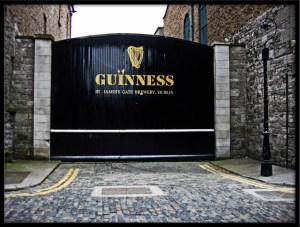
On December 31, 1759, after leaving his younger brother in charge of a Leixlip brewery in County Kildare that he had leased in 1755, Arthur Guinness signs a 9,000-year lease for a brewery at St. James Gate at £45 per annum and starts brewing Guinness. It becomes the largest brewery in Ireland in 1838 and the largest in the world by 1886. Although no longer the largest brewery in the world, it is still the largest brewer of stout on the planet.

After ceasing to brew ale, on May 19, 1769 Guinness exported his beer for the first time, shipping six and one half barrels to England. Arthur Guinness started selling dark beer porter in 1778.

Arthur Guinness died in 1803 at the age of 78 and it was at this time that his son, Arthur Guinness II, took over the company. Arthur Guinness II passed away on June 9, 1855, and his third son, Sir Benjamin Lee Guinness, succeeded him. The trademark Guinness label was created and introduced in 1862. In 1868, Edward Cecil took over after his father’s death and under his leadership Guinness doubled in size.

Guinness trademarked their iconic harp in 1876. In 1923, the Irish government wanted to use a harp as their official logo and asked Guinness for permission. He denied their request so the harp of Ireland must always face in the opposite direction.

In October 1886, Guinness became the first brewery to be publicly traded on the London Stock Exchange and was averaging sales of 1,138,000 barrels a year.

In 1929, the first ever advertisement for Guinness was published in the British national press. By this year, Guinness was selling about 2 million pints per day, a large number considering the United States was in the throes of Prohibition.

Today, the Guinness family no longer owns or runs the company, but they remain a shareholder. The legacy and traditions of Arthur Guinness remain present in the company, married with modern technologies to account for the massive growth the company has seen over the past 250 years.

Guinness has expanded well beyond the original 4-acre lot and has consequently bought out the property, rendering the 9,000-year lease from 1759 redundant.