seamus dubhghaill

Promoting Irish Culture and History from Little Rock, Arkansas, USA


Leave a comment

Birth of Áine Ceannt, Revolutionary Activist & Humanitarian Leader

Áine Ceannt (née Ní Bhraonáin), Irish revolutionary activist and humanitarian leader, is born Frances Mary Brennan at 28 Upper Camden Street, Dublin, on September 23, 1880.

Brennan is the daughter of Francis Brennan, who himself is a Fenian earlier in his life, and sister of Lily O’Brennan and Kathleen O’Brennan. Her mother is Elizabeth Anne Butler. She is educated in the Dominican College, Eccles Street, and adopts the name Áine upon joining the Gaelic League. It is through her Irish language activism that she meets her future husband, Éamonn Ceannt, whom she marries on June 7, 1905. Their son, Ronan, is born in June 1906. A convinced republican, she joins Cumann na mBan on its foundation in 1914. She writes and delivers dispatches during the Easter Rising. Her husband is one of the signatories of the Proclamation of the Irish Republic and is executed by the British at Kilmainham Gaol on May 8, 1916.

Newly widowed, Ceannt continues her republican activism, serving as Vice-President of Cumann na mBan and as a member of the Sinn Féin Standing Committee. She also plays a role in the development of the Sinn Féin Courts, a parallel legal system designed to offer an alternative to the British courts.

Ceannt is ardently opposed to the signature of the Anglo-Irish Treaty in December 1921. She is imprisoned by the Irish Free State government during the Irish Civil War in Mountjoy Prison for her anti-Treaty activity. Throughout the war, she serves at the highest levels within anti-Treaty Sinn Féin. In the years that follow, she spearheads efforts to secure state compensation for the widows and the children of those who had died in 1916 and in the Irish War of Independence. She serves as the head of the Children’s Fund of the Irish White Cross, an American-funded humanitarian organisation founded to assist victims of unrest in Ireland. She is a member of the Executive Committee of the Irish Red Cross.

In her later years, Ceannt moves to Churchtown, Dublin. She dies on February 2, 1954, in her home, Inis Ealgan, and was buried in Dean’s Grange Cemetery, situated in the suburban area of Deansgrange in Dún Laoghaire–RathdownCounty Dublin.

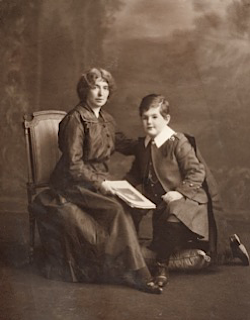
(Pictured: Photograph, circa 1917, of Áine and Ronan Ceannt, the family of Éamonn Ceannt, who is executed for his participation in the 1916 Easter Rising)


Leave a comment

Death of Leslie Mary de Barra, Irish Nationalist & Republican

Leslie Mary de Barra (née Price), Irish nationalist and republican active during the Easter Rising of 1916, the Irish War of Independence and the Irish Civil War, dies in Cork, County Cork, on April 9, 1984. She becomes Director of Cumann na mBan and goes on to be chairman and President of the Irish Red Cross.

She is born Leslie Mary Price in Dublin on January 9, 1893, to Michael and Mary Price. Her father is a blacksmith, and she is one of six children. She wants to be a teacher and by 1911 has become a Monitress, a common way for girls to get into the teaching profession. Two of her brothers are involved in the Irish Volunteers and she is a member of Cumann na mBan. In advance of the Easter Rising, with the confusion over orders and lack of information, she states that she “did not question anything” as, with all that was happening, there are often odd events in her house. But they all wait for the mobilisation orders for the Rising.

De Barra’s role during the republican rebellion in Ireland, Easter 1916, is to act as a courier carrying messages and ammunition between the main headquarters in the General Post Office (GPO) and other posts. She does her role well during the Rising and gains the respect of many Irish Republicans. On the orders of Seán Mac Diarmada, one of the principal leaders of the rising, she and fellow Cumann na mBan member Bríd Dixon are promoted in the field and treated as officers. She later admits that the job was stressful. She is stationed both in the GPO and in the Hibernian Bank. It is while she is in the bank that she comes closest to death, standing beside Captain Thomas Weafer while he is shot. Another soldier who goes to his aid is also shot. She barely has time to grab Captain Weafer before he dies. She is the person sent to fetch a priest for the dying and wounded soldiers on the Thursday. By Friday evening, she is in the GPO and is with the group evacuated with Louise Gavan Duffy. Once they reach the hospital on Jervis Street, she parts company from Duffy and heads to Jacob’s factory to see how the rebels are getting on there. She is also arrested and held in Broadstone Station but quickly released.

By 1918, de Barra represents West Cork in the Cumann na mBan convention and becomes a member of the executive committee. She leaves her teaching career to focus fully on the organisation required by the republican movement in 1918. She travels the country by train and by bicycle to get women to join the local branches of the Cumann and take part in the activities needed by the movement. She is tasked by the Irish Republican Army’s (IRA) General Headquarters to set up specific lines of communication between Dublin and the Provincial commands. Within the year the organisation has grown from 17 to over 600 branches. She is Director of the organisation during the period up to the end of the war.

De Barra marries Tom Barry on August 22, 1921, in Cork during the Truce period in the lead up to the Anglo-Irish Treaty. At the wedding are men who later end up on opposite sides. Both Éamon de Valera and Michael Collins are guests. Her husband is staunchly Anti-Treaty even though he has been friends with Collins. Although her husband is a staunch republican and a major figure in the Irish War of Independence and the Irish Civil War, while she is serving in the GPO in Dublin during the rising, he is in Mesopotamia serving in the British Army in World War I.

In later years de Barra is central to the Irish Red Cross. Initially she gets involved by organising the care of children orphaned by World War II. She represents the Irish Red Cross at conferences in Toronto, Oslo, Monaco, New Delhi, Geneva, Vienna, The Hague, Athens, Istanbul and Prague. She and her husband handle refugees from Czechoslovakia and Poland. Through the Red Cross she is able to ascertain the status of Irish held by the Spanish during the Spanish Civil War, as officially Ireland remains neutral and cannot get involved. She is Chairman of the Irish Red Cross from 1950 to 1973.

De Barra is instrumental in the setting up of the Voluntary Health Insurance organisation in the late 1950s. In 1962, with the Red Cross she launches the “Freedom from hunger” campaign in Ireland which later becomes the organisation Gorta. She serves as chairman of Gorta also.

In 1956, a memorial to 1916 is unveiled in Limerick. It is designed by Albert Power and the commemoration of the Rising is held in May 1956 and the monument is unveiled by de Barra. In 1963 she is awarded an honorary degree from University College Dublin (UCD) along with Éamon de Valera and others.

In 1971, de Barra is part of a series to look back on the events leading to Irish Independence and her story is broadcast by Raidió Teilifís Eireann. In 1979 she wins the Henry Dunant Medal which is the highest award of the Red Cross Movement.

De Barra and her husband live on St. Patrick’s Street in Cork from the 1940s until his death in 1980. She dies in Cork on April 9, 1984, and is buried with her husband in St. Finbarr’s Cemetery. She is remembered today in the Leslie Bean de Barra Trophy awarded for the Cork Area Carer of the Year.


Leave a comment

Birth of Novelist & Poet Annie M. P. Smithson

Annie Mary Patricia Smithson, Irish novelist, poet and Nationalist, is born into a Protestant family in Sandymount, Dublin, on September 26, 1873.

Smithson is christened Margaret Anne Jane but takes the names Anne Mary Patricia on her conversion to Catholicism. Her mother and father are first cousins, and her father dies when she is young. About 1881 her mother marries her second husband, Peter Longshaw, who owns a chemical factory in Warrington, Lancashire, England. She dislikes her stepfather and refers to him always as Mr. Longshaw. There are five children of the second marriage.

Smithson abandons her ambition to become a journalist in order to train as a nurse and a midwife. She trains in London and Edinburgh, before returning to Dublin in 1900. In 1901 she takes up a post as district nurse in Millton, County Down. There she falls in love with her colleague Dr. James Manton, a married man. Deciding that a relationship is impossible, she leaves Millton in 1906. They keep up a correspondence until her conversion, when she burns his letters.

Smithson converts to Catholicism in March 1907 and becomes a fervent Republican and Nationalist. She becomes a member of Cumann na mBan and campaigns for Sinn Féin in the 1918 Irish general election.

Smithson takes the Republican side in the Irish Civil War and nurses participants in the siege at Moran’s Hotel. In 1922 she is imprisoned by Irish Free State forces and is rescued from Mullingar prison by Linda Kearns McWhinney and Muriel MacSwiney, posing as a Red Cross delegation. Her political views lead to her resignation from the Queen’s Nurses Committee and a move into private nursing. In 1924 she writes a series of articles on child welfare work for the Evening Mail newspaper, based on her work in tenements in the Dublin Liberties, one of the poorest areas of the city, where she continues to work until 1929.

Smithson is Secretary and Organiser of the Irish Nurse Organisation from 1929 to 1942. She writes for the Irish Nurses’ Magazine and edits the Irish Nurses Union Gazette.

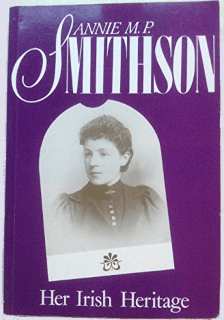
In 1917 Smithson publishes her first novel, Her Irish Heritage, which becomes a best-seller. It is dedicated to those who died in the Easter Rising of 1916. In all, she publishes twenty novels and two short story collections. Other successful novels include By Strange Paths and The Walk of a Queen. Many of her works are highly romantic and draw on her own life experiences, with nationalism and Catholicism featured as recurrent themes. In 1944 she publishes her autobiography, Myself – and Others.

From 1932 onwards Smithson shares a house in Rathmines, Dublin, with her stepsister and her stepsister’s family. She dies of heart failure on February 21, 1948, at 12 Richmond Hill, Dublin, and is buried in Whitechurch, Dublin.

Smithson’s novels are featured in Brian Friel‘s 1990 play Dancing at Lughnasa. Between 1989 and 1990 the Mercier Press reprints several of her works.


Leave a comment

The Stardust Nightclub Fire

stardust-ballroom-artane

The Stardust nightclub in Artane, Dublin goes up in flames in the early hours of February 14, 1981. Some 841 people had attended a disco there, of whom 48 die and 214 are injured as a result of the fire.

The fire starts due to an electrical fault in a first-floor storeroom inside the building that is open to the roof space. The non-compliant storage room contains dangerously flammable materials including drums of cooking oil. The staff observes a small fire outbreak on a seat in an alcove behind a curtain and fail in an attempt to extinguish it. This fire apparently starts after fire in the roof space comes through the roof tiles and falls onto the seat. The fire then spreads to tables and chairs and patrons notice smoke. The disc jockey announces that there is a small fire and requests a calm evacuation.

Outside, the fire is first spotted by a lady 200 metres from the Stardust and she calls the Dublin Fire Brigade. Within the same minute of her call, two other calls are made from the Stardust building to tell the Fire Brigade that there is a small fire on a seat in the ballroom. The fire is very small when first seen in the ballroom. Within two minutes a ferocious burst of heat and lots of thick black smoke quickly start coming from the ceiling, causing the material in the ceiling to melt and drip on top of patrons and other highly flammable materials including the seats and carpet tiles on the walls. The fire flashover envelopes the club and the lights fail.

The attendees at a trade union function taking place in the same building make their escape but the escape of some of the Stardust patrons is hampered by a number of obstructions. Some of the main fire exits are padlocked around the push bars and consequently are impossible to open.

The failure of the lighting in the club leads to widespread panic causing mass trampling as many of the patrons instinctively run for the main entrance. Many people mistake the entrance to the men’s toilets for the main entrance doors but the windows there have metal plates fixed on the inside and iron bars on the outside. Firemen attempt in vain to pull off the metal bars using a chain attached to a fire engine. Firemen rescue 25 to 30 of those trapped in the front toilets.

Ambulances from Dublin Fire Brigade, the Eastern Health Board, Civil Defence Ireland, the Irish Red Cross, the Order of Malta Ambulance Corps and St. John Ambulance Ireland are dispatched to the scene. Many ambulances leave the scene carrying up to 15 casualties. CIÉ also sends buses to transport the injured, and local radio stations ask people in the vicinity with cars to come to the club. The city’s hospitals are overwhelmed by the influx of injured and dying, in particular Mater Misericordiae University Hospital, Jervis Street Hospital and Dr. Steevens’ Hospital.

The investigation at the time reports that the cause of the fire is arson. The finding of arson has recently been ruled out by investigators, as there was never any evidence to support the arson finding, even at the time of the tragedy.

There are allegations of a huge cover-up as to the cause of so many fatalities. There is a meeting before the public inquiry in 1981 of all of the experts including the Judge when the concept of arson is determined to be the cause to protect the Dublin Corporation from having to pay out millions in compensation to the victims and families. The Coolock Garda investigation is excellent, but the Tribunal distorts the evidence. The Inquiry Report and the team of experts and coached witnesses conspire to conceal the truth and determine arson to be the cause without any evidence.

The club was located where Butterly Business Park now lies, opposite Artane Castle Shopping Centre.