seamus dubhghaill

Promoting Irish Culture and History from Little Rock, Arkansas, USA


1 Comment

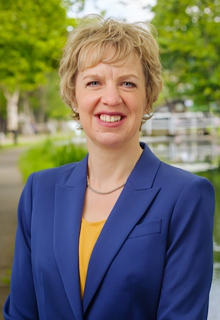
Birth of Ivana Bacik, Labour Party Politician

Ivana Catherine Bacik, Irish politician who has been the Leader of the Labour Party since March 24, 2022 and a Teachta Dála (TD) for the Dublin Bay South constituency since winning a by-election on July 9, 2021, is born in Dublin on May 25, 1968. She comes to prominence due to her abortion rights campaigning from the 1980s onward.

Bacik’s paternal grandfather, Charles Bacik, was a Czech factory owner who moved to Ireland in 1946. He eventually settled in Waterford, County Waterford, and in 1947 was involved in the establishment of Waterford Crystal. Her mother’s side of the family are Murphys from County Clare. Her father is an astronomer and is employed in a number of locations. As a result, she lives in London and South Africa, before moving to Crookstown, County Cork, at the age of six, when he becomes a physics lecturer in the Cork Institute of Technology. She attends the nearby national school in Cloughduv. When she is 11 years old, her family moves to the Sunday’s Well area of Cork city. At the age of 14, she moves to Dublin.

Bacik wins a scholarship to board at Alexandra College in Milltown, Dublin, and is awarded a sizarship at Trinity College Dublin. She has an LL.B. from Trinity and an LL.M. from the London School of Economics.

Bacik contests the Seanad Éireann elections in 1997 and 2002 as an independent candidate for the Dublin University constituency but is not successful.

She runs as a Labour Party candidate at the 2004 election to the European Parliament in the Dublin constituency. She runs with sitting MEP Proinsias De Rossa, who is also the party president, on the same ticket. She polls 40,707 first preference votes (9.6%) but is not elected.

In 2004, Bacik’s book Kicking and Screaming: Dragging Ireland into the 21st Century, is published by The O’Brien Press.

In 2007, she contested the Seanad Éireann elections for the third time in the Dublin University constituency, and is elected to the third seat, behind sitting Independent senators Shane Ross and David Norris. She initially sits as an Independent senator.

In February 2009, Bacik is included in an ‘All Star Women’s Cabinet’ in the Irish Independent. In March 2009, she confirmed claims made on a TV programme that she had taken two voluntary pay cuts of 10% in addition to a pension levy. In June 2009, she is the Labour Party candidate for the Dublin Central by-election. She comes in third with 17% of the first preference votes. She joins the Labour Party group in the Seanad in September 2009, and becomes Labour Party Seanad spokesperson for both Justice and Arts, Sports and Tourism. In November 2009, a feature by Mary Kenny of the Irish Independent includes Bacik in a list of women who “well deserved their iconic status.”

In May 2010, Bacik seeks Labour’s nomination to contest the next election in the Dublin South-East constituency but is not selected. In December 2010, she is added to the ticket as the second candidate beside Labour Party leader, Eamon Gilmore, in the Dún Laoghaire constituency for the 2011 Irish general election. Gilmore tops the poll, with Bacik receiving 10.1% of first preference votes but she is not elected. She is re-elected to Seanad Éireann at the subsequent election, after which she becomes Deputy Leader of the Seanad. She holds her seat in the Seanad in 2016 and in 2020.

On April 27, 2021, after the resignation of Eoghan Murphy from his Dáil seat in Dublin Bay South, Bacik announces her intention to stand in the upcoming by-election. She campaigns with an emphasis on providing affordable housing, as well as improving healthcare and childcare, tackling climate change, and achieving “a true republic in which church and state are separated.” During the campaign, she describes herself as having “more bills passed into law than any other Senator, on issues such as workers’ conditions, women’s health rights, and LGBT equality”. She also campaigns on increasing the number of sports amenities for children in the area, calling for unused Defence Forces football fields at the Cathal Brugha Barracks to be freed up for local sports, with the suggestion rejected by Fine Gael Minister for Defence Simon Coveney. Fine Gael complains to RTÉ after she features prominently on National Treasures, a prime-time TV show broadcast by RTÉ during the campaign. RTÉ has strict rules about fair coverage of candidates during campaigns. The national broadcaster blames an “inadvertent error” for the programme being shown three days before the election. A steering group within the broadcaster tells Fine Gael that “the broadcast should not have happened.” Consequentially, RTÉ has to show a special report on the by-election on Prime Time to “ensure fair coverage is given to all candidates.”

Bacik wins this election, receiving 8,131 (30.2%) first-preference votes. It is her fourth attempt as a Labour candidate, and she expresses her delight at the success at the count centre in the RDS. Following the election, she is described by The Irish Times as “a formidable activist and public intellectual” and that Fine Gael’s perceived antipathy towards their former TD, Kate O’Connell, may have contributed to the surge in support to Bacik from women voters. The newspaper claims that her election is “a long overdue morale boost” for Labour.

In August 2021, Bacik apologises for attending Katherine Zappone‘s controversial party in the Merrion Hotel, Dublin, in July of that year. She states that she believed that it took place within existing COVID-19 pandemic restrictions.

In March 2022, Bacik confirms she will run to succeed Alan Kelly as Labour Party leader. Kelly states that he believes that Bacik will succeed him. On March 24, 2022, she is confirmed as Labour Party leader unopposed at a party conference in Dublin. In a speech, she says she will focus on the rising cost of living and the serious and global problems facing the country. She pledges that Labour will fight the next election as a “standalone party” rather than joining any left-wing alliance.

At the 2024 Irish general election, Bacik is re-elected to the Dáil.

Bacik lives with husband Alan Saul and their two daughters in Portobello, Dublin.


Leave a comment

Birth of Frank Clarke, Former Chief Justice of Ireland

George Bernard Francis Clarke, Irish barrister who is Chief Justice of Ireland from July 2017 to October 2021, is born on October 10, 1951, in Walkinstown, Dublin. He has a successful career as a barrister for many years, with a broad practice in commercial law and public law. He is the chair of the Bar Council of Ireland between 1993 and 1995. He is appointed to the High Court in 2004 and becomes a judge of the Supreme Court of Ireland in February 2012. Following his retirement from the bench, he returns to work as a barrister. Across his career as a barrister and a judge, he is involved in many seminal cases in Irish legal history.

Clarke is the son of a customs officer who dies when he is aged eleven. His mother is a secretary. He is educated at Drimnagh Castle Secondary School, a Christian Brothers secondary school in Dublin. He wins the Dublin Junior High Jump Championship in 1969. He studies Economics and Maths at undergraduate level at University College Dublin (UCD), while concurrently studying to become a barrister at King’s Inns. He is the first of his family to attend third level education and is able to attend university by receiving grants. While attending UCD, he loses an election to Adrian Hardiman to become auditor of the Literary and Historical Society (L&H).

Clarke joins Fine Gael after leaving school. He is a speechwriter for Taoiseach Garret FitzGerald and election agent for George Birmingham. He then subsequently, himself, runs for election to Seanad Éireann. He campaigns against the Eighth Amendment of the Constitution of Ireland in 1983 and in favour of the unsuccessful Tenth Amendment of the Constitution Bill 1986. He chairs a meeting of family lawyers in 1995 supporting the successful second referendum on divorce.

Clarke is called to the Bar in 1973 and to the Inner Bar in 1985. He has a practice in commercial, constitutional and family law. Two years after commencing practice he appears as junior counsel for the applicant in State (Healy) v Donoghue before the Supreme Court, which establishes a constitutional right to legal aid in criminal cases.

Clarke represents Michael McGimpsey and his brother Christopher in a challenge against the constitutionality of the Anglo-Irish Agreement, which is ultimately unsuccessful in the Supreme Court in 1988.

Clarke appears for the plaintiff with Michael McDowell and Gerard Hogan in Cox v Ireland in 1990, where the Supreme Court first introduces proportionality into Irish constitutional law and discovers the right to earn a livelihood. He represents Seán Ardagh and the Oireachtas Subcommittee formed after the death of John Carthy in a constitutional case which limits the powers of investigation of the Oireachtas, which leads to the unsuccessful Thirtieth Amendment of the Constitution. In an action taken by tobacco companies to challenge the legality of bans on tobacco advertising, he appears for the State.

Clarke is twice appointed by the Supreme Court for the purpose of Article 26 references. He argues on behalf of the Law Society of Ireland in a referral regarding the Adoption (No. 2) Bill 1987. He is appointed by the Supreme Court to appear to argue on behalf of the rights of the mother in In re Article 26 and the Regulation of Information (Services outside the State for Termination of Pregnancies) Bill 1995. In 1994, President Mary Robinson requests him to provide her with legal advice on the presidential prerogative to refuse to dissolve Dáil Éireann.

Clarke is external counsel to the Commission to Inquire into Child Abuse and represents the Flood Tribunal in its case against Liam Lawlor and the State in Charles Haughey‘s challenge to the legality of the Moriarty Tribunal. He and George Birmingham also appear for Fine Gael at the Flood Tribunal, and he represents the public interest at the Moriarty Tribunal. He is a legal advisor to an inquiry into the deposit interest retention tax (DIRT) conducted by the Public Accounts Committee, along with future judicial colleagues Paul Gilligan and Mary Irvine.

Clarke is Chairman of the Bar Council of Ireland from 1993 to 1995. Between 1999 and 2004, he acts as chair of Council of King’s Inns. He is a professor at the Kings’s Inns between 1978 and 1985 and is appointed an adjunct professor at University College Cork (UCC) in 2014. He also serves as an adjunct professor at Trinity College Dublin (TCD).

Clarke acts as a chair of the Employment Appeals Tribunal while still in practice. He is also a steward of the Turf Club and the chairman of Leopardstown Racecourse. He was due to take over as senior steward of the Turf Club but does not do so due to his appointment to the High Court.

Clarke is appointed as a High Court judge in 2004. He is chairman of the Referendum Commission for the second Lisbon Treaty referendum in 2009. As a High Court judge he gives a ruling on the Leas Cross nursing home case against RTÉ, that the public interest justifies the broadcasting of material that otherwise would have been protected by the right to privacy. He frequently presides over the Commercial Court during his time at the High Court. He is involved in the establishment of two High Court lists in Cork, Chancery and a Non-Jury List.

Clarke is appointed to the Supreme Court on February 9, 2012, and serves as Chief Justice from October 2017 until his retirement on October 10, 2021, required by law on his 70th birthday. In March 2021, the Cabinet begins the process of identifying his successor. Donal O’Donnell is selected to replace him. His final day in court is October 8, 2021, where judges, lawyers and civil servants make a large number of tributes to him. Mary Carolan of The Irish Times says that under his leadership the Supreme Court is “perhaps the most collegial it had been in some time.”

Following his retirement from the judiciary, Clarke resumes his practice as a barrister and rejoins the Bar of Ireland. Under the rules of the Bar of Ireland, he cannot appear before a court of equal or lesser jurisdiction to that on which he sat as a judge. Given that he was the most senior judge in Ireland, he cannot appear in any court in Ireland. He can appear in the European Union (EU) courts. However, he indicates his intention to focus on mediation and arbitration work.

In June 2022, Clarke is sworn in as judge of the court of appeal of the Dubai International Financial Centre (DIFC) courts but resigns a few days later following criticism from barrister and Labour Party leader, Ivana Bacik.

Clarke has been married to Dr. Jacqueline Hayden since 1977. They have a son and a daughter. He is interested in rugby and horse racing, at one point owning several horses.