seamus dubhghaill

Promoting Irish Culture and History from Little Rock, Arkansas, USA


Leave a comment

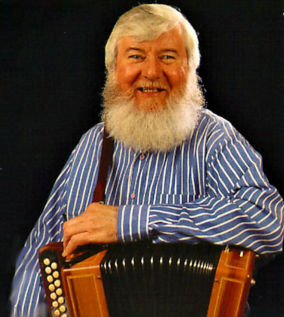
Birth of Joe Burke, Button Accordion Player

Joseph Burke, Irish musician noted for being a pre-eminent button accordion player, is born in Kilnadeema, south of Loughrea, County Galway, on April 11, 1939. He records and performs traditional Irish music for over half a century.

Burke starts playing traditional at age four and purchases his first accordion in the 1950s. He wins the All-Ireland Senior Accordion Championship in Thurles in 1959 and again in Boyle the following year. Together with fiddler Aggie Whyte, he wins the All-Ireland duet championship in 1962 in Gorey, County Wexford.

Burke co-founds the Leitrim Ceili Band with Padden Downey in 1956. Other members of the east Galway-based band, which wins All-Ireland Championships in 1959 and 1962, includes Irish flute players Paddy Carty, Ambrose Moloney and Tony Molloy, button accordionists Mick Darcy and Sean McGlynn, fiddlers Michael Joe Dooley, Paddy Doorhy, Aggie Whyte and Séamus Connolly, drummer Sean Curley and pianist Anne-Marie Courtney. The band tours in England and releases an LP on the New York-based Dublin label.

Burke first tours in the United States in 1961, and lives mainly in New York from 1962 to 1965, during which period he forms a musical partnership with fiddler Andy McGann. With McGann and pianist Felix Dolan, he records an LP, A Tribute to Michael Coleman, first released in 1966 on his own Shaskeen label. He records again with this trio, issuing The Funny Reel LP on the Shanachie Records label in 1979. Other musical collaborators over the years include Belfast fiddle great Sean McGuire, piper Michael Cooney, harpist Máire Ní Chathasaigh, fiddler Kevin Burke, pianist Charlie Lennon and his wife Anne Conroy Burke, whom he marries in 1990, on guitar and button accordion.

Burke’s first solo LP, Galway’s Own, is released in 1971. He also tours extensively for the next two decades, including with groups sponsored by Comhaltas Ceoltóirí Éireann. From 1988 to 1991, he lives in St. Louis, Missouri, where he has a musical residency at John D. McGurk’s Pub and hosts radio programmes at two stations, one of them the “Ireland in America” programme on KDHX. He represents Ireland in 1989 and 1992 at the International Accordion Festivals, in Montmagny, Quebec, along with accordion greats who include Cajun accordion player Marc Savoy and jazz accordionist Art Van Damme.

After residing in the United States from 1988 until 1991, Burke returns to Kilnadeema in 1992. There, he carries on teaching and performing music. He dies at the age of 81 on February 20, 2021, at Galway Hospice.

Burke is named RTɑs Traditional Musician of the Year in 1970. He goes on to win both the AIB Traditional Musician of the Year and the Lifetime Achievement Award from The Irish World in 1997. A Joe Burke Tribute Concert is held in April 1997 at the Town Hall Theatre in Galway, on his reception of the AIB award. Three years later, he receives an award in Musical Mastery from Boston College. He is later conferred Gradam an Chomhaltais in 2003.

Leave a comment

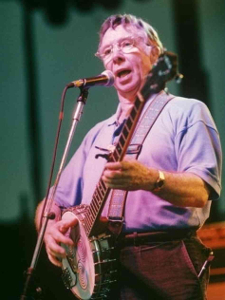
Death of Irish Folk Musician Tommy Makem

Thomas “Tommy” Makem, internationally celebrated Irish folk musician, artist, poet and storyteller, dies in Dover, New Hampshire, on August 1, 2007, following a lengthy battle with lung cancer.

Makem is born in Keady, County Armagh, on November 4, 1932. He is best known as a member of The Clancy Brothers and Tommy Makem. He plays the long-necked 5-string banjo, tin whistle, low whistle, guitar, bodhrán and bagpipes, and sings in a distinctive baritone. He is sometimes known as “The Bard of Armagh,” taken from a traditional song of the same name, and “The Godfather of Irish Music.”

Makem’s mother, Sarah Makem, is an important source of traditional Irish music, who is visited and recorded by, among others, Diane Guggenheim Hamilton, Jean Ritchie, Peter Kennedy and Sean O’Boyle. His father, Peter Makem, is a fiddler who also plays the bass drum in a local pipe band named “Oliver Plunkett,” after a Roman Catholic martyr of the reign of Charles II of England. His brother and sister are folk musicians as well. Makem, from the age of eight, is member of the St. Patrick’s church choir for 15 years where he sings Gregorian chant and motets. He does not learn to read music but he makes it in his “own way.”

Makem starts to work at 14 as a clerk in a garage and later he works for a while as a barman at Mone’s Bar, a local pub, and as a local correspondent for The Armagh Observer.

Makem emigrates to the United States in 1955, carrying his few possessions and a set of bagpipes from his time in a pipe band. Arriving in Dover, New Hampshire, he works at Kidder Press, where his hand was accidentally crushed by a press in 1956. With his arm in a sling, he leaves Dover for New York City to pursue an acting career.

The Clancys and Makem are signed to Columbia Records in 1961. The same year, at the Newport Folk Festival, Makem and Joan Baez are named the most promising newcomers on the American folk scene. During the 1960s, the Clancy Brothers and Tommy Makem perform sellout concerts at such venues as Carnegie Hall, and make television appearances on shows like The Ed Sullivan Show and The Tonight Show. The group performs for President John F. Kennedy. They also play in smaller venues such as the Gate of Horn in Chicago. They appear jointly in the UK Albums Chart in April 1966, when Isn’t It Grand Boys reaches number 22.

Makem leaves the group in 1969 to pursue a solo career. In 1975, he and Liam Clancy are both booked to play a folk festival in Cleveland, Ohio, and are persuaded to do a set together. Thereafter they often perform as Makem and Clancy, recording several albums together. He once again goes solo in 1988. Throughout the 1970s and 1980s he performs both solo and with Liam Clancy on The Irish Rovers‘ various television shows, which are filming in Canada and Ireland.

In the 1980s and 1990s, Makem is a principal in a well-known Irish music venue in New York, “Tommy Makem’s Irish Pavilion.” This East 57th Street club is a prominent and well-loved performance spot for a wide range of musicians. Among the performers and visitors are Paddy Reilly, Joe Burke, and Ronnie Gilbert. Makem is a regular performer, often solo and often as part of Makem and Clancy, particularly in the late fall and holiday season. The club is also used for warm-up performances in the weeks before the 1984 reunion concert of The Clancy Brothers and Tommy Makem at Lincoln Center for the Performing Arts. In addition, the after-party for Bob Dylan‘s legendary 30th Anniversary Concert Celebration at Madison Square Garden in 1992 is held at the Irish Pavilion.

In 1997 Makem writes a book, Tommy Makem’s Secret Ireland, and in 1999 premiers a one-man theatre show, Invasions and Legacies, in New York. His career includes various other acting, video, composition, and writing credits. He also establishes the Tommy Makem International Festival of Song in South Armagh in 2000.

Tommy Makem dies in Dover, New Hampshire, on August 1, 2007, following a lengthy battle with lung cancer. He continues to record and perform until very close to the end. Paying tribute to him after his death, Liam Clancy says, “He was my brother in every way.” He is buried next to his wife at New Saint Mary Cemetery in Dover.


Leave a comment

Birth of Irish Folk Musician Tommy Makem

Thomas “Tommy” Makem, internationally celebrated Irish folk musician, artist, poet and storyteller, is born in Keady, County Armagh, on November 4, 1932. He is best known as a member of The Clancy Brothers and Tommy Makem. He plays the long-necked 5-string banjo, tin whistle, low whistle, guitar, bodhrán and bagpipes, and sings in a distinctive baritone. He is sometimes known as “The Bard of Armagh,” taken from a traditional song of the same name, and “The Godfather of Irish Music.”

Makem’s mother, Sarah Makem, is an important source of traditional Irish music, who is visited and recorded by, among others, Diane Guggenheim Hamilton, Jean Ritchie, Peter Kennedy and Sean O’Boyle. His father, Peter Makem, is a fiddler who also plays the bass drum in a local pipe band named “Oliver Plunkett,” after a Roman Catholic martyr of the reign of Charles II of England. His brother and sister are folk musicians as well. Makem, from the age of eight, is member of the St. Patrick’s church choir for 15 years where he sings Gregorian chant and motets. He does not learn to read music but he makes it in his “own way.”

Makem starts to work at 14 as a clerk in a garage and later he works for a while as a barman at Mone’s Bar, a local pub, and as a local correspondent for The Armagh Observer.

Makem emigrates to the United States in 1955, carrying his few possessions and a set of bagpipes from his time in a pipe band. Arriving in Dover, New Hampshire, he works at Kidder Press, where his hand was accidentally crushed by a press in 1956. With his arm in a sling, he leaves Dover for New York City to pursue an acting career.

The Clancys and Makem are signed to Columbia Records in 1961. The same year, at the Newport Folk Festival, Makem and Joan Baez are named the most promising newcomers on the American folk scene. During the 1960s, the Clancy Brothers and Tommy Makem perform sellout concerts at such venues as Carnegie Hall, and make television appearances on shows like The Ed Sullivan Show and The Tonight Show. The group performs for President John F. Kennedy. They also play in smaller venues such as the Gate of Horn in Chicago. They appear jointly in the UK Albums Chart in April 1966, when Isn’t It Grand Boys reaches number 22.

Makem leaves the group in 1969 to pursue a solo career. In 1975, he and Liam Clancy are both booked to play a folk festival in Cleveland, Ohio, and are persuaded to do a set together. Thereafter they often perform as Makem and Clancy, recording several albums together. He once again goes solo in 1988. Throughout the 1970s and 1980s he performs both solo and with Liam Clancy on The Irish Rovers‘ various television shows, which are filming in Canada and Ireland.

In the 1980s and 1990s, Makem is a principal in a well-known Irish music venue in New York, “Tommy Makem’s Irish Pavilion.” This East 57th Street club is a prominent and well-loved performance spot for a wide range of musicians. Among the performers and visitors are Paddy Reilly, Joe Burke, and Ronnie Gilbert. Makem is a regular performer, often solo and often as part of Makem and Clancy, particularly in the late fall and holiday season. The club is also used for warm-up performances in the weeks before the 1984 reunion concert of The Clancy Brothers and Tommy Makem at Lincoln Center for the Performing Arts. In addition, the after-party for Bob Dylan‘s legendary 30th Anniversary Concert Celebration at Madison Square Garden in 1992 is held at the Irish Pavilion.

In 1997 Makem writes a book, Tommy Makem’s Secret Ireland, and in 1999 premiers a one-man theatre show, Invasions and Legacies, in New York. His career includes various other acting, video, composition, and writing credits. He also establishes the Tommy Makem International Festival of Song in South Armagh in 2000.

Tommy Makem dies in Dover, New Hampshire, on August 1, 2007, following a lengthy battle with lung cancer. He continues to record and perform until very close to the end. Paying tribute to him after his death, Liam Clancy says, “He was my brother in every way.” He is buried next to his wife at New Saint Mary Cemetery in Dover.