seamus dubhghaill

Promoting Irish Culture and History from Little Rock, Arkansas, USA


Leave a comment

Death of John Henry Whyte, Historian, Political Scientist & Author

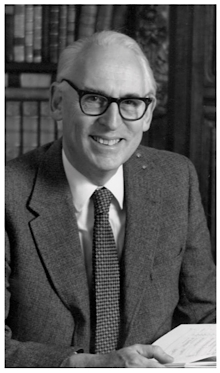
John Henry Whyte, Irish historianpolitical scientist and author of books on Northern Ireland, divided societies and church-state affairs in Ireland, dies in New York on May 16, 1990.

Whyte is born on April 30, 1928, in Penang, Malaysia. His father is manager of a rubber plantation on the mainland. His family leaves Malaysia and returns to Europe when he is three, eventually settling in Rostrevor, County Down, Northern Ireland. The Whytes are a well-known County Down family recorded in the area since at least 1713. The family is said to have come to Ireland from South Wales with Strongbow in 1170 and settled in Leinster. He is educated locally, at Ampleforth College and Oriel College Oxford, from which he takes a degree in Modern History in 1949. Continuing studies some two years later he is awarded a B.Litt degree for further research, which is to form the nebula of his first book which is published in 1958.

Whyte undertakes national service during the 1950s and works as a history teacher in his old school before being appointed lecturer in Modern History at Makerere University, Uganda. In 1962, he returns to Ireland having been appointed first “lecturer in empirical politics” at the then expanding University College Dublin (UCD). In 1966, he weds fellow academic Dr. Jean Murray and moves to Queen’s University Belfast (QUB) to undertake further studies.

In his book, Preventing the Future: Why Was Ireland So Poor for So Long?, Whyte’s successor as Professor of Politics at UCD, Tom Garvin, gives an account as to the clerical politics prevalent at the time at UCD which causes Whyte’s untimely departure:

A little later, in 1966, McQuaid provoked, possibly unintentionally, the resignation of John Whyte, a distinguished Catholic political scientist, from University College Dublin’s Department of Ethics and Politics. This resignation and move to Belfast on Whyte’s part in 1966 almost certainly was the unintended result of an extraordinary piece of clerical interference and bullying that rebounded upon McQuaid and on UCD. Whyte was in the midst of writing his standard history of the Catholic Church in independent Ireland, later published in 1969; at McQuaid’s apparent instigation, his professor and head of Department attempted to forbid him from continuing with this work. The irony was that the resultant scholarly book, finished in Belfast rather than Dublin, deeply underestimated clerical power in the Irish state and gave the Catholic Church a rather easy ride. Another irony was that Whyte, as a Roman Catholic historian and political scientist, was apparently rather favoured by McQuaid. However in 1966 bishops didn’t know they needed friends. Whyte was to come back to UCD and was professor of Ethics and Politics between 1984 and 1990. In a very real sense, McQuaid was the patriarchal and eccentric governor of Dublin Archdiocese, where one-third of the stat’s population lived; he attempted to run an urban society of a million people as though it were a large feudal community.

At Queen’s, Whyte spends seventeen years as lecturer and reader, and from 1982 Professor of Irish Politics during which he seeks to bring together political scientists from across the island and develop an All-Ireland political science fellowship. From 1973 to 1974 he works at as a research fellow at Harvard University’s Centre for International Affairs, and in 1975 he helps lead a team of researchers investigating the Northern Ireland conflict, then at its height. He also works as research fellow at the Netherlands Institute for Advanced Studies during the late 1970s and is elected Member of the Royal Irish Academy (RIA) in 1977, serving as Vice-President from 1989 to 1990.

In 1984, Whyte returns to University College Dublin, then faced with stringent fiscal cuts and wider problems in Irish third-level education. In his second period at UCD, he leads the Department, which he now heads, through a troubled period of financial cuts while supervising a reorganisation of the undergraduate curriculum. In his last years at UCD he completes his seminal work, the widely regarded Interpreting Northern Ireland. He finishes correcting the proofs and compiling the index of this work only a week before his death. While en route to an academic conference at Airley House, Virginia, he collapses at John F. Kennedy International Airport, New York, is taken to a local hospital, and dies there on May 16, 1990. He is survived by his wife, two sons, and one daughter.

Following his death, Whyte’s family, friends, and colleagues set up the John Whyte Trust Fund to continue Whyte’s work, honour his memory and encourage “informed dialogue and interaction at graduate level among people who are likely to be leaders and opinion-shapers.” To date the fund has awarded one fully paid scholarship and a number of part-paid scholarships as well as essay prizes annually. The fund also hosts an annual John Whyte Memorial Lecture. Speakers have included Paul Bew and Brendan O’Leary.

Leave a comment

Death of Michael J. Browne, Bishop of Galway and Kilmacduagh

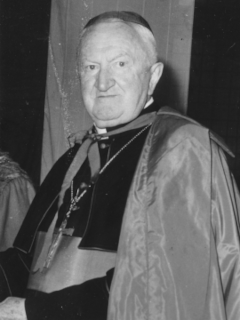
Michael J. Browne, an Irish prelate of the Roman Catholic Church, dies in Galway, County Galway, on February 24, 1980. He serves as Bishop of Galway and Kilmacduagh for almost forty years from 1937 to 1976.

Browne is born in Westport, County Mayo, on December 20, 1895. He is an important and outspoken member of the Irish hierarchy. His time as Bishop has been described by the historian James S. Donnelly Jr. as “far-reaching and … controversial,” while the historian of Irish Catholicism John Henry Whyte claims that Browne’s “readiness to put forward his views bluntly is welcome at least to the historian.”

Browne is ordained to the priesthood on June 20, 1920, for the Archdiocese of Tuam. He later serves as professor of moral theology at St. Patrick’s College, Maynooth.

On August 6, 1937, at the relatively young age of 41, Browne is appointed Bishop of Galway and Kilmacduagh by Pope Pius XI, receiving his episcopal consecration from Archbishop Thomas Gilmartin on the following August 10. He supports Taoiseach Éamon de Valera‘s defence of arrests and police searches for cached Irish Republican Army (IRA) arms, declaring, “Any Irishman who assists any foreign power to attack the legitimate authority of his own land is guilty of the most terrible crime against God’s law, and there can be no excuse for that crime – not even the pretext of solving partition or of securing unity.”

In 1939, Browne is selected by Éamon de Valera to chair the Commission on Vocational Organisation.

Browne is attentive to the state of public morality in the diocese, and James S. Donnelly Jr. has noted his role in directing episcopal and clerical censorship of newsagents and county librarians. He is also concerned about public intoxication and other misconduct at the Galway Races, controversies over dancing and the commercial dance halls, as well as immodesty in dress and the closely related issue of so-called “mixed bathing” in Galway and Salthill.

Like other members of the Irish Catholic hierarchy, Browne regularly condemns communism in his pastoral letters. When Cardinal József Mindszenty is detained by Hungary‘s post-war communist government, Browne in 1949 forwards protest resolutions from Galway CorporationGalway County Council and the University College Galway student body to Pope Pius XII. He also frequently condemns the Connolly Association, an Irish republican socialist group in Britain close to the Communist Party of Great Britain.

In 1957, in response to a growing tension between Catholics and Protestants at Fethard-on-Sea, including the Fethard-on-Sea boycott, Browne says, “non-Catholics do not protest against the crime of conspiring to steal the children of a Catholic father, but they try to make political capital when a Catholic people make a peaceful and moderate protest.”

The most enduring monument or physical legacy of Browne’s time as Bishop is the Cathedral of Our Lady Assumed into Heaven and St Nicholas, commonly known as Galway Cathedral, which is dedicated in 1965 by Cardinal Richard James Cushing of BostonMassachusetts. The site of the old jail had come into the possession of the diocese in 1941 and Browne leads the campaign to construct a new Cathedral. This includes a 1957 audience with Pope Pius XII where the plans are approved.

Browne attends the Second Vatican Council from 1962 to 1965 and retires in 1976. He dies four years later in Galway, at the age of 84, on February 24, 1980.

Browne is parodied in Breandán Ó hÉithir`s novel Lig Sinn i gCathu, which fictionalises late 1940s Galway as “Baile an Chaisil” and Browne as “An tEaspag Ó Maoláin.”

The Irish cabinet minister Noël Browne (no known relation) in his 1986 memoir Against the Tide describes the physical attributes of his episcopal namesake:

“The bishop had a round soft baby face with shimmering clear cornflower-blue eyes, but his mouth was small and mean. Around his great neck was an elegant glinting gold episcopal chain with a simple pectoral gold cross. He wore a ruby ring on his plump finger and wore a slightly ridiculous tiny scullcap on his noble head. The well-filled semi-circular scarlet silk cummerbund and sash neatly divided the lordly prince into two.”


Leave a comment

Birth of Michael J. Browne, Bishop of Galway and Kilmacduagh

Michael J. Browne, an Irish prelate of the Roman Catholic Church, is born in Westport, County Mayo, on December 20, 1895. He serves as Bishop of Galway and Kilmacduagh for almost forty years from 1937 to 1976.

Browne is an important and outspoken member of the Irish hierarchy. His time as Bishop has been described by the historian James S. Donnelly Jr. as “far-reaching and … controversial,” while the historian of Irish Catholicism John Henry Whyte claims that Browne’s “readiness to put forward his views bluntly is welcome at least to the historian.”

Browne is ordained to the priesthood on June 20, 1920, for the Archdiocese of Tuam. He later serves as professor of moral theology at St. Patrick’s College, Maynooth.

On August 6, 1937, at the relatively young age of 41, Browne is appointed Bishop of Galway and Kilmacduagh by Pope Pius XI, receiving his episcopal consecration from Archbishop Thomas Gilmartin on the following August 10. He supports Taoiseach Éamon de Valera‘s defence of arrests and police searches for cached Irish Republican Army (IRA) arms, declaring, “Any Irishman who assists any foreign power to attack the legitimate authority of his own land is guilty of the most terrible crime against God’s law, and there can be no excuse for that crime – not even the pretext of solving partition or of securing unity.”

In 1939, Browne is selected by Éamon de Valera to chair the Commission on Vocational Organisation.

Browne is attentive to the state of public morality in the diocese, and James S. Donnelly Jr. has noted his role in directing episcopal and clerical censorship of newsagents and county librarians. He is also concerned about public intoxication and other misconduct at the Galway Races, controversies over dancing and the commercial dance halls, as well as immodesty in dress and the closely related issue of so-called “mixed bathing” in Galway and Salthill.

Like other members of the Irish Catholic hierarchy, Browne regularly condemns communism in his pastoral letters. When Cardinal József Mindszenty is detained by Hungary‘s post-war communist government, Browne in 1949 forwards protest resolutions from Galway Corporation, Galway County Council and the University College Galway student body to Pope Pius XII. He also frequently condemns the Connolly Association, an Irish republican socialist group in Britain close to the Communist Party of Great Britain.

In 1957, in response to a growing tension between Catholics and Protestants at Fethard-on-Sea, including the Fethard-on-Sea boycott, Browne says, “non-Catholics do not protest against the crime of conspiring to steal the children of a Catholic father, but they try to make political capital when a Catholic people make a peaceful and moderate protest.”

The most enduring monument or physical legacy of Browne’s time as Bishop is the Cathedral of Our Lady Assumed into Heaven and St Nicholas, commonly known as Galway Cathedral, which is dedicated in 1965 by Cardinal Richard James Cushing of Boston, Massachusetts. The site of the old jail had come into the possession of the diocese in 1941 and Browne leads the campaign to construct a new Cathedral. This includes a 1957 audience with Pope Pius XII where the plans are approved.

Browne attends the Second Vatican Council from 1962 to 1965 and retires in 1976. He dies four years later, at the age of 84, on February 24, 1980.

Browne is parodied in Breandán Ó hÉithir`s novel Lig Sinn i gCathu, which fictionalises late 1940s Galway as “Baile an Chaisil” and Browne as “An tEaspag Ó Maoláin.”

The Irish cabinet minister Noël Browne (no known relation) in his 1986 memoir Against the Tide describes the physical attributes of his episcopal namesake:

“The bishop had a round soft baby face with shimmering clear cornflower-blue eyes, but his mouth was small and mean. Around his great neck was an elegant glinting gold episcopal chain with a simple pectoral gold cross. He wore a ruby ring on his plump finger and wore a slightly ridiculous tiny scullcap on his noble head. The well-filled semi-circular scarlet silk cummerbund and sash neatly divided the lordly prince into two.”