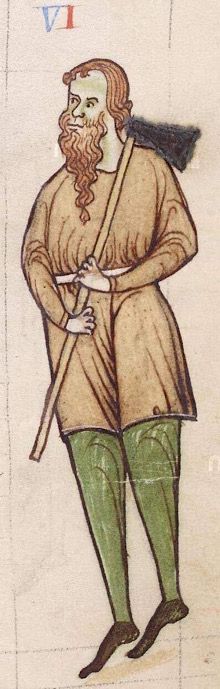
Mac Murchada has ruled Leinster since 1126 and is a powerful and ambitious king. He is an ally of Muirchertach Mac Lochlainn, High King of Ireland, but their alliance is strained by rivalries and political maneuvering. In 1166, Mac Lochlainn’s own position is weakened after his subjects rebel and kill him, and Mac Murchada is next in Ua Conchobair’s line of succession.
Ua Conchobair, now High King, turns his attention to eliminating rivals. On August 1, 1166, Mac Murchada is defeated in open battle and forced to flee Ireland. His expulsion is a critical turning point as it strips him of his kingdom and leaves him without a base to rule.
Mac Murchada returns to Ireland in 1167 with an advance party of Anglo-Normans. In 1170, Strongbow arrives with a larger force, and together they capture Dublin. Mac Murchada marries his daughter, Aoife (Eva), to Strongbow, and upon his death in 1171, Strongbow succeeds as ruler of Leinster.
Mac Murchada’s defeat and subsequent alliance with the Normans initiates the Anglo-Norman invasion of Ireland, a process that leads to centuries of English political and military involvement in the country. His actions are remembered as a pivotal moment in Irish history, with complex legacies — seen by some as a desperate ruler trying to restore his throne, and by others as a traitor who opens the door to foreign domination.
In summary, August 1, 1166, is the day Diarmait Mac Murchada is overthrown by Ruaidrí Ua Conchobair, leading to his exile and ultimately setting in motion the Norman conquest of Ireland.
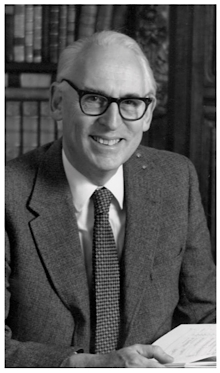
Whyte is born on April 30, 1928, in Penang, Malaysia. His father is manager of a rubber plantation on the mainland. His family leaves Malaysia and returns to Europe when he is three, eventually settling in Rostrevor, County Down, Northern Ireland. The Whytes are a well-known County Down family recorded in the area since at least 1713. The family is said to have come to Ireland from South Wales with Strongbow in 1170 and settled in Leinster. He is educated locally, at Ampleforth College and Oriel College Oxford, from which he takes a degree in Modern History in 1949. Continuing studies some two years later he is awarded a B.Litt degree for further research, which is to form the nebula of his first book which is published in 1958.
Whyte undertakes national service during the 1950s and works as a history teacher in his old school before being appointed lecturer in Modern History at Makerere University, Uganda. In 1962, he returns to Ireland having been appointed first “lecturer in empirical politics” at the then expanding University College Dublin (UCD). In 1966, he weds fellow academic Dr. Jean Murray and moves to Queen’s University Belfast (QUB) to undertake further studies.
In his book, Preventing the Future: Why Was Ireland So Poor for So Long?, Whyte’s successor as Professor of Politics at UCD, Tom Garvin, gives an account as to the clerical politics prevalent at the time at UCD which causes Whyte’s untimely departure:
A little later, in 1966, McQuaid provoked, possibly unintentionally, the resignation of John Whyte, a distinguished Catholic political scientist, from University College Dublin’s Department of Ethics and Politics. This resignation and move to Belfast on Whyte’s part in 1966 almost certainly was the unintended result of an extraordinary piece of clerical interference and bullying that rebounded upon McQuaid and on UCD. Whyte was in the midst of writing his standard history of the Catholic Church in independent Ireland, later published in 1969; at McQuaid’s apparent instigation, his professor and head of Department attempted to forbid him from continuing with this work. The irony was that the resultant scholarly book, finished in Belfast rather than Dublin, deeply underestimated clerical power in the Irish state and gave the Catholic Church a rather easy ride. Another irony was that Whyte, as a Roman Catholic historian and political scientist, was apparently rather favoured by McQuaid. However in 1966 bishops didn’t know they needed friends. Whyte was to come back to UCD and was professor of Ethics and Politics between 1984 and 1990. In a very real sense, McQuaid was the patriarchal and eccentric governor of Dublin Archdiocese, where one-third of the stat’s population lived; he attempted to run an urban society of a million people as though it were a large feudal community.
At Queen’s, Whyte spends seventeen years as lecturer and reader, and from 1982 Professor of Irish Politics during which he seeks to bring together political scientists from across the island and develop an All-Ireland political science fellowship. From 1973 to 1974 he works at as a research fellow at Harvard University’s Centre for International Affairs, and in 1975 he helps lead a team of researchers investigating the Northern Ireland conflict, then at its height. He also works as research fellow at the Netherlands Institute for Advanced Studies during the late 1970s and is elected Member of the Royal Irish Academy (RIA) in 1977, serving as Vice-President from 1989 to 1990.
In 1984, Whyte returns to University College Dublin, then faced with stringent fiscal cuts and wider problems in Irish third-level education. In his second period at UCD, he leads the Department, which he now heads, through a troubled period of financial cuts while supervising a reorganisation of the undergraduate curriculum. In his last years at UCD he completes his seminal work, the widely regarded Interpreting Northern Ireland. He finishes correcting the proofs and compiling the index of this work only a week before his death. While en route to an academic conference at Airley House, Virginia, he collapses at John F. Kennedy International Airport, New York, is taken to a local hospital, and dies there on May 16, 1990. He is survived by his wife, two sons, and one daughter.
Following his death, Whyte’s family, friends, and colleagues set up the John Whyte Trust Fund to continue Whyte’s work, honour his memory and encourage “informed dialogue and interaction at graduate level among people who are likely to be leaders and opinion-shapers.” To date the fund has awarded one fully paid scholarship and a number of part-paid scholarships as well as essay prizes annually. The fund also hosts an annual John Whyte Memorial Lecture. Speakers have included Paul Bew and Brendan O’Leary.
Diarmait Mac Murchada, Irish King of Leinster whose appeal to the English for help in settling an internal dispute leads to the Anglo-Norman invasion and conquest of Ireland by England, dies on May 1, 1171, of “an insufferable and unknown disease.”
Mac Murchada is born around 1110, the son of Donnchad mac Murchada, King of Leinster and Dublin. His father is killed in battle in 1115 by his cousin Sigtrygg Silkbeard, king of the Dublin Vikings, and is buried by them in Dublin along with the body of a dog which is considered to be a huge insult.
After the death of Énna Mac Murchada, his older brother, Mac Murchada unexpectedly becomes King of Leinster. This is opposed by the High King of Ireland, Toirdelbach Ua Conchobair, who fears that Mac Murchada will become a rival. Toirdelbach sends one of his allied Kings, the belligerent Tigernán Ua Ruairc, to conquer Leinster and oust the young Mac Murchada. Ua Ruairc goes on a brutal campaign slaughtering the livestock of Leinster and thereby trying to starve the province’s residents. Mac Murchada is ousted from his throne but is able to regain it with the help of Leinster clans in 1132. Two decades of an uneasy peace followed between Ua Conchobair and Mac Murchada. In 1152 he even assists the High King in a raid of the land of Ua Ruairc who has become a renegade.
As King of Leinster, between 1140–70, Mac Murchada commissions Irish Romanesque churches and abbeys at Baltinglass, Glendalough, Ferns, and Killeshin. He sponsors convents at Dublin, two at Aghade, County Carlow, and at Kilculliheen near Waterford city. He also sponsors the successful career of churchman St. Lorcán Ua Tuathail and presides at the synod of Clane in 1161 when Ua Tuathail is installed as archbishop of Dublin.
In 1166, Ireland’s new High King and Mac Murchada’s only ally, Muirchertach Ua Lochlainn, has fallen and a large coalition led by Mac Murchada’s arch enemy, Tigernán Ua Ruairc, marches on Leinster. The High King deposes Mac Murchada from the throne of Leinster, and he flees to Wales and from there to England and France seeking the support of Henry II of England in the recruitment of soldiers to reclaim his kingship. Henry authorises Mac Murchada to seek help from the soldiers and mercenaries in his kingdom. Those who agreed to help include Richard de Clare (Strongbow) and half-brothers Robert FitzStephen and Maurice FitzGerald.
In Mac Murchada’s absence, Ruaidrí Ua Conchobair, son of Mac Murchada’s former enemy, the High King Toirdelbach Ua Conchobair, has become the new High King of Ireland.
Mac Murchada brings an advance party of adventurers back to Ireland in 1167, recaptures Wexford, and waits for Strongbow to arrive. From his base in Wales, Strongbow launches an offensive in 1170, capturing Waterford and Dublin, taking control of the East coast, much to the dismay of the Gaelic Chieftains and Ua Conchobair. To cement the alliance, Mac Murchada marries his daughter, Aoife, to Strongbow, in Christ Church Cathedral in Dublin 1170.
The Irish Chieftains do not allow the invaders to settle, however, and they are continually attacked and harassed. It begins to appear likely that they will be driven from Ireland. However, they receive support from Henry II, who has become concerned about the amount of power and influence that Strongbow is amassing in Ireland. The subsequent domination of South Wales by the Normans is a result of the need to keep supply lines into Eastern Ireland open.
Mac Murchada dies on May 1, 1171, leaving Strongbow to declare himself King of Leinster. Mac Murchada is buried in the Cathedral graveyard of Ferns village.