seamus dubhghaill

Promoting Irish Culture and History from Little Rock, Arkansas, USA


Leave a comment

Death of John Henry Whyte, Historian, Political Scientist & Author

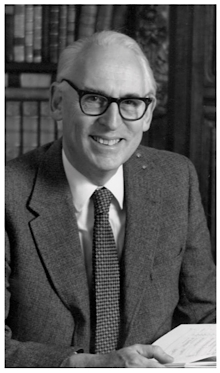
John Henry Whyte, Irish historianpolitical scientist and author of books on Northern Ireland, divided societies and church-state affairs in Ireland, dies in New York on May 16, 1990.

Whyte is born on April 30, 1928, in Penang, Malaysia. His father is manager of a rubber plantation on the mainland. His family leaves Malaysia and returns to Europe when he is three, eventually settling in Rostrevor, County Down, Northern Ireland. The Whytes are a well-known County Down family recorded in the area since at least 1713. The family is said to have come to Ireland from South Wales with Strongbow in 1170 and settled in Leinster. He is educated locally, at Ampleforth College and Oriel College Oxford, from which he takes a degree in Modern History in 1949. Continuing studies some two years later he is awarded a B.Litt degree for further research, which is to form the nebula of his first book which is published in 1958.

Whyte undertakes national service during the 1950s and works as a history teacher in his old school before being appointed lecturer in Modern History at Makerere University, Uganda. In 1962, he returns to Ireland having been appointed first “lecturer in empirical politics” at the then expanding University College Dublin (UCD). In 1966, he weds fellow academic Dr. Jean Murray and moves to Queen’s University Belfast (QUB) to undertake further studies.

In his book, Preventing the Future: Why Was Ireland So Poor for So Long?, Whyte’s successor as Professor of Politics at UCD, Tom Garvin, gives an account as to the clerical politics prevalent at the time at UCD which causes Whyte’s untimely departure:

A little later, in 1966, McQuaid provoked, possibly unintentionally, the resignation of John Whyte, a distinguished Catholic political scientist, from University College Dublin’s Department of Ethics and Politics. This resignation and move to Belfast on Whyte’s part in 1966 almost certainly was the unintended result of an extraordinary piece of clerical interference and bullying that rebounded upon McQuaid and on UCD. Whyte was in the midst of writing his standard history of the Catholic Church in independent Ireland, later published in 1969; at McQuaid’s apparent instigation, his professor and head of Department attempted to forbid him from continuing with this work. The irony was that the resultant scholarly book, finished in Belfast rather than Dublin, deeply underestimated clerical power in the Irish state and gave the Catholic Church a rather easy ride. Another irony was that Whyte, as a Roman Catholic historian and political scientist, was apparently rather favoured by McQuaid. However in 1966 bishops didn’t know they needed friends. Whyte was to come back to UCD and was professor of Ethics and Politics between 1984 and 1990. In a very real sense, McQuaid was the patriarchal and eccentric governor of Dublin Archdiocese, where one-third of the stat’s population lived; he attempted to run an urban society of a million people as though it were a large feudal community.

At Queen’s, Whyte spends seventeen years as lecturer and reader, and from 1982 Professor of Irish Politics during which he seeks to bring together political scientists from across the island and develop an All-Ireland political science fellowship. From 1973 to 1974 he works at as a research fellow at Harvard University’s Centre for International Affairs, and in 1975 he helps lead a team of researchers investigating the Northern Ireland conflict, then at its height. He also works as research fellow at the Netherlands Institute for Advanced Studies during the late 1970s and is elected Member of the Royal Irish Academy (RIA) in 1977, serving as Vice-President from 1989 to 1990.

In 1984, Whyte returns to University College Dublin, then faced with stringent fiscal cuts and wider problems in Irish third-level education. In his second period at UCD, he leads the Department, which he now heads, through a troubled period of financial cuts while supervising a reorganisation of the undergraduate curriculum. In his last years at UCD he completes his seminal work, the widely regarded Interpreting Northern Ireland. He finishes correcting the proofs and compiling the index of this work only a week before his death. While en route to an academic conference at Airley House, Virginia, he collapses at John F. Kennedy International Airport, New York, is taken to a local hospital, and dies there on May 16, 1990. He is survived by his wife, two sons, and one daughter.

Following his death, Whyte’s family, friends, and colleagues set up the John Whyte Trust Fund to continue Whyte’s work, honour his memory and encourage “informed dialogue and interaction at graduate level among people who are likely to be leaders and opinion-shapers.” To date the fund has awarded one fully paid scholarship and a number of part-paid scholarships as well as essay prizes annually. The fund also hosts an annual John Whyte Memorial Lecture. Speakers have included Paul Bew and Brendan O’Leary.

Leave a comment

Death of Hugh Hanna, Presbyterian Minister

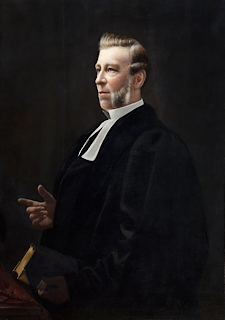
Hugh Hanna, nicknamed Roaring Hanna, a Presbyterian minister in Belfast known for his anti-Catholicism, dies in Belfast on February 3, 1892.

Hanna is born on February 25, 1821, near Dromara, County Down, the eldest among three sons and two (possibly three) daughters of Peter Hanna, of Dromara farming stock, and his wife Ellen (née Finiston), whose father served in the Black Watch regiment during the Napoleonic Wars. In the 1820s, leaving their children behind, his parents move to Belfast, where his father establishes a business turing out horse–cars. Hanna does not join them until the mid-1830s. His education reflects the modest nature of his upbringing. It is patchy and always combined with paid employment. In the 1830s he attends Bullick’s Academy, a privately run commercial college in Belfast. In the 1840s, seemingly with the intention of preparing for the Presbyterian ministry, he takes classes at Belfast Academical Institution. In 1847, he enters the general assembly’s newly established Theological College and, after some absences, obtains his licence to preach in 1851. During this time he works, first as a woolen draper‘s assistant in High Street and then, after 1844, as a teacher in the national school associated with Townsend Street Presbyterian Church, where he is a member. He resigns his teaching post in January 1852, only a month before being ordained to full-time ministry. On August 25, 1852, he marries Frances (‘Fanny’) Spence Rankin, daughter of James Rankin, a Belfast salesman. Together they have four daughters and two sons.

Hanna’s first, and only, pastorate is in a congregation that emerges out of the evangelistic efforts he and other Townsend Street members had conducted among the working people of north Belfast. In 1852, they begin meeting in the old Berry Street church and quickly grow from 75 to over 750 families. By 1869 a new building is essential and in 1870 the foundation stone for St. Enoch’s church is laid in Carlisle Circus, on property purchased from the Belfast Charitable Society. Opened in 1872 at a cost of nearly £10,000, it seats over 2,000 people and has two galleries. With 800 families and 2,500 Sunday-school scholars, it is one of the largest congregations in Belfast.

Hanna’s influence as the leader of such a large flock is not translated into advancement within the Presbyterian church. Although he serves as the Presbyterian chaplain to the Belfast garrison (1869–91) and as moderator of the presbytery (1879) and synod (1870–71) of Belfast, he does not achieve any position of note within the denomination as a whole. This is most likely because of his penchant for public controversy. Letters to the newspapers, calls for action in presbytery, and public platform debates over issues such as public-house licensing laws, Sabbath observance and property rights, brand him a destablising force. It is no doubt for this reason, rather than for his open-air preaching, of which he does very little, that he acquires his famous sobriquet, “Roaring Hugh.” His aggressive manner in debate is noted by the Belfast News Letter early in his career.

Hanna’s political views contribute to his reputation as an intolerant firebrand. He is part of a small group of Presbyterian clergy, led by the Rev. Henry Cooke, who are staunch defenders of the Protestant interest and active supporters of the conservative cause. He hosts ”anti-popery” lectures in his church and joins the Orange Order, serving briefly, in 1871, as the deputy grand chaplain for Belfast (County Grand Lodge). His determination to uphold the “right” of Protestants to preach in the open air sparks a series of violent sectarian riots and a government inquiry in Belfast in 1857. As the century progresses, and as the Presbyterian community’s political allegiances begin to shift, he becomes one of a group of prominent figures associated with two populist campaigns: opposition in the 1860s to the disestablishment of the Church of Ireland and subsequently to the introduction of home rule. In 1886, as one of the honorary secretaries of the Ulster Constitutional Club, he helps to found the Ulster Loyalist Anti-Repeal Union, a forerunner of what eventually becomes the Ulster Unionist Party.

Such activity overshadows Hanna’s impressive contribution to education. Within St. Enoch’s he establishes an enormous network of Sunday schools and evening classes, including a training institute for teachers. As a former teacher, and later as a commissioner of national education (1880–92), he is a firm advocate of the national system, and sets up six national schools in north and west Belfast.

Hanna receives only two honours: a Doctor of Divinity (DD) from the theological faculty of the Presbyterian Church in Ireland (1885) and a Doctor of Laws (LL.D.) from Galesville University in Galesville, Wisconsin (1888). In good health throughout his life, he dies suddenly of a heart attack on February 3, 1892. Buried with much fanfare in Balmoral Cemetery, Belfast, he is clearly held in high regard by surviving friends and colleagues. In 1892, the Orange Order approves the naming of LOL 1956 as the “Hanna Memorial,” and in 1894 a bronze statue depicting him in full ecclesiastical garb is erected in Carlisle Circus. Since then, his achievements have fallen on hard times. In March 1970, an Irish Republican Army bomb blast topples his statue from its plinth; several high-profile attempts to re-erect it fail. After an arson attack in 1985, and with falling numbers, the decision is taken in 1992 to demolish St. Enoch’s and unite with the neighbouring Duncairn church in a new, much smaller, building on the site.

(From: “Hanna, Hugh” by Janice Holmes, Dictionary of Irish Biography, http://www.dib.ie, October 2009 | Pictured: Portrait of Reverend Hugh Hanna by Augustus George Whichelo in 1876, which is part of the collection owned by the National Museums Northern Ireland and is located in the Ulster Museum)


Leave a comment

Birth of Ruth Coppinger, Socialist Party TD for Dublin West

Ruth Coppinger, Irish politician and member of the Socialist Party, and Teachta Dála (TD) for the Dublin West constituency, is born in Dublin on April 18, 1967.

Coppinger is a member of Fingal County Council for the Mulhuddart local electoral area from 2003 to 2014. She is co-opted to the council in 2003, replacing Joe Higgins, and is elected in 2004 and re-elected in 2009. She is an unsuccessful candidate for the Socialist Party at the 2011 Dublin West by-election.

Following victory in the 2014 Dublin West by-election, Coppinger joins her party colleague Joe Higgins in the Dáil. After being elected, she calls for a mass campaign of opposition to water charges being implemented by the Fine GaelLabour Party coalition.

In November 2014, Coppinger calls for the gradual nationalisation of U.S. multinationals to prevent job losses. In response, Fianna Fáil’s jobs spokesperson Dara Calleary calls the idea “reckless and ludicrous,” as it would “place a massive burden on taxpayers and the public finances.”

In September 2015, Coppinger joins homeless families from Blanchardstown, in occupying a NAMA-controlled property as part of a campaign to raise awareness of the housing crisis. In October 2015, she joins families in their occupation of a show house in her constituency, to protest the lack of availability of affordable social housing. She also supports the tenants of Tyrrelstown, who are made homeless when a Goldman Sachs vulture fund sells their houses.

Coppinger is re-elected to the Dáil at the 2016 Irish general election, this time under the Anti-Austerity Alliance–People Before Profit banner. On March 10. 2016, at the first sitting of the 32nd Dáil, she nominates Richard Boyd Barrett for the office of Taoiseach, quoting James Connolly from a hundred years previously when she says, “The day has passed for patching up the capitalist system. It must go,” and declaring, “We will not vote for the identical twin candidates” of Fine Gael and Fianna Fáil after they “imposed austerity.” On April 6, 2016, following the failure of the Dáil to elect a Taoiseach at that first sitting, she is nominated for the role of Taoiseach, becoming the first female nominee in the history of the state.

In 2018 Coppinger praises the MeToo movement for exposing patterns of abuse and systemic inequality. However, she also notes the limitations of achieving justice through traditional channels and calls for a stronger focus on combating intimate partner violence and societal tolerance of such abuse.

In April 2018, in the lead-up to the repeal of the Eighth Amendment, Coppinger, along with her colleague Paul Murphy, holds up a Repeal sign during leader’s questions and is reprimanded by the Ceann Comhairle. She is an advocate for abortion rights in Ireland, and is a founding member of ROSA, a movement for reproductive justice in Ireland. Earlier, in 2016, she tables the private members’ motion to repeal the Eighth Amendment.

In November 2018, Coppinger protests in the Dáil against the conduct of a rape trial in Ireland. During the trial, the defence team, as part of their argument that the sex had been consensual, states that the 17-year-old victim had worn a thong with a lace front. The defendant is subsequently found not guilty. During a sitting of the Dáil, Coppinger holds up a similar pair of underwear and admonishes the conduct of the trial, suggesting victim blaming tactics had been used and suggests this is a routine occurrence in Irish courts. She calls on Taoiseach Leo Varadkar to support her party’s bill that would increase sex education in Irish schools and provide additional training to the Irish judiciary and jurors on how to handle cases of rape. Varadkar responds that victims should not be blamed for what happens to them, irrespective of how they are dressed, where they are or if they have consumed alcohol.

In 2019 Coppinger sponsors a private member’s bill – the Domestic Violence (No-contact order) (Amendment) Bill 2019. The bill lapses with the dissolution of the Dáil and Seanad.

At the general election in February 2020, Coppinger is defeated in the Dublin West constituency. She unsuccessfully contests the 2020 Seanad election for the National University of Ireland constituency.

In June 2024, Coppinger is elected to Fingal County Council for the Castleknock local electoral area on the 7th Count. At the 2024 Irish general election, she is re-elected to the Dáil.

Coppinger is an advocate of secularism and believes in abolishing both the Angelus and the Dáil prayer, viewing them as relics of an outdated intertwining of religion and governance. She supports the separation of Church and State, criticising the Catholic Church‘s historical influence in education and health, as well as its financial privileges, including exemptions from accountability under regulations like SIPO. She has called for the requisitioning of Church lands and property, citing the Church’s failure to meet commitments to abuse victims and the necessity of addressing historical injustices.

On drug policy, Coppinger supports decriminalisation and endorses the Portuguese model, which treats addiction as a health issue rather than a criminal matter. She emphasises the hypocrisy of criminalising drug use while overlooking the societal harm caused by alcohol and advocates for expanding access to medicinal cannabis, criticising the political inertia in addressing this need.

In 2013, during referendum to abolish the Irish senate, Coppinger campaigns for a yes vote, calling the institution elitist and undemocratic. However, in 2020, following the loss of her Dáil seat, she runs unsuccessfully for a seat in the Senate. Challenged by the Irish Examiner on this, she states that so long as the Senate continues to exist, it should be used to further progressive causes.

Coppinger lives in Mulhuddart and is a secondary school teacher. Her eldest brother, Eugene Coppinger, serves on Fingal County Council from 2011 to 2019.


Leave a comment

The Irish Church Act 1869 Receives Royal Assent

The Irish Church Act 1869 receives British royal assent on July 26, 1869. The Act is an act of the Parliament of the United Kingdom which separates the Church of Ireland from the Church of England and disestablishes the former, a body that commands the adherence of a small minority of the population of Ireland. The Act is passed during the first ministry of William Ewart Gladstone and comes into force on January 1, 1871. It is strongly opposed by Conservatives in both houses of Parliament.

The Act means the Church of Ireland is no longer entitled to collect tithes from the people of Ireland. It also ceases to send representative bishops as Lords Spiritual to the House of Lords in Westminster. Existing clergy of the church receive a life annuity in lieu of the revenues to which they are no longer entitled: tithes, rentcharge, ministers’ money, stipends and augmentations, and certain marriage and burial fees.

The passage of the Bill through Parliament causes acrimony between the House of Commons and the House of Lords. Queen Victoria personally intervenes to mediate. While the Lords extort from the Commons more compensation to alleviate the disestablished churchmen, in the end, the will of the Commons prevail.

The Irish Church Act is a key move in dismantling the Protestant Ascendancy which had dominated Ireland for several centuries previously.