seamus dubhghaill

Promoting Irish Culture and History from Little Rock, Arkansas, USA


Leave a comment

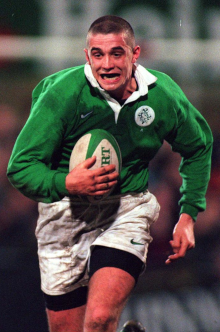
Birth of Rob Kearney, Former Rugby Union Player

Robert Kearney, former rugby union player, is born on a dairy farm on March 26, 1986, on the Cooley Peninsula in County Louth. He plays for 15 years for Leinster followed by a six-month stint in Australia, playing for Perth based side Western Force. He also plays over a decade for the Ireland national rugby union team with whom he earns 95 caps and goes on two British & Irish Lions tours in 2009 and 2013. As a youth he also plays rugby union for Clongowes Wood College and Gaelic football for Louth in the All-Ireland Minor Football Championship.

Kearney is the third of five children. He has an older brother, Richard, a younger brother Dave (who plays for Leinster) and a sister, Sara, the youngest of the five children. His elder brother Ross dies at the age of six following an accident in 1988. He is a seventh cousin of former U.S. President Joe Biden.

Like many of his peers, Kearney gets involved in athletics at an early age. The dominant sport in the area is Gaelic football. As a youth, he plays Gaelic for Naomh Muire, and in the Cooley Kickhams underage setup, before graduating to the Cooley senior football team at the age of 17 in 2004 and also Louth at minor level.

Kearney attends Clongowes Wood College in County Kildare for his secondary education. After his Leaving Certificate he moves to University College Dublin (UCD) on a sports scholarship, where he plays for the rugby team. He graduates in April 2010 with a Bachelor of Arts degree in economics. In 2005 he helps the U-20s team win the McCorry Cup, beating Dublin University Football Club (DUFC) in the final. In 2018, he is awarded the UCD Alumni Award in Sport.

Kearney plays for Leinster at both schoolboy and U-19 level before going on to represent them as a senior. He scores a hat-trick of tries on his debut for Leinster in a pre-season friendly win over Parma.

Kearney makes his Celtic League debut for Leinster in 2005 in a 22–20 defeat away to the Ospreys. He makes 32 appearances in the competition, scoring eight tries, with three penalties during a period in September 2006, when usual place kicker, Felipe Contepomi, is injured. He plays in his first Heineken Cup game in a 19–22 defeat against Bath at the Royal Dublin Society (RDS) on October 22, 2005. It is the first of ten appearances scoring ten tries in the process. He is part of Leinster’s Heineken Cup winning team in 2009 but misses the 2011 final due to injury. On May 21, 2012, the day after Leinster wins their second straight Heineken Cup, he is announced as the ERC Player of the Year for 2012. During the 2011–12 campaign he starts all nine European matches scoring six tries. He is crowned Leinster player of the year for the 2011–12 season. He confirms his departure from Leinster on September 24, 2020.

In late September 2020, it is confirmed that Kearney has signed a one-year contract with Australian side Western Force. He makes his Force debut in an 11–27 defeat to the Brumbies on February 19, 2021. He announces his retirement from rugby after one season with Western Force in Super Rugby AU and Super Rugby Trans-Tasman. Following his retirement, he returns to Louth GAA club Cooley Kickhams where he begins training in August 2021 for the first time since 2005.

Kearney represents Ireland at schoolboy and U-19 level, and tours with Ireland A in the 2006 Churchill Cup. He is first called into the Irish training squad for 2005’s autumn internationals but does not play. He is named in the Irish squad to the 2007 summer tour of Argentina and earns his first cap against Argentina on June 2, 2007, in a 16–0 defeat. During the 2008 Six Nations Championship he scores two tries, one against Scotland and one against England. He is a member of the victorious Ireland team that wins the 2009 Six Nations Championship, Triple Crown and Grand Slam. One of the most famous incidents in his career is a high tackle incident involving Italy‘s Andrea Masi in the first minute of a game. The incident is taken as an indication of the danger posed by Kearney in attack. He misses almost a year – from November 2010 until August 2011 – due to a knee injury that requires surgery.

In the 2011 Rugby World Cup, Kearney is selected but is injured for the first game against the United States. However, he plays in all the other matches which take Ireland through to the quarterfinals, in which they are knocked out by Wales, 22–10. He is selected in the Ireland squad for the 2012 Six Nations Championship and named in the starting team to play Wales in the opening match. He plays in all the other games, which see Ireland finish third in the table. He is also in the first Irish rugby team in 39 years to beat Australia on Australian soil, in the 2018 summer series. He is named in the Ireland squad for the 2019 Rugby World Cup in Japan, starting three of Ireland’s five matches and splitting time at fullback with Jordan Larmour.

Kearney is named in the British & Irish Lions squad for the 2009 tour to South Africa. He makes his Lions test debut as a substitute in the 26–21 first test defeat in Durban. Due to an injury to Lee Byrne, he is selected again for the second test in Pretoria. He scores the only try for the Lions in a 28–25 defeat. He then plays in the final test in Johannesburg which the Lions win 28–9. On April 30, 2013, he is named in his second British & Irish Lions squad.

Kearney marries Jess Redden in 2021, and their son is born in 2023.


Leave a comment

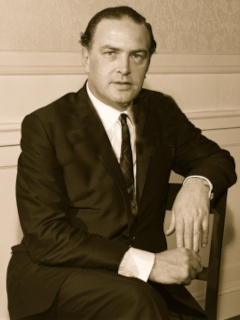
Birth of Donogh O’Malley, Fianna Fáil Politician & Rugby Union Player

Donogh Brendan O’Malley, Irish Fianna Fáil politician and rugby union player, is born on January 18, 1921, in Limerick, County Limerick. He serves as Minister for Education (1966-68), Minister for Health (1965-66) and Parliamentary Secretary to the Minister for Finance (1961-65). He also serves as a Teachta Dála (TD) for the Limerick East constituency (1954-68). He is best remembered as the Minister who introduces free secondary school education in the Republic of Ireland.

O’Malley is one of eight surviving children of Joseph O’Malley, civil engineer, and his wife, Mary “Cis” (née Tooher). Born into a wealthy middle-class family, he is educated by the Jesuits at Crescent College and later at Clongowes Wood College, County Kildare. He later studies at University College Galway (UCG), where he is conferred with a degree in civil engineering in 1943. He later returns to Limerick, where he works as an engineer before becoming involved in politics.

O’Malley plays rugby at provincial level for Munster, Leinster and Connacht and at club level for Bohemians and Shannon RFC. His chances at an international career are ruined by the suspension of international fixtures during World War II. It is at a rugby match in Tralee that he first meets Dr. Hilda Moriarty, who he goes on to marry in August 1947.

Although O’Malley runs as a Fianna Fáil candidate, he is born into a politically active family who supports Cumann na nGaedheal until a falling-out with the party in the early 1930s. He first becomes involved in local politics as a member of Limerick Corporation. He becomes Mayor of Limerick in 1961, the third O’Malley brother to hold the office (Desmond from 1941-43 and Michael from 1948-49). He is a strong electoral performer, topping the poll in every general election he runs in.

O’Malley is first elected to Dáil Éireann as a Fianna Fáil TD for Limerick East at the 1954 Irish general election. Fianna Fáil is not returned to government on that occasion. He spends the rest of the decade on the backbenches. However, his party is returned to power in 1957. Two years later, the modernising process begins when Seán Lemass takes over from Éamon de Valera as Taoiseach. Lemass introduces younger cabinet ministers, as the old guard who has served the party since its foundation in 1926 begin to retire.

In 1961, O’Malley joins the government as Parliamentary Secretary to the Minister for Finance. He is part of a new, brasher style of politician that emerges in the 1960s, sometimes nicknamed “the men in the mohair suits.” It is expected that this generation of politician, born after the Irish Civil War, will be a modernising force in post-de Valera Ireland.

Although his sporting background is in rugby and swimming, it is association football which O’Malley gets involved in at a leadership level, becoming President of the Football Association of Ireland despite never having played the sport.

Following Fianna Fáil’s retention of power in the 1965 Irish general election, O’Malley joins the cabinet as Minister for Health. He spends just over a year in this position before he is appointed Minister for Education, a position in which he displays renowned dynamism. Having succeeded Patrick Hillery, another dynamic young minister, he resolves to act swiftly to introduce the recommendations of an official report on education.

As Minister for Education, O’Malley extends the school transport scheme and commissions the building of new non-denominational comprehensive and community schools in areas where they are needed. He introduces Regional Technical Colleges (RTCs), now called Institutes of Technology, in areas where there is no third level college. The best example of this policy is the University of Limerick, originally an Institute of Higher Education, where O’Malley is credited with taking the steps to ensure that it becomes a university. His plan to merge Trinity College Dublin and University College Dublin arouses huge controversy, and is not successful, despite being supported by his cabinet colleague Brian Lenihan. Access to third-level education is also extended, the old scholarship system being replaced by a system of means-tested grants that give easier access to students without well-off parents.

Mid-twentieth century Ireland experiences significant emigration, especially to the neighbouring United Kingdom where, in addition to employment opportunities, there is a better state provision of education and healthcare. Social change in Ireland and policies intending to correct this deficit are often met with strong resistance, such as Noël Browne‘s proposed Mother and Child Scheme. As a former Health Minister, O’Malley has first-hand experience of running the department which had attempted to introduce this scheme and understood the processes that caused it to fail, such as resistance from Department of Finance and John Charles McQuaid. This influences his strategy in presenting the free-education proposal.

Shortly after O’Malley is appointed, he announces that from 1969 all education up to Intermediate Certificate level will be without cost, and free buses will bring students in rural areas to their nearest school, seemingly making this decision without consulting other ministers. However, he does discuss it with Lemass. Jack Lynch, who, as Minister for Finance, has to find the money to pay for the programme, is not consulted and is dismayed at the announcement.

By announcing the decision first to journalists and on a Saturday (during a month when the Dáil is in recess), the positive public reaction tempers resistance to the idea before the next cabinet meeting. O’Malley’s proposals are hugely popular with the public, and it is impossible for the government to go back on his word.

Some Irish commentators consider that O’Malley’s extension of education, changing Ireland from a land where the majority are schooled only to the age of 14 to a country with universal secondary-school education, indirectly leads to the Celtic Tiger boom of the 1990s-2000s when it is followed for some years by an extension of free education to primary degree level in university, a scheme that is launched in 1996 by the Labour Party and axed in 2009 by Fianna Fáil’s Batt O’Keeffe.

In 1967, O’Malley appoints Justice Eileen Kennedy to chair a committee to carry out a survey and report on the reformatory and industrial school systems. The report, which is published in 1970, is considered ground-breaking in many areas and comes to be known as the Kennedy Report. The Report makes recommendations about a number of matters, including the Magdalene laundries, in relation to which they are not acted upon. The report recommends the closure of a number of reformatories, including the latterly infamous reformatory at Daingean, County Offaly.

O’Malley’s reforms make him one of the most popular members of the government. He is affectionately known as “the School Man” for his work in education. His sudden death in Limerick on March 10, 1968, before his vision for the education system is completed, comes as a shock to the public. He is buried with a full Irish state funeral.

Following O’Malley’s death, his widow, Hilda O’Malley, does not run in the subsequent by-election for the seat he has left vacant. It is won narrowly by their nephew Desmond O’Malley. Hilda seeks the Fianna Fáil nomination for the 1969 Irish general election, but Fianna Fáil gives the party nomination to Desmond, as the sitting TD. Hilda runs as an Independent candidate in that election. After what proves a bitter campaign against her nephew, she fails to get the fourth seat in Limerick East by just 200 votes.
Leave a comment

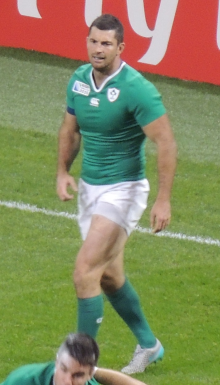
Birth of Josh van der Flier, Irish Rugby Union Player

Josh van der Flier, Irish rugby union player for Leinster Rugby and the Ireland national rugby union team, is born on April 25, 1993, in Wicklow, County Wicklow. He is of Dutch descent through his paternal grandparents, who moved to Ireland in the 1950s to open a radiator factory. He attends Wesley College, Dublin, and University College Dublin (UCD).

Van der Flier’s preferred position is flanker, but he can play other positions if needed. He is commonly referred to amongst Leinster Rugby circles as “The Dutch Disciple.”

Van der Flier begins his professional career with the Leinster academy. During his time at the academy, he plays with the Leinster senior team, making his debut in October 2014 against Zebre Parma. It is announced in April 2015 that he has been awarded a senior contract with Leinster.

Following the 2022 European Rugby Champions Cup final, Van der Flier becomes the third Leinster player to win European Professional Club Rugby Player of the Year, after Seán O’Brien (2011) and Rob Kearney (2012). In June 2022 he is named Leinster’s 2021–22 Men’s Player of the Year.

Van der Flier receives his first call up to the senior Ireland squad by coach Joe Schmidt for the 2016 Six Nations Championship. He debuts for Ireland on February 27 against England in the 2016 Six Nations Championship at Twickenham Stadium.

Van der Flier is named as the Ireland men’s XVs Players’ Player of the Year at the 2022 Rugby Players Ireland awards. He also wins the Guinness Rugby Writers of Ireland men’s player of the year award for the 2021-22 campaign.

In November 2022, Van der Flier is named as the World Rugby Men’s 15s Player of the Year.


Leave a comment

Birth of Alan Quinlan, Irish Rugby Union Player

Alan Quinlan (Irish: Ailín Ó Caoindealbhain), retired Irish rugby union player, is born in Tipperary, County Tipperary, on July 13, 1974. He plays for Munster and is registered to All-Ireland League side Shannon RFC. He retires from rugby in May 2011.

Quinlan is educated at Abbey CBS in Tipperary and works for a motor dealer after leaving school. He begins his rugby career with Clanwilliam F.C. He moves from Clanwilliam to join Shannon U20s in 1994. He captains the Irish Youth Team against Scotland in 1993. He normally plays as a blindside flanker, but he also plays openside, number eight and second row for Munster.

Quinlan begins playing for Munster in 1996 and captains the youths team before becoming a regular in the first team. In May 2006 he makes a comeback from a cruciate ligament injury earlier in the season to win both the AIB League Division 1 title with Shannon and the Heineken Cup with Munster after a late appearance from the bench in the Heineken Cup Final win over Biarritz in Cardiff. He captains the side from Number Eight in Munster’s upset victory over Ulster in Ravenhill Stadium in the 2007 Celtic League. He is voted Man of the Match as Munster beats Toulouse 16–13 on May 24, 2008 to win the Heineken Cup for a second time. He is part of the squad that wins the 2008–09 Celtic League. In total he holds five league medals with Shannon, as well as two Heineken Cup medals and a Celtic League Medal with Munster. He wins his 201st cap against Leinster, equaling Anthony Foley‘s club record for caps, on October 2, 2010. He becomes Munster’s most capped player ever on October 16, 2010, against Toulon in the Heineken Cup. In the 2009–10 season he represents Munster 21 times, including all eight of their 2010 Heineken Cup matches.

In April 2011, Quinlan officially announces his retirement from professional rugby, to be effective at the end of the 2010/11 season. He plays his last game for Munster on May 6, 2011, against Connacht in the Celtic League, scoring a try to mark the end of his remarkable career and going off to a standing ovation from the Munster and Connacht supporters. He joins the Munster team at the 2011 Celtic League Grand Final trophy presentation, celebrating Munster’s 19–9 victory over old rivals Leinster in Thomond Park.

Quinlan represents Ireland ‘A’ between 1998 and 2001 and makes his senior debut for the Irish national team in October 1999, as a replacement in a test against Romania. He plays his first Six Nations match against Italy in 2001. He is a part of Ireland’s squad at the 2003 Rugby World Cup in Australia and scores two tries in the tournament before dislocating his shoulder scoring a vital try against Argentina in the pool stages, which ends his involvement. He is named in Ireland’s 2007 Rugby World Cup squad but does not make any appearances. Ireland coach Eddie O’Sullivan is widely criticised afterwards for not using his bench. Quinlan takes his caps to a total of 27 by playing in the Autumn Internationals of 2008 against Canada and the All Blacks.

On April 21, 2009, Quinlan is named in the squad for the 2009 British & Irish Lions tour of South Africa. During Munster’s Heineken cup semi-final defeat to Leinster in May 2009, he is cited for making contact with the eye or eye area of Leinster captain Leo Cullen. The offence is deemed at the low range of seriousness and he receives a 12 playing week ban until September 9, 2009. As a result, he misses the Lions tour to South Africa.

Quinlan is a co-commentator for ITV‘s coverage of the 2011 Rugby World Cup. He regularly commentates with RTÉ Sport and Sky Sports on their rugby coverage.

Quinlan marries Irish model Ruth Griffin in Tipperary during the summer of 2008. They have one son named AJ who is born in January 2009. They later split up in June 2010. He releases an autobiography, Quinlan: Red Blooded, in 2010. He is a big golf fan and supports Liverpool.


Leave a comment

Birth of Tony Ward, Former Rugby Union & Association Football Player

Anthony Joseph Patrick Ward, Irish former rugby union and association football player during the 1970s and 1980s commonly referred to as Tony Ward, is born in Dublin on October 8, 1954. He plays rugby as a fly-half for, among others, Munster, Leinster, Ireland, the British & Irish Lions and the Barbarians. He is selected 1979 European rugby player of the year.

Ward wins 19 caps for Ireland between 1978 and 1987. He makes his international debut against Scotland at Lansdowne Road on January 21, 1978 at the age of 23. He helps Ireland win 12–9 and during the 1978 Five Nations Championship he scores 38 points, a record for a debutant. He makes one major tour with Ireland, to Australia in 1979. During his career as an Ireland international he scores 113 points, including 29 penalties, 7 conversions and 4 drop goals. He plays his last game for Ireland on June 3, 1987 in a 32–9 win over Tonga during the 1987 Rugby World Cup.

Leinsterman Ward also inspires Munster to a legendary win over New Zealand, scoring two drop goals and a conversion in a 12–0 victory at Thomond Park on October 31, 1978. To date Munster are the only Irish provincial men’s team ever to beat the All-Blacks, although having played them far more frequently than any other province and joining dozens of smaller Welsh clubs and English regions who defeated mid-week All Black teams over the same period.

Ward also plays one Test game for the British & Irish Lions during the 1980 South Africa tour. He sets a Lions Test record by scoring 18 points, including 5 penalties and a drop goal. It is also a record for any player against South Africa.

Ward is the first ever recipient of a European Rugby Player of the Year award for his performances in the 1979 Five Nations Championship.

Ward also plays association football for both Shamrock Rovers and Limerick United. In his last season with Rovers, 1974–75, he scores 6 league goals. He plays for Limerick United in the 1981–82 UEFA Cup and in 1982 he helps them win the FAI Cup.

While playing rugby Ward is a geography and PE teacher at St. Andrews School in Booterstown, Dún Laoghaire–Rathdown. During the 1990s, he is a highly valued and well respected coach for St. Andrews.

Since retiring as a sportsman, Ward has worked as a sports journalist, most notably with the Irish Independent, and as a rugby commentator for Raidió Teilifís Éireann (RTÉ). He starts as a co-commentator for the 1988 Five Nations Championship, and remains in that role for many years.

Ward is currently involved in St. Gerard’s School in Bray, County Wicklow, where he is coaching the Senior Rugby team and has been doing so for a number of years. He constantly downplays his fame and success and does not even want to be in the room if another coach plays video footage of his legendary tries.


Leave a comment

Birth of Mick Doyle, Rugby Union Player & Coach

mick-doyle

Mick Doyle, Irish rugby union international player and coach, is born in Castleisland, County Kerry, on October 13, 1941.

Doyle begins playing rugby union at Newbridge College, County Kildare. He goes on to study veterinary science at University College Dublin, who he also represents at rugby. He makes his Ireland debut against France on January 23, 1965, scoring a try in the game. While representing Ireland he also studies at the University of Cambridge where he gains a Blue in the 1965 Varsity match against the Oxford University RFC. Doyle also studies at the University of Edinburgh and plays club rugby for Edinburgh Wanderers before returning to Ireland.

Doyle goes on to earn the distinction of never being dropped during his 20-cap international career as a flanker. Doyler, as he is affectionately known, scores the winning try against Wales in the 1967 Five Nations Championship, tours Australia with Ireland in 1967 and South Africa with the British and Irish Lions the following year.

His last game for Ireland is against Australia in October 1968, when he lines out alongside his brother Tommy. He coaches Leinster to Interprovincial Championship success five times between 1979 and 1983 before he succeeds Willie John McBride as Ireland coach during the 1984–85 season. Under In 1985, under Doyle’s stewardship, Ireland wins the Triple Crown and Five Nations Championship.

Doyle leads Ireland to the inaugural 1987 Rugby World Cup, but that joy is tinged with sadness as he suffers a heart attack at the opening dinner. He battles illness and adversity and his recovery from a brain problem is chronicled in his book 0.16.

In later years, apart from working in his veterinary practice, Doyle is a regular contributor to rugby matters on RTÉ Radio One.

Mick Doyle is killed in an automobile accident in Dungannon, County Tyrone, on May 11, 2004.