seamus dubhghaill

Promoting Irish Culture and History from Little Rock, Arkansas, USA


Leave a comment

Death of Theobald Walter, the First Chief Butler of Ireland

Theobald Walter, sometimes Theobald FitzWalter, Theobald Butler, or Theobald Walter le Boteler, the first Chief Butler of Ireland, dies on February 4, 1206, at Arklow Castle at Wicklow, in present day County Wicklow. He also holds the office of Chief Butler of England and is the High Sheriff of Lancashire for 1194. He is the first to use the surname Butler of the Butler family of Ireland. He is involved in the Irish campaigns of King Henry II of England and John of England. His eldest brother, Hubert Walter, becomes the Archbishop of Canterbury and justiciar and Lord Chancellor of England.

Walter is born in Norfolk, England, in 1165, the son of Hervey Walter and his wife, Matilda de Valoignes, who is one of the daughters of Theobald de Valoignes. Their children were Theobald, Hubert, Bartholomew, Roger, and Hamon. He and his brother Hubert are brought up by their uncle Ranulf de Glanvill, the great justiciar of Henry II of England who had married his mother’s sister Bertha.

On April 25, 1185, Prince John, in his new capacity as Lord of Ireland, lands at Waterford and around this time grants the hereditary office of butler of Ireland to Walter, whereby he and his successors are to attend the Kings of England at their coronation, and on that day present them with the first cup of wine. His father had been the hereditary holder of the office of butler of England. Sometime after, King Henry II of England grants him the prisage of wines, to enable him and his heirs, the better to support the dignity of that office. By this grant, he has two barrels of wine out of every ship, which breaks bulk in any trading port of Ireland, and is loaded with 20 tons of that commodity, and one ton from 9 to 20. He accompanies John on his progress through Munster and Leinster. At this time, he is also granted a large section of the north-eastern part of the Kingdom of Limerick. The grant of five and a half cantreds is bounded by:

“…the borough of Killaloe and the half cantred of Trucheked Maleth in which it lay, and the cantreds of Elykarval, Elyochgardi, Euermond, Aros and Wedene, and Woedeneoccadelon and Wodeneoidernan.”

These are the modern baronies of Tullough (in County Clare), Clonlisk and Ballybritt (in County Offaly), Eliogarty, Ormond Upper, Ormond Lower, Owney and Arra (in County Tipperary), Owneybeg, Clanwilliam and Coonagh (in County Limerick).

Walter is active in the war that takes place when Rory O’Connor attempts to regain his throne after retiring to the monastery of Cong (present day County Mayo), as his men are involved in the death of Donal Mor McCarthy during a parley in 1185 near Cork. In 1194, he supports his brother during Hubert’s actions against Prince John, with him receiving the surrender of John’s supporters in Lancaster. He is rewarded with the office of sheriff of Lancaster, which he holds until Christmas of 1198. He is again sheriff after John takes the throne in 1199.

In early 1200, however, John deprives Walter of all his offices and lands because of his irregularities as sheriff. His lands are not restored until January 1202. A manuscript in the National Library of Ireland points to William de Braose, 4th Lord of Bramber, as the agent of his restoration:

“Grant by William de Braosa, (senior) to Theobald Walter (le Botiller) the burgh of Kildelon (Killaloe) … the cantred of Elykaruel (the baronies of Clonlisk and Ballybrit, County Offaly), Eliogarty, Ormond, Ara and Oioney, etc. 1201.”

“Elykaruel” refers to the Gaelic túath of “Ely O’Carroll”, which straddles the southern part of County Offaly and the northern part of Tipperary (at Ikerrin). The other cantreds named are probably the modern baronies of Eliogarty, Ormond Upper, Ormond Lower and Owney and Arra in County Tipperary.

Walter founds the Abbey of Woney, of which nothing now remains, in the townland of Abington, near the modern village of Murroe in County Limerick around 1200. He also founds the Cockersand Abbey in Lancaster, Abbey of Nenagh in County Tipperary, and a monastic house at Arklow in County Wicklow.

Walter marries Maud le Vavasour (1176–1226), heiress of Robert le Vavasour, a baron of Yorkshire. John Lodge in the Peerage of Ireland in 1789 gives the year as 1189, but on no apparent authority, as no other author follows him on this. Their children are Theobald le Botiller, 2nd Chief Butler of Ireland, and Maud (1192–1244), who marries three times yet only has two surviving children, Ralph and Marie.

Walter dies on February 4, 1206, at Arklow Castle, County Wicklow, and is buried at Wotheney Abbey.


Leave a comment

Birth of Sir Richard Levinge, 1st Baronet

Sir Richard Levinge, 1st Baronet, Irish politician and judge who plays a leading part in Irish public life for more than 30 years, is born at Leek, Staffordshire, England, on May 2, 1656.

Levinge is the second son of Richard Levinge of Parwich Hall, Derbyshire, Recorder of Chester, and Anne Parker, daughter of George Parker of Staffordshire and his wife Grace Bateman. The Levinges (sometimes spelled “Levin”) are a long-established Derbyshire family with a tradition of public service. Through his mother he is a first cousin of Thomas Parker, 1st Earl of Macclesfield, Lord High Chancellor of Great Britain.

Levinge is educated at Audlem School, Derbyshire, and St. John’s College, Cambridge. He enters the Inner Temple in 1671 and is called to the Bar in 1678. He is a Member of Parliament (MP) of the House of Commons of England for City of Chester from 1690 to 1695. He is also, like his father, Recorder of Chester in 1686-87, but is summarily removed from this office by King James II of England.

Levinge is one of the first to declare for William III of England at the Glorious Revolution and is sent by the new Government to Ireland as Solicitor-General in 1689. In 1692 he is elected as a member of the Irish House of Commons for Belfast and for Blessington, but chooses to sit for Blessington, a seat he holds until 1695. During this time, he serves as Speaker of the Irish House of Commons. In politics he is a moderate Tory, noted throughout his career for his desire to conciliate. In an age of bitter political faction this earns him the uncharitable nickname “Tom Double.” Although he supports the Penal Laws, as no Irish officeholder then could do otherwise, he is very tolerant in religious matters and has several Roman Catholic friends, including his predecessor as Solicitor-General, Sir Theobald Butler.

Levinge later represents Longford Borough from 1698 to September 1713 and Kilkenny City from 1713 to November 1715 in the Irish Parliament. In 1713 he is also returned for Gowran but chooses to sit for Kilkenny. He is created a Baronet of High Park in the County of Westmeath, in the Baronetage of Ireland on October 26, 1704.

Levinge also serves as Solicitor-General for Ireland from 1689, from which office he is dismissed in 1695 following a quarrel with Henry Capell, 1st Baron Capell of Tewkesbury, the Lord Lieutenant of Ireland. He returns to office as Solicitor-General in 1705 through the good offices of James Butler, 2nd Duke of Ormonde, who has acted as his patron for some years past. History repeats itself when the Lord Lieutenant, Thomas Wharton, 1st Earl of Wharton, dismisses him from office in 1709 with what is regarded by many, including Jonathan Swift, as brutal suddenness. He once again becomes a member of the Parliament of Great Britain representing Derby from 1710 to 1711. He becomes Attorney-General for Ireland in 1711, after Ormonde replaces Wharton as Lord Lieutenant.

Levinge had expressed his interest in being appointed to the English Bench but meets with no success in his efforts to achieve office in England. Under George I of Great Britain, despite being of the “wrong” political persuasion, and his growing age, his famous moderation, and his 30 years’ experience of Irish public life make him acceptable as an Irish judge to the Government, in which he has a powerful supporter in his cousin Lord Macclesfield. In 1721 he becomes Chief Justice of the Irish Common Pleas for Ireland and a member of the Privy Council of Ireland. He complains bitterly of the poor quality of his junior judges, and asks for suitable replacements, although he complains equally about some of those whose names are put forward as possible replacements. Despite being in great pain from gout in his last years, he remains on the Bench until his death on July 13, 1724.

Levinge divides his time between his ancestral home, Parwich Hall, which he purchases from his childless elder brother, and his newly acquired property Knockdrin Castle, County Westmeath. Most of his estates passes to his eldest son, who extensively rebuilds Parwich.

(Pictured: Knockdrin Castle, County Westmeath, the main Levinge residence in Ireland)


Leave a comment

The Widgery Report Is Released

john-passmore-widgery

John Passmore Widgery, Baron Widgery, English judge who serves as Lord Chief Justice of England and Wales from 1971 to 1980, issues his report exonerating “Bloody Sunday” troops on April 19, 1972.

Widgery receives promotion to the Court of Appeal in 1968. He has barely gotten used to his new position when Lord Parker of Waddington, who had been Lord Chief Justice of England and Wales since 1958, announces his retirement. There is no obvious successor and Widgery is the most junior of the possible appointees. The Lord Chancellor, Quintin Hogg, Baron Hailsham of St. Marylebone, chooses Widgery largely on the basis of his administrative abilities. On April 20, 1971, he is created a life peer taking the title Baron Widgery, of South Molton in the County of Devon.

Shortly after taking over, Widgery is handed the politically sensitive job of conducting an inquiry into the events of January 30, 1972, in Derry, where troops from 1st Battalion, Parachute Regiment had murdered 13 civil rights marchers, commonly referred to as Bloody Sunday. A 14th person dies shortly after Widgery’s appointment. He hears testimony from the paratroopers, who claim they had been shot at, while the marchers insist that no one from the march was armed. Widgery produces a report that takes the British Army‘s side. He placed the main blame for the deaths on the march organisers for creating a dangerous situation where a confrontation was inevitable. His strongest criticism of the Army is that the “firing bordered on the reckless.”

The Widgery Report is accepted by the British government and Northern Ireland‘s unionists but is immediately denounced by Irish nationalist politicians, and people in the Bogside and Creggan areas are disgusted by his findings. The British Government had acquired some goodwill because of its suspension of the Stormont Parliament, but that disappears when Widgery’s conclusions are published. The grievance with Widgery’s findings lingers and the issue remains live as the Northern Ireland peace process advances in the 1990s.

In January 1998, on the eve of the 26th anniversary of Bloody Sunday, Prime Minister Tony Blair announces a new inquiry, criticising the rushed process in which Widgery failed to take evidence from those wounded and did not personally read eyewitness accounts. The resulting Bloody Sunday Inquiry lasts 12 years before the Saville Report is published on June 15, 2010. It demolishes the Widgery Report, finding that soldiers lied about their actions and falsely claimed to have been attacked.

Prime Minister David Cameron, on behalf of the United Kingdom, formally apologises for the “unjustified and unjustifiable” events of Bloody Sunday. As a result of the Saville Report, even observers who are natural supporters of the British Army now regard Widgery as discredited. The conservative historian and commentator Max Hastings describes the Widgery report as “a shameless cover-up.”


Leave a comment

Birth of Katharine O’Shea Parnell

katharine-oshea

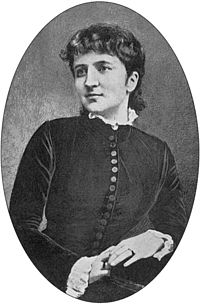
Katharine O’Shea (née Wood), English woman of aristocratic background, whose decade-long secret adultery with Charles Stewart Parnell leads to a widely publicized divorce in 1890 and his political downfall, is born in Braintree, Essex on January 30, 1846.

Katharine is the daughter of Sir John Page Wood, 2nd Baronet (1796–1866), and granddaughter of Sir Matthew Wood, a former Lord Mayor of London. She has an elder brother who becomes Field Marshal Sir Henry Evelyn Wood and is also the niece of both Western Wood MP (1804–1863) and Lord William Wood, William Ewart Gladstone‘s first Liberal Lord Chancellor.

Katharine marries Captain William O’Shea in 1867, a Catholic Nationalist MP for Clare from whom she separates around 1875. She first meets Parnell in 1880 and begins a relationship with him. Three of her children are fathered by Parnell. Although Captain O’Shea keeps publicly quiet for several years, he is aware of the relationship. He challenges Parnell to a duel in 1881 and initially forbids his estranged wife to see him, although she says that he encouraged her in the relationship. Although their relationship is a subject of gossip in London political circles from 1881, later public knowledge of the affair in an England governed by “Victorian morality” with a “nonconformist conscience” creates a huge scandal, as adultery is prohibited by the Ten Commandments.

Out of her family connection to the Liberal Party, Katharine acts as liaison between Parnell and Gladstone during negotiations prior to the introduction of the First Irish Home Rule Bill in April 1886. Parnell moves to her home in Eltham, close to the London-Kent border, that summer.

Captain O’Shea files for divorce in 1889 and his reasons are a matter for speculation. Some say he may have political motives. Alternatively, it is claimed that he has been hoping for an inheritance from Katharine’s rich aunt whom he had expected to die earlier, but when she dies in 1889 her money is left in trust to cousins. After the divorce the court awards custody of Katharine O’Shea and C.S. Parnell’s two surviving daughters to her ex-husband.

Katharine’s November divorce proceedings from Captain O’Shea, in which Parnell is named as co-respondent, leads to Parnell’s being deserted by a majority of his own Irish Parliamentary Party and to his downfall as its leader in December 1890. Catholic Ireland feels a profound sense of shock when Katharine breaks the vows of her previous Catholic marriage by marrying Parnell on June 25, 1891. With his political life and his health essentially ruined, Parnell dies at the age of 45 in Hove on October 6, 1891 in her arms, less than four months after their marriage. The cause is stomach cancer, possibly complicated by coronary artery disease inherited from his grandfather and father, who also died prematurely.

Though to her friends Katharine is known as Katie O’Shea, Parnell’s enemies, in order to damage him personally, call her “Kitty O’Shea” because at that time “kitty,” as well as being an Hiberno-English version of Catherine/Katherine/Katharine, is also a slang term for a prostitute. She lives the rest of her life in relative obscurity. She dies on February 5, 1921, at the age of 75, and is buried in Littlehampton, Sussex, England, apparently never once setting foot on Irish soil.

Captain Henry Harrison, MP, who had acted as Parnell’s bodyguard and aide-de-camp, devotes himself after Parnell’s death to the service of his widow. From her he hears a completely different version of the events surrounding the divorce issue from that which had appeared in the press, and this is to form the seed of his later two books defending Parnell published in 1931 and 1938. They have a major impact on Irish historiography, leading to a more favourable view of Parnell’s role in the O’Shea affair.