seamus dubhghaill

Promoting Irish Culture and History from Little Rock, Arkansas, USA


Leave a comment

Founding of the Football Association of Ireland

The Football Association of Ireland (Irish: Cumann Peile na hÉireann), the governing body for association football in the Republic of Ireland, is founded on September 2, 1921.

In the 19th century, association football outside of Ulster is largely confined to Dublin and a few provincial towns. The British Army teams play a role in the spread of the game to these areas, especially in Munster, as local clubs are initially reliant on them to form opposition teams, leading to the nickname “the garrison game.” Association football is played in relatively few Catholic schools as middle-class schools favour rugby union while others favour Gaelic games. The Irish Football Association (IFA) had been founded in 1880 in Belfast as the football governing body for the whole of Ireland, which was then a part of the United Kingdom and considered a Home Nation. The Leinster Football Association was an affiliate, founded in 1892 to foster the game in Leinster, outside of the Ulster heartlands. This was followed by the establishment of the Munster Football Association in 1901.

By 1913, the Leinster FA becomes the largest divisional association within the IFA, displacing the North East Ulster Football Association, yet all but two clubs in the 1913–14 Irish League are based in Ulster. While this largely reflects the balance of footballing strength within Ireland, southern members feel the IFA is doing little to promote the game outside of the professional clubs in its northern province. In the other provinces, association football is also under pressure from the Gaelic Athletic Association (GAA), which has banned members from playing or watching the sport as it is considered a “foreign” game. Furthermore, there is a growing feeling in Dublin of alleged Belfast bias when it comes to hosting matches and player selection for internationals. This view is not helped by the composition of the IFA’s sub-committees, with over half of the membership consisting of delegates hailing from the North-East, and the International Committee, who chooses the national team, containing just one member from Leinster. The Belfast members are mainly unionist, while the Dublin members are largely nationalistWorld War I increases the gulf between the northern teams and the clubs in the south as the Irish League is suspended and replaced by regional leagues, foreshadowing the ultimate split. Tensions are then exacerbated by the Irish War of Independence of 1919–21, which disrupts contact between northern and southern clubs further and prevents resumption of the Irish League. The security situation prompts the IFA to order the March 1920-21 Irish Cup semi-final replay between Glenavon and Shelbourne to be replayed in Belfast, rather than in Dublin as convention dictates. This proves to be the final straw and the Leinster FA confirms their decision to disaffiliate from the IFA at a meeting on June 8, 1921.

The Football Association of Ireland (FAI) is formed in Dublin on September 2, 1921, by the Leinster FA. The Free State League (originally the Football League of Ireland and now the League of Ireland) is founded in June of that year when the Leinster FA withdraws from the IFA. This is the climax of a series of disputes about the alleged Belfast bias of the IFA. Both bodies initially claim to represent the entire island. The split between Southern Ireland (which becomes the Irish Free State in December 1922) and Northern Ireland (which comes into existence as a jurisdiction in 1921) does not produce a split in the governing bodies of other sports, such as the Irish Rugby Football Union (IRFU). The Munster Football Association, originally dominated by British Army regiments, falls into abeyance on the outbreak of World War I, and is re-established in 1922 with the help of the FAI, to which it affiliates. The Falls League, based in the Falls Road of nationalist West Belfast, affiliates to the FAI, and from there Alton United wins the FAI Cup in 1923. However, when the FAI applies to join FIFA in 1923, it is admitted as the Football Association of the Irish Free State (FAIFS) based on a 26-county jurisdiction. (This jurisdiction remains, although Derry City, from Northern Ireland, are given an exemption, by agreement of FIFA and the IFA, to join the League of Ireland in 1985.) Attempts at reconciliation followed. At a 1923 meeting, the IFA rejects an FAIFS proposal for it to be an autonomous subsidiary of the FAIFS. A 1924 meeting in Liverpool, brokered by the English FA, almost reaches agreement on a federated solution, but the IFA insists on providing the chairman of the International team selection committee. A 1932 meeting agrees on sharing this role, but founders when the FAIFS demands one of the IFA’s two places on the International Football Association Board (IFAB). Further efforts to reach agreement are made through a series of conferences between the IFA and FAI from 1973 to 1980 during the height of the Troubles in Northern Ireland.

The IFA does not feel obliged to refrain from selecting Free State players for its international team. The name Football Association of Ireland is readopted by the FAIFS in 1936, in anticipation of the change of the state’s name in the pending Constitution of Ireland, and the FAI begins to select players from Northern Ireland based on the Constitution’s claim to sovereignty there. A number of players play for both the FAI “Ireland” (against FIFA members from mainland Europe) and the IFA “Ireland” (in the British Home Championship, whose members had withdrawn from FIFA in 1920). Shortly after the IFA rejoins FIFA in 1946, the FAI stops selecting Northern players. The IFA stops selecting southern players after the FAI complains to FIFA in 1950.

From the late 1960s, association football begins to achieve more widespread popularity. Donogh O’MalleyTD and then Minister for Education, begins a new programme of state-funded schools in 1966, many with association football pitches and teams. The Gaelic Athletic Association’s ban on members playing “foreign” games is lifted in 1971.  RTÉ television, founded in 1962, and British television (available nearly everywhere on cable or microwave relay from the 1970s), broadcast association football regularly. Above all, the increasing success of the international side from the late 1980s gives increased television exposure, more fans, and more funds to the FAI.

However, increased media exposure also highlights some inadequacies of its hitherto largely amateur organisation. In January 1999, the FAI announces a planned national association football stadium, to be called Eircom Park after primary sponsors Eircom. This is to be a 45,000-seat stadium in City West, modeled on the GelreDome in Arnhem. It gradually becomes apparent that the initial forecasts of cost and revenue have been very optimistic. FAI and public support for the project is also undermined by the announcement of the Stadium Ireland in Abbotstown, which would have 65,000 seats and be available free to the FAI, being funded by the state. The Eircom Park project is finally abandoned in March 2001, amid much rancour within the FAI.

During preparation for the 2002 FIFA World Cup, the captain of the senior football team, Roy Keaneleaves the training camp and returns to his home. He is critical of many aspects of the organisation and preparation of the team for the upcoming games, and public opinion in Ireland is divided. As a result of the incident, the FAI commissions a report from consultants Genesis into its World Cup preparations. The “Genesis Report” makes a number of damning criticisms regarding corruption and cronyism within the association, but is largely ignored. The complete report is never published for legal reasons. The FAI subsequently produces its own report of itself titled “Genesis II” and implements a number of its recommendations.

In 2002, the FAI announces a deal with British Sky Broadcasting to sell broadcasting rights to Ireland’s international matches, as well as domestic association football, to be televised on its satellite subscription service. The general public feels it should be on RTÉ, the free-to-air terrestrial service, in spite of their offering much lower rates. Faced with the prospect of the government legislating to prevent any deal, the FAI agrees to accept an improved, but still lower, offer from RTÉ.

In 2002, the FAI makes an unsuccessful bid with the Scottish Football Association to host UEFA Euro 2008.

Following the respectable performance of the national team in the 2002 FIFA World Cup, the team’s fortunes decline under the management of Mick McCarthyBrian Kerr and Steve Staunton.

In September 2006, Lars-Christer Olsson, CEO of UEFA, is quoted as anticipating that Lansdowne Road in Dublin (actually owned by the Irish Rugby Football Union) will stage the UEFA Cup Final in 2010, and that the FAI and the IFA will co-host the 2011 UEFA European Under-21 Championship. The 2010 final is ultimately awarded to Hamburg, but in January 2009, UEFA nameS Lansdowne Road as the host stadium for the renamed 2011 UEFA Europa League Final. In August 2010, an FAI spokesman says they will have repaid all of their stadium debt of €46 million within 10 years despite the disastrous sale of 10-year tickets for premium seats at the Aviva Stadium.

In November 2007, the FAI moves to new headquarters at the National Sports Campus in Abbotstown. Its headquarters since the 1930s had been a Georgian terraced house at 80 Merrion Square, which is sold for a sum variously reported as “in excess of €6m” and “almost €9m.”


Leave a comment

Birth of Michael McCarthy, Professional Football Player & Manager

Michael Joseph “Mick” McCarthy, professional football manager, pundit and former player, is born on February 7, 1959, in Barnsley, South Yorkshire, England. He is most recently the head coach of Blackpool.

McCarthy makes his league debut for then-Fourth Division Barnsley on August 20, 1977, in a 4–0 win over Rochdale. He spends two years in the basement league, before the club wins promotion. A strong central defender, he is a virtual ever-present for his hometown club, but departs in December 1983 for fellow Division 2 club Manchester City.

Manchester City wins promotion in McCarthy’s first full season, and he finally has the chance to play at the highest level. His first season in the topflight is steady enough as the club reaches mid-table, but relegation strikes the following year. However, he does not face the drop as he signs for Celtic in May 1987 in a surprise £500,000 move.

McCarthy is brought to Parkhead by David Hay but within days of the signing the Celtic boss is sacked. Fortunately for McCarthy, Hay’s replacement is the returning Parkhead legend Billy McNeill, who quickly recognises that McCarthy’s strength and aggression are qualities desperately required by a notoriously leaky Celtic defence. He picks up his first silverware with Celtic as they win the league and cup double in his first season. The following season he again wins a Scottish Cup winners medal, although the club has to settle for third place in the league.

If ever an example is needed to reflect McCarthy’s values, it cannot be bettered than that on the day of the 1998 Scottish Cup Final. Celtic wins 2-1, but to the disgust of many, the unpopular Conservative Prime Minister Margaret Thatcher is in attendance and to present the trophy to the winners. The players are under pressure from the Scottish Football Association (SFA) to meet her, but a few refuse. According to fellow Celtic player Andy Walker, McCarthy refuses point-blank, as he is from Barnsley and the son of a miner. Shaking hands with her is an impossibility for him.

In the summer of 1988, McCarthy joins fellow Celtic players Packie Bonner and Chris Morris in Germany as part of the Republic of Ireland European Championship squad and gives a fine account of himself particularly in the historic 1-0 win over England. He, like Bonner and Morris, also star in the Republic’s 1990 FIFA World Cup squad which makes it to the quarterfinals in Italy.

In terms of his Celtic career, McCarthy never repeats the achievements or level of performance of his debut season.

McCarthy signs for Lyon in the summer of 1989 for £350,000. Afflicted by injuries and mindful of his spot in Ireland’s World Cup team, he finishes that season on loan to Millwall. After a captain’s showing in Italy for the Ireland national side, Millwall signs him full-time and later he becomes manager at The Den in 1992. In February 1996, he follows Jack Charlton into the Ireland manager’s job and experiences various highs and lows over his nearly seven years in charge. He has since managed Sunderland and Wolverhampton Wanderers.

In later years McCarthy becomes a low-key candidate for the Celtic manager’s job after the departures of Martin O’Neill and Gordon Strachan but is never favoured by the board or the general support for the role. Ironically then in 2018, he takes over from Martin O’Neill following his second stint as the Ireland manager. Notably, Roy Keane is Martin O’Neill’s assistant and has to step down also. On April 4, 2020, amid the global coronavirus pandemic, he stands down as manager and is immediately replaced by Stephen Kenny.

McCarthy joins Cypriot First Division club APOEL as manager on November 2, 2020, signing a contract until 2022. He is sacked by the club on January 5, 2021, following a run of 2 wins, 1 draw and 5 defeats in his eight games in charge.

On January 22, 2021, McCarthy is appointed as manager of Cardiff City, following the sacking of Neil Harris. He signs a contract until the end of the season. After making an unbeaten start to his reign at the club, a run that includes a six-game winning streak, he signs a new two-year deal with the club on March 4, 2021. Cardiff finishes the season in 8th place. Despite losing one of their opening six matches at the start of the following season, a run of results follows which sees Cardiff drop as low as 21st in the table. On October 23, 2021, after suffering a club-record eighth successive loss of the season at the hands of Middlesbrough, McCarthy leaves the club by mutual consent.

On January 19, 2023, McCarthy is appointed head coach of the Championship’s second-bottom placed club Blackpool on a short-term contract until the end of the season. On April 8, 2023, he leaves Blackpool by mutual consent, following a 3–1 home defeat to Cardiff the previous day. He achieves two wins in his 14 games in charge, losing nine of them, which leaves the club in 23rd position. “With results on the pitch not improving in recent weeks, the decision has been agreed by both parties that a change is needed,” the club says in a statement.


Leave a comment

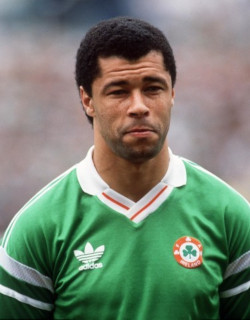
Birth of Professional Footballer Paul McGrath

Paul McGrath, former professional footballer for St. Patrick’s Athletic F.C., Manchester United F.C., Aston Villa F.C., Derby County F.C., and the Republic of Ireland national football team, is born in Greenford, Middlesex on December 4, 1959.

McGrath is born to an Irish mother and a Nigerian father. His father disappears soon after his conception. His mother, Betty McGrath, is terrified that her father will find out she had become pregnant outside marriage and in an interracial relationship. She travels in secret to London to have her child, who is considered illegitimate, and gives him up for fostering when he is four weeks old. When he is five years old, the family he had been fostered by comes to Betty saying they cannot control him. Betty places him into an orphanage.

McGrath begins as a schoolboy with Pearse Rovers and plays junior football for Dalkey United. While at the latter, he attracts the attention of Manchester United scout Billy Behan. Before becoming a full-time professional with League of Ireland club St. Patrick’s Athletic in 1981, he briefly works as an apprentice metal worker and a security guard in Dublin.

McGrath makes his debut in a League of Ireland Cup clash with the Shamrock Rovers F.C. in August at Richmond Park. He ultimately excels at St. Patrick’s, earning the nickname “The Black Pearl of Inchicore” and receiving the PFAI Players’ Player of the Year Award in his first and only season, scoring four goals in 31 total appearances.

In 1982, McGrath moves to Manchester United, then managed by Ron Atkinson. He misses out on a place in the FA Cup victory over Brighton & Hove Albion F.C. the following year. He is named man of the match for the 1985 FA Cup Final, which United wins 1–0 against Everton F.C. In his early years at Manchester United, he is frequently used as a midfielder, changing to defender while still at Old Trafford.

In 1985–86, it appears that McGrath is on course to pick up a league title medal after United wins their first 10 league games of the season, but injuries to key players including Bryan Robson soon take their toll on the side and they eventually finish fourth in the table, 12 points behind champions Liverpool F.C. Despite a dismal start to the 1986–87 season and a managerial change, McGrath remains a regular member of the first team. United finishes second behind Liverpool in the league a year later.

By the 1988–89 season, McGrath is struggling with knee injuries and is becoming a less regular member of the first team. His relationship with manager Alex Ferguson is becoming strained, as McGrath’s alcohol addiction and physical problems lead to United offering him a retirement package of £100,000. He refuses and Ferguson begins to inform clubs of his availability. Aston Villa’s offer is accepted and McGrath signs on August 3, 1989 for a fee of £400,000.

While at Aston Villa, McGrath plays some of the best football of his career, despite recurrent knee problems. Villa comes close to winning the title in his first season, finishing second to Liverpool. In the inaugural season of the Premier League (1992-93), Aston Villa again finishes as runners-up, behind Manchester United. As a sign of the regard he is now held in by his fellow professionals, McGrath wins the PFA Players’ Player of the Year award at the end of the season. He wins his first trophy with Villa, defeating Manchester United in the 1993–94 Football League Cup. In 1996 he wins a second League Cup for Villa. By the end of his Villa career he has chalked up 323 appearances for the club.

McGrath departs Aston Villa in the autumn of 1996, leaving a legacy as one of the greatest players in the club’s history. He is sold to Derby County for £200,000 and helps the newly promoted Rams finish 12th in its first Premier League season. He then drops down a division to sign for Sheffield United F.C. in the summer of 1997. He plays his final game as a professional for Sheffield United against Ipswich Town F.C. on November 9, 1997. He officially retires at the end of the season.

In McGrath’s international career he wins his first full cap against Italy in 1985, last playing 12 years later, against Wales. During that time, he is often regarded as the single most influential player Ireland has in the national team’s glory days.

In McGrath’s international career he is a major part of the breakthrough of Ireland’s national team of the late 1980s and early 1990s. During the early part of Jack Charlton‘s era, he plays as a defensive midfielder, due to the wealth of talent Ireland has in defence. In UEFA Euro 1988, as the national side first qualifies for an international tournament, he is present in the 1–0 group stage win against England.

In 1990, Ireland qualifies for its first FIFA World Cup, eventually reaching the quarter-finals, where they lose to Italy 1-0, with McGrath ever present in the lineups. He captains the team four times in 1992 after the retirement of Mick McCarthy, and ignores a painful shoulder virus to play in the 1994 FIFA World Cup.

In Ireland’s opening game of the 1994 World Cup, a 1–0 win against favourites Italy, in a perfect example of his commitment to the game, McGrath puts up an astonishing defensive performance in spite of excruciating knee problems. Even after his retirement from international football in 1997, he is still regarded today as one of the greatest players ever to put on Ireland’s green shirt.

Upon retiring, McGrath settles in Monageer, County Wexford. In 2004, one year after being taken to court, charged with a breach of the peace, he returns to the football world after five years, moving to Waterford F.C. in Ireland as director of football.

In 2011, McGrath launches a singing career with a cover version of the Gerry Goffin and Carole King song “Goin’ Back.” The recording is followed by the planning of an album of covers by the footballer, with a percentage of the album’s proceeds going to the Acquired Brain Injury Foundation and the Cystic Fibrosis Foundation of Ireland.