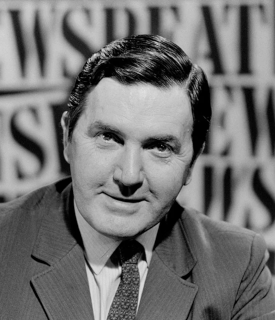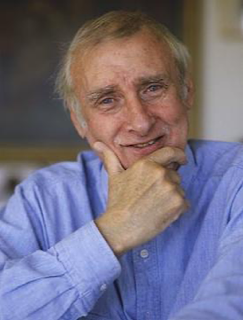
Terence Alan “Spike” Milligan, Anglo-Irish comedian, writer, musician, poet, playwright and actor, is born on April 16, 1918, in Ahmednagar, India. He leads the comic troupe featured on the 1950s BBC radio hit The Goon Show. His anarchic sense of absurdity and unique comic genius make him a model for succeeding generations of comedians and paves the way for the Monty Python brand of alternative comedy.
Milligan is the son of an Irish father, Leo Alphonso Milligan, a regimental sergeant major in the British Indian Army, and English mother, Florence Mary Winifred (née Kettleband). He is raised in India and Burma (Myanmar). He is educated at the Convent of Jesus and Mary, Poona, and later at St. Paul’s High School, Rangoon. He moves to England with his family in 1933. He serves in the army during World War II and, when he is wounded in combat, begins a struggle with manic-depressive illness that lasts the rest of his life. Toward the end of the war, he meets Harry Secombe, and they work together entertaining the troops. After the war the pair, along with Peter Sellers and Michael Bentine, begin spending time at the Grafton Arms pub, where they develope their comedy routines. BBC radio begins broadcasting the group’s work in 1951, as Crazy People, and in 1952 it is renamed The Goon Show. As such it continues until early 1960 (though Bentine soon leaves the show) and becomes a cult classic.
Milligan later acts onstage and in small parts in movies—including Monty Python’s Life of Brian (1979)—and writes numerous books of poems, war memoirs, the play The Bedsitting Room (with John Antrobus; first performed 1962), and a number of television series. He also supports a multitude of causes, especially those involving the environment. Because his father is Irish and he is born in India—and despite his years of military service—the British government does not consider him a citizen. Rather than take an oath of allegiance, he takes Irish citizenship. Nonetheless, he is made an honorary Commander of the British Empire in 1992 and is given an honorary knighthood in 2000.
Milligan dies from kidney failure, at the age of 83, on February 27, 2002, at his home on Dumb Woman’s Lane near Rye, East Sussex. On the day of his funeral, March 8, 2002, his coffin is carried to St. Thomas Church in Winchelsea, East Sussex, and is draped in the flag of Ireland. He had once quipped that he wanted his headstone to bear the words: “I told you I was ill.” He is buried at St. Thomas’ churchyard but the Chichester diocese refuses to allow this epitaph. A compromise is reached with the Gaelic translation of “I told you I was ill,” Dúirt mé leat go mé breoite, and in English, “Love, light, peace.” The additional epitaph Grá mhór ort Shelagh can be read as “Great love for you Shelagh.”
According to a letter published in the Rye and Battle Observer in 2011, Milligan’s headstone is removed from St. Thomas’ churchyard in Winchelsea and moved to be alongside the grave of his wife, but is later returned.