seamus dubhghaill

Promoting Irish Culture and History from Little Rock, Arkansas, USA


Leave a comment

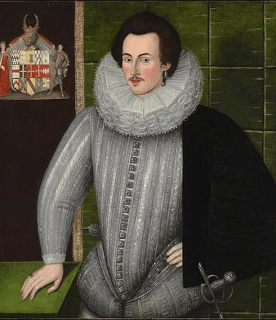
Charles Blount, 8th Baron Mountjoy, Becomes Lord Deputy of Ireland

Charles Blount, 8th Baron Mountjoy, English nobleman and soldier, becomes Lord Deputy of Ireland under Queen Elizabeth I on January 21, 1600.

Blount is born in 1563, the second son of James, 6th Baron Mountjoy, and Catherine, only daughter of Sir Thomas Legh. He is among the most distinguished of the family, succeeding as 8th Baron Mountjoy on the death in 1594 of his unmarried elder brother William, 7th Baron Mountjoy. The good fortune of his youthful and handsome looks find favour with Queen Elizabeth I which arouses the jealousy of Robert Devereux, 2nd Earl of Essex, leading to a duel between the two courtiers, who later become close friends.

Blount is returned to the House of Commons as MP for St. Ives, Cornwall in 1584 and for Bere Alston in 1586 and 1593, before entering the House of Lords in 1594. Between 1586 and 1598, he spends most of his time on the Continent, serving in the Netherlands and Brittany. He joins Lord Essex and Sir Walter Raleigh in their expedition to the Azores in 1597, along with his distant cousin, Sir Christopher Blount.

The downfall of Lord Essex does not damage Blount’s career. After the failure of his rebellion, Essex shocks many by denouncing his sister Penelope, who is Blount’s mistress, as a traitor, which inevitably raises the question of his own possible involvement. But the Crown, anxious to retain Blount’s services, and also to show as much leniency as possible to the defeated rebels, simply ignore the accusation.

On February 24, 1600, Blount lands in Ireland as Lord Deputy following Lord Essex and in the ensuing years brings the Nine Years’ War to an end. The leader of the rebellion, Hugh O’Neill, Earl of Tyrone, writes about Blount’s “refined manners” that he would lose a whole season of campaigning “while waiting until breakfast is prepared to his mind!” Despite this, Blount proves that he is quite qualified to pursue the war.

In early 1600, Blount dispatches Sir Henry Docwra with an army of 4,200 troops to land at Culmore to erect a fortress commanding the shores of Lough Foyle in the northwest of Ulster. To prevent Hugh O’Neill from sending a strong force to repulse Dowcra’s forces, Blount advances in force from Dublin to Newry causing O’Neill to fear a southern advance into Tyrone.

Blount aims to avoid the mistakes of previous Lords-Deputy. After the Battle of Moyry Pass, he has it cleared, and a garrison is established there. It had long been a problem for English forces advancing into Ulster from the south. He also establishes posts with garrisons at Mountnorris and Armagh.

On July 13, 1601, Blount and his army along with Turlough McHenry O’Neill of the Fews who had recently switched to the English side in the war, have a stand-off with Hugh O’Neill’s forces at the River Blackwater. After a few shots in vain from either side, O’Neill’s forces withdraw, and Blount sends his forces to occupy the ruined Blackwater fort destroyed by O’Neill in 1595. Later O’Neill’s forces attack Blount’s camp before withdrawing. In response, the Lord-Deputy sends his forces across the river where they find strong artificially fortified fords, which would have held out against the English.

By July 15, 1601, the Lord-Deputy has secured the surrender of O’Neill’s ally Hugh Magennis. That month, he has a new fort near the old Blackwater fort erected.

Blount reports to the council in England that O’Neill is determined to prevent his forces from advancing into Tyrone and toward Dungannon. As such, he initiates a policy of burning large quantities of corn to induce a famine to drive the rebels out of their strongholds.

Blount sets about trying to entice Hugh’s forces to come out and attack by fetching some materials for the new fort from the Tyrone side of the river as well as burning more corn. Further skirmishes between Blount and O’Neill’s forces ensue during the summer of 1601.

Spanish forces land in Munster in August 1601, forcing Blount to send his forces southward leaving O’Neill remaining in his unbroken heartland of Tyrone. The Spanish arrival culminates in the Siege of Kinsale that December, which sees a major defeat of the rebels and their allies.

O’Neill during this time has also moved south to assist some of his allies, however, after some serious defeats at the hands of the forces of Richard Burke, 4th Earl of Clanricarde of Connacht, he is in no place to offer any effective resistance once Blount marches once more to Tyrone in the summer of 1602.

Blount advances to the location he found the previous summer at the River Blackwater, which commands safe and secure passage into Tyrone, previously inaccessible, and sets about erecting a new fort. Having observed this, O’Neill burns his capital at Dungannon and flees to his last refuge in Glenconkeyne.

Advancing northward through Tyrone, Blount erects a fort in the townland of Magheralamfield, afterward known as Mountjoy Castle. He also christens the new fort at the Blackwater Charlemont Fort after himself.

Once in Tyrone, Blount carries out a campaign of devastation throughout it resulting in the mass hunting of rebels, spoiling of corn, the burning of houses and the killing of churls so as to force the submission of O’Neill and his remaining allies. Most symbolically, Blount has the inauguration site of the O’Neill’s at Tullyhogue Fort destroyed.

On March 30, 1603, six days after the death of Elizabeth and the accession of James I, O’Neill makes peace with Blount, signing the Treaty of Mellifont. Blount continues in office with the more distinguished title of Lord-Lieutenant. He declares amnesty for the rebels and grants them honourable terms, which causes some severe criticism from England. He shows similar moderation in putting down the abortive risings in Cork, Waterford and Wexford, where the aldermen, apparently with some vague idea of gaining greater toleration for Roman Catholics, refuse to proclaim the new King. In Cork, three insurgents are hanged after a summary trial, but the rest are acquitted or pardoned.

As part of the Plantation of Ulster, the majority of the barony of Loughinsholin is detached from County Tyrone and made part of the newly created County Londonderry. The rest of Loughinsholin along with the northern parts of Dungannon barony are merged to create the short-lived barony of Mountjoy. It is later amalgamated with the barony of Dungannon.

On his return to England, Blount serves as one of Sir Walter Raleigh’s judges in 1603, and in the same year King James I appoints him Master-General of the Ordnance as well as creating him Earl of Devonshire, granting him extensive estates. He is one of the founder members of the Spanish Company re-founded by royal charter in 1605.

Toward the end of Blount’s life, on December 26, 1605, at Wanstead House near London, in a ceremony conducted by his chaplain William Laud, afterward Archbishop of Canterbury, he marries his long-time mistress Lady Penelope, formerly wife of Robert Rich, 3rd Baron Rich (later 1st Earl of Warwick) and sister of Robert Devereux, 2nd Earl of Essex.

Blount leaves no legitimate children, and so his hereditary titles become extinct at his death on April 3, 1606, at Savoy House, London.

Leave a comment

Birth of Lady Louisa Conolly

Lady Louisa Conolly, an English-born Irish noblewoman, is born on December 5, 1743, perhaps at Goodwood House in Westhampnett, Chichester, West Sussex, England. She is the third of the famous Lennox sisters and is notable among them for leading a wholly uncontroversial life filled with good works.

Born Lady Louisa Augusta Lennox, she and her sisters are portrayed in Stella Tillyard‘s book Aristocrats: Caroline, Emily, Louisa, and Sarah Lennox and in the BBC television series based on it. The Lennox sisters are the daughters of Charles Lennox, 2nd Duke of Richmond, and Lady Sarah Cadogan. The 2nd Duke’s father, Charles Lennox, 1st Duke of Richmond, is an illegitimate son of King Charles II of England.

Conolly is still a child when her parents die within a year of each other in 1750 and 1751. After this, she is brought up by her much older sister Emily FitzGerald, Duchess of Leinster, in Kildare. In 1758, at age 15, she marries Thomas Conolly (1738–1803), grand-nephew of William Conolly, Speaker of the Irish House of Commons. Her husband, a wealthy landowner and keen horseman, is also a successful politician who is elected to Parliament as early as 1759. The couple lives in the Palladian mansion Castletown House in County Kildare, the decoration of which she directs throughout the 1760s and 1770s. The Conolly summer residence, Cliff House, on the banks of the River Erne between Belleek, County Fermanagh, and Ballyshannon, County Donegal, is demolished as part of the Erne Hydroelectric scheme, which constructs the Cliff and Cathaleen’s Fall hydroelectric power stations. Cliff hydroelectric power station is constructed on the site of Cliff House and is commissioned in 1950.

The Conollys, themselves unhappily childless, at that point take up the welfare of young children from disadvantaged backgrounds as a lifelong project, contributing both money and effort towards initiatives which enable foundlings and vagabonds to acquire productive skills and support themselves. They develop one of the first Industrial Schools where boys learn trades, and she takes active personal interest in mentoring the students. In middle age, she also virtually adopts her niece Emily Napier (1783–1863), the daughter of her sister Lady Sarah Lennox. Emily, who spends long months with her aunt in Kildare, marries Sir Henry Bunbury, 7th Baronet, and moves to Suffolk, although she remains close to her aunt until her death.

Thomas Conolly dies on April 27, 1803. Upon his death, a major part of his estates, which includes Wentworth Castle, passes to a distant relative, Frederick Vernon. Conolly receives the Castletown House and estate, as also certain liquid investments and valuable urban properties, which enable her to live in comfort and continue her activities until her own death on August 6, 1821, of an abscess on her hip. She wills these substantial properties to a great-nephew, Edward Michael Pakenham, grandson of Thomas’ sister Harriet, later the MP for Donegal.

In 1999, a 6-part miniseries called Aristocrats, based on the lives of Conolly and her sisters, airs in the UK.

(Pictured: “Lady Louisa Conolly” by George Romney, 1776)


Leave a comment

Murder of William de Burgh, 3rd Earl of Ulster

William Donn de Burgh, 3rd Earl of Ulster and 4th Baron of Connaught, Irish noble who is Lord Lieutenant of Ireland (1331–32), is murdered at the age of 20 on June 6, 1333. His murder leads to the Burke Civil War.

De Burgh is born on September 17, 1312, the grandson of Richard Óg de Burgh, 2nd Earl of Ulster, via his second son, John, who dies in 1313. He is also Lord of Connaught in Ireland, and holds the manor of Clare, Suffolk.

De Burgh is summoned to Parliament from December 10, 1327 to June 15, 1328 by writs addressed to Willelmo de Burgh. In 1331 he is appointed Lord Lieutenant of Ireland for a year.

De Burgh marries, before November 16, 1327 (by a Papal Dispensation dated May 1, 1327), Maud of Lancaster, daughter of Henry, 3rd Earl of Lancaster and Maud Chaworth. They have only one surviving child, Elizabeth de Burgh, 4th Countess of Ulster, who is 13 months old when her father is murdered. She marries Lionel of Antwerp, third son of Edward III of England. Maud remarries Sir Ralph Ufford, Justiciar of Ireland (1344–46), and has further issue. She is said to have great influence over her second husband.

In February 1332, at Greencastle, near the mouth of Lough Foyle, de Burgh has his cousin, Sir Walter Liath de Burgh, starved to death. In revenge, Sir Walter’s sister, Gylle de Burgh, wife of Sir Richard de Mandeville, plans his assassination.

On June 6, 1333, William de Burgh is killed by de Mandeville, Sir John de Logan, and others. The Annals of the Four Masters note that “William Burke, Earl of Ulster, was killed by the English of Ulster. The Englishmen who committed this deed were put to death, in divers ways, by the people of the King of England; some were hanged, others killed, and others torn asunder, in revenge of his death.”

De Burgh’s widow, Maud, flees to England, where she remarries, is again widowed in 1346, and then becomes an Augustinian canoness at Campsey Priory in Suffolk, where she is buried. Upon his death, the various factions of the de Burghs, now called Burke, began the Burke Civil War for supremacy.

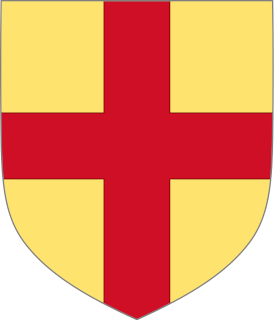
(Pictured: Arms of the House of de Burgh)


Leave a comment

Birth of Physicist & Engineer William Thomson

William Thomson, 1st Baron Kelvin, Scots Irish mathematical physicist and engineer, is born in Belfast on June 26, 1824.

At the University of Glasgow, he does important work in the mathematical analysis of electricity and formulation of the first and second laws of thermodynamics and does much to unify the emerging discipline of physics in its modern form. He works closely with mathematics professor Hugh Blackburn in his work. He also has a career as an electrical telegraph engineer and inventor, which propels him into the public eye and ensures his wealth, fame and honour. For his work on the transatlantic telegraph project, he is knighted in 1866 by Queen Victoria, becoming Sir William Thomson. He has extensive maritime interests and is most noted for his work on the mariner’s compass, which had previously been limited in reliability.

Absolute temperatures are stated in units of kelvin in his honour. While the existence of a lower limit to temperature (absolute zero) is known prior to his work, Thomson is widely known for determining its correct value as approximately −273.15 degree Celsius or −459.67-degree Fahrenheit.

Thomson is ennobled in 1892 in recognition of his achievements in thermodynamics, and of his opposition to Irish Home Rule, becoming Baron Kelvin, of Largs in the County of Ayr. He is the first British scientist to be elevated to the House of Lords. The title refers to the River Kelvin, which flows close by his laboratory at the University of Glasgow. His home is the imposing red sandstone mansion Netherhall, in Largs. Despite offers of elevated posts from several world-renowned universities, Thomson refuses to leave Glasgow, remaining Professor of Natural Philosophy for over 50 years, until his eventual retirement from that post. The Hunterian Museum at the University of Glasgow has a permanent exhibition on the work of Thomson including many of his original papers, instruments and other artifacts such as his smoking pipe.

Always active in industrial research and development, he is recruited around 1899 by George Eastman to serve as vice-chairman of the board of the British company Kodak Limited, affiliated with Eastman Kodak.

In November 1907 he catches a chill, and his condition deteriorates until he dies at his Scottish residence, Netherhall, in Largs on December 17.

Lord Kelvin is an elder of St. Columba’s Parish Church (Church of Scotland) in Largs for many years. It is to that church that his remains are taken after his death. Following the funeral service, his body is taken to Bute Hall in his beloved University of Glasgow for a service of remembrance before being taken to London for interment at Westminster Abbey, near the final resting place of Sir Isaac Newton.