seamus dubhghaill

Promoting Irish Culture and History from Little Rock, Arkansas, USA


Leave a comment

Death of Physicist George Johnstone Stoney

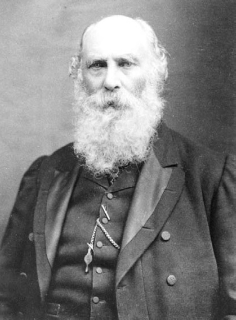
George Johnstone Stoney FRS, Irish physicist, dies on July 5, 1911, at Notting Hill, London, England. He is most famous for introducing the term “electron” as the “fundamental unit quantity of electricity.” He introduces the concept, though not the word, as early as 1874, initially naming it “electrine,” and the word itself comes in 1891. He publishes around 75 scientific papers during his lifetime.

Stoney is born on February 15, 1826, at Oakley Park, near Birr, County Offaly, in the Irish Midlands, the son of George Stoney and Anne (née Bindon Blood). His only brother is Bindon Blood Stoney, who becomes chief engineer of the Dublin Port and Docks Board. The Stoney family is an old-established Anglo-Irish family. During the time of the famine (1845–52), when land prices plummet, the family property is sold to support his widowed mother and family. He attends Trinity College Dublin (TCD), graduating with a BA degree in 1848. From 1848 to 1852 he works as an astronomy assistant to William Parsons, 3rd Earl of Rosse, at Birr Castle, County Offaly, where Parsons had built the world’s largest telescope, the 72-inch Leviathan of Parsonstown. Simultaneously he continues to study physics and mathematics and is awarded an MA by TCD in 1852.

From 1852 to 1857, Stoney is professor of physics at Queen’s College Galway. From 1857 to 1882, he is employed as Secretary of the Queen’s University of Ireland, an administrative job based in Dublin. In the early 1880s, he moves to the post of superintendent of Civil Service Examinations in Ireland, a post he holds until his retirement in 1893. He continues his independent scientific research throughout his decades of non-scientific employment duties in Dublin. He also serves for decades as honorary secretary and then vice-president of the Royal Dublin Society (RDS), a scientific society modeled after the Royal Society of London and, after his move to London in 1893, he serves on the council of that society as well. Additionally, he intermittently serves on scientific review committees of the British Association for the Advancement of Science from the early 1860s.

Stoney publishes seventy-five scientific papers in a variety of journals, but chiefly in the journals of the Royal Dublin Society. He makes significant contributions to cosmic physics and to the theory of gases. He estimates the number of molecules in a cubic millimeter of gas, at room temperature and pressure, from data obtained from the kinetic theory of gases. His most important scientific work is the conception and calculation of the magnitude of the “atom of electricity.” In 1891, he proposes the term “electron” to describe the fundamental unit of electrical charge, and his contributions to research in this area lays the foundations for the eventual discovery of the particle by J. J. Thomson in 1897.

Stoney’s scientific work is carried out in his spare time. A heliostat he designed is in the Science Museum Group collection. He is elected a Fellow of the Royal Society in June 1861.

Stoney proposes the first system of natural units in 1881. He realizes that a fixed amount of charge is transferred per chemical bond affected during electrolysis, the elementary charge e, which can serve as a unit of charge, and that combined with other known universal constants, namely the speed of light c and the Newtonian constant of gravitation G, a complete system of units can be derived. He shows how to derive units of mass, length, time and electric charge as base units. Due to the form in which Coulomb’s law is expressed, the constant 4πε0 is implicitly included, ε0 being the vacuum permittivity.

Like Stoney, Max Planck independently derives a system of natural units (of similar scale) some decades after him, using different constants of nature.

Hermann Weyl makes a notable attempt to construct a unified theory by associating a gravitational unit of charge with the Stoney length. Weyl’s theory leads to significant mathematical innovations, but his theory is generally thought to lack physical significance.

Stoney marries his cousin, Margaret Sophia Stoney, by whom he has had two sons and three daughters. One of his sons, George Gerald Stoney FRS, is a scientist. His daughter Florence Stoney OBE is a radiologist while his daughter Edith is considered to be the first woman medical physicist. His most scientifically notable relative is his nephew, the Dublin-based physicist George Francis FitzGerald. He is second cousin of the grandfather of Ethel Sara Turing, mother of Alan Turing.

After moving to London, Stoney lives first at Hornsey Rise, north London, before moving to 30 Chepstow Crescent, Notting Hill, west London. In his later years illness confines him to a single floor of the house, which is filled with books, papers, and scientific instruments, often self-made. He dies at his home on July 5, 1911. His cremated ashes are buried in St. Nahi’s Church, Dundrum, Dublin.

Stoney receives an honorary Doctor of Science (D.Sc.) from the University of Dublin in June 1902. Also in 1902, he is elected as a member to the American Philosophical Society. The street that he lived on in Dundrum is later renamed Stoney Road in his memory.
Craters on Mars and the Moon are named in his honour.


Leave a comment

Death of Patrick Mayhew, British Barrister, Politician & Northern Ireland Secretary

Patrick Barnabas Burke Mayhew, Baron Mayhew of Twysden, PC, QC, DL, British barrister, politician and Secretary of State for Northern Ireland, who serves during a critical period in the Northern Ireland peace process, dies at his home in Kent, England, on June 25, 2016. He is a key figure in the December 1993 Downing Street Declaration which leads to the Provisional Irish Republican Army (IRA) ceasefire on August 31, 1994

Mayhew is born on September 11, 1929. His father, George Mayhew, is a decorated army officer turned oil executive. His mother, Sheila Roche, descendant of members of the Anglo-Irish Protestant ascendancy, is a relative of James Roche, 3rd Baron Fermoy, an Irish National Federation MP for East Kerry. Through his father, Mayhew is descended from the Victorian social commentator Henry Mayhew. He is educated at Tonbridge School, an all boys public school in Tonbridge, Kent.

Mayhew then serves as an officer in the 4th/7th Royal Dragoon Guards, studies law at Balliol College, Oxford, and is president of the Oxford University Conservative Association (OUCA) and of the Oxford Union. He is called to the Bar by the Middle Temple in 1955.

In 1963, Mayhew marries The Rev. Jean Gurney, and they have four sons.

Mayhew contests Dulwich at the 1970 United Kingdom general election, but the incumbent Labour Party member, Samuel Silkin, beats him by 895 votes. He is Member of Parliament (MP) for Tunbridge Wells from its creation at the February 1974 United Kingdom general election, standing down at the 1997 United Kingdom general election.

Mayhew is Under Secretary of Employment from 1979 to 1981, then Minister of State at the Home Office from 1981 to 1983. After this, he serves as Solicitor General for England and Wales from 1983 to 1987, and then Attorney General for England and Wales and simultaneously Attorney General for Northern Ireland from 1987 to 1992.

Mayhew is Secretary of State for Northern Ireland from 1992 to 1997, the longest anyone has served in this office.

Mayhew is one of only five Ministers (Tony Newton, Kenneth Clarke, Malcolm Rifkind and Lynda Chalker are the others) to serve throughout the whole 18 years of the premiership of Margaret Thatcher and John Major. This represents the longest uninterrupted Ministerial service in Britain since Henry John Temple, 3rd Viscount Palmerston, in the early 19th century.

Mayhew is knighted in 1983. On June 1997, he is given a life peerage as Baron Mayhew of Twysden, of Kilndown in the County of Kent. He retires from the House of Lords on June 1, 2015.

Mayhew suffers from cancer and Parkinson’s disease in his later years. He dies at the age of 86 on June 25, 2016, in his home in Kent.

Mayhew’s son, The Honourable Henry Mayhew, appears in the fourth episode of the series The Secret History Of Our Streets, discussing life in the Portland Road, Notting Hill, London. Another son, Tristram, co-founds the outdoor adventure company Go Ape. His son Jerome is the Conservative Party MP for the constituency of Broadland in Norfolk since December 2019.


Leave a comment

Death of Feargus Edward O’Connor, Irish Chartist Leader

Zoomify http://137.73.123.18/ncse/liv/zoomify/ns_por13 x=1200 y=1734 maxzoom=3

Feargus Edward O’Connor, Irish Chartist leader and advocate of the Land Plan, which seeks to provide smallholdings for the labouring classes, dies in Notting Hill, West London, England on August 30, 1855. He succeeds in making Chartism the first specifically working-class national movement in Great Britain. A highly charismatic figure, he is admired for his energy and oratory but was criticised for alleged egotism.

O’Connor is born on July 18, 1796, in Connorville house, near Castletown-Kinneigh in west County Cork, into a prominent Irish Protestant family. He is originally christened Edward Bowen O’Connor, but his father, the Irish nationalist politician Roger O’Connor, chooses to call him Feargus. He is educated mainly at Portarlington Grammar School and has some elementary schooling in England.

O’Connor, who claims royal descent from the ancient kings of Ireland, practices law but exchanges law for politics when he is elected to the British House of Commons as Member of Parliament for County Cork, as a Repeal candidate rather than a Whig. Unseated in 1835, he turns to radical agitation in England, although he continues to press Irish grievances and to seek Irish support. As a result of his humour, invective, and energy, he becomes the best-known Chartist leader and the movement’s most popular speaker. His journal, The Northern Star, founded in 1837, gains a wide circulation.

O’Connor’s methods and views alienate other Chartist leaders, particularly William Lovett, but in 1841, after spending a year in prison for seditious libel, he acquires undisputed leadership of the Chartists. Failing to lead the movement to victory and vacillating in his attitude toward the middle class and toward the People’s Charter, a six-point bill drafted and published in May 1838, he begins to lose power, although he is remarkably elected to Parliament for Nottingham in 1847, defeating Thomas Benjamin Hobhouse.

The failure of the People’s Charter in 1848 marks the beginning of the end for O’Connor, whose egocentricity is already bordering on madness. In the spring of 1852, he visits the United States, where his behaviour leaves no doubt that he is not a well man. It is possible that he is in the early stages of general paralysis of the insane, brought on by syphilis.

In the House of Commons in 1852 O’Connor strikes three fellow MPs, one of them Sir Benjamin Hall, a vocal critic of the Land Plan. Arrested by the Deputy Sergeant-at-Arms, he is sent by his sister to Dr. Thomas Harrington Tuke‘s private Manor House Asylum in Chiswick, where he remains until 1854, when he is removed to his sister’s house. He dies on August 30, 1855, at 18 Albert Terrace, Notting Hill Gate. He is buried in Kensal Green Cemetery on September 10. No fewer than 40,000 people witness the funeral procession. Most Chartists prefer to remember his strengths rather than his shortcomings.

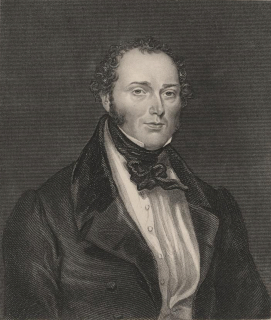
(Pictured: Stipple engraving portrait of the Chartist leader Feargus Edward O’Connor by an unknown artist, mid 19th century, published in the Northern Star in December 1837)


Leave a comment

Live Aid

live-aid-logo

Live Aid, a dual-venue benefit concert organised primarily by Dublin-born Bob Geldof, is held on July 13, 1985. The event is organised by Geldof and Midge Ure to raise funds for relief of the ongoing Ethiopian famine. Billed as the “global jukebox,” the event is held simultaneously at Wembley Stadium in London, England, (attended by 72,000 people) and John F. Kennedy Stadium in Philadelphia, Pennsylvania, (attended by about 100,000 people).

On the same day, concerts inspired by the initiative take place in other countries, such as the Soviet Union, Canada, Japan, Yugoslavia, Austria, Australia and West Germany. It was one of the largest-scale satellite link-ups and television broadcasts of all time. An estimated global audience of 1.9 billion, across 150 nations, watch the live broadcast. If accurate, this would be nearly 40% of the world population at the time.

In October 1984, images of millions of people starving to death in Ethiopia were shown in the UK in Michael Buerk‘s BBC News reports on the 1984 famine. The report shocks Britain, motivating its citizens to inundate relief agencies, such as Save the Children, with donations, and to bring the world’s attention to the crisis in Ethiopia. Bob Geldof also sees the report, and calls Midge Ure from Ultravox, and together they quickly co-write the song, “Do They Know It’s Christmas?” in the hope of raising money for famine relief. Geldof then contacts colleagues in the music industry and persuades them to record the single under the title “Band Aid” for free. On November 25, 1984, the song is recorded at SARM West Studios in Notting Hill, London and is released four days later. It stays at number-one on the UK Singles Chart for five weeks, is Christmas number one, and becomes the fastest-selling single ever in Britain and raises £8 million, rather than the £70,000 Geldof and Ure had initially expected.

The 1985 Live Aid concert is conceived as a follow-up to the successful charity single. The idea to stage a charity concert to raise more funds for Ethiopia originally comes from Boy George, the lead singer of Culture Club. On Saturday, December 22, 1984, an impromptu gathering of some of the other artists from Band Aid join Culture Club on stage at the end of their concert at Wembley Stadium for an encore of “Do They Know It’s Christmas?” George is so overcome by the occasion he tells Geldof that they should consider organising a benefit concert.

The concert begins at noon at Wembley Stadium in London. It continues at John F. Kennedy Stadium in the United States, starting at 8:51 EDT. The overall concert continues for just over 16 hours, but since many artists’ performances are conducted simultaneously in Wembley and JFK, the total concert’s length is much longer.

Throughout the concerts, viewers are urged to donate money to the Live Aid cause. Three hundred phone lines are manned by the BBC, so that members of the public can make donations using their credit cards. The phone number and an address that viewers can send cheques to are repeated every twenty minutes.

The following day, news reports state that between £40 and £50 million had been raised. It is now estimated that around £150m has been raised for famine relief as a direct result of the concerts. Geldof mentions during the concert that the Republic of Ireland had given the most donations per capita, despite being in the threat of a serious economic recession at the time. The single largest donation comes from the Al Maktoum, who is part of the ruling family of Dubai, who donates £1M during a phone conversation with Geldof.