seamus dubhghaill

Promoting Irish Culture and History from Little Rock, Arkansas, USA


Leave a comment

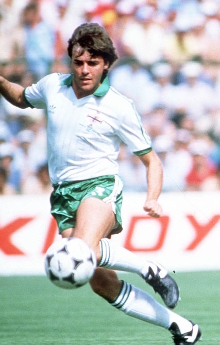
Birth of Mal Donaghy, Former Northern Ireland Footballer

Malachy Martin Donaghy, former Northern Ireland international footballer who also plays for Luton Town F.C. and Manchester United F.C., is born in Belfast, Northern Ireland, on September 13, 1957. He is the manager of the Northern Ireland national under-19 football team from 2000-2008.

Originally from west Belfast, Donaghy begins his football career as a goalkeeper with little-known Down and Connor League side team St. Agnes before moving on to play as an outfield player for works team Post Office Social Club. After barely six months, he is on the move again, this time joining Amateur League side Cromac Albion, where his blossoming talent is spotted by then Larne F.C. boss Brian Halliday.

Donaghy’s rapid rise in the game continues when, after just 20 matches with the Inver Park club, he is transferred to Luton Town F.C. in June 1978 for a fee of £20,000.

Donaghy spends ten years at Luton Town F.C., overseeing the most successful era of their history to date. He collects a Second Division title winner’s medal in 1982, enabling him to experience First Division football for the first time. He helps Luton Town F.C. retain their First Division status and is a key part of the team that finishes a club record high of seventh in the 1986–87 season. In 1987–88, he helps Luton Town F.C. win their first major trophy as they achieve a shocking 3–2 win over Arsenal F.C. in the 1988 Football League Cup Final.

In October 1988, Donaghy departs from Kenilworth Road in a £650,000 move to his boyhood heroes Manchester United F.C. It is at the time a big risk for Alex Ferguson to pay out a large sum of money for a 31-year-old, but Donaghy repays the United manager’s faith in him with some consistent performances in not only his favoured central defensive position but also as a full-back.

Immediately after joining United, Donaghy is the club’s first choice left-back for the 1988–89 season, missing only the League Cup game for which he is cup-tied. However, his opportunities are limited in the 1989–90 season, and he is unable to make even the substitutes bench for the 1990 FA Cup final triumph over Crystal Palace F.C. However, he does make the substitutes bench for the 1991 European Cup Winners’ Cup final triumph.

United are First Division runners-up in 1991–92 and win their first-ever League Cup, but Donaghy’s first-team chances continue to be restricted, and he is also left out of the side that beats Nottingham Forest F.C. in the League Cup final.

Donaghy’s next move is in August 1992 when, just a month short of his 35th birthday, Chelsea F.C. manager Ian Porterfield pays £100,000 for his services. He helps Chelsea finish 11th in the inaugural Premier League season and helps them reach the 1994 FA Cup final, although he does not make the squad for the team that loses 4–0 to double-winners Manchester United F.C. At the end of the season, he announces his retirement from club football.

Donaghy makes his final appearance for Northern Ireland against the Mexico national football team in Miami in June 1994, three months before his 37th birthday.

Shortly after his playing career ends, Donaghy returns to the province with his family and after a brief spell as manager at Newry City F.C., he has stints as a coach with Cliftonville F.C. and as a Youth Development Officer back on his home pitch with Donegal Celtic F.C. In 2000, he is appointed manager for the Northern Ireland national under-19 team. He serves in this capacity until 2008.

The first of Donaghy’s 91 international caps comes in May 1980 at Windsor Park in the 1–0 British Home Championship victory over Scotland. He further enhances his reputation during the 1982 and 1986 World Cup finals. In the former tournament, he plays in four of Northern Ireland’s five games. He is sent off after 60 minutes of the famous 1–0 win over Spain in Valencia, for the offence of shoving Spain’s José Antonio Camacho, but returns for Northern Ireland’s final match, a 4–1 defeat by France in Madrid.


Leave a comment

Birth of Actress & Author Pauline McLynn

Pauline McLynn, Irish character actress and author, is born in Sligo, County Sligo, on July 11, 1962. She is best known for her roles as Mrs. Doyle in the Channel 4 sitcom Father Ted, Libby Croker in the Channel 4 comedy drama Shameless, Tip Haddem in the BBC One comedy Jam & Jerusalem, and Yvonne Cotton in the BBC soap opera EastEnders.

McLynn grows up with two younger brothers in Galway. She studies History of Art and Modern English at Trinity College Dublin but is more heavily involved in the college’s drama society. She graduates with an MA.

Although McLynn is in her early thirties when playing Mrs. Doyle in Father Ted, makeup is used to make her look far older to fit the character’s elderly profile. She receives a British Comedy Award for her performances in 1996. The award is presented to her by Tony Blair.

Subsequent televised appearances include a similar elderly role in the “Yesterday Island” episode of youth sci-fi series Life Force, sketches on Bremner, Bird and Fortune, and panel shows Just a Minute, Have I Got News for You, and If I Ruled the World. In 1999, she appears in the film adaptation of Angela’s Ashes. She also appears in Jennifer SaundersJam & Jerusalem. Between 2001 and 2003 she reprises Mrs. Doyle in an advert for online tax return filing by the Inland Revenue.

McLynn is critically acclaimed for her performance in the 2005 film Gypo, receiving an Irish Film & Television Academy award nomination for Best Actress.

McLynn appears as Libby Croker in Shameless, which is produced by the British broadcaster Channel 4. In January 2011 it is announced that she has left the show, reportedly after a “difficult year.” She also plays the role of Alice’s mother in the Comedy Central show Threesome. She stars in Samuel Beckett’s Happy Days at the Crucible Theatre, Sheffield, in 2011. She plays Mary Whyte in the BBC’s 2013 sitcom Father Figure.

In 2014, McLynn plays the part of Evelyn in “Kiss for the Camera”, a series three episode of the BBC comedy Pramface. On May 12, 2014, she joins the cast of EastEnders as Yvonne Cotton, the mother of Charlie Cotton (Declan Bennett) and ex-daughter-in-law of Dot Branning (June Brown). After starting as a recurring character, she quickly becomes a regular when her character’s storylines escalate. She makes her final appearance on January 13, 2015, at the end of her contract. However, she returns to the soap opera on May 14, 2015 for one single episode to give evidence against Dot during Nick Cotton‘s (John Altman) murder trial.

In 2017, McLynn appears as the mother of lead character Marcella in Roisin Conaty‘s E4 comedy GameFace, and in April 2018 she portrays Sister Mary in the BBC Two biopic Dave Allen At Peace. She appears as a minor character named Mrs. Trattner in the 2018 film Johnny English Strikes Again.

In 2020, McLynn is one of the celebrity pilgrims on the Sultans Trail in the BBC series Pilgrimage: Road to Istanbul. She also appears in Riverdance: The Animated Adventure.

In 2021 McLynn appears as Oona in the E4 S6 of Inside No. 9. She also appears as Carol, a bar landlady, in the film Last Night in Soho, which is released in October 2021. She also appears in Doctor Who, as Mary in the New Year’s special “Eve of the Daleks.”

McLynn is married to theatrical agent Richard Cook. She is a patron of the children’s charity World Vision Ireland and is president of Friends of Innisfree Housing Association. She is also a patron for Littlehill Animal Rescue, Sanctuary in Ireland and Birmingham Greyhound Protection.

McLynn is a fan of the Premier League football team Aston Villa. She says her best moment supporting Villa came in 1996 when she watched them beat Leeds United in the Football League Cup final with her Father Ted co-star Ardal O’Hanlon, who is a Leeds supporter. She is raised as a Roman Catholic but is now an atheist.

McLynn is involved with many charities against the racing and export of greyhounds. She is a patron of Greyhound Protection UK.


Leave a comment

Death of Bill O’Herlihy, Broadcaster & Public Relations Executive

Bill O’Herlihy, Irish television broadcaster and public relations executive, dies in Dublin on May 25, 2015. He is best known for his broadcasts for Raidió Teilifís Éireann (RTÉ), primarily in the sporting arena.

Born and raised in Glasheen in Cork, County Cork, O’Herlihy is the son of a local government official and the grandson of William O’Herlihy, a news editor for The Cork Examiner. He is educated at Glasheen boys’ national school and later at St. Finbarr’s College, Farranferris.

After finishing his schooling at fifteen, O’Herlihy follows his grandfather into journalism and secures a job in the reading room of The Cork Examiner. He is only seventeen years-old when he subsequently becomes sub-editor of the Evening Echo, a position he holds for five years. He also graduates to the positions of news, features and sports reporter.

In the early 1960s O’Herlihy begins his broadcasting career when he starts to do local association football reports from Cork for Radio Éireann. In 1965, he makes his first television broadcast in a programme commemorating the sinking of the RMS Lusitania off the Cork coast. After three years O’Herlihy is asked to join RTÉ’s current affairs programme 7 Days to add the required field-reporting skills to the studio-based interviews. The programme has a reputation for its hard-hitting investigative reporting, and he reports on many varying stories from illegal fishing in Cork to the outbreak of the crisis in Northern Ireland. In November 1970, the 7 Days programme comes into controversy when O’Herlihy reports a story on illegal money lending. The report is unconventional as it is one of the first television pieces to use hidden cameras, it claims the government is not responding to illegal moneylending. A tribunal of inquiry follows, and O’Herlihy is forced to move away from current affairs.

Following this controversy, while O’Herlihy is not sacked as he has fifteen months left on his contract with RTÉ, he is moved to the RTÉ Sports department. There he works under Michael O’Hehir, who dislikes him and his broadcasting style. In spite of this O’Herlihy fronts RTÉ’s television coverage of the Olympic Games that year. He also becomes involved in the production of various sports programmes.

O’Herlihy is not long in the RTÉ Sports department when he becomes a regular presenter for such programmes as Sunday Sport and Sports Stadium. In 1978 he becomes RTÉ Soccer host alongside Eamon Dunphy and, in 1984, Johnny Giles joins the panel and Liam Brady follows in 1998. Since 1974 O’Herlihy becomes RTÉ’s chief sports presenter for such events as all Olympic Games until 2012, FIFA World Cups until 2014, UEFA European Football Championships until 2012 and European and World Track and Field Championships. He hosts RTÉ highlights of the Ryder Cup in 2006 when it is at the K Club in County Kildare and continues to present coverage of Ireland’s soccer internationals for RTÉ, along with Dunphy, Giles and Brady.

O’Herlihy hosts RTÉ’s coverage of rugby union in the 1980s and early 1990s. However, when RTÉ attains the rights to cover the English Premier League in 1992, Tom McGurk takes over as host of RTÉ’s coverage of rugby union. O’Herlihy covers the Premier League, Irish Internationals and The Champions League before dropping the Premier League in 2008. He continues to cover the Olympic Games and International Athletic Championships such as the European and World Athletics. He presents the first Rugby World Cup on RTÉ television in 1987 and, with Jim Carney, co-presents the first edition of The Sunday Game in 1979.

In 2012, while covering Chloe Magee‘s progress at the 2012 Summer Olympics O’Herlihy remarks that badminton was once considered “a mainly Protestant sport.” RTÉ subsequently receives a number of complaints, and while Magee criticises the remarks, the argument is made that the incident inadvertently reflected a complex historical reality.

O’Herlihy presents RTÉ Sport‘s coverage of the 2010 FIFA World Cup, his ninth FIFA World Cup. He fronts 18 European Championships and FIFA World Cups for RTÉ, the last of which comes in 2014. This proves to be the final tournament with O’Herlihy at the helm. He retires at its conclusion and dies the following year.

O’Herlihy attends the 12th Irish Film & Television Awards on Sunday, May 24, 2015. He dies peacefully in his sleep at his home the following day at the age of 76 nearly a year after his retirement. He is survived by wife Hillary and daughters Jill and Sally. Giles, Brady and Dunphy appear on The Late Late Show in tribute later that week. At the time of his death O’Herlihy is working on a sports version of Reeling in the Years, which RTÉ immediately cancels.


Leave a comment

Birth of Kevin Moran, Gaelic & Association Footballer

Kevin Bernard Moran, Irish footballer who excels at the top levels of Gaelic and association football, is born in Dublin on April 29, 1956. In Gaelic football, he is known for his time at senior level with the Dublin county football team, winning two All-Ireland Senior Football Championships with them, and in association football for his career with Manchester United F.C. and the Republic of Ireland national football team. In 1985 he becomes the first man to be sent off in an FA Cup Final.

Moran grows up in Rialto, Dublin until his early teens, before he moves to the Long Mile Road in Walkinstown. While there, he attends James’s Street CBS and Drimnagh Castle Secondary School where Gaelic football is the dominant sport although association football proves to be the sport he plays on the streets while growing up. During the period in which he plays Gaelic football for Good Counsel GAA and association football for Rangers A.F.C., Bohemian F.C. and Pegasus A.F.C., he has divided loyalties between the two sports, as both sports are then played on Saturday.

In his native Ireland, Moran plays at senior level for the Dublin county football team. A former Dublin under-21 player, he is called up to the senior panel for the first time in 1976. He wins two All-Ireland Championship medals with Dublin in 1976 and 1977. In the 1976 final, he helps Dublin to defeat (by 3–8 to 0–10) Kerry, the winner over Dublin in the 1975 final, and again in the 1977 semi-final, aided by new tactics which manager Kevin Heffernan introduces, and which hinders Kerry’s tactic of pulling defenders forward and taking full advantage of the space behind the half-back line. The 1977 final results in a 5–12 to 3–6 victory over Armagh at Croke Park. He is awarded a GAA GPA All-Stars Award for his performance in the 1976 championship.

Moran is also part of the 1976–77 side that wins the National Football League for Dublin with a win over Derry in the final. He plays his club football for Dublin-based GAA club Good Counsel.

With Bohemian F.C. winning everything bar the FAI Cup in the 1974-75 League of Ireland season, 18-year-old Moran does not have an opportunity for much game time and only makes one League of Ireland appearance in the last game of the season on April 17, 1975. After Bohs he moves to University College Dublin A.F.C. where in December 1975 he wins the Collingwood Cup. In February 1976 he wins the Universities Championship when he scores the winner for the Irish Universities against their Scottish counterparts. He plays for Pegasus A.F.C. from 1976-78.

Moran is spotted by Billy Behan, a Manchester United F.C. scout, who reports to United manager Dave Sexton, and Moran signs for Manchester United in February 1978. He makes his senior debut on April 20, 1979, against Southampton F.C., and is a regular player in the first team by the time Ron Atkinson succeeds Sexton as manager in June 1981. Despite not being the tallest of defenders, he is known for his strong aerial ability and is a threat in the box from corners and set pieces. Playing as a centre-back, he wins FA Cup medals with the club in 1983 and 1985.

Moran is notable for being sent off in the 1985 FA Cup Final against Everton F.C., the first player ever to be sent off in an FA Cup final. TV cameras reveal that he had gone for the ball, and not for Peter Reid in the offending tackle. He is later presented with the winner’s medal that had at first been withheld.

After 10 years with United, Moran leaves Old Trafford as a 32-year-old in the summer of 1988, having played his final 18 months at the club under the management of Alex Ferguson. His first team opportunities are limited since the arrival of Steve Bruce in December 1987.

Moran transfers to Sporting Gijón, where he remains for two seasons, making 33 appearances without scoring. During his time at Sporting Gijón, he rooms with promising youngster and future Real Madrid CF and FC Barcelona star Luis Enrique.

In 1990, Moran returns to England to join Second Division Blackburn Rovers F.C. He is an automatic choice in the first team but endures a disappointing first season at Ewood Park as Rovers finishes 19th in the Second Division. The following season is a huge success, however, as playoff victory ends the club’s 26-year exile from the top division and secures their place in the new Premier League. He continues in his role as club captain as Rovers finishes fourth in 1992–93 and runners-up in 1993–94. He retires at the end of the 1993–94 season, one year before Rovers wins their first league title in 81 years. In both seasons preceding his retirement, Rovers are beaten to the title by his old club, Manchester United.

Moran makes his debut for the Republic of Ireland against Switzerland in 1980 and plays a key role in Ireland’s unsuccessful attempt to qualify for the 1982 FIFA World Cup finals in Spain. He plays 71 times for Ireland between 1980 and 1994, including UEFA Euro 1988 in Germany and the 1990 FIFA World Cup in Italy, and scores 6 goals. He is also a member of the Irish squad at the 1994 FIFA World Cup in the United States, despite being 38 years old and about to retire from playing completely but does not play due to an injury he picks up before the tournament starts.

After retiring from football, Moran makes a career in business. In 1994, he forms a football agency, Proactive Sports Management, with Paul Stretford and Jesper Olsen. His own clients include John O’Shea and Steve Finnan. He also works as a pundit on Irish television channel TV3.

Moran’s brother Ray is a knee specialist known as “Dr. Cruciate” and as a “surgeon to the stars,” with clients including rock star Jon Bon Jovi and numerous athletes (such as Bernard Brogan, Colm Cooper, Brendan Maher, Alan Quinlan and Josh van der Flier). Moran sits on the board of his brother’s Sports Surgery Clinic (SSC) in Santry, Dublin, which opens in 2007.


Leave a comment

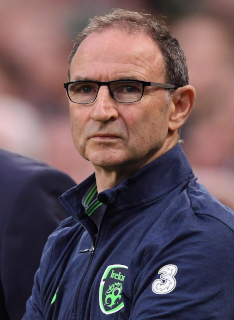
Birth of Martin O’Neill, Association Football Player & Manager

Martin Hugh Michael O’Neill, OBE, Northern Irish association football manager and former player who played as a midfielder, is born in Kilrea, County Londonderry, Northern Ireland, on March 1, 1952, the sixth child of nine siblings.

O’Neill’s father is a founding member of local GAA club Pádraig Pearse’s GAC Kilrea. He plays for both Kilrea and Derry at underage level. He also plays Gaelic football while boarding at St. Columb’s College, Derry, and later at St. Malachy’s College, Belfast.

Starting his career in Northern Ireland, O’Neill moves to England where he spends most of his playing career with Nottingham Forest, with whom he wins the European Cup twice, in 1979 and 1980. He is capped 64 times for the Northern Ireland national football team, also captaining the side at the 1982 FIFA World Cup.

During his managerial career O’Neill manage Grantham Town, Wycombe Wanderers, Norwich City, Leicester City, Celtic, Aston Villa and Sunderland. He guides Leicester City to the Football League Cup final three times, winning twice. As Celtic manager between 2000 and 2005, he leads that club to seven trophies including three Scottish Premier League titles and the 2003 UEFA Cup Final. After joining Aston Villa he achieves three consecutive sixth-place finishes in the English Premier League and guides them to the 2010 Football League Cup Final.

O’Neill becomes Republic of Ireland manager in 2013 and leads them to qualification for the 2016 UEFA European Football Championship for the third time in the nation’s history, beating the reigning world champions, Germany, in the process. He leaves the role with assistant Roy Keane by “mutual agreement” in November 2018. He is appointed as Nottingham Forest manager on January 15, 2019. He guides the club to a ninth-place finish in the Championship. However, he is sacked as manager on June 28, 2019, after reportedly falling out with some of the senior first team players.

Despite never completing his degree, O’Neill remains a follower of criminology. His fascination begins with the James Hanratty case of 1961. He has worked in television as an analyst for BBC and ITV at the FIFA World Cup, the UEFA European Championship and on UEFA Champions League matches.

In 2002, Norwich supporters voted O’Neill into the club’s Hall of Fame. He is awarded an OBE for services to sport in 2004. He is awarded the Nottingham Lifetime Achievement Award on November 3, 2013 for his services to football and achievements with Nottingham Forest.


Leave a comment

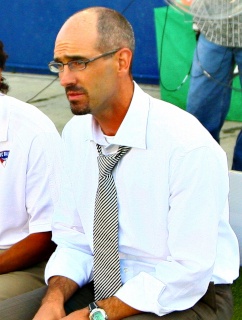
Birth of Steve Morrow, Professional Footballer & Manager

Stephen Joseph Morrow, Northern Irish former professional footballer and manager, is born on July 2, 1970, in Belfast, Northern Ireland.

Morrow makes his full international debut for Northern Ireland in May 1990 against Uruguay. He goes on to win 39 caps for his country from then until 1999.

Morrow becomes a semi-regular with Arsenal in 1992–93. He plays most of his matches in midfield, replacing the injured Paul Davis as Arsenal reaches the League Cup and FA Cup finals. He starts the League Cup final against Sheffield Wednesday. After falling behind to a John Harkes goal, Arsenal equalises through Paul Merson, and then Merson sets up Morrow to score the winner, which is also his first for the club. In the celebrations after the match, Arsenal skipper Tony Adams attempts to pick up Morrow and parade him on his shoulders, but Adams slips, and Morrow awkwardly hits the ground. He breaks his arm and has to be rushed to hospital.

As a result, Morrow misses the rest of that season, including the 1993 FA Cup Final, where Arsenal completes the Cup Double. Before the final kicks off, he receives his League Cup winners’ medal.

Morrow is fit enough by the start of the next season but plays only 13 matches, compared to 25 the previous season. One of those is the scene of an Arsenal triumph, the club’s 1994 European Cup Winners’ Cup Final win over Parma. In an Arsenal midfield depleted of John Jensen and David Hillier, he makes his first appearance in the competition that season partnering 20-year-old Ian Selley in central midfield as Arsenal beats Parma 1–0 with an Alan Smith goal.

Morrow nearly leaves the club in March 1994, following an approach from the Premier League‘s bottom club Swindon Town, but the transfer falls through and he signs a new contract with Arsenal, where he spends three more years.

Morrow goes on to play over 20 matches the following season, including a second Cup Winners’ Cup final, which Arsenal loses to Real Zaragoza. He scores his second Arsenal goal in the League Cup once again against Sheffield Wednesday, and scores his first Arsenal league goal in a 3–1 defeat at Blackburn Rovers, who win the Premier League that season. However, he never finds favour under new Arsenal boss Bruce Rioch, who only gives the Irishman five matches in 1995–96.

After the arrival of Arsène Wenger in 1996, Morrow is told he is surplus to requirements at Highbury, and he is loaned to Queens Park Rangers (QPR) in March 1997, the deal being made permanent that summer. He plays 85 games for Arsenal in total, scoring three goals.

At QPR, Morrow is initially a regular, but the club struggles, going from contenders for promotion to the Premiership to facing relegation to the Football League Second Division. Injuries to his shoulder ligaments ruled him out for most of the 1999–2000 season, and he loses his place in the side. He later has a loan spell at Peterborough United, but it does not become permanent, and he is released on a free transfer in the summer of 2001.

Struggling to find a club in the United Kingdom, Morrow moves to the United States to play for Major League Soccer (MLS) side Dallas Burn. He spends two seasons at Dallas, who rename themselves FC Dallas in 2004, before retiring because of a persistent neck injury.

On February 3, 2004, Morrow is named as an assistant coach to FC Dallas but resigns in late May due to personal reasons. However, he returns to the club on January 27, 2005, under coach Colin Clarke. When Clarke is fired on November 7, 2006, Morrow is named interim head coach. On December 11, 2006, FC Dallas removes the ‘interim’ from his title. He is fired as coach on May 20, 2008.

On September 12, 2008, Morrow returns to Arsenal as International Partnerships – Performance Supervisor, managing Arsenal’s international partnerships, which includes the Colorado Rapids of Major League Soccer in the United States, BEC Tero of Thailand and Hoàng Anh Gia Lai of Vietnam, and assisting Arsenal’s academies in countries such as Egypt and Ghana. From 2014, he works as Arsenal’s head of youth development. He leaves Arsenal in 2019 following a coaching staff shake up.

On May 7, 2021, Morrow is appointed The FA’s head of player selection and talent strategy working across England men’s teams.


Leave a comment

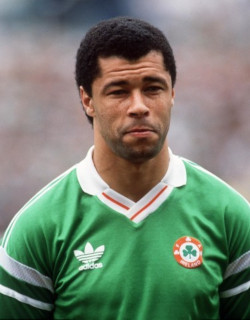
Birth of Professional Footballer Paul McGrath

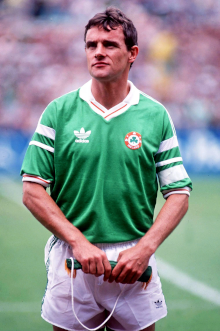
Paul McGrath, former professional footballer for St. Patrick’s Athletic F.C., Manchester United F.C., Aston Villa F.C., Derby County F.C., and the Republic of Ireland national football team, is born in Greenford, Middlesex on December 4, 1959.

McGrath is born to an Irish mother and a Nigerian father. His father disappears soon after his conception. His mother, Betty McGrath, is terrified that her father will find out she had become pregnant outside marriage and in an interracial relationship. She travels in secret to London to have her child, who is considered illegitimate, and gives him up for fostering when he is four weeks old. When he is five years old, the family he had been fostered by comes to Betty saying they cannot control him. Betty places him into an orphanage.

McGrath begins as a schoolboy with Pearse Rovers and plays junior football for Dalkey United. While at the latter, he attracts the attention of Manchester United scout Billy Behan. Before becoming a full-time professional with League of Ireland club St. Patrick’s Athletic in 1981, he briefly works as an apprentice metal worker and a security guard in Dublin.

McGrath makes his debut in a League of Ireland Cup clash with the Shamrock Rovers F.C. in August at Richmond Park. He ultimately excels at St. Patrick’s, earning the nickname “The Black Pearl of Inchicore” and receiving the PFAI Players’ Player of the Year Award in his first and only season, scoring four goals in 31 total appearances.

In 1982, McGrath moves to Manchester United, then managed by Ron Atkinson. He misses out on a place in the FA Cup victory over Brighton & Hove Albion F.C. the following year. He is named man of the match for the 1985 FA Cup Final, which United wins 1–0 against Everton F.C. In his early years at Manchester United, he is frequently used as a midfielder, changing to defender while still at Old Trafford.

In 1985–86, it appears that McGrath is on course to pick up a league title medal after United wins their first 10 league games of the season, but injuries to key players including Bryan Robson soon take their toll on the side and they eventually finish fourth in the table, 12 points behind champions Liverpool F.C. Despite a dismal start to the 1986–87 season and a managerial change, McGrath remains a regular member of the first team. United finishes second behind Liverpool in the league a year later.

By the 1988–89 season, McGrath is struggling with knee injuries and is becoming a less regular member of the first team. His relationship with manager Alex Ferguson is becoming strained, as McGrath’s alcohol addiction and physical problems lead to United offering him a retirement package of £100,000. He refuses and Ferguson begins to inform clubs of his availability. Aston Villa’s offer is accepted and McGrath signs on August 3, 1989 for a fee of £400,000.

While at Aston Villa, McGrath plays some of the best football of his career, despite recurrent knee problems. Villa comes close to winning the title in his first season, finishing second to Liverpool. In the inaugural season of the Premier League (1992-93), Aston Villa again finishes as runners-up, behind Manchester United. As a sign of the regard he is now held in by his fellow professionals, McGrath wins the PFA Players’ Player of the Year award at the end of the season. He wins his first trophy with Villa, defeating Manchester United in the 1993–94 Football League Cup. In 1996 he wins a second League Cup for Villa. By the end of his Villa career he has chalked up 323 appearances for the club.

McGrath departs Aston Villa in the autumn of 1996, leaving a legacy as one of the greatest players in the club’s history. He is sold to Derby County for £200,000 and helps the newly promoted Rams finish 12th in its first Premier League season. He then drops down a division to sign for Sheffield United F.C. in the summer of 1997. He plays his final game as a professional for Sheffield United against Ipswich Town F.C. on November 9, 1997. He officially retires at the end of the season.

In McGrath’s international career he wins his first full cap against Italy in 1985, last playing 12 years later, against Wales. During that time, he is often regarded as the single most influential player Ireland has in the national team’s glory days.

In McGrath’s international career he is a major part of the breakthrough of Ireland’s national team of the late 1980s and early 1990s. During the early part of Jack Charlton‘s era, he plays as a defensive midfielder, due to the wealth of talent Ireland has in defence. In UEFA Euro 1988, as the national side first qualifies for an international tournament, he is present in the 1–0 group stage win against England.

In 1990, Ireland qualifies for its first FIFA World Cup, eventually reaching the quarter-finals, where they lose to Italy 1-0, with McGrath ever present in the lineups. He captains the team four times in 1992 after the retirement of Mick McCarthy, and ignores a painful shoulder virus to play in the 1994 FIFA World Cup.

In Ireland’s opening game of the 1994 World Cup, a 1–0 win against favourites Italy, in a perfect example of his commitment to the game, McGrath puts up an astonishing defensive performance in spite of excruciating knee problems. Even after his retirement from international football in 1997, he is still regarded today as one of the greatest players ever to put on Ireland’s green shirt.

Upon retiring, McGrath settles in Monageer, County Wexford. In 2004, one year after being taken to court, charged with a breach of the peace, he returns to the football world after five years, moving to Waterford F.C. in Ireland as director of football.

In 2011, McGrath launches a singing career with a cover version of the Gerry Goffin and Carole King song “Goin’ Back.” The recording is followed by the planning of an album of covers by the footballer, with a percentage of the album’s proceeds going to the Acquired Brain Injury Foundation and the Cystic Fibrosis Foundation of Ireland.