seamus dubhghaill

Promoting Irish Culture and History from Little Rock, Arkansas, USA


Leave a comment

Birth of Siobhan Fahey, Founding Member of Bananarama

Siobhan Maire Fahey, Irish singer and founding member of the British girl group Bananarama, who have ten top-10 hits including the U.S. number one hit single “Venus,” is born on September 10, 1958, in County Meath. She is the first Irish-born woman to have written two number one singles on the Irish charts. She later forms the musical act Shakespears Sister, who have a UK number one hit with the 1992 single “Stay.” She joins the other original members of Bananarama for a 2017 UK tour, and, in 2018, a North America and Europe tour.

Fahey is the daughter of Helen and Joseph Fahey, both from County Tipperary. She has two younger sisters, Maire (who plays Eileen in the video of the 1982 song “Come On Eileen,” a hit for Dexys Midnight Runners) and Niamh, a producer and editor. She lives in Ireland for several years before her father joins the British Army and the family moves to England, then to Germany for several years, and back to England when she is nine years old. When she is 14, she and her family move to Harpenden, Hertfordshire, and, two years later, she leaves home for London and becomes involved in the punk scene of the late 1970s.

Fahey takes a course in fashion journalism at the London College of Fashion, where she meets Sara Dallin in 1980. Along with Keren Woodward, they found Bananarama and record their first demo “Aie a Mwana” in 1981. Bananarama then works with the male vocal trio Fun Boy Three, releasing two top-five singles with them in early 1982 before having their own top-five hit with “Shy Boy” later that year. Fahey, with Dallin and Woodward, co-write many of the group’s hits, including “Cruel Summer,” “Robert De Niro’s Waiting…,” “I Heard a Rumour,” and “Love in the First Degree.”

In 1988, frustrated with the direction she feels Bananarama is heading, Fahey leaves the group and forms Shakespears Sister. Initially, she effectively is Shakespears Sister, though American singer/songwriter Marcella Detroit later becomes an official member, making the outfit a duo. Their 1992 single “Stay” spends eight weeks at number one on the UK Singles Chart and wins the 1993 Brit Award for Best British Video. At the 1993 Ivor Novello Awards, she, Detroit, and Dave Stewart receive the award for Outstanding Contemporary Song Collection. She often appears in the band’s music videos and on-stage as a vampish glam figure. After two successful albums, tensions begin to rise between Fahey and Detroit and they split up in 1993. That year, Fahey admits herself into a psychiatric unit with severe depression.

In 1996, Fahey continues as Shakespears Sister by herself and releases the single “I Can Drive.” Intended as the first single from Shakespears Sister’s third album and her first record since her split with Marcella Detroit, the single performs disappointingly (UK number 30), which prompts London Records not to release the album. Following this, she leaves the label and, after a lengthy battle, finally obtains the rights to release the album (entitled #3) independently through her own website in 2004.

Fahey briefly re-joins Bananarama in 1998 to record a cover version of ABBA‘s “Waterloo” for the Channel 4 Eurovision special A Song for Eurotrash. She reteams with Bananarama again in 2002 for a “last ever” reunion at the band’s 20th-anniversary concert at G-A-Y in London. The trio performs “Venus” and “Waterloo.”

Fahey continues to make music into the new millennium. In 2005, she independently releases The MGA Sessions, an album recorded with frequent collaborator Sophie Muller in the mid-1990s. Her most recent single under her own name, “Bad Blood,” is released on October 17, 2005.

Fahey’s track “Bitter Pill” is partially covered by the pop band The Pussycat Dolls on their 2005 debut album PCD. The verses, which were slightly altered, and the overall sound of the song are from “Bitter Pill,” but added in is the chorus of Donna Summer‘s “Hot Stuff.” The song is renamed “Hot Stuff (I Want You Back)” and a remix is included as a B-side to their hit single “Beep.”

In 2008, Fahey appears in the Chris Ward-written and directed short film What Shall We Do with the Drunken Sailor, based on the life of artist/model Nina Hamnett, self-styled “Queen of Bohemia,” with Fahey playing the role of Hamnett opposite actor Clive Arrindel, Donny Tourette, frontman with punk band Towers of London, and Honey Bane, former vocalist of the punk band Fatal Microbes.

In 2009, Fahey decides to resurrect the Shakespears Sister name and releases a new album. Entitled Songs from the Red Room, it is released on her own record label, SF Records, and includes various singles she had released under her own name in recent years. She performs her first live show in almost 15 years as Shakespears Sister in Hoxton, London, on November 20, 2009. In 2014 she joins the line-up of Dexys Midnight Runners for some shows, including at Glastonbury Festival.

In 2017, it is announced that Fahey has joined her former Bananarama bandmates for an upcoming UK tour. This is the first live tour she has done as a member of Bananarama.

In 2019, Fahey reunites with Marcella Detroit for Shakespears Sister dates, commencing with an appearance on BBC One‘s The Graham Norton Show on May 10, 2019.

Fahey marries Dave Stewart of Eurythmics in 1987; the couple divorces in 1996. They have two sons, Samuel (born November 26, 1987) and Django James (born 1991). The two brothers form a musical band called Nightmare and the Cat. As an infant, Samuel Stewart appears in early Shakespears Sister videos for “Heroine” and “You’re History.” Django Stewart is also an actor. Samuel is currently the guitarist for the American indie rock band Lo Moon.

Prior to her marriage to Stewart, Fahey is romantically involved with Jim Reilly, the drummer for the Northern Irish punk rock band Stiff Little Fingers and Scottish singer Bobby Bluebell of The Bluebells, with whom she co-writes the UK No. 1 “Young at Heart.”


Leave a comment

St. Patrick’s Hospital for the Insane Opens in Dublin

Having been funded by a bequest from author Jonathan Swift following his death in 1745, St. Patrick’s Hospital for the Insane, Dublin, opens on September 19, 1757. The hospital is a psychiatric facility located near Kilmainham and the Phoenix Park.

Today, St. Patrick’s University Hospital, known for the innovative care of its patients, provides “Ireland’s largest, independent, not-for-profit mental health services.” When founded in 1745 it is the first psychiatric hospital to be built in Ireland mandated for the care of “Idiots and Lunaticks.”

Although new theories of madness and more therapeutic approaches to treatment are being proposed in the late 1700’s, during most of the eighteenth-century society views the lunatic as one who has literally lost his reason, “the essence of his humanity,” and therefore “his claim to be treated as a human being.” Treatments designed “to weaken the animal spirits that were believed to be producing madness,” still include restraints with chains, bloodletting, emetics, purging, and beating.

Confinement rather than cure is the focus of the earliest institutions in Great Britain. They resemble prisons with cells and keepers to control the inmates. Bethlem Hospital in London is the first to include lunatics in 1377. By the eighteenth century it has become infamous as “Bedlam” and has a reputation for cruelty, neglect, and poor living conditions, with an inadequate diet, rough clothing, and inactivity. Even worse, the mad in Bedlam are displayed as entertainment — a “freak show,” a “spectacle,” a “menagerie” from which “both provincial bumpkins and urban sophisticates could derive almost endless amusement” for a fee.

The earliest biographers of Jonathan Swift report that he had chosen to found St. Patrick’s Hospital because he had become insane himself at the end of his life. One writer even claims that he is the first patient to die there. Neither of these conclusions is accurate. It is his philosophical views and personal experiences that influence Swift’s decision to leave his estate for the establishment of St. Patrick’s.

Throughout the eighteenth century, medicine, politics, and literature all debate the relation between reason and madness, a subject that greatly interests Swift. In his most powerful satires, including Gulliver’s Travels (1726) and A Modest Proposal (1729), he sometimes explores the Lockean theory that “any person could fall into madness by the erroneous association of ideas.”

But the stronger motivation for Swift’s legacy grows from his involvement with the day-to-day problems of the Irish people, not only as an individual but also as Dean of St. Patrick’s Cathedral, a position he holds from 1713 until his death. At mid-century there are no provisions specifically for lunatics. If not being cared for by their families or found wandering the countryside, lunatics would sometimes be confined with criminals in prisons, with the poor in a workhouse, or with the sick in a hospital. Swift has firsthand knowledge of these conditions since he served as a governor of the workhouse and as a trustee of several hospitals. In 1710, after a visit to Bedlam, he gets himself elected a governor there in 1714. By 1731 he has decided on his legacy, intending his hospital to be charitable and more humane than Bedlam.

Another strong motivation may have been Swift’s ability to empathize with the sufferers of madness. Not mental illness but recurring attacks of Ménière’s disease (MD) afflict him for over fifty years, beginning at age twenty-three. The debilitating bouts of vertigo, nausea, tinnitus, and deafness worsen by the late 1730’s, and he complains of memory loss and difficulty in reading and writing. When he finalizes his will in 1740, he refers to himself as sound in mind but weak in body. In 1742, following a sudden decline in his health, his friends have him judged incompetent and appoint a guardian. Probable dementia increases his helplessness until his death on October 19, 1745.

Swift leaves an estate of about 12,000 pounds. In his will he lists details as to where St. Patrick’s should be built and how it should be run by his board of governors. Although they first meet in 1746, the asylum does not open until 1757. The governors need to acquire the site, oversee the plan and construction of the building, and ensure available money for operating expenses. Insufficient funds are the main obstacle, even after adding money from rents, donations, subscriptions and Parliament. Finally, St. Patrick’s has to accept paying patients to offset the costs of its charity cases.

Richard Leeper, who is appointed Resident Medical Superintendent in 1899, introduces a series of important initiatives including providing work and leisure activities for the patients. Norman Moore, who is appointed Resident Medical Superintendent in 1946, introduces occupational therapy, including crafts and farm work to the patients.

After the introduction of deinstitutionalisation in the late 1980s the hospital goes into a period of decline. In 2008 the hospital announces the expansion of its outpatient services to a series of regional centres across Ireland. A mental health facility for teenagers, known as the Willow Grove Adolescent Inpatient Unit, opens at the hospital in October 2010.

The hospital is affiliated with Trinity College Dublin and has 241 inpatient beds.


Leave a comment

Birth of Novelist Rosina Bulwer Lytton

rosina-bulwer-lytton

Novelist Rosina Bulwer Lytton (née Rosina Doyle Wheeler) is born in Ballywhire, County Limerick on November 4, 1802. She writes and publishes fourteen novels, a volume of essays and a volume of letters. Her husband is Edward Bulwer-Lytton, a novelist and politician. She spells her married surname without the hyphen used by her husband.

Rosina Doyle Wheeler’s mother is Anna Wheeler, the advocate of women’s rights and daughter of the Rev. Nicholas Milley Doyle, a Church of Ireland clergyman, Rector of Newcastle, County Tipperary. Her father is Francis Massey Wheeler, an Anglo-Irish landowner. One of her mother’s brothers, Sir John Milley Doyle (1781–1856), leads British and Portuguese forces in the Peninsular War and the War of the Two Brothers.

Rosina Doyle is educated at Reading Abbey Girls’ School in part by Frances Arabella Rowden, who is not only a poet, but, according to Mary Russell Mitford, “had a knack of making poetesses of her pupils.” This ties Rosina to other of Rowden’s pupils such as Caroline Posonby, later Lady Caroline Lamb, the poet Letitia Elizabeth Landon (“L.E.L.”), Emma Roberts, the travel writer and Anna Maria Fielding, who publishes as S.C. Hall.

Rosina Doyle Wheeler marries Edward Bulwer-Lytton, at that time surnamed simply Bulwer, on August 29, 1827. This is against the wishes of his mother, who withdraws his allowance, so that he is forced to work for a living.

His writing and efforts in the political arena take a toll upon their marriage, and the couple legally separates in 1836. Her children are taken from her. In 1839, her novel, Cheveley, or the Man of Honour, in which Edward Bulwer-Lytton is bitterly caricatured, is published.

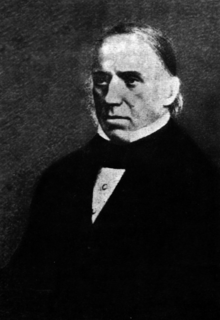
In June 1858, when her husband is standing as parliamentary candidate for Hertfordshire, she appears at the hustings and indignantly denounces him. To silence her, Edward has her committed “insane.” Under the supervision of Robert Gardiner Hill, a British surgeon who specialises in the treatment of lunacy, she is incarcerated in a psychiatric hospital. She is liberated a few weeks later following a public outcry. This is chronicled in her book A Blighted Life. For years she continues her attacks upon her husband’s character. She outlives him by nine years.

Rosina Bulwer Lytton dies in Upper Sydenham, London, England on March 12, 1882.


Leave a comment

Death of Philologist Eugene O’Curry

eugene-ocurry

Eugene O’Curry, philologist and antiquary, dies of a heart attack in Dublin on July 30, 1862.

O’Curry is born at Doonaha, near Carrigaholt, County Clare, the son of Eoghan Ó Comhraí, a farmer, and his wife Cáit. Eoghan has spent some time as a traveling peddler and has developed an interest in Irish folklore and music. Unusual for someone of his background, he is literate and is known to possess a number of Irish manuscripts. It is likely that Eoghan is primarily responsible for his son’s education.

Having spent some years working on his father’s farm and as a school teacher, O’Curry moves to Limerick in 1824 and spends seven years working there at a psychiatric hospital. He marries Anne Broughton, daughter of John Broughton of Killaderry near Broadford, County Limerick on October 3, 1824. He is a supporter of Catholic emancipation and in 1828 writes a poem congratulating Daniel O’Connell on his election as an MP.

During this period O’Curry is establishing a reputation for his knowledge of the Irish language and Irish history, and, by 1834, is in correspondence with the antiquary John O’Donovan. He is employed, from 1835 to 1842, on O’Donovan’s recommendation, in the topographical and historical section of Ordnance Survey Ireland. O’Donovan goes on to marry O’Curry’s sister-in-law, Mary Anne Broughton, in 1840. O’Curry spends much of the remainder of his life in Dublin and earns his living by translating and copying Irish manuscripts. The catalogue of Irish manuscripts in the British Museum (1849) is compiled by him for a fee of £100. He is responsible for the transcripts of Irish manuscripts from which O’Donovan edits the Annals of the Four Masters between 1848 and 1851.

In 1851 O’Curry is elected a member of the Royal Irish Academy and, on the founding of the Catholic University of Ireland in 1854, he is appointed professor of Irish history and archaeology. He works with George Petrie on the Ancient Music of Ireland (1855). In 1852, he and O’Donovan propose the Dictionary of the Irish Language, which is eventually begun by the Royal Irish Academy in 1913 and finally completed in 1976.

O’Curry’s lectures are published by the university in 1860, and give a better knowledge of Irish medieval literature than can be obtained from any other one source. Three other volumes of lectures are published posthumously, under the title On the Manners and Customs of the Ancient Irish (1873). His voluminous transcripts, notably eight huge volumes of early Irish law, testify to his unremitting industry. The Celtic Society, of the council of which he is a member, publishes two of his translations of medieval tales.

Eugene O’Curry dies of a heart attack at his home in Dublin on July 30, 1862, and is survived by two sons and two daughters. He is buried at Glasnevin Cemetery in Dublin. O’Curry Road in the Tenters area of Dublin 8 is named in his honour.