seamus dubhghaill

Promoting Irish Culture and History from Little Rock, Arkansas, USA


Leave a comment

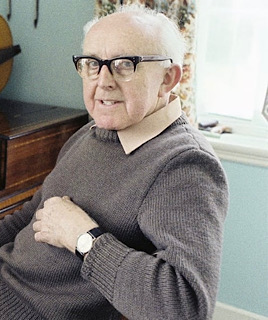
Death of Cathal Gannon, Harpsichord Maher & Fortepiano Restorer

Cathal Gannonharpsichord maker, a fortepiano restorer and an amateur horologist, dies on May 23, 1999.

Gannon is born on August 1, 1910, in Harold’s Cross, Dublin, into a craftsmen family of carpenters, many of whom worked in the famous Guinness Brewery. His education, in two local schools, is rudimentary and at the age of fifteen he starts working as an apprentice carpenter in the Guinness Brewery. His apprenticeship involves learning to make office furniture and attending evening classes in nearby colleges, where he is able to improve his education in a more congenial atmosphere. A love of music and the arts had been encouraged by two maiden aunts. His parents subsequently purchase an upright piano and he learns to play it at the Read Pianoforte School. When his apprenticeship is completed and he is on the dole for some years, he spends much of his spare time buying pictures, books, antiques and old clocks and watches in the various auction rooms and antique shops in Dublin.

During the mid-1930s, Gannon becomes a member of several Dublin-based societies, most notably the Old Dublin Society, and there befriends well-known people such as Grace Plunkett (née Gifford), the widow of Joseph Mary Plunkett, who had been executed following the Easter Rising of 1916. At around this time, he is also introduced to Carl Hardebeck, an arranger of Irish traditional music. At a later stage in his life, he meets Desmond Guinness and his wife Mariga, founders of the Irish Georgian Society, which he subsequently joins.

While reading a series of articles about Tibet in a magazine, Gannon stumbles across an article, which, he believes, is by Violet Gordon-Woodhouse, a British harpsichordist and clavichord player of the period. The article is about the revival of the harpsichord, which interests him. He asks permission to examine the harpsichords on display in the National Museum of Ireland, Dublin, but is given no encouragement by the staff. He is finally allowed to see the instruments when he is in his early twenties. Dismayed, he concludes that they are too expensive to buy and too complicated to make.

While on holidays in Glengarriff in the Beara Peninsula of County Cork during August 1936, Gannon meets his future wife, Margaret Key from Harrow, London. They marry in 1942.

In London with Margaret, who is visiting her parents, Gannon goes to the Benton Fletcher collection of keyboard instruments, which is then in Chelsea, and measures a harpsichord by Jacob and Abraham Kirckman. Back home, he makes a copy of the instrument in a tiny conservatory at the back of his house in the Dublin suburb of Rialto. The harpsichord is played by John S. Beckett for the first time in public in 1959 as the continuo for Johann Sebastian Bach‘s St. Matthew Passion and is praised in the national press. Beckett subsequently persuades the authorities in the Guinness Brewery to provide Gannon with a special workshop, in which he makes five harpsichords and restores several antique pianos. The first harpsichord made in the Brewery is donated to the Royal Irish Academy of Music in Dublin. The second is sold to Harrods of London, and the third is sold to Ireland’s national radio and television station RTÉ. This third instrument is used regularly by the RTÉ Symphony and Concert orchestras and also by the well-known composer and performer of Irish traditional music, Seán Ó Riada.

Gannon continues to make many more harpsichords and restore more pianos during the years to come. In all, he completes twenty harpsichords during his lifetime – the final four are completed by a friend, Patrick Horsley, in England. One of the harpsichords made by Gannon-Horsley returns to Ireland and is presented to NUI Maynooth. A piano of note that he restores is a Broadwood square piano owned by the poet and composer, Thomas Moore, which belonged to Lord and Lady Elveden (later Iveagh).

Gannon is the subject of several RTÉ radio programmes, three RTÉ television programmes (including The Late Late Show) and a television programme, Gallery, made by BBC Northern Ireland. He befriends a great many people, including the artist, writer and conservationist Peter Pearson, and regular musical evenings are held at the family home in Bryan Guinness‘s grounds in the suburbs of Dublin. Because of his interest in antique clocks and watches, he becomes a member of the Irish branch of the Antiquarian Horological Society, founded by his friend William Stuart.

In 1978, Trinity College Dublin (TCD) gives Gannon an honorary MA degree for his contribution to the authentic performance of early music in Ireland. Two years later, he is invited to travel with the New Irish Chamber Orchestra to China, where he tunes and maintains one of his harpsichords and celebrates his seventieth birthday. In 1989, a second honorary MA is given to him, this time by NUI Maynooth.

Following Gannon’s 80th birthday, which is attended by fifty people, he finally settles down to retirement. A series of minor strokes follow, which eventually lead to dementia and ultimately to his death, aged 88, on May 23, 1999.

The Cathal Gannon Early Music Room is opened in the Royal Irish Academy of Music in May 2003. It contains a harpsichord and clavichord made by Gannon, a Broadwood grand piano restored by him, and a square piano.

Part of a transmitted RTÉ programme, Nationwide (January 17, 2007), features archive footage of Gannon and his instruments. Three RTÉ radio programmes, Bowman: Sunday Morning, broadcast in November 2006, feature a 1983 interview with Gannon.


Leave a comment

St. Patrick’s Hospital for the Insane Opens in Dublin

Having been funded by a bequest from author Jonathan Swift following his death in 1745, St. Patrick’s Hospital for the Insane, Dublin, opens on September 19, 1757. The hospital is a psychiatric facility located near Kilmainham and the Phoenix Park.

Today, St. Patrick’s University Hospital, known for the innovative care of its patients, provides “Ireland’s largest, independent, not-for-profit mental health services.” When founded in 1745 it is the first psychiatric hospital to be built in Ireland mandated for the care of “Idiots and Lunaticks.”

Although new theories of madness and more therapeutic approaches to treatment are being proposed in the late 1700’s, during most of the eighteenth-century society views the lunatic as one who has literally lost his reason, “the essence of his humanity,” and therefore “his claim to be treated as a human being.” Treatments designed “to weaken the animal spirits that were believed to be producing madness,” still include restraints with chains, bloodletting, emetics, purging, and beating.

Confinement rather than cure is the focus of the earliest institutions in Great Britain. They resemble prisons with cells and keepers to control the inmates. Bethlem Hospital in London is the first to include lunatics in 1377. By the eighteenth century it has become infamous as “Bedlam” and has a reputation for cruelty, neglect, and poor living conditions, with an inadequate diet, rough clothing, and inactivity. Even worse, the mad in Bedlam are displayed as entertainment — a “freak show,” a “spectacle,” a “menagerie” from which “both provincial bumpkins and urban sophisticates could derive almost endless amusement” for a fee.

The earliest biographers of Jonathan Swift report that he had chosen to found St. Patrick’s Hospital because he had become insane himself at the end of his life. One writer even claims that he is the first patient to die there. Neither of these conclusions is accurate. It is his philosophical views and personal experiences that influence Swift’s decision to leave his estate for the establishment of St. Patrick’s.

Throughout the eighteenth century, medicine, politics, and literature all debate the relation between reason and madness, a subject that greatly interests Swift. In his most powerful satires, including Gulliver’s Travels (1726) and A Modest Proposal (1729), he sometimes explores the Lockean theory that “any person could fall into madness by the erroneous association of ideas.”

But the stronger motivation for Swift’s legacy grows from his involvement with the day-to-day problems of the Irish people, not only as an individual but also as Dean of St. Patrick’s Cathedral, a position he holds from 1713 until his death. At mid-century there are no provisions specifically for lunatics. If not being cared for by their families or found wandering the countryside, lunatics would sometimes be confined with criminals in prisons, with the poor in a workhouse, or with the sick in a hospital. Swift has firsthand knowledge of these conditions since he served as a governor of the workhouse and as a trustee of several hospitals. In 1710, after a visit to Bedlam, he gets himself elected a governor there in 1714. By 1731 he has decided on his legacy, intending his hospital to be charitable and more humane than Bedlam.

Another strong motivation may have been Swift’s ability to empathize with the sufferers of madness. Not mental illness but recurring attacks of Ménière’s disease (MD) afflict him for over fifty years, beginning at age twenty-three. The debilitating bouts of vertigo, nausea, tinnitus, and deafness worsen by the late 1730’s, and he complains of memory loss and difficulty in reading and writing. When he finalizes his will in 1740, he refers to himself as sound in mind but weak in body. In 1742, following a sudden decline in his health, his friends have him judged incompetent and appoint a guardian. Probable dementia increases his helplessness until his death on October 19, 1745.

Swift leaves an estate of about 12,000 pounds. In his will he lists details as to where St. Patrick’s should be built and how it should be run by his board of governors. Although they first meet in 1746, the asylum does not open until 1757. The governors need to acquire the site, oversee the plan and construction of the building, and ensure available money for operating expenses. Insufficient funds are the main obstacle, even after adding money from rents, donations, subscriptions and Parliament. Finally, St. Patrick’s has to accept paying patients to offset the costs of its charity cases.

Richard Leeper, who is appointed Resident Medical Superintendent in 1899, introduces a series of important initiatives including providing work and leisure activities for the patients. Norman Moore, who is appointed Resident Medical Superintendent in 1946, introduces occupational therapy, including crafts and farm work to the patients.

After the introduction of deinstitutionalisation in the late 1980s the hospital goes into a period of decline. In 2008 the hospital announces the expansion of its outpatient services to a series of regional centres across Ireland. A mental health facility for teenagers, known as the Willow Grove Adolescent Inpatient Unit, opens at the hospital in October 2010.

The hospital is affiliated with Trinity College Dublin and has 241 inpatient beds.


Leave a comment

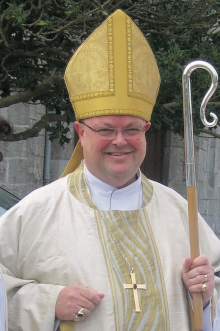
Rev. Canon Paul Colton Elected Bishop of Cork, Cloyne and Ross

One of the youngest members of the Church of Ireland, Rev. Canon William Paul Colton is elected Bishop of Cork, Cloyne and Ross on January 29, 1999. He succeeds the Rt. Rev. Robert Warke.

Colton, born March 13, 1960, and known as Paul Colton, is perhaps best known for being the bishop who officiates the wedding of footballer David Beckham and Spice Girl Victoria Adams on July 4, 1999, at the medieval Luttrellstown Castle on the outskirts of Dublin.

Colton attends St. Luke’s National School, Douglas, Cork, Cork Grammar School and Ashton Comprehensive School, Cork before being awarded a scholarship to the Lester B. Pearson United World College of the Pacific, Victoria, British Columbia, Canada where he completes the International Baccalaureate in 1978. He studies law at University College Cork, part of the National University of Ireland, and is the first graduate of the university to be elected to a bishopric in the Church of Ireland. He studies theology at Trinity College Dublin. In 1987 he completes the degree of Master in Philosophy (Ecumenics) at Trinity College, Dublin and a Master of Laws at Cardiff University in 2006. His LL.M thesis is on the subject of legal definitions of church membership.

In 2013 Colton completes, and is conferred with, a PhD in Law also at Cardiff University. His academic areas of interest are church law, the law of the Church of Ireland, law within Anglicanism, the interface between the laws of religious communities and the laws of States (particularly in Ireland and Europe), human rights, education law, and charity law. In 2014 he is appointed as an honorary research fellow at the Cardiff School of Law and Politics of Cardiff University, and its Centre for Law and Religion.

Colton is elected Bishop of Cork, Cloyne and Ross by an Electoral College on January 29, 1999, and consecrated on the Feast of the Annunciation, March 25, 1999, in Christ Church Cathedral, Dublin. He is enthroned in Saint Fin Barre’s Cathedral, Cork on April 24, 1999, in St. Colman’s Cathedral, Cloyne on May 13, 1999, and in St. Fachtna’s Cathedral, Ross on May 28, 1999.

Colton is married to Susan Colton, who is deputy principal of a primary school, and they have two adult sons. He is the first Church of Ireland bishop to openly support same-sex marriage. He is involved in education debates and in charity work. He chairs the board of directors of Saint Luke’s Charity, Cork, which focuses on the elderly and dementia sufferers. He is also chairman of the board of governors of Midleton College.

At the episcopal ordination of Bishop Fintan Gavin as Catholic bishop of Cork and Ross in June 2019, Colton presents the crosier at Bishop Gavin’s own request.

As of June 2020, Colton is the longest-serving bishop of Cork, Cloyne and Ross since bishop William Lyon in 1617 and also the longest serving bishop still in office in the Anglican churches of Ireland, England, Scotland and Wales. He is the author of almost a dozen book chapters, mostly in the area of the interface between religion and law.


Leave a comment

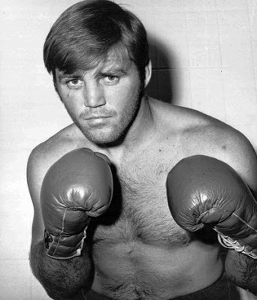
Death of Boxer Jerry “Irish” Quarry

jerry-quarry

Jerry Quarry, American heavyweight boxer nicknamed “Irish” or “The Bellflower Bomber,” dies on January 3, 1999, in Templeton, California. He is the most visible member of a significant Irish American boxing family, which includes three other pro boxers, his father and two brothers.

Quarry is born on May 15, 1945, in Bakersfield, California and first puts on a pair of boxing gloves when he is three years old. By the time he is eight, he has won the Junior Golden Gloves at the 45 lb. class. He continues to fight as an amateur until 1964 when he culminates a great amateur career by winning the National Golden Gloves Heavyweight Championship and is the tournament’s most outstanding fighter. He sets a record that is still standing today. He wins the title by knocking out all five opponents over a three-day span.

Under the watchful eyes of his co-managers, his dad and veteran fight manager Johnnie Flores, Quarry turns professional in May 1965. He runs off twelve wins in a row before running into Tony Doyle and is held to his first draw. He also has two draws with Tony Alongi. His first loss comes in his 21st pro bout, against the tough veteran Eddie Machen. His loss is attributed to poor conditioning and at the time Jerry promises that poor conditioning will never cost him another bout. He defeats Joey Orbillo, Alex Miteff, Billy Daniels, Floyd Patterson, Buster Mathis, Brian London, Jack Bodell, Mac Foster, Ron Lyle, and Thad Spencer just to name a few.

Quarry loses a disputed 15-round decision to Jimmy Ellis for the World Boxing Association version of the Heavyweight title that had been stripped away from Muhammad Ali.

Boxing Illustrated names Quarry the most popular professional boxer in the world in 1968, 1969 and in 1970 is tied with Muhammad Ali to share the honor. He fights Muhammad Ali in what is billed as the return of the champ. Quarry gets cut early in the fight and receives eighteen stitches as a result of the loss.

Quarry comes along in a boxing era that many consider to be the best of all time. In the middle 1970’s he manages himself and is trained by Gil Clancy. He continues to fight on occasion until 1992. His record over his 28-year career is 53-9-4 with 32 knockouts. He is inducted into the World Boxing Hall of Fame in 1995.

Within a few years of his final bout, Quarry is diagnosed with dementia and is soon unable to feed or dress himself and has to be cared for by relatives, primarily his brother James, the only one of the four Quarry brothers not to box professionally. He is hospitalized with pneumonia on December 28, 1998, and then suffers cardiac arrest. He never regains consciousness and dies on January 3, 1999. He is interred at Shafter Cemetery in Shafter, California. A foundation is established in his honor to battle boxing-related dementia, a condition that has afflicted many boxers and brought Quarry’s life to an early end.