seamus dubhghaill

Promoting Irish Culture and History from Little Rock, Arkansas, USA


Leave a comment

Birth of Mick Moloney, Irish American Musician & Scholar

Michael “Mick” Moloney, Irish-born American musician and scholar, is born in Limerick, County Limerick, on November 15, 1944. He is the artistic director of several major arts tours and co-founds Green Fields of America.

Moloney is the son of Michael Moloney, the head air traffic control officer of Shannon Airport, and his wife, Maura, who works as the principal of a Limerick primary school. He first plays tenor banjo during his teenage years. He studies at University College Dublin (UCD), graduating with a bachelor’s degree in economics. He then relocates to London to be a social worker assisting immigrant communities, before joining The Johnstons. After playing with the group for five years, he immigrates to the United States in 1973. He initially settles in Philadelphia, Pennsylvania, and eventually becomes an American citizen.

Three years after moving to the United States, Moloney co-founds Green Fields of America, an ensemble of Irish musicians, singers, and dancers which tour across the country on several occasions. He also serves as the artistic director for several major arts tours. One of these is the 1985 festival in Manhattan titled “Cherish the Ladies” to highlight female musicians in the area of Irish traditional music, which had been dominated by men until that decade. He produces an album for the female group by the same name titled Irish Women Musicians in America. The group’s leader, Joanie Madden, is one of several future fellows of the National Endowment for the Arts (NEA) to be mentored by Moloney. He produces and performs on over 70 albums and serves as advisor for numerous festivals and concerts across America, with ethnomusicologist and musician Daniel T. Neely putting the figure as high as 125 albums.

Moloney undertakes postgraduate studies at the University of Pennsylvania, obtaining a master’s degree before being awarded a Doctor of Philosophy in folklore and folk life in 1992. He goes on to teach ethnomusicology, folklore, and Irish studies at Penn, Georgetown University, and Villanova University. He is also global distinguished professor of music and Irish studies at New York University (NYU) until his death. In recognition of his work in public folklore, he receives a 1999 National Heritage Fellowship from the NEA.

In addition to music performance, Moloney writes Far from the Shamrock Shore: The Story of Irish American History Through Song, which is published by Crown Publications in February 2002 with a supplementary CD on Shanachie Records. He hosts three nationally syndicated series covering folk music on American Public Television (APT). He works as a consultant, performer, and interviewee on the RTÉ special Bringing It All Back Home, and is also a participant, consultant, and music arranger for Out of Ireland, a documentary film by PBS. He performs on the PBS special The Irish in America: Long Journey Home.

Moloney is married three times over the course of his life. His first marriage is to Miriam Murphy. His second marriage is to Philomena Murray. Together, they have one child but eventually divorce. His third marriage to Judy Sherman also ends in divorce. He is in a domestic partnership with Sangjan Chailungka at the time of his death. During his later years, he divides his time between Bangkok, where he resides with Chailungka, and his apartment in Greenwich Village. In Bangkok, he volunteers as a music therapist and teacher for abandoned children with HIV at the Mercy Center in the Khlong Toei district, which is founded by the Redemptorist priest Joseph H. Maier.

Moloney dies at the age of 77 on July 27, 2022, at his home in Manhattan, having played at the Maine Celtic Festival less than a week before. The cause of death is not announced.

Leave a comment

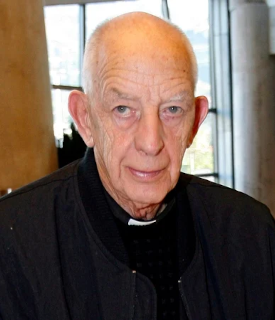
Birth of Fr. Alec Reid, Facilitator in the Northern Ireland Peace Process

Alexander Reid CSsR, Irish Catholic priest noted for his facilitator role in the Northern Ireland peace process, is born in Dublin on August 5, 1931. BBC journalist Peter Taylor subsequently describes Reid’s role as “absolutely critical” to the success of the peace process.

Reid is raised in Nenagh, County Tipperary, from the age of six following the death of his father. He studies English, history and philosophy at University College Galway.

Reid is professed as a Redemptorist in 1950 and ordained a priest seven years later. For the next four years, he gives Parish Missions in Limerick, Dundalk and Galway (Esker), before moving to Clonard Monastery in Belfast, where he spends almost the next forty years. The Redemptorist Monastery at Clonard stands on the interface between the Catholic nationalist Falls Road and the Protestant loyalist Shankill Road areas of west Belfast.

In the late 1980s, Reid facilitates a series of meetings between Gerry Adams and John Hume, in an effort to establish a “Pan-Nationalist front” to enable a move toward renouncing violence in favour of negotiation. Reid, himself a staunch nationalist who favours a united Ireland and the withdrawal of British forces from Northern Ireland, then acts as their contact person with the Irish Government in Dublin from a 1987 meeting with Charles Haughey up to the signing of the Good Friday Agreement in 1998. In this role, which is not public knowledge at the time, he holds meetings with various Taoisigh, and particularly with Martin Mansergh, advisor to various Fianna Fáil leaders. After the eventual success of the peace negotiations, Gerry Adams says, “there would not be a peace process at this time without [Father Reid’s] diligent doggedness and his refusal to give up.”

In 1988 in Belfast, Reid delivers the last rites to two British Army corporals, David Howes and Derek Wood of the Royal Corps of Signals, who are killed by the Provisional Irish Republican Army (IRA) – an event known as the corporals killings – after they drive into the funeral cortège of IRA member Kevin Brady, who had been killed in the Milltown Cemetery attack. A photograph of his involvement in that incident becomes one of the starkest and most enduring images of the Troubles. Unknown until years later, he is carrying a letter from Sinn Féin President Gerry Adams to Social Democratic and Labour Party (SDLP) leader John Hume outlining Adams’ suggestions for a political solution to the Troubles. Adams later tells the BBC in 2019 that Reid also advised U.S Ambassador to Ireland Jean Kennedy Smith during the peace process, stating “He was talking to her on the side and she was talking to her brother Teddy.”

After he moves to Dublin, Reid is involved in peace efforts in the Basque Country. In January 2003, he is awarded the Sabino Arana 2002 “World Mirror” prize, by the Sabino Arana Foundation in Bilbao, in recognition of his efforts at promoting peace and reconciliation. He and a Methodist minister, the Rev. Harold Good, announce that the IRA has decommissioned their arms at a news conference in September 2005.

Reid is involved in controversy in November 2005 when he makes comments during a meeting in Fitzroy Presbyterian Church concerning the Unionist community in Northern Ireland. When the loyalist activist Willie Frazer makes remarks that Catholics had butchered Protestants during the Troubles, Reid angrily responds, “You don’t want to hear the truth. The reality is that the nationalist community in Northern Ireland were treated almost like animals by the unionist community. They were not treated like human beings. They were treated like the Nazis treated the Jews.” Reid later apologises, saying his remarks had been made in the heat of the moment. In an interview with CNN, he says that “The IRA were, if you like, a violent response to the suppression of human rights.”

Reid dies in a Dublin hospital on November 22, 2013. He is survived by two sisters and an aunt, and is buried in Milltown Cemetery, Belfast.


Leave a comment

The Corporals Killings

British Army corporals Derek Wood and David Howes are killed by the Provisional Irish Republican Army (IRA) on March 19, 1988, in Belfast, Northern Ireland, in what becomes known as the corporals killings. The soldiers, wearing civilian clothes, both armed with Browning Hi-Power pistols and in a silver Volkswagen Passat hatchback, drive into the funeral procession for IRA member Kevin Brady.

The Brady funeral is making its way along the Andersonstown Road toward Milltown Cemetery when the corporals’ car appears from the opposite direction. The car drives straight towards the front of the funeral, which is headed by several black taxis. It drives past a Sinn Féin steward who signals it to turn. Mourners at the funeral say they believed they were under attack from Ulster loyalists, as three days earlier, loyalist Michael Stone had attacked an IRA funeral and killed three people. The car then mounts a pavement, scattering mourners, and turns into a small side road. When this road is blocked, it then reverses at speed, ending up within the funeral procession. Corporal Wood attempts to drive the car out of the procession but his exit route is blocked by a black taxi.

An angry crowd surrounds the car, smashes the windows and attempts to drag the soldiers out. Wood produces a Browning Hi-Power 9mm handgun. He climbs partly out of a window and fires a shot in the air, which briefly scatters the crowd. The crowd then surges back, with some of them attacking the car with a wheel-brace and a stepladder snatched from a photographer. The corporals are eventually pulled from the car and punched and kicked to the ground.

The attack is witnessed by the media and passersby. Journalist Mary Holland recalls seeing one of the men being dragged past a group of journalists. “He didn’t cry out; just looked at us with terrified eyes, as though we were all enemies in a foreign country who wouldn’t have understood what language he was speaking if he called out for help.”

The men are taken to nearby Casement Park sports ground, just opposite. Here they are beaten, stripped to their underpants and socks, and searched by a small group of men. The BBC and The Independent write that the men were “tortured.” A search reveals that the men are British soldiers. Their captors find a military ID on Howes which is marked “Herford,” the site of a British military base in Germany, but it is believed they misread it as “Hereford,” the headquarters of the Special Air Service (SAS).

Redemptorist priest Father Alec Reid, who plays a significant part in the peace process leading to the 1998 Good Friday Agreement, intervenes and attempts to save the soldiers, and asks people to call an ambulance. “I got down between the two of them and I had my arm around this one and I was holding this one up by the shoulder….They were so disciplined, they just lay there totally still and I decided to myself they were soldiers. There was a helicopter circling overhead and I don’t know why they didn’t do something, radio to the police or soldiers to come up, because there were these two of their own soldiers.”

One of the captors warns Father Reid not to interfere and orders two men to take him away.

The two soldiers are placed in a taxi and driven fewer than 200 yards to a waste ground near Penny Lane (South Link), just off the main Andersonstown Road. There they are taken out of the vehicle and shot dead. Wood is shot six times and Howes is shot five times. Each also has multiple injuries to other parts of their bodies. The perpetrators quickly leave the scene. Father Reid hears the shots and rushes to the waste ground. He believes one of the soldiers is still breathing and attempts to give him mouth-to-mouth resuscitation. Upon realizing that the soldiers are dead, he gives them the last rites. According to photographer David Cairns, although photographers have their films taken by the IRA, he is able to keep his by quickly leaving the area after taking a photograph of Reid kneeling beside the almost naked body of Howes, administering the last rites. Cairns’ photograph is later named one of the best pictures of the past 50 years by Life magazine.

The whole incident is filmed by a British Army helicopter hovering overhead. An unnamed soldier of the Royal Scots says his eight-man patrol is nearby and sees the attack on the corporals’ car but are told not to intervene. Soldiers and police arrive on the scene three minutes after the corporals had been shot. A British Army spokesman says the army did not respond immediately because they needed time to assess the situation and were wary of being ambushed by the IRA. The large funeral procession also prevents them getting to the scene quickly.

Shortly after, the IRA releases a statement:

“The Belfast Brigade, IRA, claims responsibility for the execution of two SAS members who launched an attack on the funeral cortege of our comrade volunteer Kevin Brady. The SAS unit was initially apprehended by the people lining the route in the belief that armed loyalists were attacking them and they were removed from the immediate vicinity. Our volunteers forcibly removed the two men from the crowd and, after clearly ascertaining their identities from equipment and documentation, we executed them.”

Two men, Alex Murphy and Harry Maguire, are sentenced to life imprisonment for murder, but are released in 1998 under the terms of the Good Friday Agreement. Several other men receive lesser sentences for their part in the corporals killings.

(Pictured: Catholic priest Father Alec Reid administers the last rights to Corporal David Howes, one of two British soldiers brutally beaten and murdered in Belfast)