Sterling’s post in Ireland ends on March 7, 1934, when he becomes U.S. minister to Bulgaria, a position he remains in until 1936. In 1937, he is appointed to minister roles for both Latvia and Estonia, however he does not accept the post. In 1938, he becomes U.S. minister to Sweden and remains in that role until 1941.
Warren is born on March 10, 1703, in Warrenstown, County Meath, the youngest son of Michael Warren and Catherine Plunkett, née Aylmer, who was the first wife of Sir Nicholas Plunkett.
In 1716, when he is 13 years old, Warren signs on as an ordinary seaman in Dublin and he and his brother initially serve together. He rapidly rises in the ranks, becoming a Captain in 1727. His ship patrols American colonial waters to provide protection from French forces. He becomes involved in colonial politics and land speculation.
In 1744, Warren is made commodore and commands a 16-ship squadron off the Leeward Islands, capturing 24 ships in four months. In 1745, he commands a group of ships that support the Massachusetts forces in the capture of the Fortress of Louisbourg. The prize system of the time allows naval officers to profit from the capture of enemy ships, and this expedition earns Warren a fortune, a promotion to the rank of Rear Admiral of the Blue, and a knighthood.
Warren’s lands include several thousand acres on the south side of the Mohawk River west of Schenectady, New York, now known as Florida, Montgomery County, New York, roughly across from present day Amsterdam. He brings two nephews, William Johnson, eventually Sir William Johnson, and Michael Tyrrell to clear and manage the land. Tyrrell soon leaves, asking his uncle for support with a naval appointment. Tyrrell has a very distinguished naval career, rising to Admiral. He becomes sick while headed to London from the West Indies and is buried at sea. In 1741, Warren builds Warren House, a mansion overlooking the Hudson River on his 300-acre estate in Greenwich Village. He also owns property on Long Island, the van Cortland Estate in Westchester County, New York and South Carolina.
While on a visit to Ireland in 1752, Peter Warren dies suddenly in Dublin on July 29, 1752 “of a most violent fever.” The towns of Warren, Rhode Island and Warren, New Hampshire are named after him, as well as Warren Street in Lower Manhattan.
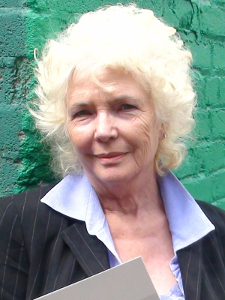
Flanagan is the daughter of Rosanna (née McGuirk) and Terence Niall Flanagan, an Irish Army officer and Communist who had fought in the International Brigade in the Spanish Civil War against General Francisco Franco. Although her parents are not Irish speakers, they want Fionnula and her four siblings to learn the Irish language, thus she grows up speaking English and Irish fluently. She is educated in Switzerland and England. She trains extensively at the Abbey Theatre in Dublin and travels throughout Europe before settling in Los Angeles, California in early 1968.
Flanagan comes to prominence in Ireland in 1965 as a result of her role as Máire in the Telefís Éireann production of the Irish language play An Triail, for which she receives the Jacob’s Award in Dublin for her “outstanding performance.” With her portrayal of Gerty McDowell in the 1967 film version of Ulysses, she establishes herself as one of the foremost interpreters of James Joyce. She makes her Broadway debut in 1968 in Brian Friel‘s Lovers, then appears in The Incomparable Max (1971) and such Joycean theatrical projects as Ulysses in Nighttown and James Joyce’s Women (1977-1979), a one-woman show written by Flanagan and directed for the stage by Burgess Meredith. It is subsequently filmed in 1983, with Flanagan both producing and playing all six main female roles.
George Brent, Irish-born American stage, film, and television actor in American cinema, is born on March 15, 1904 in Ballinasloe, County Galway.
Brent was born George Patrick Nolan to John J. and Mary (née McGuinness) Nolan. His mother is a native of Clonfad, Moore, County Roscommon. During the Irish War of Independence, Brent is part of the Irish Republican Army (IRA). He flees Ireland with a bounty set on his head by the British government, although he later claims only to have been a courier for guerrilla leader and tactician Michael Collins.
He eventually moves to Hollywood, and makes his first film, Under Suspicion, in 1930. Over the next two years, he appears in a number of minor films produced by Universal Studios and 20th Century Fox, before being signed to contract by Warner Bros. in 1932. He remains at Warner Bros. for the next 20 years, carving out a successful career as a top-flight leading man during the late 1930s and 1940s.
Brent drifts into “B” pictures from the late 1940s and retires from film in 1953. He continues to appear on television until 1960, having appeared on the religion anthology series, Crossroads. He is cast in the lead in the 1956 television series, Wire Service. In 1978, he makes one last film, the made-for-television production Born Again.
George Brent receives two stars on the Hollywood Walk of Fame, the first, at 1709 Vine St., for his film contributions, the second star, at 1614 Vine St., for his work in television.
Brent is married five times: Helen Louise Campbell (1925–1927), Ruth Chatterton (1932–1934), Constance Worth (1937), Ann Sheridan (1942–1943), and Janet Michaels (1947-1974). His final marriage to Janet Michaels, a former model and dress designer, lasts 27 years until her death in 1974. They have a son and a daughter.
Brent also carries on a lengthy relationship with his frequent Warner Bros. co-star, actress Bette Davis, who describes her last meeting with Brent after many years of estrangement. He is suffering from advanced emphysema, and she expresses great sadness at his ill health and deterioration. George Brent dies on May 26, 1979 in Solana Beach, California.



 seamus dubhghaill