seamus dubhghaill

Promoting Irish Culture and History from Little Rock, Arkansas, USA


Leave a comment

Execution of George Plantagenet, Duke of Clarence

George Plantagenet, Duke of Clarence, an English nobleman who engages in several major conspiracies against his brother, King Edward IV, is executed for high treason in the Tower of London on February 18, 1478, allegedly by drowning in a butt of malmsey wine.

Plantagenet is born in Dublin Castle on October 21, 1449, the sixth child and third surviving son of Richard Plantagenet, 3rd Duke of York, and Cecily Neville, Duchess of York, and the brother of English kings Edward IV and Richard III. His father’s struggle to gain power precipitates the Wars of the Roses (1455–85) between the houses of York and Lancaster.

Soon after Edward IV becomes king in March 1461, Plantagenet is made Duke of Clarence, and in 1462 he is appointed Lord Lieutenant of Ireland. However, around 1468, he falls under the influence of Richard Neville, 16th Earl of Warwick, who is losing the control that he had formerly exercised over the King. In defiance of Edward IV, he marries Neville’s daughter Isabel in Église Notre-Dame de Calais in July 1469. Then, in March 1470, he and Neville secretly support an armed uprising in northern England. When Edward IV discovers their treachery, they flee to France but return in September.

After Edward IV goes into exile, Plantagenet and Neville put the ineffectual Lancastrian monarch Henry VI, deposed in 1461, back on the throne. But Plantagenet soon becomes disenchanted with Neville’s management of the government. When Edward IV returns from exile in March 1471, the brothers become reconciled, and Plantagenet, who fights in the battles that lead to Edward’s restoration, is created, by right of his wife, first Earl of Warwick on March 25, 1472, and first Earl of Salisbury in a new creation.

After his wife dies on December 22, 1476, Plantagenet seeks to wed Mary, Duchess of Burgundy. But when Edward IV objects to that match also, the embittered Plantagenet once more begins scheming against his brother. Edward IV becomes convinced that his brother is aiming at his throne. Plantagenet is thrown into prison, and in January 1478 the King unfolds the charges against his brother to Parliament. He had slandered the King, had received oaths of allegiance to himself and his heirs, and had prepared for a new rebellion. Both houses of Parliament pass the bill of attainder, he is “privately executed” at the Tower of London on February 18, 1478, by tradition in the Bowyer Tower, and soon after the event, a rumour spreads that he had been drowned in a butt of malmsey wine.

Two of Plantagenet’s children survive their father: Margaret Pole, Countess of Salisbury (1473–1541), and Edward Plantagenet, 17th Earl of Warwick (1475–99), who passes the greater part of his life in prison and is beheaded in November 1499.

Plantagenet is a principal character in two of William Shakespeare‘s history plays: Henry VI, Part 3 and The Tragedy of Richard the Third. Shakespeare portrays him as weak-willed and changeable.


Leave a comment

Death of Novelist Shan Fadh Bullock

Novelist Shan Fadh Bullock dies in Sutton, Surrey, on February 27, 1935. His works include fourteen novels set in Ulster and he is admired by James Matthew Barrie and Thomas Hardy.

Bullock is born on May 17, 1865 at Inisherk, County Fermanagh just outside the County Cavan border near Belturbet, in what is now Northern Ireland. His father, Thomas Bullock, is a strict man who has eleven children and drives several to emigration because of his stern demeanour. Thomas Bullock works on the Crom Castle estate which runs along the Cavan/Fermanagh border and has both Catholic and Protestant workers. Protestant workers have the prime jobs and are employed as craftsmen and supervisors while Catholics work in the outer area of the estate at unskilled jobs. Folk memories of the Battle of Newtownbutler in 1689 remain long in the memory in the area where up to 1,500 Jacobite troops are hacked down or drowned in Upper Lough Erne when pursued by the Williamite cavalry. Many of the Williamite army is drawn from the local Protestant population.

Bullock is educated at Crom estate primary school run by the Church of Ireland and Farra School near Bunbrosna, County Westmeath. He fails the entrance exams at the University of Dublin. He tries his hand at farming but finds he is not suited. He moves to London in 1883 and becomes a Civil Service clerk. He takes to journalism to supplement his salary and publishes his first book of stories, The Awkward squads, in 1893. His stories are centered on Irish Catholic and Protestant small farmers and labourers and their struggles and tensions. He marries Emma Mitchell in 1899 and they have a son and daughter.

Bullock is well respected in literary circles but his books are never successful enough for him to become a full time writer. He says that the English are not interested in Irish stories and that there is no reading public in Ireland. He dislikes Orange sectarianism and is ambivalent to Irish nationalism. His novel The Red Leaguers looks at sectarianism conflict and Robert Thorne examines the lives of London clerks which is a popular theme at the time. His last and best novel The Loughsiders is published in 1924 and is the story of a conniving smallholder based on William Shakespeare’s Richard III.

Bullock’s wife dies in 1922. He spends the final years of his life in Sutton, Surrey and dies there on February 27, 1935.

Bullock’s daughter presents his literary papers, including two unpublished novels, two plays, numerous short stories and essays, and some correspondence to the Queen’s University Belfast library in the 1960s. A portrait of Bullock by Dermod O’Brien, RHA, is also at Queen’s University Belfast. His correspondence with Sir Horace Plunkett is in the archives of the Plunkett Foundation, Long Hanborough Business Park, Woodstock, Oxfordshire. Enniskillen public library has a collection of cuttings on Bullock, including some photocopied letters.


Leave a comment

Birth of Novelist Shan Fadh Bullock

shan-fadh-bullock

Novelist Shan Fadh Bullock is born on May 17, 1865, at Inisherk, County Fermanagh just outside the County Cavan border near Belturbet. His works include fourteen novels set in Ulster and he is admired by James Matthew Barrie and Thomas Hardy.

Bullock’s father, Thomas Bullock, is a strict man who has eleven children and drives several to emigration because of his stern demeanour. Thomas Bullock works on the Crom Castle estate which runs along the Cavan/Fermanagh border and has both Catholic and Protestant workers. Protestant workers have the prime jobs and are employed as craftsmen and supervisors while Catholics work in the outer area of the estate at unskilled jobs. Folk memories of the Battle of Newtownbutler in 1689 remain long in the memory in the area where up to 1,500 Jacobite troops are hacked down or drowned in Upper Lough Erne when pursued by the Williamite cavalry. Many of the Williamite army is drawn from the local Protestant population.

Bullock is educated at Crom estate primary school run by the Church of Ireland and Farra School near Bunbrosna, County Westmeath. He fails the entrance exams at the University of Dublin. He tries his hand at farming but finds he is not suited. He moves to London in 1883 and becomes a Civil Service clerk. He takes to journalism to supplement his salary and publishes his first book of stories, The Awkward squads, in 1893. His stories are centered on Irish Catholic and Protestant small farmers and labourers and their struggles and tensions. He marries Emma Mitchell in 1899 and they have a son and daughter.

Bullock is well respected in literary circles, but his books are never successful enough for him to become a full-time writer. He says that the English are not interested in Irish stories and that there is no reading public in Ireland. He dislikes Orange sectarianism and is ambivalent to Irish nationalism. His novel The Red Leaguers looks at sectarianism conflict and Robert Thorne examines the lives of London clerks which is a popular theme at the time. His last and best novel The Loughsiders is published in 1924 and is the story of a conniving smallholder based on William Shakespeare’s Richard III.

Shan Bullock’s wife dies in 1922. He spends the final years of his life in Sutton, Surrey and dies there on February 27, 1935.


3 Comments

Birth of Stage Actress Julia Betterton Glover

julia-betterton-glover

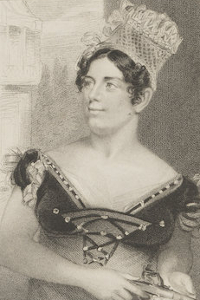
Julia Betterton Glover, Irish-born stage actress well known for her comic roles in the late 18th and 19th centuries, is born on January 8, 1779, in Newry, in what is now Northern Ireland.

“Betterton” is not her real name, despite her father`s promotion of the fiction. She is born Julianna Butterton, the daughter of the Newry`s theatre manager William Butterton. His venture fails and he decides there will be financial benefit to him if her name is changed to “Betterton,” claiming links to a famous actor and long dead Thomas Betterton. With this deception he and his family travel round the theatres and the young Julia is acclaimed as an infant acting prodigy in York, the West Country, Bath, and elsewhere.

In 1787, she joins the York Circuit under manager Tate Wilkinson and appears as the Page in Thomas Otway‘s The Orphan, as well as the Duke of York with George Frederick Cooke in Richard III. When Cooke is cast as Glumdalca, the Queen of the Giants, in Henry Fielding‘s burlesque play Tom Thumb, Cooke chooses Julia to play the title role.

In 1790, at age nine, she makes her debut in Scotland at the Dumfries Theatre Royal. In 1795 she goes to Bath and plays the parts of Juliet, Imogen, Desdemona, Lady Macbeth, and Lydia Languish. She becomes well known, particularly praised for her comic role as Languish, and news of her success reaches London. A number of job offers are made, but they are declined by her father. He eventually accepts a lucrative offer, taking her salary for himself, for which she makes her London début in 1797 as Percy by Hannah More.

In 1800, her father sells her in marriage to Samuel Glover, the son of an industrial family from Birmingham, for £1, 000, although the money is never paid. Unhappily married, she has eight children, four of whom survive childhood. In 1820, she plays Hamlet at the Lyceum Theatre to critical acclaim. In 1822, she appears as Nurse in Romeo and Juliet at the Theatre Royal, Drury Lane. Her daughter Phyllis plays Juliet. On February 8, 1837, her father, with whom she has had an unhappy relationship, dies.

One of her sons is Edmund Glover and another is William Howard Glover. In 1850, Glover announces her retirement from the stage. After two weeks confined to her bed, she appears at Drury Lane for her farewell benefit performance on July 12, 1850, as Mrs. Malaprop in The Rivals. She is noticeably ill and weak during her performance and is unable to stand to receive her applause at the end of the play. Instead, the curtain rises to reveal Glover seated, surrounded by the rest of the cast. She dies in London four days later on July 16, 1850. She is buried in St. George’s Churchyard Gardens in London.