seamus dubhghaill

Promoting Irish Culture and History from Little Rock, Arkansas, USA


Leave a comment

Birth of Thomas Whelan, One of the “Forgotten Ten”

Thomas Whelan, one of six men executed in Mountjoy Prison, Dublin, on March 14, 1921, is born on October 5, 1898, in Gortrummagh, near Clifden, County Galway.

Whelan is the sixth of thirteen children born to farmer John Whelan and Bridget Price. He attends national school at Beleek and Clifden, before leaving school at the age of 15 to work on his father’s farm. He moves to Dublin at the age of 18, where he finds work as a railway man, and joins the Irish Volunteers as a member of ‘A’ Company, 3rd Battalion, Dublin Brigade. He lives at Barrow Street, Ringsend, Dublin, and works at a train depot.

Whelan is arrested on November 23, 1920, and, on February 1, 1921, is charged with the shooting death of Captain G.T. Baggallay, an army prosecutor who had been a member of courts that sentenced Volunteers to death under the Restoration of Order in Ireland Act on Bloody Sunday (1920).

Whelan is defended at his court-martial by Michael Noyk, through whom he protests his innocence of the charges. As in the case of Patrick Moran, there is eyewitness evidence that Whelan had been at Mass at the time the shooting had taken place.

The prosecution casts doubt on the reliability of the eyewitnesses, arguing that as Catholics they are not neutral. The defence complains that it is unfair to suggest the witnesses “were prepared to come up and perjure themselves on behalf of the prisoner” because “they belonged to a certain class and might hold certain political opinions.”

The military court does, however, trust the evidence of an army officer who lives in the same house as Baggallay and who has identified Whelan as the man covering him with a revolver during the raid. There is also testimony by a soldier who had passed by the house when he heard shots fired. This witness says he saw Whelan outside, attempting to start his motorcycle. Whelan is found guilty of murder and sentenced to death.

In Mountjoy Prison, Whelan is imprisoned with the writer and activist Ernie O’Malley, who describes him as “… smooth-faced, quiet and brown eyed with wavy hair; he smiled quietly and steadily. His voice was soft and when he laughed with the others one knew that the fibre was not as hard and that there was a shade of wistfulness about him.”

Whelan is quoted just before being hanged, “Give the boys my love. Tell them to follow on and never surrender. Tell them I am proud to die for Ireland.”

Whelan is hanged at 6:00 a.m. along with Patrick Moran, the first of six men to be executed in pairs that day. A crowd estimated at 40,000 gathers outside the prison to pray as the executions take place. His mother, Bridget, sees him before his execution and waits outside with the praying crowd holding candles. She tells a reporter that she had left her son “so happy and cheerful you would almost imagine he was going to see a football match.” He is 22 years old at the time of his death.

Following the Two for One policy that decrees the assassination of two members of the Royal Irish Constabulary (RIC) in retaliation for every executed Irish Volunteer, the Irish Republican Army (IRA) in Whelan’s native Clifden ambushes and fatally shoots RIC Constables Charles Reynolds and Thomas Sweeney at Eddie King’s Corner on March 16, 1921. In response to the RIC’s request for assistance over the wireless, a trainload of Black and Tans arrive in Clifden from Galway in the early hours of Saint Patrick’s Day, March 17, 1921, and proceed to “burn, plunder and murder.” During what is now called “The Burning of Clifden,” the Black and Tans kill one local civilian (John McDonnell), seriously injure another, burn down fourteen houses, and damaged several others.

Whelan is one of a group of men hanged in Mountjoy Prison in the period 1920-1921 who are commonly referred to as the Forgotten Ten. In 2001, he and the other nine, including Kevin Barry, are exhumed from their graves in Mountjoy Prison and given a full state funeral. He is now buried in Glasnevin Cemetery, Dublin. An annual commemoration is still held in Clifden in his honor.

(Pictured: Patrick Moran (left) and Thomas Whelan (right) before their executions, Mountjoy Prison, Dublin, March 14, 1921, courtesy of Kilmainham Gaol Museum.)


5 Comments

The Pearse Street Ambush

The Pearse Street Ambush takes place in Dublin on March 14, 1921, during the Irish War of Independence. Dublin awakes to the news that six Irish Republican Army (IRA) volunteers, captured in an ambush at Drumcondra two months earlier, have been hanged. The gates of Mountjoy Gaol are opened at 8:25 a.m. and news of the executions is read out to the distraught relatives of the dead. As many as 40,000 people gather outside and many mournfully say the Rosary for the executed men.

The Labour movement calls a half-day general strike in the city in protest at the hangings. The clandestine Republican government declares a day of national mourning. All public transport comes to a halt and republican activists make sure the strike is observed.

By the evening, the streets clear rapidly as the British-imposed curfew comes into effect at 9:00 p.m. each night. The city is patrolled by regular British troops and the much-feared paramilitary police, or Auxiliaries, as people scurry home and await IRA retaliation for the hangings. This is not long in coming.

Pearse Street is just south of the River Liffey, running from Ringsend, an old fishing port, to the city centre. Number 144 Pearse Street houses the company headquarters of the IRA’s Dublin Brigade 3rd Battalion at St. Andrews Catholic Hall. It has been used for this purpose since before the 1916 Easter Rising.

On the evening of March 14, Captain Peadar O’Meara sends the 3rd Battalion out to attack police or military targets. As many as thirty-four IRA men prowl the area, armed with the standard urban guerrilla arms of easily hidden handguns and grenades. One young volunteer, Sean Dolan, throws a grenade at a police station on nearby Merrion Square, which bounces back before it explodes, blowing off his own leg.

At around 8:00 p.m., with the curfew approaching, a company of Auxiliaries, based in Dublin Castle is sent to the area to investigate the explosion. It consists of one Rolls-Royce armoured car and two tenders holding about 16 men. Apparently, the Auxiliaries have some inside information as they made straight for the local IRA headquarters at 144 Pearse Street. One later testifies in court that “I had been notified there were a certain number of gunmen there.”

However, the IRA is waiting. As soon as the Auxiliaries approach the building, they are fired upon from three sides. What the newspapers describe as “hail of fire” tears into the Auxiliaries’ vehicles. Five of the eight Auxiliaries in the first tender are hit in the opening fusillade. Two of them are fatally injured, including the driver, an Irishman named O’Farrell, and an Auxiliary named L. Beard.

The IRA fighters, however, are seriously outgunned. The Rolls Royce armoured car is impervious to small arms fire (except its tyres, which are shot out) and the mounted Vickers heavy machine gun sprays the surrounding houses with bullets. The unwounded Auxiliaries also clamber out of their tenders and return fire at the gun flashes from street corners and rooftops.

Civilian passersby thow themselves to the ground to avoid the bullets but four are hit, by which side it is impossible to tell. The British military court of inquiry into the incident finds that the civilians had been killed by persons unknown, if by the IRA then they were “murdered,” if hit by Auxiliaries the shootings were “accidental.” This, aside from demonstrating the court’s bias, shows that no one is sure who had killed them.

Firing lasts for only five minutes but in that time seven people, including the two Auxiliaries, are killed or fatally wounded and at least six more are wounded. Eighteen-year-old Bernard O’Hanlon, originally from Dundalk, lay sprawled, dead, outside 145 Pearse Street, his British Bull Dog revolver under him which has five chambers, two of which contain expended rounds and three of which contain live rounds, indicating he had gotten off just two shots before being cut down.

Another IRA Volunteer, Leo Fitzgerald, is also killed outright. Two more guerrillas are wounded, one in the hip and one in the back. They, along with Sean Dolan, who had been wounded by his own grenade, are spirited away by sympathetic fire brigade members and members of Cumann na mBan and treated in nearby Mercer’s Hospital.

Three civilians lay dead on the street. One, Thomas Asquith, is a 68-year-old caretaker, another, David Kelly, is a prominent Sinn Féin member and head of the Sinn Féin Bank. His brother, Thomas Kelly, is a veteran Sinn Féin politician and a Member of Parliament since 1918. The third, Stephen Clarke, aged 22, is an ex-soldier and may have been the one who had tipped off the Auxiliaries about the whereabouts of the IRA meeting house. An internal IRA report notes that he was “under observation… as he was a tout [informant] for the enemy.”

Two IRA men are captured as they flee the scene. One, Thomas Traynor, a 40-year-old veteran of the Easter Rising, is carrying an automatic pistol, but claims to have had no part in the ambush itself. He had, he maintains, simply been asked to bring in the weapon to 144 Great Brunswick Street. The other is Joseph Donnelly, a youth of just 17 years of age.

As most of the IRA fighters get away through houses, over walls and into backstreets, the Auxiliaries ransack St. Andrew’s Catholic Hall at number 144 Pearse Street but find little of value. Regular British Army troops quickly arrive from nearby Beggars Bush Barracks and cordon off the area, but no further arrests are made. Desultory sniping carries on in the city for several hours into the night.

March 14, 1921, was bloody day in Dublin. Thirteen people had died violently in the city by the end of the day – six IRA Volunteers executed that morning, two more killed in action at Pearse Street, two Auxiliaries killed in action and three civilians in the crossfire. It is the worst day of political violence in the city since Bloody Sunday on November 21, 1920, when 31 had been killed.

(From: “The Pearse Street Ambush, Dublin, March 14, 1921” by John Dorney, The Irish Story, http://www.theirishstory.com, January 26, 2015 | Pictured: British Army troops keep crowds back from Mountjoy Prison during the executions, March 14 1921.)


Leave a comment

The Electricity Supply Board (ESB) is Established

The Electricity Supply Board (ESB; Irish: Bord Soláthair an Leictreachais), a state-owned electricity company operating in the Republic of Ireland, is established on August 11, 1927, by the fledgling Irish Free State government under the Electricity (Supply) Act 1927, to manage Ireland’s electricity supply after the successful Shannon hydroelectric scheme at Ardnacrusha and take over all existing projects for the electrification of Ireland. While historically a monopoly, the ESB now operates as a commercial semi-state concern in a “liberalised” and competitive market. It is a statutory corporation whose members are appointed by the government of Ireland.

The Shannon hydroelectric scheme at Ardnacrusha is Ireland’s first large-scale electricity plant and, at the time, it provides 80% of the total energy demands of Ireland. To give an idea of the growth in demand, the output of Ardnacrusha is now approximately two per cent of national peak demand for power.

By 1937, plans are being finalised for the construction of several more hydroelectric plants. The plans called for stations at Poulaphouca, Golden Falls, Leixlip (all in Leinster), Clady, Cliff and Cathaleen’s Fall (between Belleek and Ballyshannon in County Donegal), Carrigadrohid and Inniscarra (in County Cork). All these new plants are completed by 1949 and together harness approximately 75% of Ireland’s inland waterpower potential. Many of these plants are still in operation, however, as can be expected with continuing growth in demand, their combined capacity falls far short of Ireland’s modern needs.

With Ireland’s towns and cities benefiting from electricity, the new government pushes the idea of Rural Electrification. Between 1946 and 1979, the ESB connects in excess of 420,000 customers in rural Ireland. The Rural Electrification Scheme is described as “the Quiet Revolution” because of the major socio-economic change it brings about. The process is greatly helped in 1955 by the Electricity Supply Amendment Act, 1955.

In 1947, the ESB, needing ever more generation capacity, builds the North Wall station on a 7.5-acre site in Dublin‘s industrial port area on the north side of the River Liffey on the site of an old oil refinery. The original station consists of one 12.5 MW steam turbine that is originally purchased for a power station at Portarlington but instead used at North Wall. Other power stations built around this time include the peat fired stations at Portarlington, County Laois, and Allenwood, County Kildare.

Because of the risks of becoming dependent on imported fuel sources and the potential for harvesting and utilising indigenous peat, the ESB – in partnership with Bord na Móna – establishes those stations and ESB also builds Lanesboro power station in 1958. Located in County Longford, the plant burns peat, cut by Bord na Móna in the bogs of the Irish midlands. In 1965, the Shannonbridge station, located in County Offaly, is commissioned. The two stations have been replaced by new peat-fired stations near the same locations, and peat is also used to power the independent Edenderry Power Station in County Offaly.

As in most countries, energy consumption is low at night and high during the day. Aware of the substantial waste of night-time capacity, the ESB commissions the Turlough Hill pumped-storage hydroelectric station in 1968. This station, located in County Wicklow, pumps water uphill at night with the excess energy created by other stations, and releases it downhill during the day to turn turbines. The plant can generate up to 292 MW of power, but output is limited in terms of hours because of the storage capacity of the reservoir.

The 1970s bring about a continued increase in Ireland’s industrialisation and with it, a greater demand for energy. This new demand is to be met by the construction of the country’s two largest power stations – Poolbeg Generating Station in 1971 and Moneypoint Power Station in 1979. The latter, in County Clare, remains Ireland’s only coal-burning plant and can produce 915 MW, just shy of the 1015 MW capacity of Poolbeg. In 2002 and 2003, new independent stations, Huntstown Power (north Dublin) and Dublin Bay Power (Ringsend, Dublin), are constructed.

In 1991, the ESB establishes the ESB Archive to store historical documents relating to the company and its impact on Irish life.

On September 8, 2003, two of the last remaining places in Ireland unconnected to the national grid – Turbot Island and Inishturk Island (off the coast of County Galway)- are finally connected to the main supply. Some islands are still powered by small diesel-run power stations.

Sixty wind farms are currently connected to the power system and have the capacity to generate 590 MW of power, depending on wind conditions. These wind farms are mainly owned by independent companies and landowners.

On March 16, 2005, the ESB announces that it is to sell its ShopElectric (ESB Retail) chain of shops, with the exception of the Dublin Fleet Street and Cork Academy Street outlets, to Bank of Scotland (Ireland), converting them into main street banks. Existing staff are offered positions as bank tellers.

On March 27, 2008, the ESB announces a €22bn capital investment programme in renewable energy technology, with the aim to halve its carbon emissions within 12 years and achieve carbon net-zero by 2035.


Leave a comment

Birth of Cecil King, Painter & Collector

Cecil King, painter and collector, is born on February 22, 1921, at Rathdrum, County Wicklow.

King is the son of Henry King, businessman, of Rathdrum, and Susan King (née Crowe). He is educated at the Church of Ireland Ranelagh School, Athlone, and at Mountjoy School, Clontarf, Dublin (1936–39). Subsequently he joins the printing firm of W. & S. McGowan in Dundalk, where he goes on to become a director. During the 1940s his interest in amateur drama leads him to take classes at the Gaiety School of Acting in Dublin, where his fellow students include Milo O’Shea and Eamonn Andrews. Around this time, he is also involved in An Óige (the Irish Youth Hostel Association), in which he serves as honorary national secretary and honorary treasurer. This involvement leads him to travel extensively from the late 1940s around Europe, where he visits many major art museums and galleries.

King begins to acquire works of art, by both European and Irish artists, and by the mid-1950s he has amassed one of the most important collections of modern art in Ireland. Around 1954 he himself begins to paint, under the guidance of Barbara Warren and the English artist Neville Johnson. In his early work he focuses on urban scenes, often based on the area of Ringsend, Dublin, where he uses subdued tones to produce poetic images of a sombre mood. Even here his interest in the formal qualities of painting – such as the flatness of the picture surface and the juxtaposition of areas of colour on it, which becomes a defining feature of his art – is evident. In 1964 he leaves his successful business career behind in order to devote himself entirely to art, a bold move considering the limited audience for modern art that exists in Ireland at the time. In his own words he recalls how “Painting was what I wanted to do, I realised I didn’t need a car. I could do without an awful lot of things.” (Sunday Independent, November 7, 1982)

By this time, King is working in a fully abstract style. However, he still draws his inspiration from the external world, particularly the milieu of the circus. A painting such as Trapeze (1976; Allied Irish Bank collection) shows how he responds to acrobatic performance, not in any literal or figurative sense, but to the tensions and balances inherent within it. The overall effect is to convey to the viewer the essence of anticipation of the performance. Indeed, his works can create an almost physical sense of involvement on the part of the viewer. This is especially true of his Berlin Suite, a series of screen-prints produced as a result of a visit to East Berlin and published by Editions Alecto of London (1970). He is also inspired to produce a number of paintings on this theme of the claustrophobia of the divided city. Ultimately, he aspires to create works which, with their economy and restraint, achieve a meticulously balanced harmony. This concern leads him, in such works as the Baggot Street Series, to move away from even the most veiled figurative references, evidence for the fact that he constantly strives to further his artistic explorations.

King often works seven days a week. This quiet determination contributes in no small part to the international standing he soon achieves, as does his prolific record as an exhibitor. Writing a foreword to an exhibition of his work at Kilkenny in 1975, the critic William Packer finds that King’s art “confounds the expectations we might have of Irish art, for it is far from local in ambition, accomplishment, and seriousness.” He mounts over twenty-five one-man exhibitions and contributes to a large number of group shows in Ireland and abroad. A significant proportion of his output is to be found in galleries in Europe and the United States, including the Museum of Modern Art, New York, and the Tate Gallery, London. He is also represented in the major public and corporate collections in Ireland, such as the Irish Museum of Modern Art, Ulster Museum, Trinity College Dublin (TCD), Crawford Municipal Gallery, Dublin City Gallery The Hugh Lane, Arts Council, Aer Lingus, Bank of Ireland, Allied Irish Bank, and ESB. In fact, King, with his hard-edge abstract style, is one of the very few artists working in Ireland at the time whose work is comparable to that of the major (principally American) international exponents of abstraction. The term “hard-edge,” applied to King’s style, may however belie the subtlety he could achieve in terms of his handling of colour and texture. This is particularly true of his works in the media of pastel and tapestry, while his last paintings show a tendency towards more expressive brushwork and a more complex approach to colour.

King enjoys a happy relationship with Oliver Dowling from 1960 to the time of his death, at Dún Laoghaire, County Dublin, on April 7, 1986, having suffered a heart attack just three days before an exhibition of his work is due to open in Dublin at the Oliver Dowling Gallery. His legacy is not alone artistic: he also makes a significant contribution to the promotion of modern art in Ireland in his capacity as a member of the organising committee for the Rosc exhibition since its inception in the 1960s, where his wide knowledge of international art is much respected. A member of Aosdána, he twice serves as commissioner for the Department of Foreign Affairs cultural committee. He is also generous in his encouragement of young artists, whose work he regularly adds to his own collection.

(From: “King, Cecil” by Rebecca Minch, Dictionary of Irish Biography, http://www.dib.ie, May 2012 | Pictured: Abstract, Oil on Canvas by Cecil King)


Leave a comment

Birth of Irish Footballer Jimmy Dunne

James “Jimmy” Dunne, Irish footballer who played for, among others, Shamrock Rovers F.C., Sheffield United F.C., Arsenal F.C. and Southampton F.C., is born on September 3, 1905, in Ringsend, Dublin. Dunne is also a dual internationalist and plays for both Ireland teams: the FAI XI and the IFA XI. Dunne holds the all-time record of consecutive goals scored at the elite level of English football.

Dunne is the first Irishman to figure prominently in the English Football League scoring records. In the 1930–1931 season he scores 41 league goals for Sheffield United. This becomes a club record and remains the most league goals scored by an Irishman during a single English League season.

In the 1931–1932 season, he scores in twelve consecutive matches. This is the all-time record of consecutive goals scored at the elite level of English football. Dunne also scores 30 or more First Division goals in three consecutive seasons between 1930 and 1933. He excels at either centre forward or inside forward and is outstanding with his head. On September 27, 1930, he scores a hat-trick of headers against Portsmouth F.C. He is a fringe member of the great Arsenal F.C. side of the 1930s before finishing his career at Shamrock Rovers F.C.

Dunne dies suddenly from a heart attack in Dublin, at the age of 44, on November 14, 1949. His two sons, Tommy and Jimmy, also play in the League of Ireland for St. Patrick’s Athletic F.C. Tommy also plays for Shamrock Rovers F.C. His nephew, another Tommy Dunne, also plays for Rovers and another nephew Christy Doyle, plays for Shelbourne F.C. and the Republic of Ireland.


Leave a comment

The Battle of Rathmines

The Battle of Rathmines is fought in and around what is now the Dublin suburb of Rathmines on August 2, 1649, during the Irish Confederate Wars. It is fought between an English Parliamentarian army under Michael Jones which holds Dublin and an army composed of Irish Confederate and English Royalist troops under the command of the James Butler, 1st Duke of Ormond.

By 1649, Ireland has already been at war for eight years, since the outbreak of the Irish Rebellion of 1641. The English Parliament holds only two small enclaves, Dublin and Derry, in Ireland.

In July 1649, Ormond, marches his coalition forces of 11,000 men to the outskirts of Dublin with the intent of taking the city from its Parliamentary garrison, which had landed there in 1647. Ormond takes Rathfarnham Castle and camps at Palmerston Park in Rathgar, about 4 km south of the city. The area from Ormond’s camp to the city of Dublin is now a heavily urbanised area, but in 1649, it is open countryside. Ormond begins inching his forces closer to Dublin by taking the villages around its perimeter and to this end, sends a detachment of troops to occupy Baggotrath Castle, on the site of present-day Baggot Street bridge. For reasons which have never been clear, they take several hours to reach Baggotrath, a distance of about a mile, and they arrive to find that the Parliamentary troops have already occupied the castle.

However, Ormond is not expecting Michael Jones, the Parliamentary commander, to take the initiative and has not drawn up his troops for battle. Unfortunately for the Royalists, this is exactly what Jones does, launching a surprise attack on August 2 from the direction of Irishtown with 5,000 men and sending Ormond’s men at Baggotsrath reeling backwards towards their camp in confusion.

Too late, Ormond and his commanders realise what is going on and send units into action piecemeal to try to hold up the Parliamentarian advance, so that they can form their army into battle formation. However, Jones’ cavalry simply outflanks each force sent against them, sending them too fleeing back south through the townland of Rathmines. The battle becomes a rout as scores of fleeing Royalist and Confederate soldiers are cut down by the pursuing Roundheads. The fighting finally ends when the English Royalist troops under Murrough O’Brien, 1st Earl of Inchiquin, mounts a disciplined rearguard action, allowing the rest to get away. Ormond claims he has lost less than a thousand men. Jones claims to have killed around 4,000 Royalist or Confederate soldiers and taken 2,517 prisoners, while losing only a handful himself. Ormond certainly loses at least one leading officer, Christopher Plunkett, 2nd Earl of Fingall, who is fatally wounded and dies in Dublin Castle a few days later. Ormond also loses his entire artillery train and all his baggage and supplies.

In the aftermath of the battle, Ormond withdraws his remaining troops from around Dublin, allowing Oliver Cromwell to land in the city at Ringsend with 15,000 veteran troops on August 15. Cromwell calls the battle “an astonishing mercy,” taking it as a sign that God has approved of his conquest of Ireland. Over the next four years he completes the Cromwellian conquest of Ireland.

Without Jones’ victory at Rathmines, the New Model Army would have had no port to land at in Ireland and the Cromwellian conquest of Ireland would have been much more difficult. Ormond’s incompetent generalship at Rathmines disillusions many Irish Confederates with their alliance with the English Royalists and Ormond is ousted as commander of the Irish forces the following year.


Leave a comment

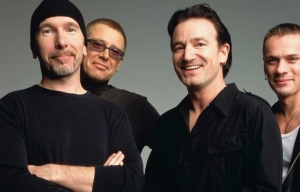
U2 Fights to Save Hanover Quay Recording Studio

u2

On January 29, 2002, at a public hearing at the Gresham Hotel, rock superstars U2 battle to save their recording studios at Hanover Quay in the Grand Canal Dock area of Ringsend, a southside inner suburb of Dublin, from being pulled to the ground.

The Dublin Docklands Development Authority wants to clear the way for a major new leisure development on a Hanover Quay site which contains a number of buildings including the band’s one-story recording studio. Talks between the band and the Dublin Docklands Development Authority fail to result in a compromise.

Citing the multi-million-pound records sales and musical heritage that have resulted from their use of the Hanover Street site since 1994, the band members submit to An Bord Pleanála (Irish Planning Appeals Board) a formal, nine page objection to the proposed plan. The band recorded their All That You Can’t Leave Behind album and a portion of their Pop album at the studio.

In addition to U2’s complaint, three other parties raise formal objections, including businessman Harrie Crosbie, millionaire businessman and Point Depot owner, who also owns small business premises at the Hanover Quay site.

In a statement released in the evening, the band says that while they love the docklands and are very happy with their present studio, they “appreciate that change is inevitable and often for the best.” They disclose that they are continuing discussions with the Dublin Docklands Development Authority but would consider moving to another location in the vicinity should a suitable property be offered.

The hearing continues into a second day.

Ultimately, on June 17, 2002, U2 loses the battle to save the Hanover Quay recording studio from demolition when An Bord Pleanála gives the go-ahead for the redevelopment of the Hanover Quay site. The band later reaches an agreement with the Dublin Docklands Development Authority for a replacement studio building which allows them to remain in the docklands area.