seamus dubhghaill

Promoting Irish Culture and History from Little Rock, Arkansas, USA


Leave a comment

Death of Robert Lloyd Praeger, Naturalist, Writer & Librarian

Robert Lloyd Praeger, Irish naturalist, writer and librarian, dies at the age of 87 in a Belfast hospital on May 5, 1953.

Praeger is born on August 25, 1865 in Holywood, County Down, in what is now Northern Ireland, the second son among five sons and one daughter of Willem Emilius Praeger, linen merchant, and Maria Praeger (née Patterson). From a Unitarian background, he is raised in Holywood and attends the primary school of the Reverend Charles McAlester and then the nearby Sullivan Upper School, followed by the Royal Belfast Academical Institution. He attends what is now Queen’s University Belfast (QUB) from 1882, earning a Bachelor of Arts in 1885 and a Bachelor of Engineering in 1886. While at college he also becomes very active in the Belfast Naturalists’ Field Club (BNFC), learning a range of practical naturalist skills. He is elected to the club’s committee in 1885.

Praeger works in the National Library of Ireland in Dublin from 1893 to 1923. He co-founds and edits The Irish Naturalist, and writes papers on the flora and other aspects of the natural history of Ireland. He organises the Lambay Survey in 1905-06 and, from 1909 to 1915, the wider Clare Island Survey. He is an engineer by qualification, a librarian by profession and a naturalist by inclination.

Praeger is awarded the Veitch Memorial Medal of the Royal Horticultural Society (RHS) in 1921. He becomes the first President of both An Taisce and the Irish Mountaineering Club in 1948, and serves as President of the Royal Irish Academy (RIA) for 1931–34.

Praeger is instrumental in developing advanced methodologies in Irish botany by inviting Knud Jessen, the acclaimed Danish expert in Glacial and Post-Glacial flora, to undertake research and teaching in Ireland. This leads to the establishment of “paleoecology” as a distinct field of study in Ireland.

vice-county system is adopted by Praeger, dividing Ireland into forty vice-counties based on the counties. However, the boundaries between them does not always correspond to the administrative boundaries and there are doubts as to the correct interpretation of them.

Praeger dies in a Belfast hospital on May 5, 1953 and is buried in Dean’s Grange Cemetery, Dublin, together with his wife Hedwig. His younger sister Rosamond Praeger is a sculptor and botanical artist.

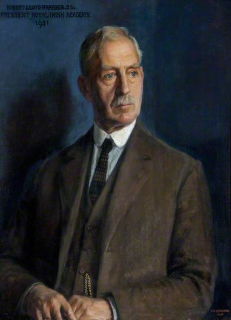
(Pictured: Portrait of Robert Lloyd Praeger by Sarah Cecilia Harrison, National Museums Northern Ireland)


Leave a comment

Death of May Tennant, Civil Servant & Trade Unionist

Margaret Edith (May) Tennant (née Abraham), CH, civil servant, trade unionist, factory inspector, and campaigner, dies at Great Maytham, near RolvendenKent, England, on July 11, 1946.

Abraham is born on April 5, 1869, in Rathgar, County Dublin. She works to improve conditions for industrial workers and is also involved in women’s health and education. She is one of the first people to be appointed to the Order of the Companions of Honour in 1917.

Abraham is educated at home. Following her father’s death in 1887, she decides to move to London in search of employment. In London she becomes secretary to Emilia, Lady Dilke, who is a leader of the Women’s Trade Union League, an organisation of which she becomes treasurer. She supports the London Dock Strike of 1889 and helps organise laundresses.

In 1891, Abraham is appointed to the Royal Commission on Labour, set up to investigate the poor conditions faced by industrial workers, as one of four women assistant commissioners.

H. H. Asquith decides to appoint women factory inspectors in 1893, and Abraham is one of his first choices, soon superintending a team of five women inspectors. In this position, she is known for her good humour which helps relations with factory managers. In 1895, she joins the Departmental Committee on Dangerous Trades. She writes a book on factory legislation in 1896, The Laws Relating to Factories and Workshops, Including Laundries and Docks.

In 1896, Abraham marries Harold Tennant, brother-in-law of and parliamentary secretary to Asquith, and chairman of the Departmental Committee on Dangerous Trades. She resigns in 1897 shortly before the birth of her first son, to devote herself to her family. She goes on to have five children. Her eldest son, Henry, is killed in battle in 1917 during World War I.

Despite her new family life, Tennant does not give up her work entirely, remaining on the Committee on Dangerous Trades. In 1899, she becomes chairman of the Industrial Law Indemnity Fund, which provides compensation to victimised workers. She is on the Royal Commission on Divorce in 1909 and is a founder and treasurer of the Central Committee for Women’s Employment.

During World War I, Tennant takes on more work. She works initially for the War Office as welfare advisor, then briefly in the Women’s Department of the National Service Department, before moving to the Ministry of Munitions. After the war, she reduces her workload, but still serves on committees on maternal mortality and maternal health. She is also a governor of Bedford College in London, an institution founded for the education of women that is part of the University of London. From 1941 she is closely involved in campaigning for the Royal Air Force Benevolent Fund.

Tennant and her husband purchase and rebuild a country house, Great Maytham, at Rolvenden, Kent, a property whose old walled garden had earlier been the inspiration for The Secret Garden by Frances Hodgson Burnett. She develops expertise as a gardener, becoming prominent in the Royal Horticultural Society. After her husband’s death in 1935, she moves to a smaller house named Cornhill at Great Maytham, where she dies July 11, 1946. Some of her correspondence is in the British Library, London.