seamus dubhghaill

Promoting Irish Culture and History from Little Rock, Arkansas, USA


Leave a comment

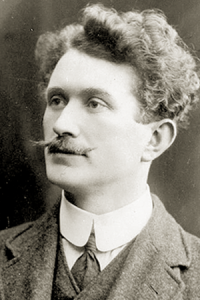
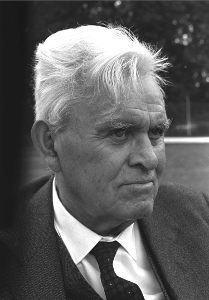
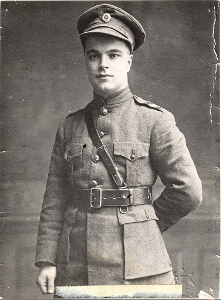
Death of Dan Breen, Irish Patriot & Politician

Irish republican Dan Breen (1967)

Daniel “Dan” Breen, volunteer in the Irish Republican Army during the Irish War of Independence and the Irish Civil War, dies in Dublin on December 27, 1969. In later years, he was a Fianna Fáil politician.

Breen is born in Grange, Donohill parish, County Tipperary, on August 11, 1894. His father dies when he is six, leaving the family very poor. He is educated locally before becoming a plasterer and later a linesman on the Great Southern Railways.

Breen is sworn into the Irish Republican Brotherhood in 1912 and the Irish Volunteers in 1914. On January 21, 1919, the day the First Dáil meets in Dublin, Breen takes part in the Soloheadbeg Ambush. The ambush party of eight men, led by Seán Treacy, attacks two Royal Irish Constabulary (RIC) men who are escorting explosives to a quarry. The two policemen, James McDonnell and Patrick O’Connell, are fatally shot during the incident. The ambush is considered to be the first incident of the Irish War of Independence.

During the conflict, the British put a £1,000 price on Breen’s head, which is later increased to £10,000. He quickly establishes himself as a leader within the Irish Republican Army (IRA). He is known for his courage. On May 13, 1919 he helps rescue his comrade Seán Hogan at gunpoint from a heavily guarded train at Knocklong station in County Limerick. Breen, who is wounded, remembers how the battalion is “vehemently denounced as a cold-blooded assassins” and roundly condemned by the Catholic Church. After the fight, Treacy, Séamus Robinson, and Breen meet Michael Collins in Dublin, where they are told to make themselves scarce although they do not necessarily agree.

Breen and Sean Treacy shoot their way out through a British military cordon in the northern suburb of Drumcondra (Fernside). They escape, only for Treacy to be killed the next day. Breen is shot at least four times, twice in the lung.

The British reaction is to make Tipperary a “Special Military Area,” with curfews and travel permits. Volunteer GHQ authorises entrerprising attacks on barracks. The British policy forces Breen and Treacy to retreat to Dublin. They join Michael Collins’ Squad of assassins, later known as the Dublin Guard, and Dublin becomes the centre of the war.

Breen is present in December 1919 at the ambush in Ashtown beside Phoenix Park in Dublin where Martin Savage is killed while trying to assassinate the Lord Lieutenant of Ireland, Viscount John French. The IRA hides behind hedges and a dungheap as the convoy of vehicles drives past. They have been instructed to ignore the first car but this contains their target, Lord French. Their roadblock fails as a policeman removes the horse and cart intended to stop the car.

Breen utterly rejects the Anglo-Irish Treaty, which makes him, like many others, angry and embittered. In the June 1922 elections Breen is nominated as a candidate by both the pro- and anti-Treaty sides, but is not elected.

Breen is elected to Dáil Éireann at the 1923 general election as a Republican anti-Treaty Teachta Dála (TD) for the Tipperary constituency. Following the Anglo-Irish Treaty, Breen joins the Anti-Treaty IRA in the civil war, fighting against those of his former comrades in arms who support the Treaty. He is arrested by the National Army of the Irish Free State and interned at Limerick Prison. He spends two months there before going on hunger strike for six days followed by a thirst strike of six days, prompting his release.

Breen writes a best-selling account of his guerrilla days, My Fight for Irish Freedom, in 1924. He represents Tipperary from the Fourth Dáil in 1923 as a Republican with Éamon de Valera and Frank Aiken. He is defeated in the June 1927 general election and travels to the United States where he opens a prohibition speakeasy. In 1932 he returns to Ireland and regains his seat as a member of Fianna Fáil in the Dáil at that year’s general election. During World War II he is said to hold largely pro-Axis views. He represents his Tipperary constituency without a break until his retirement at the 1965 election.

Breen dies in Dublin on December 27, 1969 and is buried in Donohill, near his birthplace. His funeral is the largest seen in west Tipperary since that of his close friend and comrade-in-arms Seán Treacy at Kilfeacle in October 1920. An estimated attendance of 10,000 mourners assemble in the tiny hamlet, giving ample testimony to the esteem in which he was held.

Breen is the subject of a 2007 biography Dan Breen and the IRA by Joe Ambrose.


1 Comment

Execution of IRA Officer Joe McKelvey

joe-mckelvey

Joe McKelvey, Irish Republican Army (IRA) officer, is executed by firing squad along with three other Anti-Treaty militants, on December 8, 1922, during the Irish Civil War.

McKelvey is born into a nationalist family in Stewartstown, County Tyrone. He has a keen interest in the Gaelic Athletic Association and the Irish language. He studies as an accountant and gains some of the qualifications necessary for this profession, but never fully qualifies. He works for a time at the Income Tax Office on Queen’s Square in Belfast and later finds work in Belfast’s engineering industry with Mackies on Springfield Road. He joins the Irish Republican Brotherhood and the Irish Volunteers, which after 1919, become known as the Irish Republican Army (IRA). He is a founding member of the O’Donovan Rossa Club, Belfast, founded in 1916 on the Falls Road. Each year the club honours him with a juvenile hurling blitz, an invitational competition which is participated in by clubs throughout Ireland.

McKelvey participates in the Irish War of Independence (1919–1921) against the British, in which he commands the IRA’s Belfast Brigade. On August 22, 1920, he helps to organise the killing of Royal Irish Constabulary (RIC) Detective Oswald Swanzy in Lisburn. The killing itself is carried out by IRA men from Cork, but McKelvey arranges a taxi to carry the assassins to and from the scene and disposes of their weapons. In reprisal for this shooting, 300 Catholic homes in Lisburn are burned out. McKelvey is forced to lie low in Dublin for some time after these events.

In March 1921, the IRA is re-organised by its leadership in Dublin into Divisions and McKelvey is appointed commander of the Third Northern Division, responsible for Belfast and the surrounding area. In May 1921, McKelvey’s command suffers a severe setback, when fifty of his best men are sent to County Cavan to train and link up with the IRA units there, only to be surrounded and captured by the British Army on Lappanduff hill on May 9. In most of Ireland, hostilities are ended with a truce declared on July 11, 1921.

McKelvey is alone among the leadership of the Belfast IRA in going against the acceptance of the Anglo-Irish Treaty. Most of his comrades support Michael Collins‘ assurances that, although the Treaty accepts the partition of Northern Ireland from the rest of the country, this is only a temporary concession which will be dealt with later. McKelvey does not accept this. As a result, he leaves his command as head of the IRA Third Northern Division and joins the Anti-Treaty IRA in Dublin.

In March 1922, McKelvey participates in the anti-Treaty IRA‘s repudiation of the authority of the Dáil, the civil government of the Irish Republic declared in 1919, and is elected to the IRA Army Executive. In April 1922 he helps command the occupation of the Four Courts in defiance of the new Irish Free State. This action helps to spark the civil war between pro- and anti-Treaty factions. McKelvey is among the most hardline of the anti-Treaty republicans and briefly, in June 1922, becomes IRA Chief of Staff, replacing Liam Lynch.

On June 28, 1922, the new Irish Free State government shells the Four Courts to assert its authority over the militants defending it. The Republicans in the Four Courts surrender after two days of fighting and McKelvey is captured. He is held for the following five months in Mountjoy Prison in Dublin.

On December 8, 1922, Joe McKelvey is executed by firing squad along with three other Anti-Treaty militants, Rory O’Connor, Liam Mellows, and Richard Barrett. The executions are ordered in reprisal for the Anti-Treaty IRA’s murder of Sean Hales, a Pro-Treaty member of the Third Dáil.


2 Comments

Disappearance of Father Michael Griffin

father-michael-griffin

Father Michael Griffin, a Catholic priest, disappears on November 14, 1920, after he leaves his residence at St. Joseph’s Church, in Galway. His housekeeper hears him talking to someone at the door and assumes that Fr. Griffin is going to visit a sick parishioner. He never returns.

Griffin is born in Gurteen, East Galway and ordained at St. Patrick’s College, Maynooth in 1917. A priest of the Diocese of Clonfert, he serves in the Diocese of Galway, Kilmacduagh and Kilfenora. In June 1918, the curate is transferred from the parish of Ennistymon, County Clare, to Rahoon, Galway City.

Fr. Griffin is known to the Crown Forces as a republican sympathiser. On the night of September 8, 1920, he is called out to attend Seamus Quirke, a First Lieutenant in the local Irish Republican Army (IRA) after he is shot seven times at the docks. He also takes part in the funeral mass of Michael Walsh of the Old Malt House following his murder on the night of October 19, 1920.

On November 14, Fr. Griffin is lured from the presbytery by British forces. He is taken to Lenaboy Castle where he is questioned. After being interrogated, he is shot through the head and his body is taken away by lorry and buried in an unmarked grave at Cloghscoltia near Barna. His disappearance is reported to the police the following day.

Fr. Griffins’ remains are discovered by a local man, William Duffy, while he is attending cattle on November 20.

Frank Percy Crozier, commander of the Auxiliary Division of the Royal Irish Constabulary, travels to Galway on November 22 and finds that Fr. Griffin has been murdered by his men, and that a plot is afoot to murder Dr. Michael Fogarty, Bishop of Killaloe. Crozier writes in Ireland For Ever:

“I found out that the military inquiry into the murder of Father Griffin (held in lieu of an inquest) was fast with a ‘frame up’ and that a verdict of murder against persons, or somebody ‘unknown’ would result. I told the military commander this and the name of the real murderer but was informed that a senior official of Dublin Castle had been to Galway in front of me to give instructions as to ‘procedure’ in this murder investigation. At Killaloe next day I received further evidence that the hidden hand was still at work and was told in confidence that instructions had been received to kill Dr. Fogarty, Roman Catholic Bishop of Killaloe, by drowning him in a sack from the bridge over the River Shannon, so as to run no further risk of detection by having his body found.”

On November 23, Fr. Griffin’s funeral mass takes place at St. Joseph’s Church, Presentation Road. The funeral cortege moves through the streets of Galway, with three bishops, 150 priests, and in excess of 12,000 mourners participating. The priest is buried in the grounds of Loughrea Cathedral.

A group of enthusiasts gather together in Galway in the spring of 1948 to form a football club and they decide unanimously to name the club “Father Griffins” and they grow and flourish to be a major force in Galway football. There is also a road in Galway City called “Father Griffin Road.”


Leave a comment

Assassination of Sinn Féin County Councilor John Lynch

cairo-gang

Sinn Féin County Councilor John Lynch of Kilmallock, County Limerick, is assassinated by British agents at the Exchange Hotel in Dublin on September 23, 1920.

Captain Geoffrey Thomas Baggallay, a “one-legged” courts-martial officer, phones Dublin Castle at 1:15 AM telling of John Lynch’s presence at the Exchange Hotel. A group of 12 soldiers, believed to be members of the Cairo Gang, enter the hotel wearing military caps and long black Burberry coats. They hold the hotel porter, William Barrett, at gunpoint. After consulting the register, they proceed to Lynch’s room on the third floor, where Lynch has been staying since September 12.

They shoot Lynch and then leave, claiming that Lynch had fired a shot at them when they attempted to arrest him. The military reports a death at the hotel at 2:15 AM. The Royal Irish Constabulary (RIC) arrives after the military reports the death to them. The coroner’s verdict is that Lynch is shot by a soldier in self-defence. No evidence is given by any soldiers at the inquiry. The Irish Republican Army (IRA) believe that the actual murder is carried out by Henry James Angliss and Charles Ratsch Peel working undercover. The group of khaki-clad men who shoot Lynch number about twelve, and the IRA certainly believes that Angliss and Peel are among them based on inside information received from “Lt G” at Dublin Castle. Lt G is believed to be Lily Mernin who works as a typist at army headquarters.

Michael Collins believes that many of the British officers that are later killed on “Bloody Sunday” shot John Lynch in the Exchange Hotel. Lynch is the local Sinn Féin organiser of a loan and is in Dublin to hand over £23,000 in subscriptions to Collins. Altogether £370,163 is raised in the loan effort in Ireland by September 1920 when it closes down.

It is impossible to know who the twelve men of the raiding party are, however, apparently Lt. Angliss, under the influence of drink, divulges his participation in the shooting to a girl who passes this information on to an Irish Intelligence Service informant. Peel escapes death on “Bloody Sunday” by barricading himself in his room. George Osbert Smyth is understood to have been part of the raiding party, from information given to his family on a visit home. Osbert Smyth is shot dead in October 1920 while trying to arrest IRA suspects Dan Breen and Sean Treacy at a house in Drumcondra.

(Pictured: The Cairo Gang)


4 Comments

Founding of “The Squad” (“The Twelve Apostles”)

the-squad

The Squad, originally nicknamed the Twelve Apostles, an Irish Republican Army (IRA) unit founded by Michael Collins to counter British intelligence efforts during the Irish War of Independence, is officially established on September 19, 1919, at 46 Rutland Square although by this time it has already been in operation for two months and has already carried out two killings.

On April 10, 1919, the First Dáil announces a policy of ostracism of Royal Irish Constabulary men. At the time Sinn Féin official policy is against acts of violence. Boycotting, persuasion, and mild intimidation succeed against many officers. However, others escalate their activities against republicans and in March 1920 Collins asks Dick McKee to select a small group to form an assassination unit.

When the squad is formed, it comes directly under the control of the Director of Intelligence or his deputy and under no other authority. The Squad is commanded by Mick McDonnell.

The original ‘Twelve Apostles’ are Mick McDonnell, Tom Keogh, Jimmy Slattery, Paddy Daly, Joe Leonard, Ben Barrett, Vincent Byrne, Sean Doyle, Paddy Griffin, Eddie Byrne, Mick Reilly, and Jimmy Conroy. After some time, the Squad is strengthened with the addition of Ben Byrne, Frank Bolster, Mick Keogh, Mick Kennedy, Bill Stapleton, and Sam Robinson. They are employed full-time and receive a weekly wage.

Sometimes the squad is strengthened as occasion demands by members of the Intelligence staff, the Active Service Unit, munition workers, and members of the Dublin Brigade.

On July 30, 1919, the first assassination authorised by Michael Collins is carried out when Detective Sergeant “the Dog” Smith is shot near Drumcondra, Dublin. The Squad continues targeting plainclothes police, members of the G Division of the Dublin Metropolitan Police, and occasionally, problematic civil servants. Organisationally it operates as a subsection of Collins’ Intelligence Headquarters. Two of the executions by The Squad are the killing on January 21, 1920, of RIC Inspector William Redmond of the DMP “G” Division and on March 2, 1920, of British double agent John Charles Byrnes.

One of the Apostles’ particular targets is the Cairo Gang, a deep-cover British intelligence group, so called since it has either been largely assembled from intelligence officers serving in Cairo or from the Dublin restaurant called The Cairo, which the gang frequents. Sir Henry Wilson brings in the Cairo Gang in mid-1920, explicitly to deal with Michael Collins and his organization. Given carte blanche in its operations by Wilson, the Cairo Gang adopts the strategy of assassinating members of Sinn Féin unconnected with the military struggle, assuming that this would cause the IRA to respond and bring its leaders into the open.

The most well-known operation executed by the Apostles occurs on Bloody Sunday, November 21, 1920, when British MI5 officers, linked to the Cairo Gang and significantly involved in spying, are shot at various locations in Dublin. Fourteen are killed and six are wounded. In addition to the Twelve Apostles, a larger number of IRA personnel are involved in this operation. The only IRA man captured during the operation is Frank Teeling. In response to the killings, the Black and Tans retaliate by shooting up a Gaelic football match between Dublin and Tipperary at Croke Park, killing fourteen civilians including one of the players, Michael Hogan, and wounding sixty-eight. The Hogan stand at Croke Park is named after him.

In May 1921, after the IRA’s Dublin Brigade takes heavy casualties during the burning of the Custom House, the Squad and the Brigade’s Active Service Unit are combined into the Dublin Guard, under the direction of Paddy Daly. Under the influence of Daly and Michael Collins, most of the Guard takes the Free State side and joins the Irish Army in the Irish Civil War of 1922-23. During this conflict some of them are attached to the Criminal Investigation Department and are accused of multiple assassinations of Anti-Treaty fighters.

(Pictured: Squad Members Mick McDonnell, Liam Tobin, Vinny Byrne, Paddy Daly, and Jim Slattery)


Leave a comment

The Theft of the Irish Crown Jewels

irish-crown-jewels-reward

The theft from Dublin Castle of the Irish Crown Jewels, the heavily jeweled star and badge regalia of the Sovereign and Grand Master of the Order of St. Patrick, as well as the collars of five knights of the Order is discovered on July 6, 1907. The theft has never been solved and the jewels have never been recovered.

Prior to 1903, the insignia of the Sovereign and those of deceased Knights are in the custody of the Ulster King of Arms, the senior Irish officer of arms, and are kept in a bank vault. In 1903, the jewels are transferred to a safe, which is to be placed in the newly constructed strongroom in Dublin Castle beside the Ulster King of Arms’ office. The new safe is too large for the doorway to the strongroom and Arthur Vicars, the Ulster King of Arms, instead stores it in his office. Seven latch keys to the door of the Office of Arms are held by Vicars and his staff, and two keys to the safe containing the insignia are both in the custody of Vicars. Vicars is known to regularly get drunk on overnight duty and he once awoke to find the jewels around his neck. It is not known whether or not this is a prank or a practice for the actual theft.

The insignia are last worn by the Lord Lieutenant, Lord Aberdeen, on March 15, 1907, at a function to mark Saint Patrick’s Day on March 17. They are last known to be in the safe on June 11, when Vicars shows them to a visitor to his office. The jewels are discovered to be missing on July 6, four days before the start of a visit by King Edward VII and Queen Alexandra to the Irish International Exhibition, at which it is planned to invest Bernard FitzPatrick, 2nd Baron Castletown, into the Order. The theft reportedly angers the King, but the visit goes on as scheduled, however, the investiture ceremony is cancelled.

A police investigation is conducted by the Dublin Metropolitan Police (DMP). Posters issued by the DMP depict and describe the missing jewels. Detective Chief Inspector John Kane of Scotland Yard arrives on July 12 to assist. His report, which is never released, is said to name the culprit but is suppressed by the Royal Irish Constabulary (RIC).

Vicars refuses to resign his position, and similarly refuses to appear at a Viceregal Commission into the theft. Vicars argues for a public Royal Commission instead, which has the power to subpoena witnesses. He publicly accuses his second in command, Francis Shackleton, of the theft. Kane explicitly denies to the Commission that Shackleton, brother of the explorer Ernest Shackleton, is involved. Shackleton is exonerated in the Commission’s report, and Vicars is found to have “not exercise[d] due vigilance or proper care as the custodian of the regalia.” Vicars is compelled to resign, as are all the staff in his personal employ.


3 Comments

The Carrowkennedy Ambush

carrowkennedy-ambush

The Carrowkennedy Ambush is carried out at Carrowkennedy, near Westport, County Mayo, by the Irish Republican Army (IRA) West Mayo Flying Column on June 2, 1921, during the Irish War of Independence.

The ambush is organized by Major General Michael Kilroy, later Commandant of the 4th Western Battalion of the IRA. He and his flying column of volunteers take up position between Widow Sammon’s House and that of Widow McGreal in Carrowkennedy and await a Royal Irish Constabulary patrol.

At 6:30 PM, a scout signals the approach of the patrol, which includes two Crossley tenders and a Ford motorcar. Jimmy O’Flaherty, a former Connaught Ranger, lines up his sights on District Inspector Edward J. Stevenson in the lead vehicle. Stevenson is killed by a bullet through the centre of his forehead. The lorry lurches forward and stops in the middle of the road and comes under heavy fire from the hillside above. Police tumble out quickly and get down behind a bank which gives them some cover. A Lewis gun is thrown out and trained on the third section of IRA men. After two short bursts of fire, the gunner lay dead beside his gun. A second gunner fires a burst of shots from the Lewis in the direction of the third section, then he swings the muzzle in the air to protect himself from the riflemen above. This is unsuccessful and he also falls dead beneath the gun. Four men in the lorry are now dead and the remaining men are led by Sergeant Creegan. They attach a grenade launcher to a Lee–Enfield rifle and keep the IRA at bay.

The second lorry is stopped by gunfire from both sides of the road as soon as shots are heard from the direction of the first lorry, killing the second driver. This lorry coasts to the ditch at the side of the road. After a while the men run towards McGrale’s thatched cottage facing the road. They poke rifles through the front windows and through a window high in the gable which looks down on the Westport road. They use up a lot of ammunition unnecessarily and then realize that they have left their spare ammunition in the lorry. They unsuccessfully try to persuade the Widow McGrale and her young son to fetch the ammunition.

The motorcar is some distance behind the second lorry and stops beyond the cottage. Three men jump off the exposed side and two remain on the sheltered side of the road which has a thicket beside it next to the cottage. One of the policemen advances towards the rebel position but is badly wounded.

Two hours later, Michael Kilroy is worried that if the first lorry does not surrender soon, the column might not have time to concentrate on the police in the McGrale cottage as enemy reinforcements could arrive at any time. A fresh assault on the lorry is made by Johnny Duffy and Tommy Heavey who have bayonets. A rifle grenade, which is hurled by the police, falls back into the lorry and explodes, killing the man who threw it and fatally wounding other police beside him. A handkerchief of surrender is hoisted on a rifle by Sergeant Creegan, who is fatally wounded in the legs and abdomen.

The captured Lewis gun is fired on the McGreal house from a covered position by O’Flaherty. The men inside come out with their hands above their heads.

The IRA column captures 22 rifles, eight drums for the Lewis gun, several boxes of grenades, 21 revolvers, and approximately 6,000 rounds of rifle ammunition. Petrol is poured over the two lorries and the motorcar and they are set ablaze.

Eight of the British are killed outright or die of their wounds and sixteen surrender. The Black and Tans who surrender are not killed, even though this policy has been endorsed by IRA General Headquarters due to the terror and mayhem they inflict on civilians. Many of the local people go into hiding to avoid the retribution of the Tans. The IRA volunteers escape arrest by sheltering in safe houses.


Leave a comment

Execution of Thomas Kent

thomas-kent

Irish nationalist Thomas Kent is executed at Cork Detention Barracks on May 9, 1916. Kent’s story is one of the stranger episodes that happens after the rebellion in Dublin has been quelled. Unlike the Dublin rebels, Kent does not go out to fight. Rather the British come to him looking for trouble.

Kent is part of a prominent nationalist family who lives at Bawnard House, Castlelyons, County Cork. After spending some time in Boston, he returns to Ireland because of poor health. He is active in the Land League, Sinn Féin, and the Irish Republican Brotherhood. With the launch of the Irish Volunteers in 1913, he is prominent with another legendary Cork man, Terence MacSwiney, in organizing and training recruits.

The Kent family is prepared to take part in the Easter Rising but when the mobilisation order is countermanded by Eoin MacNeill, commander of the Irish Volunteers, on April 22, they stay at home. The rising nevertheless goes ahead in Dublin on Easter Monday. The Royal Irish Constabulary (RIC) is dispatched to arrest well-known sympathizers throughout the country including, but not limited to, known members of the Irish Republican Brotherhood, Sinn Féin, and the Irish Volunteers.

When the Kent residence is raided at 3:45 AM on May 2, the RIC is met with resistance from Thomas and his brothers Richard, David, and William. A gunfight lasts for four hours, during which RIC officer Head Constable William Rowe is killed and David Kent is seriously wounded. Eventually the Kents are forced to surrender, although Richard makes a last-minute dash for freedom and is fatally wounded.

Thomas and William are tried by court martial on May 4 on a charge of “armed rebellion.” William, who is not political, is found innocent, but Thomas is found guilty in the death of Constable Rowe and is sentenced to death. Before being led out for his execution, Kent says, “I have done my duty as a soldier of Ireland and in a few moments, I hope to see the face of God.” He is executed by firing squad in Cork in the early morning hours of May 9. David Kent is brought to Dublin where he is charged with the same offence, found guilty, and sentenced to death, but the sentence is commuted, and he is sentenced to five years penal servitude.

Apart from the singular case of Roger Casement, Thomas Kent is the only person outside of Dublin to be executed for his role in the events surrounding Easter Week. He is buried on the grounds of Cork Prison, formerly the Military Detention Barracks at the rear of Collins Barracks, Cork. The former army married quarters at the rear of Collins Barracks are named in his honour.

Taoiseach Enda Kenny offers a state funeral to the Kent family early in 2015 which they accept. Kent’s remains are exhumed from Cork prison in June 2015 after being buried for 99 years. The state funeral is held on September 18, 2015, at St. Nicholas’ Church in Castlelyons. Kent lay in state at Collins Barracks in Cork the day before. The requiem mass is attended by President Michael D. Higgins, with Enda Kenny delivering the graveside oration.


Leave a comment

The Battle of Ashbourne

fingal-brigade-ira

As the end of the 1916 Easter Rising becomes increasingly apparent and the rebels in Dublin are being squeezed harder and harder by the British forces, the rebels outside the city achieve a small victory on Friday, April 28, 1916, in what comes to be known as the Battle of Ashbourne.

The Battle of Ashbourne is a direct confrontation and gun battle between up to 70 members of the Royal Irish Constabulary (RIC) and about 37 Irish Volunteers, led by Thomas Ashe and Richard Mulcahy. It is one of the few engagements outside of Dublin city centre and is, in contrast to the main Rising in Dublin, a successful one.  It is also an example of the guerilla warfare that becomes a normal method of operation during the Irish War of Independence.

After the Volunteers battalion is mobilized on Easter Sunday, they are split into smaller groups, known as flying columns, and are sent north of Dublin city towards Ashbourne. Their mission is to destroy the railway line near Batterstown and disrupt the movement of British troops into the city. They set out by bicycles, mostly armed with shotguns. After raiding a number of barracks in the area, cutting communications, and collecting rifles, they reach the Cross of the Rath at Ashbourne.

There they are met with a barricade that has been hastily erected by the RIC members stationed in the barracks nearby. The RIC constables quickly surrender and are sent to the barracks to order a full surrender, but they do not return. The Volunteers take up positions across the road while James O’Connor and Ashe try to break in the door. The constables begin firing from the upper windows of the building and a gun battle breaks out.

The fighting intensifies as RIC reinforcements arrive from Navan, Dunboyne, and Slane. Two Volunteers, John Crennigan and Thomas Rafferty, are fatally wounded. When District Inspector Gray is killed, the constables surrender and are taken prisoner. The Volunteers gather their arms and ammunition while Ashe warns the constables that they will be shot if they take up arms against the Irish people again.

In total, fourteen people are killed in the battle – two Volunteers, eight RIC members, two civilians driving the RIC cars, and two innocent civilians caught in the crossfire. Many more are injured.

The Volunteers’ victory is short lived, however, as in the early afternoon of the next day Ashe receives word of the surrender in Dublin. He demobilises the battalion and sends the men home. Many, including O’Connor, are arrested within days and interned in Wakefield Prison and Frongoch Internment Camp.

Ashe eventually spends time in jail for his role in the uprising and is jailed again in 1917. He begins a hunger strike on September 20, demanding POW status. Ashe dies after just five days on hunger strike from injuries received while being force-fed. The manner of his death outrages the Irish population.

As a side note, Thomas Ashe is a cousin of actor Gregory Peck.


Leave a comment

The Beginning of the 1916 Easter Rising

proclamation-of-independence

The Easter Rising, also known as the Easter Rebellion, begins in Dublin on April 24, 1916, and lasts for six days. The Rising, organised by seven members of the Military Council of the Irish Republican Brotherhood, is launched to end British rule in Ireland and establish an independent Irish Republic while the United Kingdom is heavily engaged in World War I. It is the most significant uprising in Ireland since the Irish Rebellion of 1798, and the first armed action of the Irish revolutionary period.

Shortly before midday, members of the Irish Volunteers, led by schoolmaster and Irish language activist Patrick Pearse and joined by the smaller Irish Citizen Army of James Connolly and 200 women of Cumann na mBan, seize key locations in Dublin and proclaim an Irish Republic. The rebels’ plan is to hold Dublin city centre, a large, oval-shaped area bounded by the Grand Canal to the south and the Royal Canal to the north, with the River Liffey running through the middle.

The rebels march to the General Post Office (GPO) on O’Connell Street, Dublin’s main thoroughfare, and occupy the building and hoist two republican flags. Pearse stands outside and reads the Proclamation of the Irish Republic.

Elsewhere in Dublin, some of the headquarters battalion under Michael Mallin occupy St. Stephen’s Green, where they dig trenches and barricade the surrounding roads. The 1st battalion, under Edward “Ned” Daly, occupy the Four Courts and surrounding buildings, while a company under Seán Heuston occupies the Mendicity Institution across the River Liffey from the Four Courts. The 2nd battalion, under Thomas MacDonagh, occupies Jacob’s Biscuit Factory. The 3rd battalion, under Éamon de Valera, occupy Boland’s Mill and surrounding buildings. The 4th battalion, under Éamonn Ceannt, occupy the South Dublin Union and the distillery on Marrowbone Lane. From each of these garrisons, small units of rebels establish outposts in the surrounding area.

There are isolated actions in other parts of Ireland, with attacks on the Royal Irish Constabulary barracks at Ashbourne, County Meath and in County Galway, and the seizure of the town of Enniscorthy, County Wexford. Due to a last-minute countermand issued on Saturday, April 22, by Volunteer leader Eoin MacNeill, the number of rebels who mobilise is much lower than expected.

The British Army brings in thousands of reinforcements as well as artillery and a gunboat. There is fierce street fighting on the routes into the city centre, where the rebels put up stiff resistance, slowing the British advance and inflicting heavy casualties. Elsewhere in Dublin, the fighting mainly consists of sniping and long-range gun battles. The main rebel positions are gradually surrounded and bombarded with artillery.

With much greater numbers and heavier weapons, the British Army suppresses the Rising, and Pearse agrees to an unconditional surrender on Saturday, April 29. Almost 500 people are killed during Easter Week. About 54% are civilians, 30% are British military and police, and 16% are Irish rebels. More than 2,600 are wounded. Many of the civilians are killed as a result of the British using artillery and heavy machine guns, or mistaking civilians for rebels. Others are caught in the crossfire in a crowded city. The shelling and the fires leave parts of inner-city Dublin in ruins.

After the surrender the country remains under martial law. About 3,500 people are taken prisoner by the British, many of whom have played no part in the Rising, with 1,800 of them being sent to internment camps or prisons in Britain. Most of the leaders of the Rising are executed following courts-martial. The Rising brings physical force republicanism back to the forefront of Irish politics, which for nearly 50 years has been dominated by constitutional nationalism. It, and the British reaction to it, leads to increased popular support for Irish independence. In December 1918, republicans, represented by the reconstituted Sinn Féin party, win a landslide victory in the general election to the British Parliament. They do not take their seats but instead convene the First Dáil and declare the independence of the Irish Republic, which ultimately leads to the Irish War of Independence.