seamus dubhghaill

Promoting Irish Culture and History from Little Rock, Arkansas, USA


Leave a comment

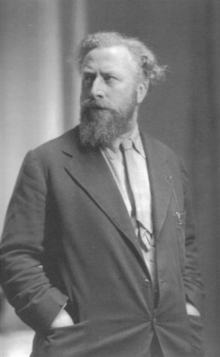
Birth of Archaeologist Etienne Andrew Rynne

Etienne Andrew Rynne, archaeologist, is born on September 11, 1932, at 20 Upper Pembroke Street, Dublin.

Rynne is one of six children (five boys and a girl) of Dr. Michael Rynne, a civil servant and diplomat, and Nathalie Rynne (née Fournier), from Auvergne, France. He has a twin brother, Michael, and is a nephew of the writer and broadcaster Stephen Rynne. He receives his early education in a number of institutions in Ireland and abroad, including Terenure College in Dublin, Clongowes Wood College in County Kildare, Coláiste na Rinne in County Waterford and École des Roches in Normandy. He then attends University College Dublin (UCD), where he graduates BA in archaeology and French (1953) and MA in archaeology (1955). He wins the prestigious National University of Ireland (NUI) travelling studentship for his thesis on Iron Age weapons.

After spending a year on the continent, Rynne returns to Ireland in 1957 to join the antiquities division of the National Museum of Ireland (NMI) in Kildare Street. One of his first assignments is to participate in the excavations at the Hill of Tara, previously headed by his old mentor at UCD, the recently deceased Professor Seán P. Ó Ríordáin. Already an expert on the Iron Age, he expands his expertise to cover Irish Celtic and early Christian art. He becomes an influential figure at the museum, remaining until 1967 and gaining much valuable experience in archaeological research, cataloguing and display, and is once described as the “true master of the Kildare Street crypt.” Intimately acquainted with the museum’s early Christian artefacts, he is particularly drawn to the eighth-century Ardagh chalice, on which he compiles extensive research notes relating to its dismantling and conservation. Although he is recognised as a leading authority on the chalice, his workload at the NMI and various academic commitments, not least his thirty-five years as editor of the North Munster Antiquarian Journal (NMAJ), prevent publication of his great work on the treasure.

During Rynne’s time at the NMI, he develops a close friendship with its director, Dr. Anthony T. Lucas, and on April 1, 1967 marries his daughter Aideen in the Church of the Miraculous Medal, Clonskeagh, Dublin. That year, he leaves the museum to take up a lectureship in archaeology at University College Galway (UCG), remaining there for thirty-one years until his retirement as professor of Celtic archaeology in 1998. During his professorship, he introduces many innovative changes at UCG, placing great emphasis on the value of well-planned field trips to historical monuments and archaeological sites around Connacht and north Clare, including Poulnabrone in his beloved Burren and Dún Aonghasa on Inishmore, which in 1991 he is first to suggest was built for ceremonial rather than defensive purposes. He often ventures further afield to sites such as the Jorvik Viking Centre, York, and the West Kennet Long Barrow in Wiltshire. Many local expeditions include small excavations, which he continues to conduct on behalf of the NMI.

Despite his heavy workload, Rynne writes close to one hundred academic papers in local and international journals, his expansive subject matter including not only archaeology but also folklore and Irish War of Independence history, the latter interest stemming from his father’s involvement in the formation of the Irish state (1917–23). His editorial tenure at the NMAJ includes the publication in 1975 and 1978 of dedicated issues on Edward MacLysaght and John Hunt respectively, and he is editor of Figures from the Past (1987), the Festschrift for Helen Maybury Roe. He also uses the national press to express his sometimes-eccentric views on various subjects, such as Irish neutrality, the American justice system and running the M3 motorway through Tara. A highly engaging and entertaining speaker, he thrives in front of an audience, be it a small group of students standing in a muddy field or an official address to the Royal Society of Antiquaries of Ireland, of which he serves as president from 1985 to 1989. His lectures are marked by his erudite and characteristically passionate delivery, complete with subtle intonation, and he is as comfortable speaking French as he is English or Irish.

Rynne’s legacy cannot be fairly assessed without reference to his largely unpopular stance in the Wood Quay controversy of the late 1970s. When Dublin’s original Viking settlement at Wood Quay is unearthed by archaeologists, he sides with the NMI, which, under the directorship of Joseph Raftery, decides to excavate only a small section of the site before handing it over to developers. This results in the destruction of much unexcavated archaeology. The NMI’s decision results in serious damage to its reputation, with Rynne one of the few archaeologists publicly supporting its unpopular stance. His loyalty to the NMI administration, which includes his father-in-law Lucas, alienates many fellow archaeologists, and is described by Patrick Wallace, then director of excavations at Wood Quay and among the many scholars who campaign to save the site, as “excessive, unnecessary and so unquestioning that it led to his being on the … wrong side during the Wood Quay court case.”

Rynne’s contribution to the history and heritage of his adopted province of Connacht and city of Galway is, however, widely acknowledged as immense. Once settled in UCG, he makes his home in the medieval town of Athenry, where he engages enthusiastically with the local community via lectures, walks and talks on the town’s famous walls and castle. Although Dublin-born, he becomes firmly entrenched in Galway’s colourful past and is instrumental in the founding of the city’s first municipal museum in Comerford House, adjacent to the Spanish Arch, in 1971. Drawing on his considerable NMI experience, he acts as honorary curator for the Galway museum for over a decade, before its move to the present purpose-built building in 2007. Ever willing to disseminate the story of Galway’s past beyond the twin towers of its university, to its citizens and the wider public, he compiles the Tourist Trail of Old Galway (1977). This signposted walking tour of Galway communicates the city’s importance in the medieval world, not only from an Irish, but also from a European and global perspective, and represents an enduring legacy to the self-styled promoter and protector of the city’s heritage.

Elected a member of the Royal Irish Academy (RIA) in 1966, Rynne is a fellow of the Society of Antiquaries of London (1975), and president of both the Cambrian Society of Wales (1999) and the Galway Archaeological and Historical Society (1989–94). Although diagnosed with heart disease in 1991, he remains active long after his retirement in 1998, continuing to publish papers on aspects of Irish archaeology up to his death.

In the summer of 2012 Rynne suffers a stroke and dies at the age of 79 on June 22, 2012, at University Hospital Galway. He is survived by Aideen, his wife of forty-five years, and their four sons and one daughter. A fifth son pre-deceases him. He is buried in the New Cemetery, Athenry.

(From: “Rynne, Etienne Andrew” by Frank Cullen, Dictionary of Irish Biography, http://www.dib.ie, June 2018)

Leave a comment

Assassination of Sir Arthur Edward Vicars

arthur-vicars

Sir Arthur Edward Vicars, genealogist and heraldic expert, is assassinated in Kilmorna, County Kerry by the Irish Republican Army (IRA) on April 14, 1921.

Vicars is born on July 27, 1862 in Leamington Spa, Warwickshire, England, and is the youngest child of Colonel William Henry Vicars of the 61st Regiment of Foot and his wife Jane (nee Gun-Cunninghame). This is his mother’s second marriage, the first being to Pierce O’Mahony by whom she has two sons. He is very attached to his Irish half-brothers and spends much time at their residences. On completing his education at Magdalen College School, Oxford and Bromsgrove School he moves permanently to Ireland.

Vicars quickly develops an expertise in genealogical and heraldic matters and makes several attempts to be employed by the Irish heraldic administration of Ulster King of Arms, even offering to work for no pay. In 1891 he is one of the founder members of the County Kildare Archaeological Society and remains its honorary secretary until his death.

Vicars first attempts to find a post in the Office of Arms when in 1892 he applies unsuccessfully for the post of Athlone Pursuivant on the death of the incumbent, Bernard Louis Burke. In a letter dated October 2, 1892 his half-brother Pierce Mahony writes that Sir Bernard Burke, Ulster King of Arms, is dying and urges him to move at once. Burke dies in December 1892, and Vicars is appointed to the office by letters patent dated February 2, 1893. In 1896 he is knighted, in 1900 he is appointed Commander of the Royal Victorian Order (CVO) and in 1903 he is elevated to Knight Commander of the Order (KCVO). He is also a fellow of the Royal Society of Antiquaries of Ireland and a trustee of the National Library of Ireland.

In 1897 Vicars publishes An Index to the Prerogative Wills of Ireland 1536 -1810, a listing of all persons in wills proved in that period. This work becomes very valuable to genealogists after the destruction of the source material for the book in 1922 when the Public Record Office at the Four Courts is destroyed at the start of the Irish Civil War.

Vicars’ career is very distinguished until 1907 when it is hit by the scandal of the theft of the Irish Crown Jewels. As Registrar of the Order of St. Patrick, he has custody of the insignia of the order, also known as the “crown jewels.” They are found to be missing on July 6, and a Crown Jewel Commission is established in January 1908 to investigate the disappearance. Vicars and his barrister Tim Healy refuse to attend the commission’s hearings. The commission’s findings are published on January 25, 1908 and he is dismissed as Ulster five days later.

On November 23, 1912, the Daily Mail publishes serious false allegations against Vicars. The substance of the article is that Vicars had allowed a woman reported to be his mistress to obtain a copy of the key to the safe and that she had fled to Paris with the jewels. In July 1913 he successfully sues the paper for libel. The paper admits that the story is completely baseless and that the woman in question does not exist. He is awarded damages of £5,000.

Vicars leaves Dublin and moves to Kilmorna, near Listowel, County Kerry, the former seat of one of his half-brothers. He marries Gertrude Wright in Ballymore, County Westmeath on July 4, 1917. He continues to protest his innocence until his death, even including bitter references to the affair in his will.

In May 1920 up to a hundred armed men break into Kilmorna House and hold Vicars at gunpoint while they attempt to break into the house’s strongroom. On April 14, 1921, he is taken from Kilmorna House, which is set afire, and shot dead in front of his wife. According to the communiqué issued from Dublin Castle, thirty armed men took him from his bed and shot him, leaving a placard around his neck denouncing him as an informer. On April 27, as an official reprisal, four shops are destroyed by British Armed Forces in the town of Listowel. The proclamation given under Martial law and ordering their demolition states:

“For any outrage carried out in future against the lives or property of loyalist officials, reprisals will be taken against selected persons known to have rebel sympathies, although their implication has not been proved.”

Vicars is buried in Leckhampton, Gloucestershire on April 20, 1921. His wife dies in Somerset in 1946.


Leave a comment

Birth of Robert Gibbings, Wood Engraver & Sculptor

LEAD Technologies Inc. V1.01

Robert John Gibbings, Irish artist and author most noted for his work as a wood engraver and sculptor, and for his books on travel and natural history, is born into a middle-class family in Cork, County Cork on March 23, 1889. Along with Noel Rooke he is one of the founder members of the Society of Wood Engravers in 1920 and is a major influence in the revival of wood engraving in the twentieth century.

Gibbings’ father, the Reverend Edward Gibbings, is a Church of Ireland minister. His mother, Caroline, is the daughter of Robert Day, Fellow of the Royal Society of Antiquaries of Ireland and president of The Cork Historical and Archaeological Society. He grows up in the town of Kinsale where his father is the rector of St. Multose Church.

Gibbings studies medicine for three years at University College Cork before deciding to persuade his parents to allow him to take up art. He studies under the painter Harry Scully in Cork and later at the Slade School of Fine Art and the Central School of Art and Design.

During World War I Gibbings serves in the Royal Munster Fusiliers and is wounded at Gallipoli before eventually being invalided out of the army in 1918. He then resumes his studies in London.

Gibbings is very much at the centre of developments in wood engraving. He is a founder member and leading light of the Society of Wood Engravers, which he sets up with Noel Rooke in 1920. In 1922 he contributes two wood engravings, “Clear Waters” and “Hamrun,” to Contemporary English Woodcuts, an anthology of wood engravings produced by Thomas Balston, a director at Gerald Duckworth & Company and an enthusiast for the new style of wood engravings. In 1923 he receives a commission for a set of wood engravings for The Lives of Gallant Ladies for the Golden Cockerel Press, his most important commission to date at 100 guineas.

Gibbings is working on the wood engravings The Lives of Gallant Ladies when Hal Taylor, the owner of the press, becomes very ill with tuberculosis and has to put it up for sale. He seeks a loan from a friend, Hubert Pike, a director of Bentley Motors, to buy the press. He takes over in February 1924 and owns and runs the press until 1933.

Gibbings illustrates numerous books on travel and natural history, including Charles Darwin’s The Voyage of the Beagle, and writes a series of bestselling river books, notably Sweet Thames Run Softly. He does a huge amount to popularise the subject of natural history, travelling extensively through Polynesia, Bermuda and the Red Sea to gather inspiration for his work.

Gibbings is the first man to draw underwater, the illustrations filling his Penguin classic Blue Angels and Whales. He is one of the first natural history presenters on the BBC.

In September 1955 Gibbings and his wife, Patience, purchase Footbridge Cottage, a tiny beehive of a cottage in Gibbings’s words, in Long Wittenham on the banks of the River Thames. Life there suits him, and he has a period of tranquility that he had not known previously. They live there until he dies of cancer in an Oxford hospital on January 19, 1958. He is buried in the churchyard at Long Wittenham. The grave is marked by a simple headstone featuring his device of a crossed quill and graver, carved by Michael Black, a young sculptor who is a friend of Gibbings.