seamus dubhghaill

Promoting Irish Culture and History from Little Rock, Arkansas, USA


Leave a comment

Birth of Harry Ferguson, Mechanic and Inventor

Henry George “Harry” Ferguson, a British mechanic and inventor who is noted for his role in the development of the modern agricultural tractor and its three-point linkage system, for being the first person in Ireland to build and fly his own aeroplane, and for developing the first four-wheel drive Formula One car, the Ferguson P99, is born on November 4, 1884, at Growell, near Dromore, County Down, in what is now Northern Ireland.

Ferguson is the son of a farmer. In 1902, he goes to work with his brother, Joe, in his bicycle and car repair business. While working there as a mechanic, he develops an interest in aviation, visiting air shows abroad. In 1904, he begins to race motorcycles.

In the 1900s Ferguson becomes fascinated with the newly emerging technology of powered human flight and particularly with the exploits of the Wright brothers, the American aviation pioneers who made the first plane flight in 1903 at Kill Devil Hills, North Carolina.

The first person to accomplish powered flight in the UK is Alliot Verdon Roe in June 1908, who also flies an aeroplane of his own design, but this has not yet been achieved in Ireland. Ferguson begins to develop a keen interest in the mechanics of flying and travels to several air shows, including exhibitions in 1909 at Blackpool and Rheims where he takes notes of the design of early aircraft. He convinces his brother that they should attempt to build an aircraft at their Belfast workshop and, working from his notes, they work on the design of a plane, the Ferguson monoplane.

After making many changes and improvements, they transport their new aircraft by towing it behind a car through the streets of Belfast up to Hillsborough Park to make their first attempt at flight. They are at first thwarted by propeller trouble but continue to make technical alterations to the plane. After a delay of nearly a week caused by bad weather, the Ferguson monoplane finally takes off from Hillsborough on December 31, 1909. Ferguson becomes the first Irishman to fly and the first Irishman to build and fly his own aeroplane.

After falling out with his brother over the safety and future of aviation, Ferguson decides to go it alone, and in 1911 founds a company selling Maxwell, Star and Vauxhall cars and Overtime Tractors. He sees at first hand the weakness of having tractor and plough as separate articulated units, and in 1917 he devises a plough that can be rigidly attached to a Ford Model T car — the Eros, which becomes a limited success, competing with the Fordson Model F.

In 1917 Ferguson meets Charles E. Sorensen while Sorensen is in England scouting production sites for the Fordson tractor. They discuss methods of hitching the implement to the tractor to make them a unit. In 1920 and 1921 he demonstrates early versions of his three-point linkage on Fordson tractors at Cork and at Dearborn, Michigan. He and Henry Ford discuss putting the Ferguson system of hitch and implements onto Fordson tractors at the factory, but no deal is struck. At the time the hitch is mechanical. Ferguson and his team of longtime colleagues, including Willie Sands and Archie Greer, soon develop a hydraulic version, which is patented in 1926. After one or two false starts, he eventually founds the Ferguson-Sherman Inc., with Eber and George Sherman.

The new enterprise manufactures the Ferguson plough, incorporating the patented “Duplex” hitch system mainly intended for the Fordson “F” tractor. Following several more years of development, Ferguson’s new hydraulic version of the three-point linkage is first seen on his prototype “Ferguson Black” or ‘Irish tractor’ as he calls it, now in the Science Museum, South Kensington, London. A production version of the “Black” is introduced in May 1936, made at one of the David Brown Engineering Ltd. factories in Huddersfield, West Yorkshire, and designated Ferguson Model A tractor.

Ferguson’s interests are merged with those of David Brown junior to create the Ferguson-Brown Company.

In October 1938, Ferguson demonstrates his latest tractor to Henry Ford at Dearborn, and they make the famous “handshake agreement.” He takes with him his latest patents covering future improvements to the Ferguson tractor and it is these that lead to the Ford-Ferguson 9N introduction to the world on June 29, 1939.

Henry Ford II, Ford’s grandson, ends the handshake agreement on June 30, 1947, following unsuccessful negotiations with Ferguson, but continues to produce a tractor, the 8N, incorporating Ferguson’s inventions, the patents on almost all of which have not yet expired, and Ferguson is left without a tractor to sell in North America. His reaction is a lawsuit demanding compensation for damage to his business and for Ford’s illegal use of his designs. The case is settled out of court in April 1952 for just over $9 million. The court case costs him about half of that and a great deal of stress and ill health.

By 1952, most of the important Ferguson patents have expired, and this allows Henry Ford II to claim that the case had not restricted Ford’s activities too much. It follows that all the world’s other tractor manufacturers can also use Ferguson’s inventions, which they do. A year later Ferguson merges with Massey-Harris Limited to become Massey-Harris-Ferguson Co., later Massey Ferguson.

Ferguson dies at his home at Stow-on-the-Wold, Gloucestershire, England, on October 25, 1960, as the result of a barbiturate overdose. The inquest is unable to conclude whether his death had been accidental or not.

A blue plaque commemorating Ferguson is mounted on the Ulster Bank building in Donegall Square, Belfast, the former site of his showroom. A granite memorial has been erected to Ferguson’s pioneering flight on the North Promenade, Newcastle, County Down, and a full-scale replica of the Ferguson monoplane and an early Ferguson tractor and plough can be seen at the Ulster Folk and Transport Museum at Cultra, County Down. Today his name lives on in the name of the Massey Ferguson company.


Leave a comment

Death of Physicist George Johnstone Stoney

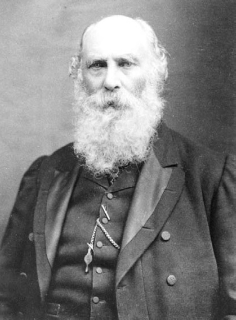
George Johnstone Stoney FRS, Irish physicist, dies on July 5, 1911, at Notting Hill, London, England. He is most famous for introducing the term “electron” as the “fundamental unit quantity of electricity.” He introduces the concept, though not the word, as early as 1874, initially naming it “electrine,” and the word itself comes in 1891. He publishes around 75 scientific papers during his lifetime.

Stoney is born on February 15, 1826, at Oakley Park, near Birr, County Offaly, in the Irish Midlands, the son of George Stoney and Anne (née Bindon Blood). His only brother is Bindon Blood Stoney, who becomes chief engineer of the Dublin Port and Docks Board. The Stoney family is an old-established Anglo-Irish family. During the time of the famine (1845–52), when land prices plummet, the family property is sold to support his widowed mother and family. He attends Trinity College Dublin (TCD), graduating with a BA degree in 1848. From 1848 to 1852 he works as an astronomy assistant to William Parsons, 3rd Earl of Rosse, at Birr Castle, County Offaly, where Parsons had built the world’s largest telescope, the 72-inch Leviathan of Parsonstown. Simultaneously he continues to study physics and mathematics and is awarded an MA by TCD in 1852.

From 1852 to 1857, Stoney is professor of physics at Queen’s College Galway. From 1857 to 1882, he is employed as Secretary of the Queen’s University of Ireland, an administrative job based in Dublin. In the early 1880s, he moves to the post of superintendent of Civil Service Examinations in Ireland, a post he holds until his retirement in 1893. He continues his independent scientific research throughout his decades of non-scientific employment duties in Dublin. He also serves for decades as honorary secretary and then vice-president of the Royal Dublin Society (RDS), a scientific society modeled after the Royal Society of London and, after his move to London in 1893, he serves on the council of that society as well. Additionally, he intermittently serves on scientific review committees of the British Association for the Advancement of Science from the early 1860s.

Stoney publishes seventy-five scientific papers in a variety of journals, but chiefly in the journals of the Royal Dublin Society. He makes significant contributions to cosmic physics and to the theory of gases. He estimates the number of molecules in a cubic millimeter of gas, at room temperature and pressure, from data obtained from the kinetic theory of gases. His most important scientific work is the conception and calculation of the magnitude of the “atom of electricity.” In 1891, he proposes the term “electron” to describe the fundamental unit of electrical charge, and his contributions to research in this area lays the foundations for the eventual discovery of the particle by J. J. Thomson in 1897.

Stoney’s scientific work is carried out in his spare time. A heliostat he designed is in the Science Museum Group collection. He is elected a Fellow of the Royal Society in June 1861.

Stoney proposes the first system of natural units in 1881. He realizes that a fixed amount of charge is transferred per chemical bond affected during electrolysis, the elementary charge e, which can serve as a unit of charge, and that combined with other known universal constants, namely the speed of light c and the Newtonian constant of gravitation G, a complete system of units can be derived. He shows how to derive units of mass, length, time and electric charge as base units. Due to the form in which Coulomb’s law is expressed, the constant 4πε0 is implicitly included, ε0 being the vacuum permittivity.

Like Stoney, Max Planck independently derives a system of natural units (of similar scale) some decades after him, using different constants of nature.

Hermann Weyl makes a notable attempt to construct a unified theory by associating a gravitational unit of charge with the Stoney length. Weyl’s theory leads to significant mathematical innovations, but his theory is generally thought to lack physical significance.

Stoney marries his cousin, Margaret Sophia Stoney, by whom he has had two sons and three daughters. One of his sons, George Gerald Stoney FRS, is a scientist. His daughter Florence Stoney OBE is a radiologist while his daughter Edith is considered to be the first woman medical physicist. His most scientifically notable relative is his nephew, the Dublin-based physicist George Francis FitzGerald. He is second cousin of the grandfather of Ethel Sara Turing, mother of Alan Turing.

After moving to London, Stoney lives first at Hornsey Rise, north London, before moving to 30 Chepstow Crescent, Notting Hill, west London. In his later years illness confines him to a single floor of the house, which is filled with books, papers, and scientific instruments, often self-made. He dies at his home on July 5, 1911. His cremated ashes are buried in St. Nahi’s Church, Dundrum, Dublin.

Stoney receives an honorary Doctor of Science (D.Sc.) from the University of Dublin in June 1902. Also in 1902, he is elected as a member to the American Philosophical Society. The street that he lived on in Dundrum is later renamed Stoney Road in his memory.
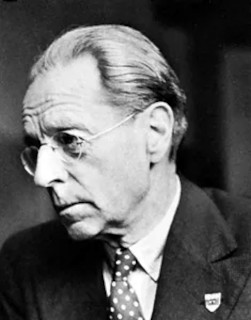
Craters on Mars and the Moon are named in his honour.


Leave a comment

Death of Harry Ferguson, Mechanic & Inventor

Henry George “Harry” Ferguson, a British mechanic and inventor who is noted for his role in the development of the modern agricultural tractor and its three-point linkage system, for being the first person in Ireland to build and fly his own aeroplane, and for developing the first four-wheel drive Formula One car, the Ferguson P99, dies in Stow-on-the-Wold, Gloucestershire, England, on October 25, 1960. Today his name lives on in the name of the Massey Ferguson company.

Ferguson is born on November 4, 1884, at Growell, near Dromore, County Down, in what is now Northern Ireland, the son of a farmer. In 1902, he goes to work with his brother, Joe, in his bicycle and car repair business. While working there as a mechanic, he develops an interest in aviation, visiting airshows abroad. In 1904, he begins to race motorcycles.

In the 1900s Ferguson becomes fascinated with the newly emerging technology of powered human flight and particularly with the exploits of the Wright brothers, the American aviation pioneers who made the first plane flight in 1903 at Kill Devil Hills, North Carolina.

The first person to accomplish powered flight in the UK is Alliot Verdon Roe in June 1908, who also flies an aeroplane of his own design, but this has not yet been achieved in Ireland. Ferguson begins to develop a keen interest in the mechanics of flying and travels to several air shows, including exhibitions in 1909 at Blackpool and Rheims where he takes notes of the design of early aircraft. He convinces his brother that they should attempt to build an aircraft at their Belfast workshop and, working from his notes, they work on the design of a plane, the Ferguson monoplane.

After making many changes and improvements, they transport their new aircraft by towing it behind a car through the streets of Belfast up to Hillsborough Park to make their first attempt at flight. They are at first thwarted by propeller trouble but continue to make technical alterations to the plane. After a delay of nearly a week caused by bad weather, the Ferguson monoplane finally takes off from Hillsborough on December 31, 1909. Ferguson becomes the first Irishman to fly and the first Irishman to build and fly his own aeroplane.

After falling out with his brother over the safety and future of aviation, Ferguson decides to go it alone, and in 1911 founds a company selling Maxwell, Star and Vauxhall cars and Overtime Tractors. He sees at first hand the weakness of having tractor and plough as separate articulated units, and in 1917 he devises a plough that can be rigidly attached to a Ford Model T car — the Eros, which becomes a limited success, competing with the Fordson Model F.

In 1917 Ferguson meets Charles E. Sorensen while Sorensen is in England scouting production sites for the Fordson tractor. They discuss methods of hitching the implement to the tractor to make them a unit. In 1920 and 1921 he demonstrates early versions of his three-point linkage on Fordson tractors at Cork and at Dearborn, Michigan. He and Henry Ford discuss putting the Ferguson system of hitch and implements onto Fordson tractors at the factory, but no deal is struck. At the time the hitch is mechanical. Ferguson and his team of longtime colleagues, including Willie Sands and Archie Greer, soon develop a hydraulic version, which is patented in 1926. After one or two false starts, he eventually founds the Ferguson-Sherman Inc., with Eber and George Sherman.

The new enterprise manufactures the Ferguson plough, incorporating the patented “Duplex” hitch system mainly intended for the Fordson “F” tractor. Following several more years of development, Ferguson’s new hydraulic version of the three-point linkage is first seen on his prototype “Ferguson Black” or ‘Irish tractor’ as he calls it, now in the Science Museum, South Kensington, London. A production version of the “Black” is introduced in May 1936, made at one of the David Brown Engineering Ltd. factories in Huddersfield, West Yorkshire, and designated Ferguson Model A tractor.

Ferguson’s interests are merged with those of David Brown junior to create the Ferguson-Brown Company.

In October 1938, Ferguson demonstrates his latest tractor to Henry Ford at Dearborn, and they make the famous “handshake agreement.” He takes with him his latest patents covering future improvements to the Ferguson tractor and it is these that lead to the Ford-Ferguson 9N introduction to the world on June 29, 1939.

Henry Ford II, Ford’s grandson, ends the handshake agreement on June 30, 1947, following unsuccessful negotiations with Ferguson, but continues to produce a tractor, the 8N, incorporating Ferguson’s inventions, the patents on almost all of which have not yet expired, and Ferguson is left without a tractor to sell in North America. His reaction is a lawsuit demanding compensation for damage to his business and for Ford’s illegal use of his designs. The case is settled out of court in April 1952 for just over $9 million. The court case costs him about half of that and a great deal of stress and ill health.

By 1952, most of the important Ferguson patents have expired, and this allows Henry Ford II to claim that the case had not restricted Ford’s activities too much. It follows that all the world’s other tractor manufacturers can also use Ferguson’s inventions, which they do. A year later Ferguson merges with Massey-Harris Limited to become Massey-Harris-Ferguson Co., later Massey Ferguson.

Ferguson dies at his home at Stow-on-the-Wold on October 25, 1960, as the result of a barbiturate overdose. The inquest is unable to conclude whether his death had been accidental or not.

A blue plaque commemorating Ferguson is mounted on the Ulster Bank building in Donegall Square, Belfast, the former site of his showroom. A granite memorial has been erected to Ferguson’s pioneering flight on the North Promenade, Newcastle, County Down, and a full-scale replica of the Ferguson monoplane and an early Ferguson tractor and plough can be seen at the Ulster Folk and Transport Museum at Cultra.