seamus dubhghaill

Promoting Irish Culture and History from Little Rock, Arkansas, USA


Leave a comment

Olympic Champion Michelle de Bruin Banned from Swimming

On August 6, 1998, Irish Olympic swimming champion Michelle de Bruin is banned from swimming for four years after being found guilty of tampering with a drug test. The International Swimming Federation says she used alcohol to tamper with urine samples taken the previous January at her home as part of the out-of-competition doping control programme run by FINA, the world governing body of swimming.

De Bruin is the golden girl of Irish swimming, winning three medals at the 1996 Summer Olympics in Atlanta. Her performances in Atlanta give rise to much muted comment about a dramatic improvement in her times. U.S. swimmer and then world record holder Janet Evans is more vocal, stating at one press conference that the Irish swimmer’s performance is “questionable and suspicious.” Supporters decry the comments as jealousy. At the same time, the Irish media does not cover itself in glory with the national broadcaster RTÉ apparently decreeing that comment about possible drug taking should not be referenced by commentators.

FINA says her urine sample shows “unequivocal signs of adulteration” and has an alcohol content (to mask drug taking) that is “compatible with physical manipulation.”

De Bruin confirms a challenge to the ban at a news conference on Friday, August 7. It continues her emphatic and repeated claims that she has never breached drug rules. Her sister, Aisling Smith, speaking from the family home in Rathcoole, on the outskirts of Dublin, says, “Michelle is determined to fight it through.”

De Bruin competes under her maiden name of Smith at the 1996 Atlanta Olympics and wins gold medals in the 400m individual medley, 400m freestyle, and the 200m individual medley. She wins a bronze medal in the 200m butterfly event.

Reacting to news of the ban, Irish Minister for Tourism, Sport and Recreation Dr. Jim McDaid says it is a personal tragedy for the swimmer and her family. Taking time out from government business in Reykjavik, Iceland, he says, that like the rest of the Irish people, he is “saddened and disappointed” at the ban and hopes that the Olympic champion can establish her innocence.

A four-year ban from any national or international swimming contest at De Bruin’s age of 28 effectively ends her swimming career. She could also be stripped of the four medals – two gold, two silver – she won at the 1997 European Aquatics Championships in Seville, Spain.

At a later conference, Evans highlights that the accusations of de Bruin’s doping had been heard by her poolside. De Bruin later receives an apology from Evans.

De Bruin never returns to competitive swimming and later works as a barrister, practising under her married name. Despite the ban for manipulating samples, none of Smith’s swimming achievements have been annulled, and she remains Ireland’s most successful Olympian.

Her coach and husband, Erik de Bruin, previously serves a four-year ban for using illegal drugs during his career as a discus thrower.

2 Comments

Execution of Father John Murphy

father-john-murphy

John Murphy, Irish Roman Catholic priest and one of the leaders of the Irish Rebellion of 1798 in Wexford, is executed by British soldiers on July 2, 1798.

Murphy is born at Tincurry in the Parish of Ferns, County Wexford in 1753, the youngest son of Thomas and Johanna Murphy. Studying for the priesthood is then illegal in Ireland and so priests are trained abroad. He sails for Spain in early 1772 and studies for the priesthood in Seville, where many of the clergy in Ireland receive their education due to the persecution of Catholics as a result of the Penal Laws.

Fr. Murphy is initially against rebellion and actively encourages his parishioners to give up their arms and sign an oath of allegiance to the British Crown. On May 26, 1798, a company of men armed with pikes and firearms gather under Fr. Murphy to decide what to do for safety against the regular yeomanry patrols at a townland called the Harrow. At about eight o’clock that evening, a patrol of some twenty Camolin cavalry spot the group and approach them, demanding to know their business. They leave after a brief confrontation, having burned the cabin of a missing suspected rebel whom they had been tasked to arrest. As the patrol returns, they pass by Fr. Murphy’s group, who are now angry at the sight of the burning cabin. As the cavalry passes by the men an argument develops, followed by stones being thrown and then an all-out fight between the men and the troops. Most of the cavalry quickly flees, but two of the yeomen are killed. The Wexford Rebellion has begun and Fr. Murphy acts quickly. He sends word around the county that the rebellion has started and organises raids for arms on loyalist strongholds.

Parties of mounted yeomen respond by killing suspects and burning homes, causing a wave of panic. The countryside is soon filled with masses of people fleeing the terror and heading for high ground for safety in numbers. On the morning of May 28, a crowd of some 3,000 gather on Kilthomas Hill but is attacked and put to flight by Crown forces who kill 150. At Oulart Hill, a crowd of over 4,000 combatants gather, plus many women and children. Spotting an approaching North Cork Militia party of 110 rank and file, Fr. Murphy and the other local United Irishmen leaders such as Edward Roche, Morgan Byrne, Thomas Donovan, George Sparks and Fr. Michael Murphy organise their forces and massacre all but five of the heavily outnumbered detachment.

The victory is followed by a successful assault on the weak garrison of Enniscorthy, which swells the Irish rebel forces and their weapon supply. However, defeats at New Ross, Arklow, and Bunclody mean a loss of men and weapons. Fr. Murphy returns to the headquarters of the rebellion at Vinegar Hill before the Battle of Arklow and is attempting to reinforce its defences. Twenty thousand British troops arrive at Wexford with artillery and defeat the rebels, armed only with pikes, at the Battle of Vinegar Hill on June 21. However, due to a lack of coordination among the British columns, the bulk of the rebel army escapes to fight on.

Eluding the crown forces by passing through the Scullogue Gap, Fr. Murphy and other leaders try to spread the rebellion across the country by marching into Kilkenny and towards the midlands. On June 26, 1798, at the Battle of Kilcumney Hill in County Carlow, their forces are tricked and defeated. Fr. Murphy and his bodyguard, James Gallagher, become separated from the main surviving group. Fr. Murphy decides to head for the safety of a friend’s house in Tullow, County Carlow, when the path clears. They are sheltered by friends and strangers. One Protestant woman, asked by searching yeomen if any strangers have passed, answers “No strangers passed here today.” When she is later questioned about why she had not said Murphy and Gallagher had not passed, she explains that they had not passed because they were still in her house when she was questioned.

After a few days, some yeomen capture Murphy and Gallagher in a farmyard on July 2, 1798. They are brought to Tullow later that day where they are brought before a military tribunal, charged with committing treason against the British crown, and sentenced to death. Both men are tortured in an attempt to extract more information from them. Fr. Murphy is stripped, flogged, hanged, decapitated, his corpse burned in a barrel of tar and his head impaled on a spike. This final gesture is meant to be a warning to all others who fight against the British Crown.

Fr. John Murphy’s remains are buried in the old Catholic graveyard with Fr. Ned Redmond in Ferns, County Wexford.


Leave a comment

Birth of Marcus O’Sullivan, Middle Distance Runner

marcus-osullivan

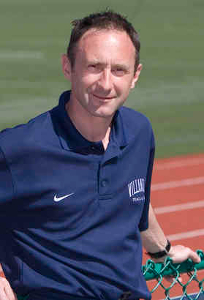
Marcus O’Sullivan, Irish middle distance runner, is born in Cork, County Cork, on December 22, 1961. Although he does not plan to enroll at any of Ireland’s universities, his running encourages him to go to Villanova University. After four years of education at Villanova, he graduates with a degree in accounting and later attains an MBA and a CPA.

O’Sullivan quickly becomes a world class runner and takes part in four summer Olympic Games. He wins three gold medals at the IAAF World Indoor Championships over 1500m in Indianapolis (1987), Budapest (1989), and Toronto (1993). In his victories in 1987 and 1989, he sets championship records. He is third all-time in total sub-4 minute miles with 101, trailing Steve Scott (137) and John Walker (127).

At the 1985 European Athletics Indoor Championships, O’Sullivan wins a silver medal in the 1500m. He finishes 4th in the 1991 IAAF World Indoor Championships in Seville, Spain. He qualifies for Ireland for Olympic Games in 1984, 1988, 1992, and 1996, at both 800 metres and 1500 metres. He reaches the 1500 metre finals at the 1988 Summer Olympics in Seoul, South Korea.

O’Sullivan sets an indoor 1500 metres world record of 3:35.4 on February 10, 1989, and is generally regarded as a better competitor running indoors. This is evidenced by the fact that he wins the prestigious Wanamaker Mile in Madison Square Garden‘s Millrose Games six times (1986, 1988, 1989, 1990, 1992, and 1996).

O’Sullivan’s personal best for the mile, which is set indoors in 1988, is 3:50.94. His personal best for the 1500 metres, which is set outdoors in 1996, is 3:33.61.

O’Sullivan, along with Irish runners Ray Flynn, Eamonn Coghlan, and Frank O’Mara (who ran collegiately at the University of Arkansas) establish the still standing world record in the 4 x 1 mile relay, when they combine in Dublin on August 17, 1985 to run 15:49.08.

O’Sullivan now runs the Running Works cross country summer camp in Canadensis, Pennsylvania, along with Cricket Batz, and is the head coach of Villanova cross country and track and field. He is coached by Tom Donnelly of Haverford College and advises Bob Kennedy in the later years before Kennedy’s retirement.

In addition to his ties to American record holder Bob Kennedy, O’Sullivan has coached elite professional runners such as Canadian indoor world silver medalist Carmen Douma-Hussar and New Zealander Adrian Blincoe.