seamus dubhghaill

Promoting Irish Culture and History from Little Rock, Arkansas, USA


Leave a comment

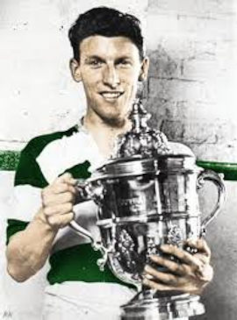
Birth of Paddy Coad, Irish Football Player & Manager

Patrick “Paddy” Coad, Irish football player and manager, is born at 100 Lower Yellow Road in Waterford, County Waterford, on April 14, 1920. He plays as a forward for Waterford, Glenavon, Shamrock Rovers and Ireland. Although known, primarily, as a maker of goals, he scores 126 goals in the League of Ireland and a further 41 in the FAI Cup. In 1946–47, he is top goal scorer in the League of Ireland. As a player manager, he also guides Shamrock Rovers to three League of Ireland titles and two FAI Cups, before he returns to Waterford and guides them to their first league title in 1966. He is appointed manager of Limerick in September 1967.

Coad is educated at De La Salle College Waterford and first distinguishes himself as a sportsman playing hurling and table tennis, becoming a Munster champion at the latter sport. He also begins to play football with Corinthians, a local junior club based in the Lower Yellow Road area of Waterford. He is soon spotted by Waterford, making his League of Ireland debut in 1937 at the young age of seventeen. He then moves to the Northern Ireland Football League (NIFL) club Glenavon but returns to Waterford after the start of World War II. He is a member of the Waterford team that finishes as a runner up to Cork United in both the League of Ireland and the FAI Cup. Waterford could have won the league title, but their players refuse to turn up for a play-off game against Cork after a dispute over bonus payments.

Coad signs with Shamrock Rovers in 1942 and on February 8 makes his debut against Brideville in the FAI Cup. During his early seasons with the club, he plays alongside Peter Farrell, Tommy Eglington, Jimmy McAlinden and Tommy Breen. He also helps Rovers win the FAI Cup three times. In November 1949, after the untimely death of Jimmy Dunne, he reluctantly accepts the position of player manager. He brings in many young players, including Liam Tuohy, and the team becomes known as Coad’s Colts. The Colts win 19 trophies between 1954 and 1959. Under his guidance, Rovers win three League of Ireland titles and the FAI Cup twice. In 1957, they also make their debut in the European Cup. Despite losing 9–2 on aggregate to Manchester United, Coad at the age of 37, dominates the away game at Old Trafford. He makes two appearances in the European Cup. On May 2, 1955, he is rewarded with a benefit game against Chelsea F.C. with Rovers winning 3-2.

Coad returns home to manage the Blues in 1960. In the 1965–66 League of Ireland season Waterford wins the Championship for the first time. Coad reflects on his legacy: “To bring the first title to my native Waterford leaves everything else in the shade.”

Between 1946 and 1952, Coad also makes eleven appearances and scored three goals for Ireland. He makes his debut on September 30, 1946, in a 1–0 defeat to England. On March 2, 1947, he scores his first goal for Ireland in a 3–2 win against Spain. During this game he also sets up both of Ireland’s other goals for Davy Walsh. On May 22, 1949, he scores the only goal, a penalty, in a 1–0 win over Portugal. His third goal for Ireland comes on May 30, 1951, in 3–2 away win over Norway. Ireland is 2–0 down until Peter Farrell and Alf Ringstead level the score. Then in the 82nd minute Coad scores from 20 yards to win the game. He plays his last game for Ireland in a 6–0 away defeat against Spain on June 1, 1952.

Coad wins the Texaco Hall of Fame Award in 1981 and the Professional Footballers’ Association of Ireland (PFAI) Merit Award in 1983.

After his professional playing career Coad works for twelve years as a commercial traveler for B. P. Ganley Ltd, a bacon and pork distributor in Waterford. He and his wife, Bud, have two daughters and a son. He is ill for six months prior to his death on March 8, 1992, at his daughter’s home in Waterford.

Coad’s brother, Seamus, plays for Waterford in the late 1960s and manages the team in the 1990s. Seamus’ sons Gary and Nigel Coad continue the family name by lining out for the Blues under their father before both going on to win many trophies locally. Amazingly, both Gary and Nigel become only the third set of second-generation brothers to play together for Waterford, following Paddy and Seamus, the Hales and Fitzgeralds. In 2012, Seamus’ grandson, Conor, becomes the latest Coad to play for Waterford United.

The Shamrock Rovers Player of the Year trophy is named after Paddy Coad.


Leave a comment

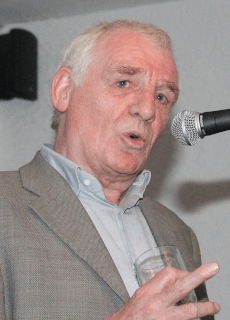
Birth of Eamon Dunphy, Media Personality & Journalist

Eamon Martin Dunphy, Irish media personality, journalist, broadcaster, author, sports pundit and former professional footballer, is born in Dublin on August 3, 1945.

Dunphy grows up in Drumcondra, Dublin, in what he describes as “a one-room tenement flat [with] no electricity, no hot water.” He attends Saint Patrick’s National School, Drumcondra. In 1958, he gets a one-year government scholarship to Sandymount High School but has to work as a messenger at the tweed clothing shop Kevin and Howlin.

A promising footballer, Dunphy leaves Dublin while still a teenager to join Manchester United as an apprentice. He does not break into the first team at United, and subsequently leaves to play for York City, Millwall, Charlton Athletic, Reading and Shamrock Rovers. It is at Millwall that he makes the most impact. He is considered an intelligent and skillful player in the side’s midfield. He is a member of “The Class of ’71,” the Millwall side that fails by just one point to gain promotion to the Football League First Division.

Dunphy plays 23 times for the Republic of Ireland and is Millwall’s most capped international footballer with 22 caps, until surpassed by David Forde and Shane Ferguson. He makes his Ireland debut on November 10, 1965, in the playoff at the Parc des Princes in Paris for the 1966 FIFA World Cup which Spain wins 1–0, thanks to a José Ufarte goal. He goes on to become, in his own words, “a good player, not a great player.”

Dunphy accompanies Johnny Giles back to Ireland to join Shamrock Rovers in 1977. Giles wants to make the club Ireland’s first full-time professional club and hopes to make Rovers into a force in European football by developing talented young players at home who would otherwise go to clubs in England. Dunphy is originally intended to be in charge of youth development. However, despite an FAI Cup winners medal in 1978, his only medal in senior football, and two appearances in the UEFA Cup Winners’ Cup, he becomes disillusioned with the Irish game and drops out of football altogether to concentrate on a career in journalism.

After retiring from the game, Dunphy first begins writing on football for the Sunday Tribune and then contributes regular columns on both football and current events for the Sunday Independent. He currently writes a column on football for the Irish Daily Star. He coins the term “Official Ireland” to refer to the establishment. He also works for Ireland on Sunday (now the Irish Daily Mail), The Sunday Press (now defunct), and the Irish Examiner.

Since the 1980s, Dunphy has written a number of books. His first and most widely praised book is Only a Game? The Diary of a Professional Footballer, which is an autobiographical account of his days playing for Millwall. Written in diary form, it records events from the dressing room of his 1973–74 season, which begins well for him at Millwall but subsequently ends in disillusionment: after being substituted in an October 27, 1973, home loss to eventual league winners Middlesbrough, he does not play another game all season, the club finishing mid-table.

In 1985, rock band U2 and manager Paul McGuinness commission Dunphy to write the story of their origins, formation, early years and the time leading up to their highly successful album The Joshua Tree. His book Unforgettable Fire – Past, Present, and Future – The Definitive Biography of U2 is published in 1988. It receives some favourable reviews, but critics close to the band speak of many inaccuracies. A verbal war erupts in the press during which he calls lead singer Bono a “pompous git.”

Dunphy also writes a biography of long-serving Manchester United manager Matt Busby and in 2002 ghost writes the autobiography of Republic of Ireland and Manchester United player Roy Keane.

Since the mid-1980s, Dunphy has regularly appeared as an analyst during football coverage on Raidió Teilifís Éireann (RTÉ). Since RTÉ acquired the rights to show English football, he has been a regular contributor to Premier Soccer Saturday. He also contributes to analysis of UEFA Champions League games and, in international football, RTÉ’s coverage of FIFA World Cups, UEFA European Football Championships and qualifying matches involving the Republic of Ireland national football team.

In 2001, Dunphy becomes the first male host of the quiz show The Weakest Link, which airs on TV3, for just one series. In 2003, he is hired again by TV3 to host their new Friday night chat show, entitled The Dunphy Show. Pitted head-to-head with RTÉ’s long-running flagship programme, The Late Late Show, Dunphy’s show loses what is a highly publicised “ratings war,” and is cancelled before its original run concludes.

Dunphy is the first presenter of a made-for-mobile television show on the 3 mobile network in Ireland. His rants and “Spoofer of the Week” are watched by thousands of 3 Mobile customers. The shows are awarded “Best Entertainment Show” at Ireland’s Digital Media Awards. He admits he never uses a mobile himself but enjoys filming for a mobile audience from his living room in Ranelagh.

In July 2018, Dunphy announces that he is leaving RTÉ after 40 years with the broadcaster, and that he intends to focus on his podcast The Stand with Eamon Dunphy.

Dunphy has also has a prominent radio career with several stations, including Today FM, Newstalk and RTÉ Radio 1. He is the original host in 1997 of the popular current affairs show The Last Word on Today FM. In September 2004, he takes over The Breakfast Show slot on the Dublin radio station Newstalk 106 from David McWilliams. The show tries to court controversy and listeners in equal measure. He fails to attract the large listenership predicted, with only a few additional thousand tuning in. He announces in June 2006 his intention to leave Newstalk 106, citing an inability to sustain the demands of an early morning schedule. After his departure from Newstalk 106, he confirms he is suffering from a viral illness from which he later recovers.

In July 2006, RTÉ announces that Dunphy will present a new weekly programme as part of the new RTÉ Radio 1 autumn schedule.

Dunphy rejoins Newstalk but leaves again in 2011 “due to interference from management and a push to put a more positive spin on the news.” On his last show he accuses his boss, Denis O’Brien, of “hating journalism.” He quits after Sam Smyth is sacked from Today FM (also owned by O’Brien) and says management at Newstalk is trying to remove “dissenting voices” like Constantin Gurdgiev from the airwaves.

Dunphy is a daily Mass-goer until he is preparing for marriage to his first wife, Sandra from Salford, when he is 21. He is Catholic and she is Protestant. The priest instructing them for marriage disapproves strongly of the mixed couple, saying that he should not marry her because she is “not a proper person.” Dunphy’s observance is already weakening but he quits his daily Mass-going at this point. He and Sandra have two children, a boy and a girl, and he is now a grandfather. His first marriage ends, and he moves to Castletownshend in County Cork for two years in the early 1990s. He lives with another partner, Inge, before meeting his second wife, RTÉ commissioning editor Jane Gogan, in the Horseshoe Bar in Dublin in 1992. They marry at the Unitarian Church on St. Stephen’s Green on September 24, 2009.

In an interview with An Phoblacht, Dunphy, who had previously written highly critical articles on the Provisional IRA and Sinn Féin, states that he is now a Sinn Féin supporter and declares he had voted for them in the 2011 Irish general election. He describes their representatives as “incredibly hard-working and incredibly intelligent.”

Dunphy publishes his autobiography entitled The Rocky Road in October 2013.

Today, Dunphy generally resides at his home near Ranelagh in Dublin. He also owns a holiday home in Deauville, France.

(Pictured: Éamon Dunphy at the Sinn Féin Summer School, 2013)


4 Comments

Death of Tom Aherne, Irish Footballer & Hurler

Thomas Aherne, Irish footballer and hurler also referred to as Bud Aherne, dies on December 30, 1999. He plays football for Belfast Celtic F.C. and Luton Town F.C. and is a dual internationalist, playing for both Ireland teams – the IFA XI and the FAI XI. In 1949 he is a member of the FAI XI that defeats England 2–0 at Goodison Park, becoming the first non-UK team to beat England at home. As a hurler he also plays one game for Limerick.

Aherne is born in Limerick, County Limerick, on January 26, 1919. As a youth, he initially emerges as a prominent hurler with Treaty Sarsfields and also plays one game for Limerick. However, he subsequently decides to concentrate on football and begins his senior career with Limerick United where his teammates include Davy Walsh. During World War II, he serves in the Irish Army and is stationed at Crosshaven. His impressive performances in the League of Ireland attract attention and in 1946 he is signed by Belfast Celtic.

While at Belfast Celtic, Aherne plays alongside Jackie Vernon, Billy McMillan, Robin Lawler and Johnny Campbell and helps them win the Irish Cup in 1947 and an Irish League title in 1948. He is also at Celtic during the infamous Boxing Day riot which breaks out during a game against local rivals Linfield F.C. In March 1949, he leaves Celtic and signs for Luton Town. However, in May 1949, he temporarily rejoins Celtic for their final tour before the club disbands. Together with McMillan, Campbell, Lawlor, guest player Mick O’Flanagan and manager Elisha Scott, he goes on the Celtic tour of North America. The highlight of the 10-game tour comes on May 29 when Celtic beats the reigning British champions, Scotland, 2–0.

Aherne signed for Luton Town for a fee of £6,000 and makes his English Football League debut on March 19 in a 2–1 away defeat to Tottenham Hotspur. Despite the fact he is over 30 when he joins Luton, he quickly establishes himself as a regular. He plays competitive football into his late thirties and is ever-present during the 1954–55 season when Luton wins promotion to Division One. After playing 288 games for Luton, including 267 in the league, he retires after a hairline fracture of the ankle ends his career. Even then he continues to play for a local league team, Luton Celtic, into his forties.

When Aherne begins his international career in 1946 there are in effect, two Ireland teams, chosen by two rival associations. Both associations, the Belfast-based Irish Football Association and the Dublin-based Football Association of Ireland, claim jurisdiction over the whole of Ireland and select players from the whole island. As a result, several notable Irish players from this era, including Aherne play for both teams.

Between 1946 and 1953 Aherne makes 16 appearances for the FAI XI. He makes his FAI debut in June 1946 during an Iberian tour, playing in both the 3–1 defeat to Portugal on June 16 and then helping the FAI XI gain a surprise 1–0 victory against Spain on June 23. He remains a regular in the FAI XI throughout the late 1940s and early 1950s and is featured prominently in the qualifying rounds for the 1950 FIFA World Cup. He is also a member of the FAI XI team that defeats England 2–0 at Goodison Park, becoming the first non-UK team to beat England at home.

On November 16, 1953, during a 1–1 draw with France, Aherne briefly becomes involved in controversy. Although only a friendly, the game quickly becomes heated and at one point, with Aherne chasing Raymond Kopa down the tunnel after play had been stopped for a foul. Kopa allegedly runs for his life after upsetting Aherne once too often. The FAI selectors are not impressed, and Aherne is told a repeat will end his international career. As it turns out, he makes only one more appearance for the FAI XI. That comes on October 4, 1953, in 5–3 defeat against France during a qualifier for the 1954 FIFA World Cup.

Between 1946 and 1950, Aherne also makes six appearances for the IFA XI. These include two Victory Internationals played in early 1946. On February 2 at Windsor Park, he makes his debut for the IFA XI in a 3–2 defeat to Scotland. Then on May 4 he helps the IFA XI defeat Wales 1–0 at Ninian Park. On September 28, 1946, he also plays for the IFA XI in a heavy defeat to England. The highlight of his career with the IFA XI comes on October 4, 1947, when he helps them gain a 2–0 win against Scotland.

Ahern makes his last appearance for the IFA XI in a 0–0 draw with Wales on March 8, 1950. As well as being part of the 1950 British Home Championship, the game also doubles up as a qualifier for the 1950 FIFA World Cup. Aherne, together with Con Martin, Reg Ryan and Davy Walsh, is one of four players from the Republic, included in the IFA XI that day and as a result he plays for two different associations in the same FIFA World Cup tournament. This situation eventually leads to intervention by FIFA and as a result Aherne becomes one of the last four Republic-born players to play for the IFA XI.

After retiring as a player Aherne settles in Luton where he coaches the Luton Town youth team, works in the local car industry and runs a very successful licensed premises. He also continues to visit Limerick regularly and remains healthy and active until he is diagnosed with Alzheimer’s disease in the mid-1990s. He dies on December 30, 1999, at the age of 80 and is survived by his wife, Eileen, two sons, Pat and Brian, and three daughters, Maura, Trisha and Catherine.


Leave a comment

Birth of Sammy McIlroy, Northern Irish Footballer

Samuel Baxter McIlroy, Northern Irish footballer who plays for Manchester United, Stoke City, Manchester City, Örgryte IS (Sweden), Bury, VfB Mödling (Austria), Preston North End and the Northern Ireland national team, is born on August 2, 1954, in Belfast, Northern Ireland.

McIlroy moves to English club Manchester United in 1969 becoming Sir Matt Busby‘s final signing. He makes his debut on November 6, 1971, in the Manchester derby against Manchester City, scoring in a 3–3 draw. He drifts in and out of the side and plays in 31 matches in 1973–74 as Manchester United suffers a rare relegation. He is an ever-present in 1974–75 playing in all of the club’s 51 fixtures as they gain an instant return to the First Division. On their return they finish in third place and also reach the 1976 FA Cup Final where they lose 1–0 to Southampton.

A year later, McIlroy picks up a winner’s medal as United triumphs 2–1 against Liverpool. A runners-up medal in the FA Cup follows two years after that as Manchester United are defeated 3–2 by Arsenal, with McIlroy equalising for United having been 2–0 down, only for Alan Sunderland to dramatically win it for Arsenal minutes afterwards. After spending ten seasons at Old Trafford, making 419 appearances and scoring 71 goals, he leaves for Stoke City in February 1982.

Stoke City pays Manchester United a club record fee of £350,000 for McIlroy on February 2, 1982. He arrives at Stoke with the club in deep relegation trouble in 1981–82 and he plays in 18 matches as Stoke avoids the drop by two points. In 1982–83 Stoke has a solid midfield with McIlroy playing alongside former Manchester United teammate Mickey Thomas, Mark Chamberlain and Paul Bracewell and the side finishes in a mid-table position of 13th in 1982–83. However the 1983–84 season sees Stoke struggle again and McIlroy and the returning Alan Hudson help Stoke stage a revival which sees they stay up by two points. In 1984–85 Stoke suffers an embarrassing relegation going down with a then record low points tally of 17 with McIlroy winning the Stoke City F.C. Player of the Year award. He is handed a free transfer in the summer of 1985 and goes on to play at Manchester City in the 1985–86 season, Swedish club Örgryte IS in 1986, Bury from 1986 to 1989 and Preston North End from 1989 to 1991. McIlroy’s last club as a player is with Northwich Victoria from 1991 to 1993.

As a player for the Northern Ireland national team, McIlroy wins 88 caps and scores 5 goals. He plays in all of the country’s matches during both the 1982 FIFA World Cup, where Northern Ireland defeats the host nation Spain and advances to the second round, and the 1986 FIFA World Cup in which he captains the team. He is also part of the Northern Ireland side which wins the 1983-84 British Home Championship.

McIlroy begins his managerial career as player-coach under John McGrath at Preston North End in 1991. He then goes on to manage non-league team Ashton United and Northwich Victoria before joining Macclesfield Town for six and a half seasons, culminating in their promotion to the English Football League (EFL) in 1997.

McIlroy arrives at the Moss Rose in 1993 replacing Peter Wragg who had narrowly avoided relegation the previous season. His first season at the Moss Rose sees a very creditable seventh-place finish and the Bob Lord Trophy. His second season surpasses all expectations as his skilful and flowing football brings the Silkmen a conference title, only to be denied promotion to the English Football League thanks to ground regulations. The following season the Silkmen beat Northwich Victoria 3–1 at Wembley to win the club’s second FA Trophy. In the red letter season of 1996-97 the Silkmen secure promotion to the English Football League for the first time in 120 years. The success continues the following year beginning with a home win over Torquay United. The Silkmen finish the season unbeaten at home and are promoted into the Football League Second Division in second place. But the promotion is a bridge too far for the rapidly rising club as the Silkmen finish at the bottom of the division. McIlroy leaves the Moss Rose in 1999 to take up the position at his own national team.

McIlroy manages Northern Ireland for nearly three years, but the team wins only five times in 29 matches, with all of the wins occurring in his first year. The side fails to score even a single goal in 8 qualifying matches for UEFA Euro 2004, but does achieve a respectable 0–0 draw against Spain. Upon completion of the qualifying matches, he resigns to re-enter club management with Stockport County. He spends just over a year at Edgeley Park which sees him win 14 matches.

On November 17, 2005, McIlroy takes over as caretaker manager of Conference side Morecambe, stepping in for incumbent manager Jim Harvey who had suffered a heart attack. Having guided Morecambe into the Conference play-offs, where they lose 4–3 on aggregate to Hereford United, he is appointed permanent manager in May 2006. In his first full season, Morecambe again reaches the play-offs where they defeat Exeter City to win promotion to the English Football League in one of the first games played at the new Wembley Stadium.

McIlroy guides Morecambe to a respectable 11th-place finish in 2007–08, the club’s inaugural season in the English Football League, as well as leading the side to League Cup scalps against Preston North End and Wolverhampton Wanderers. In 2008–09, he again secures an 11th-place finish League Two. Morecambe’s third season in the English Football League sees them surpass their highest ever finishes of the previous two seasons, with McIlroy steering the Shrimps to a 4th-place finish, and participation in the League Two playoff semi-finals. However, a 6–0 capitulation away at eventual winners Dagenham & Redbridge in the first leg renders the second leg virtually irrelevant, although McIlroy motivates his team to secure a 2–1 victory, in what is the final match to be played at Christie Park, Morecambe’s home for 89 years. On May 9, 2011, McIlroy leaves Morecambe by mutual consent after a 20th-place finish in the league.


Leave a comment

Republic of Ireland Advances to the Round-of-16 at Euro 2016

Robbie Brady heads the Republic of Ireland into the round-of-16 of Euro 2016 as the Irish score in the 85th minute to sensationally defeat Italy 1-0 at Stade Pierre-Mauroy in Villeneuve-d’Ascq, France on June 22, 2016. In addition to congratulatory remarks to the team, President Michael D. Higgins pays tribute to the Irish fans who “have earned widespread acclaim for their behaviour in France.”

Brady heads home the only goal of the match as Ireland seals progress after finishing third in Group E with four points. The victory sets up a round-of-16 meeting with Euro 2016 host France in Lyon, their first meeting since the controversial 2010 FIFA World Cup qualifier that saw them controversially defeated as the result of a Thierry Henry handball.

Ireland had been unfortunate to draw their opener against Sweden and, while they then suffered a sobering 3-0 loss to Belgium, they do not appear to have suffered a loss of confidence against the Azzurri. Ireland goes into the match against Italy knowing only a win will secure progress but they are given hope when Italy manager Antonio Conte, who is already certain of top spot, makes eight changes to the side that defeated Sweden.

Jeff Hendrick sends a fierce drive just wide from outside the box on nine minutes, while Daryl Murphy‘s header brings a fingertip save from Salvatore Sirigu midway through the half. It is not until six minutes before the break that Italy shows any sort of threat, with Ciro Immobile swiveling before steering a shot wide. Ireland then sees a penalty appeal rejected when James McClean goes down under pressure from Federico Bernardeschi.

Ireland continues to press for a winner in the second half, but Simone Zaza provides a reminder of Italy’s quality on 53 minutes with a superb volley on the turn from Mattia De Sciglio‘s cross that sails just over the bar. At the other end, Ireland continues to make chances but finds it difficult to break through a stubborn Italy defence. With just over an hour gone Hendrick does make space for a shot in the area, but his shot is wayward.

Conte brings on Lorenzo Insigne for Immobile on 73 minutes and the Napoli forward nearly breaks the deadlock shortly afterwards, curling a shot against the far post after a driving run toward goal in similar fashion to Éder‘s late winner against Sweden.

Ireland then has a golden opportunity to break the deadlock when substitute Wes Hoolahan goes clean through on goal, but he scuffs his shot and Sirigu is able to gather at the second attempt. A minute later, they make the breakthrough. Hoolahan sends in the cross for his Norwich City teammate Brady, who is allowed the space to head past Sirigu and send Ireland into the next round.

Italy, who faces reigning champions Spain in the round-of-16, hopes for a much improved performance when their regular starters return to action.

In the round-of-16 match against France, Ireland takes the lead in the match with an early penalty from Robbie Brady, but France goes on to win 2–1 to advance to the quarter-finals

(From: “Republic of Ireland beat Italy to reach round of 16” by ESPN staff, http://www.espn.com, June 22, 2016)