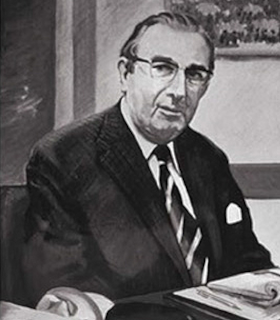
Dunne is born as Bernard Dunn in the village of Rostrevor, County Down, on May 19, 1908. He is the eldest son and second among three children of Barney Dunn, a businessman, and Margaret (née Byrne). His father inherits the Woodside Restaurant Temperance Refreshment Rooms and an auctioneering firm, and his mother runs a drapery business and later a shipping agency. He attends St. Mary’s School in Rostrevor until he is fourteen years old. While still in school he takes on a number of jobs, including repairing bicycles, rearing sheep, and working as a boot-boy at the home of Sir John Foster George Ross of Bladensburg. He is convinced not to emigrate to the United States by a family friend, Edward Whitaker.
Dunne moves to Drogheda in the newly established Irish Free State in 1926. He is employed as an apprentice first in Anderson’s of West Street, Drogheda, and later in Cameron’s Drapery store in Longford. It is after his move to Longford that he adds an “e” to his surname. In the mid-1930s, he moves to Cork, where he works as a buyer for Roches Stores in the menswear department. In 1944, he leaves Roches Stores to open a drapery shop with his friend, Des Darrer, across the road from Roches Stores on St. Patrick’s Street. A high-profile advertising campaign, combined with low prices, launches the venture successfully.
A second store opens on North Main Street, Cork, in 1947, which is followed by stores in Waterford and Mallow. Dunne and Darrer remain in partnership until 1952, when it is dissolved and Darrer takes ownership of the Waterford Dunnes Stores, renaming it Darrers.
The tenth store, in Wexford, opens in 1955, and the first store in Dublin opens in 1958. In 1960, Dunne launches the store’s first own-brand product, a lady’s jacket under the label St. Bernard. By 1964, Dunnes Stores has expanded into grocery and has an annual turnover of £6 million. He purchases two other Dublin stores, Bolger’s and Cassidy’s, in 1972, which have eleven shops across Dublin combined. Dunnes Stores opens its first branch in Northern Ireland in 1976.
Dunne meets his wife, Nora Maloney, while working at Roches Stores. They are married in September 1939 and have six children, including Margaret (Dunne) Heffernan, Frank, Elizabeth (Dunne) McMahon, Therese, and Ben Junior. Ben and later Margaret go on to work in the family business.
The family lives in Douglas, Cork, at Brownington Park, and in Blackrock, Cork, at Barnstead and at Ringmahon House. Following the establishment of the Dunnes Stores headquarters in Dublin in the early 1970s, the family moves to Jury’s Hotel, Dame Street. He and Nora later move to the Shelbourne Hotel, where they live until his death on April 14, 1983.
IRA intelligence establishes that an Auxiliary patrol usually leaves Victoria Barracks (in the north of the city) each night at 8:00 p.m. and makes its way to the city centre via Dillon’s Cross. On December 11, IRA commander Seán O’Donoghue receives intelligence that two lorries of Auxiliaries will be leaving the barracks that night and travelling with them will be British ArmyIntelligence Corps Captain James Kelly.
A unit of six IRA volunteers commanded by O’Donoghue take up position between the barracks and Dillon’s Cross, a “couple of hundred yards” from the barracks. Their goal is to destroy the patrol and capture or kill Captain Kelly. Five of the volunteers hide behind a stone wall while one, Michael Kenny, stands across the road dressed as an off-duty British officer. When the lorries near he is to beckon the driver of the first lorry to slow down or stop.
At 8:00 p.m., two lorries, each carrying 13 Auxiliaries, emerge from the barracks. The first lorry slows when the driver spots Kenny and, as it does so, the IRA unit attacks with grenades and revolvers. The official British report says that 12 Auxiliaries are wounded and that one, Spencer Chapman, a former Officer in the 4th Battalion London Regiment (Royal Fusiliers), dies from his wounds shortly after. As the IRA unit makes its escape, some of the Auxiliaries fire on them while others drag the wounded to the nearest cover: O’Sullivan’s pub.
The Auxiliaries break into the pub with weapons drawn. They order everyone to put their hands over their heads to be searched. Backup and an ambulance are sent from the nearby barracks. One witness describes young men being rounded up and forced to lie on the ground. The Auxiliaries drag one of them to the middle of the crossroads, strip him naked and forced him to sing “God Save the King” until he collapses on the road.
Angered by an attack so near their headquarters and seeking retribution for the deaths of their colleagues at Kilmichael, the Auxiliaries gather to wreak their revenge. Charles Schulze, an Auxiliary and a former British Army Captain in the Dorsetshire Regiment during World War I, organizes a group of Auxiliaries to burn the centre of Cork.
At 9:30 p.m., lorries of Auxiliaries and British soldiers leave the barracks and alight at Dillon’s Cross, where they break into houses and herd the occupants onto the street. They then set the houses on fire and stand guard as they are razed to the ground. Those who try to intervene are fired upon and some are badly beaten. Seven buildings are set on fire at the crossroads. When one is found to be owned by Protestants, the Auxiliaries quickly douse the fire.
British forces begin driving around the city firing at random as people rush to get home before the 10:00 p.m. curfew. A group of armed and uniformed Auxiliaries surround a tram at Summerhill, smash its windows, and forced all the passengers out. Some of the passengers, including at least three women, are repeatedly kicked, hit with rifle butts, threatened, and verbally abused. The Auxiliaries then force the passengers to line up against a wall and search them, while continuing the physical and verbal abuse. Some have their money and belongings stolen. One of those attacked is a Catholicpriest, who is singled out for sectarian abuse. Another tram is set on fire near Father Mathew‘s statue. Meanwhile, witnesses report seeing a group of 14–18 Black and Tans firing wildly for upwards of 20 minutes on nearby MacCurtain Street.
Soon after, witnesses report groups of armed men on and around St. Patrick’s Street, the city’s main shopping area. Most are uniformed or partially uniformed Auxiliaries and some are British soldiers, while others wear no uniforms. They are seen firing into the air, smashing shop windows and setting buildings on fire. Many report hearing bombs exploding. A group of Auxiliaries are seen throwing a bomb into the ground floor of the Munster Arcade, which houses both shops and flats. It explodes under the residential quarters while people are inside the building. They manage to escape unharmed but are detained by the Auxiliaries.
The Cork City Fire Brigade is informed of the fire at Dillon’s Cross shortly before 10:00 p.m. and are sent to deal with it at once. On finding that Grant’s department store on St. Patrick’s Street is ablaze, they decide to address it first. The fire brigade’s Superintendent, Alfred Hutson, calls Victoria Barracks and asks them to tackle the fire at Dillon’s Cross so that he can focus on the city centre. The barracks take no heed of his request. As he does not the resources to deal with all the fires at once, he has to prioritize the order in which the fires are addressed. He oversees the operation on St. Patrick’s Street and meets The Cork Examiner reporter Alan Ellis. He tells Ellis that “all the fires were being deliberately started by incendiary bombs, and in several cases, he had seen soldiers pouring cans of petrol into buildings and setting them alight.”
British forces hindered the firefighter’s attempts to tackle the blazes by intimidating them and cutting or driving over their hoses. Firemen are also shot at, and at least two are wounded by gunfire. Shortly after 3:00 a.m. on December 12, reporter Alan Ellis comes upon a unit of the fire brigade pinned down by gunfire near City Hall. The firemen say that they are being shot at by Black and Tans who have broken into the building. They also claim to see uniformed men carrying cans of petrol into the building from nearby Union Quay barracks.
At about 4:00 a.m. there is a large explosion and City Hall and the neighbouring Carnegie Library go up in flames, resulting in the loss of many of the city’s public records. According to Ellis, the Black and Tans had detonated high explosives inside City Hall. When more firefighters arrive, British forces shoot at them and refuse them access to water. The last act of arson takes place at about 6:00 a.m. when a group of policemen loot and burn the Murphy Brothers’ clothes shop on Washington Street.
After the ambush at Dillon’s Cross, IRA commander Seán O’Donoghue and volunteer James O’Mahony make their way to the farmhouse of the Delaney family at Dublin Hill on the northern outskirts of the city, not far from the ambush site. Brothers Cornelius and Jeremiah Delaney are members of F Company, 1st Battalion, 1st Cork Brigade IRA. O’Donoghue hides some grenades on the farm and the two men go their separate ways.
At about 2:00 a.m., at least eight armed men enter the house and go upstairs into the brothers’ bedroom. The brothers get up and stand at the bedside and are asked their names. When they answer, the gunmen open fire. Jeremiah is killed outright, and Cornelius dies of his wounds on December 18. Their elderly relative, William Dunlea, is wounded by gunfire. The brothers’ father says the gunmen wore long overcoats and spoke with English accents. It is thought that, while searching the ambush site, Auxiliaries had found a cap belonging to one of the volunteers and had used bloodhounds to follow the scent to the family’s home.
Over 40 business premises and 300 residential properties are destroyed, amounting to over five acres of the city. Over £3 million worth of damage (1920 value) is caused, although the value of property looted by British forces is not clear. Many people become homeless and 2,000 are left jobless. Fatalities include an Auxiliary killed by the IRA, two IRA volunteers killed by Auxiliaries, and a woman who dies from a heart attack when Auxiliaries burst into her house. Several people, including firefighters, are reportedly assaulted or otherwise wounded.
Conservative Party leader Bonar Law says, “in the present condition of Ireland, we are much more likely to get an impartial inquiry in a military court than in any other.” Greenwood announces that a military inquiry would be carried out by General Peter Strickland. This results in the “Strickland Report,” but Cork Corporation instructs its employees and other corporate officials to take no part. The report blames members of the Auxiliaries’ K Company, based at Victoria Barracks. The Auxiliaries, it is claimed, burned the city centre in reprisal for the IRA attack at Dillon’s Cross. The British Government refuses to publish the report.
(Pictured: Workers clearing rubble on St. Patrick’s Street in Cork after the fires)
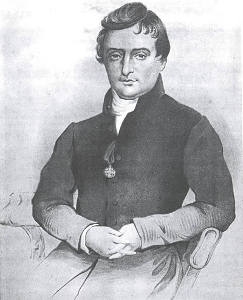
Mathew receives his schooling in Kilkenny, then moves for a short time to Maynooth. From 1808 to 1814 he studies in Dublin, where in the latter year he is ordained to the priesthood. Having entered the Capuchin order, after a brief period of service at Kilkenny, he joins the mission in Cork.
The movement with which his name is associated begins on April 10, 1838, with the establishment of the Cork Total Abstinence Society, which in less than nine months enrolls no fewer than 150,000 names. It rapidly spreads to Limerick and elsewhere, and some idea of its popularity may be formed from the fact that at Nenagh 20,000 persons are said to take the pledge in one day, 100,000 at Galway in two days, and 70,000 in Dublin in five days. At its height, just before the Great Famine, his movement enrolls some 3 million people, or more than half of the adult population of Ireland. In 1844 he visits Liverpool, Manchester, and London with almost equal success.
His work has a remarkable impact on the condition of the people in Ireland. The number committed to jail falls from 12,049 in 1839 to 9,875 by 1845. Sentences of death fall from 66 in 1839 to 14 in 1846, and transportations fall from 916 to 504 over the same period.
Mathew visits the United States in 1849, returning in 1851. While there, he finds himself at the center of the Abolitionist debate. Many of his hosts are pro-slavery and want assurances that their influential guest will not stray outside his remit of battling alcohol consumption. But Mathew has signed a petition encouraging the Irish in the U.S. to not partake in slavery in 1841 during Charles Lenox Remond‘s tour of Ireland. Now however, in order to avoid upsetting his slave-owning friends in the U.S., he snubs an invitation to publicly condemn chattel slavery, sacrificing his friendship with that movement. He defends his position by pointing out that there is nothing in the scripture that prohibits slavery. He is condemned by many on the abolitionist side, including the former slave and abolitionist Frederick Douglass who had received the pledge from Mathew in Cork in 1845.
Mathew dies on December 8, 1856, in Queenstown, County Cork, after suffering a stroke. He is buried at St. Joseph’s Cemetery, Cork City, which he had established himself.


 seamus dubhghaill